
Commercial Restroom Fixtures
Chrome Bathroom Touchless Faucets
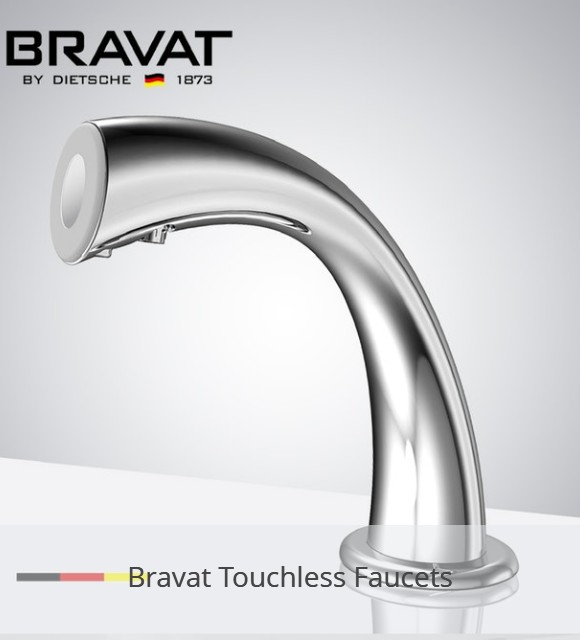
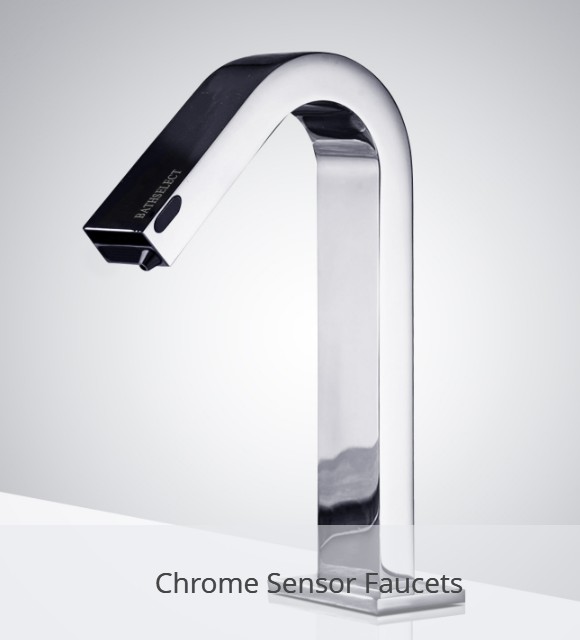
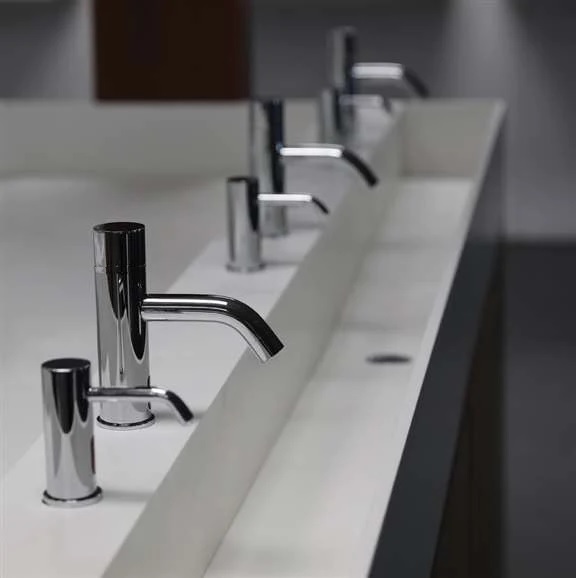
With its reflective and lustrous surface the chrome bathroom touchless faucet finish adds an element of elegance and sophistication to the bathroom. Its versatility allows it to seamlessly blend with various color palettes and materials, providing flexibility in design options. The chrome finish is known for its strength, wear resistance, durability, resistance to corrosion and tarnish, and easy maintenance, making it a practical choice for long-term use in high-moisture environments. With its timeless appeal and compatibility with other chrome-finished accessories, the chrome finish offers a cohesive and coordinated look. Overall, it combines aesthetics, durability, and ease of maintenance, making it an excellent choice for enhancing the overall design and functionality of any bathroom project.
Touchless
Hygiene & Low Contact
Water-Saving
Flow Control & Sensors
Heavy-Duty
High-Traffic Durability
Spec-Ready
B2B Compliance Focus
Browse Touchless Faucets By Type & Finish
Read More
Shop Touchless Faucets By Finish
Professional Chrome Touchless Sensor Faucet Buying Considerations
Chrome touchless sensor faucets remain one of the most widely specified solutions for commercial restrooms, healthcare facilities, hospitality properties, airports, educational campuses, office buildings, and modern residential bathrooms because they combine timeless aesthetics with dependable hands-free operation. Before selecting a chrome automatic faucet, buyers should compare sensor responsiveness, activation accuracy, adjustable sensing range, temperature control options, AC, battery, or hybrid power configurations, water efficiency, solid brass construction, vandal-resistant design, finish durability, and long-term maintenance requirements. A polished chrome finish provides excellent corrosion resistance, complements virtually any restroom design, and simplifies routine cleaning in high-use environments. BathSelect® offers an extensive collection of premium commercial sensor faucets, advanced temperature-control touchless faucets, coordinated touchless faucet and soap dispenser systems, and elegant commercial chrome touchless faucet collections designed for demanding commercial and institutional applications. Specification professionals frequently reference EPA WaterSense bathroom faucet guidance to evaluate water-efficient performance, IAPMO plumbing standards for plumbing product compliance, NSF public health standards for plumbing component safety, American Institute of Architects (AIA) resources for commercial specification, and BIMobject to streamline BIM and Revit coordination during design, specification, and construction. Comparing these related BathSelect collections and recognized industry resources helps architects, plumbing engineers, contractors, designers, healthcare planners, facility managers, and building owners specify chrome touchless sensor faucets that support hygiene, water conservation, code-conscious design, simplified maintenance, and dependable long-term lifecycle performance.
|
|
|
Join Us
Need Product Spec's or BIM file
For any specific products you are interested in you can request BIM file by emailing us at BathSelect or simply call us and talk with one of our commercial experts! For commercial bathroom touchless restroom faucets inspiration, new product releases join our email list!
Technical FAQs (Commercial Performance Focus)
How does a touchless bathroom faucet actually control water flow?
A proximity sensor (IR or time-of-flight) feeds a control module that energizes a solenoid valve. The controller enforces a programmed run-cycle and closes the valve automatically, ensuring repeatable, contact-free operation.
What sensor technologies are used and when does ToF provide an advantage?
IR sensors react to reflected infrared light, while ToF sensors calculate distance using signal return time. ToF improves stability in reflective basins, variable lighting, and high-traffic environments by enforcing distance-based detection.
How do touchless faucets prevent run-on and water waste?
Controllers apply maximum run-time limits, re-trigger delays, and sensor filtering logic that forces shutoff if a sensor is blocked or falsely activated.
Why Specify BathSelect ?
What differentiates BathSelect touchless faucets from typical sensor faucets?
BathSelect faucets are engineered with commercial-duty solenoids, precision-tuned sensor logic, and solid metal bodies, prioritizing long service life, stable detection, and consistent flow control in high-use environments.
How does BathSelect approach sensor accuracy and reliability?
BathSelect focuses on tightly controlled sensor windows, optimized detection zones, and advanced filtering logic to minimize false triggers caused by reflections, lighting changes, or adjacent traffic.
Are BathSelect faucets suitable for demanding commercial installations?
Yes. BathSelect designs are commonly specified for airports, office towers, healthcare facilities, hospitality restrooms, and education projects where durability, uptime, and ease of maintenance are critical.
How does BathSelect support long-term maintenance and serviceability?
Internal layouts emphasize accessible solenoids, replaceable seals, serviceable inlet strainers, and standardized components to reduce downtime and simplify field maintenance.
What materials are used in BathSelect touchless faucet construction?
BathSelect primarily uses solid brass or stainless steel bodies paired with durable surface treatments, ensuring structural integrity, corrosion resistance, and long-term aesthetic stability.
How does BathSelect address water efficiency and compliance?
BathSelect faucets integrate low-flow outlets, controlled run-time programming, and compatibility with laminar flow devices to support water efficiency goals without compromising user experience.
Why do architects and engineers favor BathSelect for touchless projects?
Design professionals value BathSelect for its balance of technical performance, modern design flexibility, reliable sensor behavior, and strong value across a wide range of commercial and upscale residential applications.
How does BathSelect compare in value against legacy commercial brands?
Which performance specs should be verified before specifying a touchless faucet?
Key specs include operating pressure window, flow rate at typical site pressure (commonly evaluated around 60–80 psi), outlet type (laminar vs aerated), sensor range and adjustability, cycle timing logic, and service access for strainers, solenoid, and power modules.
How do commercial-grade touchless faucets differ from residential models?
Commercial models prioritize long-duty solenoids, standardized serviceable components, vandal-resistant construction, faster maintenance access, and controllers tuned for high activation counts, while residential models often optimize for aesthetics and lighter duty cycles.
How do touchless faucets prevent run-on, nuisance activations, and water waste?
Controllers typically implement maximum run-time limits, re-trigger delays, anti-false-trigger filtering, and shutoff logic that forces closure if the sensor is blocked or repeatedly triggered, preventing continuous flow and reducing unnecessary water use.
How is water temperature managed in a touchless setup?
Temperature is commonly preset by an upstream mixing device—mechanical, pressure-balance, or thermostatic—located below deck or at a centralized distribution point. The faucet then delivers the blended temperature without user adjustment at the spout.
What’s the practical difference between pressure-balance and thermostatic mixing upstream?
Pressure-balance mixing mitigates sudden temperature shifts caused by pressure fluctuations, while thermostatic mixing regulates outlet temperature more precisely by actively compensating for both pressure and temperature variations under changing demand.
Why do many projects specify laminar flow for touchless bathroom faucets?
Laminar outlets produce a smooth, low-turbulence stream that reduces splashing at shallow basins and can help limit airborne mist compared to highly aerated outlets, improving perceived cleanliness and reducing countertop mess.
What supply conditions must be controlled for stable sensor and valve performance?
Stable inlet pressure, clean water, and correct inlet strainer placement are essential. Particulate debris can prevent full solenoid sealing (drip), restrict flow, or cause inconsistent cycle behavior, especially in high-use installations.
What are the most common causes of dripping after shutoff—and how do you diagnose them?
Typical root causes include debris lodged in the solenoid seat, worn internal seals, unstable supply pressure, or upstream mixing valves introducing fluctuating conditions. Diagnosis usually starts with strainer inspection and flushing, followed by solenoid cleaning or seal replacement if needed.
Battery, plug-in transformer, or hardwired: which power approach is best?
Hardwired power reduces maintenance and supports consistent output in high-traffic environments; plug-in transformers simplify installation where receptacles exist; battery power is ideal for retrofits but requires a planned replacement schedule and low-battery monitoring.
What maintenance tasks keep touchless faucets reliable long-term?
Facilities teams typically perform sensor window cleaning, inlet strainer inspection, periodic solenoid and seal servicing, mixing valve calibration checks (where used), and verification of power health (battery state or transformer output).
What installation details reduce callbacks in commercial restrooms?
Use rigid mounting, correct gasket compression (avoid over-torque), protected wiring routing, accessible service clearances for solenoid/strainers, and sensor placement that avoids reflective surfaces, direct sunlight, and high-traffic interference zones.
What accessibility considerations should be checked for touchless faucet usability?
Verify spout reach and height relative to the basin, ensure the detection zone is intuitive for varied users, confirm run-time is sufficient for handwashing, and maintain required clearances for wheelchair approach and comfortable hand placement.
Which technical differentiators matter most when comparing brands?
|
|
|