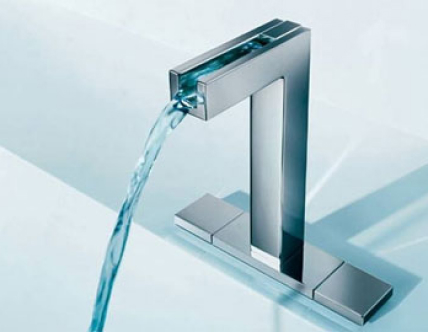
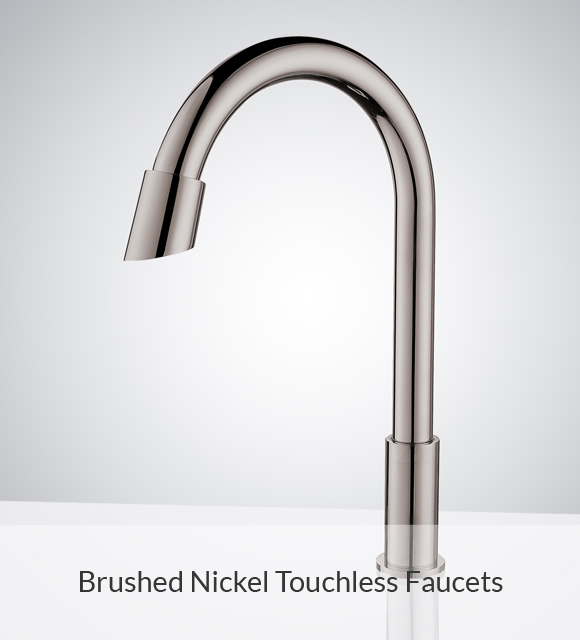
Brushed Nickel Touchless Faucets
Brushed nickel touchless faucets offer a sleek and timeless appeal, easy maintenance, durability, and hygienic benefits. With BathSelect high-quality craftsmanship and smart sensing technology, specifying brushed
nickel touchless faucets becomes an excellent choice for architects, designers, and property managers seeking reliable and visually appealing fixtures for commercial bathrooms. When debating a finish for your commercial bathroom, brushed nickel is a finish worth considering since it is a popular choice due to its sleek and soft, muted tones of brushed nickel thus creating a versatile finish that blends with both modern and traditional bathroom designs.
No doubt brushed nickel has ability to hide fingerprints and smudges, compared to darker finishes, thus its more forgiving in showing minor marks, making it easier to keep clean and maintain its pristine appearance in any commercial restroom space.
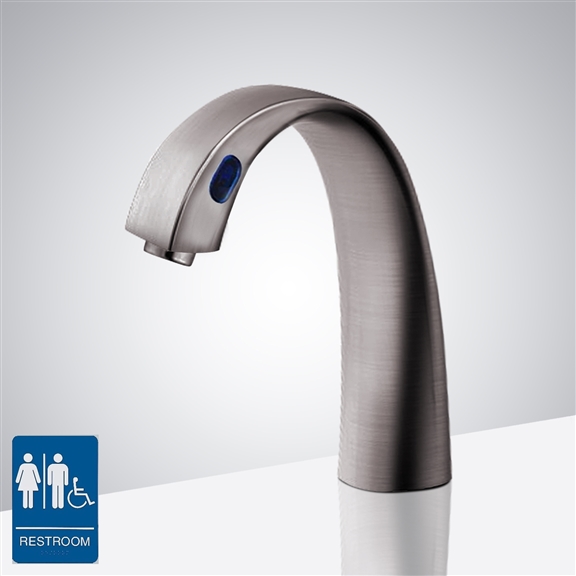
Brushed nickel touchless faucets
The finish is known for its longevity and resistance to tarnishing and corrosion, ensuring faucets will withstand the rigors of commercial use and continue to look great for years to come. BathSelect brushed nickel touchless faucets are constructed with high-quality materials, offering a corrosion-resistant and drip-free performance, ensuring long-lasting functionality.
Our touchless faucets promotes better hygiene by eliminating the need for users to touch the faucet handles, reducing the spread of germs and bacteria, thus maintaining cleanliness by minimizing the potential for cross-contamination from dirty hands and contribute to water savings by promoting environmental sustainability thus delivering water only when needed, reducing water waste.
Read More
Our touchless faucets feature smart sensing technology, ensuring accurate and reliable activation, and are favored by architects, designers, and property managers for their high quality and performance so you can have confidence in specifying faucets that combine style, durability, hygiene, and water efficiency, meeting the demands of commercial bathroom settings.
Browse Touchless Faucets By Type & Finish
Professional Brushed Nickel Touchless Faucet Buying Considerations
Brushed nickel motion sensor faucets combine the convenience of hands-free operation with one of the industry's most versatile and durable finishes, making them an excellent choice for healthcare facilities, hospitality projects, office buildings, educational campuses, airports, luxury residences, and other high-use environments. Before selecting a touchless faucet, buyers should compare sensor responsiveness, temperature control capabilities, AC, battery, or hybrid power options, flow efficiency, solid brass construction, vandal-resistant design, finish durability, maintenance accessibility, and long-term serviceability. A quality brushed nickel finish helps reduce the visibility of fingerprints and water spots while complementing a wide range of contemporary and transitional bathroom interiors. BathSelect® offers an extensive collection of premium commercial sensor faucets, advanced temperature-control touchless faucets, coordinated touchless faucet and soap dispenser systems, and elegant chrome and brushed nickel touchless faucets designed for demanding commercial and institutional applications. Industry professionals frequently reference EPA WaterSense bathroom faucet guidance for water-efficient fixture selection, IAPMO plumbing standards for plumbing system compliance, NSF public health standards for plumbing component safety, American Institute of Architects (AIA) resources for commercial product specification, and BIMobject to streamline BIM and Revit coordination throughout design and construction. Comparing these related BathSelect collections and recognized industry resources helps architects, plumbing engineers, contractors, designers, healthcare planners, facility managers, and building owners specify brushed nickel touchless faucets that support hygiene, water conservation, code-conscious design, simplified maintenance, and dependable long-term lifecycle performance.
|
|
|
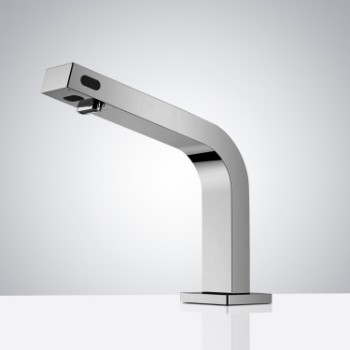
The brushed nickel Commercial Electronic Lavatory AC & Battery Powered Faucet is made with cast brass and are meant for high traffic applications.
Join Us
Need Product Spec or BIM file
Best German Quality Bathroom Touchless Faucets. Get BathSelect emails of touchless bathroom faucets inspiration, new product releases and more!
We're available to provide assistance and support for your inquires!
Featured
categories
Technical FAQs for Brushed-Nickel, Sensor-Activated Faucets in Commercial Settings (High-Traffic Restrooms, Airports, Office Towers, Healthcare, Education, and Hospitality Public Areas)
What makes a sensor-operated faucet commercial grade?
Commercial-grade designs use long-duty solenoids, vandal-resistant construction, standardized service parts, and controllers engineered for high activation cycles.
Why is brushed-nickel specified so often in public restrooms?
Brushed-nickel finishes tend to hide fingerprints and water spotting better than polished surfaces while maintaining a neutral, professional appearance.
How do motion-activated faucets control on and off without touch?
An infrared or ToF sensor detects hands, then a control module opens a solenoid valve for a timed wash cycle.
What sensor features matter most in busy washrooms?
Adjustable detection range, anti-false-trigger filtering, fast response time, and stable performance under reflective lighting conditions are key.
How do these faucets prevent run-on and water waste?
Programmable cycle time limits, automatic shutoff timers, and re-trigger delays help prevent continuous flow and nuisance activations.
How is water temperature handled in commercial touch-free installations?
Temperature is typically delivered through an upstream mixing valve, mechanical or thermostatic, supplying a controlled blended temperature to all faucets.
What’s the difference between pressure-balance and thermostatic mixing upstream?
Pressure-balance mixing reduces sudden temperature swings, while thermostatic mixing maintains a set temperature more precisely under changing loads.
What flow rates are typical, and why does it matter commercially?
Lower GPM reduces water consumption and splash, and laminar outlets are commonly selected to reduce aerosolization and keep basins cleaner.
Why do many commercial projects prefer laminar flow outlets?
Laminar streams reduce splashing in shallow basins and can help limit airborne mist compared to highly aerated flow patterns.
What supply conditions must be verified for consistent sensor performance?
Verify stable pressure, clean water, and correct strainer placement, since debris can stick solenoids and cause weak flow, dripping, or inconsistent cycles.
What maintenance routines keep commercial sensor faucets reliable?
Regularly clean the sensor lens, inspect inlet strainers, confirm mixing valve calibration, test solenoid function, and verify battery or power health.
Battery versus hardwired power: which is better for facilities teams?
Hardwired power reduces service calls and supports consistent performance, while battery power simplifies retrofits but requires scheduled replacements.
How do brushed-nickel coatings hold up to disinfectants and frequent cleaning?
Higher-quality plated or PVD-type coatings resist chemical wear more effectively, while abrasive cleaners can dull or thin the finish over time.
What installation details reduce vandalism and callbacks?
Concealed mounting hardware, secure escutcheons, protected outlets, locked controller access, and reinforced mounting surfaces help prevent damage and rework.
What should be checked when specifying sensor faucets for ADA and user accessibility?
Confirm spout reach and height, sensor detection zone usability, cycle time, and sink clearance for wheelchair approach and comfortable hand placement.
How do commercial touch-free kitchen-style faucets differ from restroom models?
They typically require higher arc clearance, better splash control, and more robust sealing to handle grease, chemicals, and frequent use in breakroom environments.
What are common causes of drip after shutoff in automatic faucets?
Common causes include debris in the solenoid valve, worn seals, unstable supply pressure, or upstream mixing conditions creating inconsistent pressure or temperature.
What are top brands and their technical differentiators for commercial sensor faucets?
|
|
|




.jpg)
.jpg)