A spec-friendly guide for architects, designers, and project teams evaluating hands-free faucet activation with
integrated or preset temperature-control strategies.
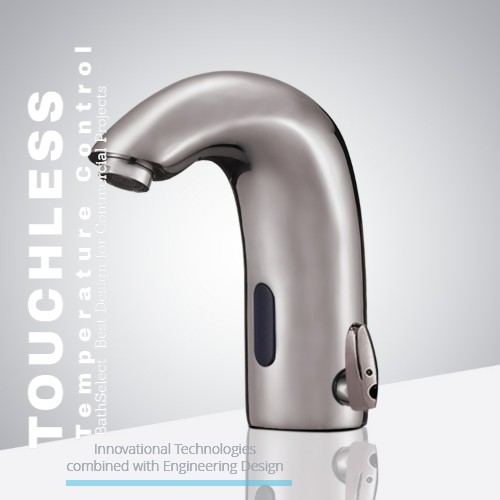
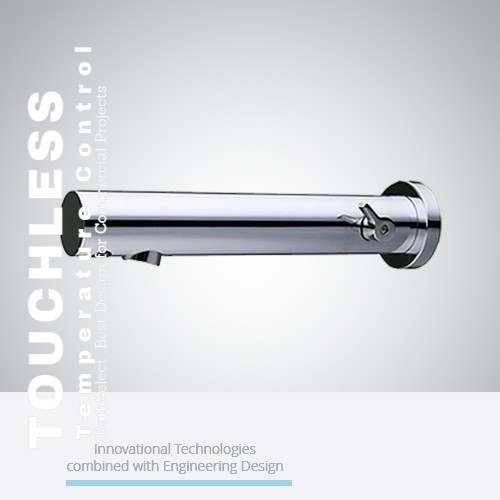
Temperature-control touchless faucets combine hands-free activation with either integrated mixing or a remote/preset mixing-valve strategy. For AEC teams, the key considerations are temperature management, activation behavior, installation requirements, and service access. Available configurations vary by model.
Design intent for specifiers:
coordinate hands-free activation, temperature management, service access, and visual integration within the bathroom specification.
Core Spec Drivers
Category
What to verify
Sensor platform
Sensor type, detection range, response behavior, and adjustment capability; verify the selected model's specifications.
Temperature strategy
Integrated user-adjustable mixing vs remote/under-sink preset mixing valve.
Power architecture
Battery, AC, or compatible hybrid configurations where offered; verify power requirements and service access by model.
Lifecycle
Valve and control access, wiring protection, finish care, replacement parts, and model-specific maintenance requirements.
Recent technical issues
For temperature-control specifications, confirm how the selected faucet senses users, mixes hot and cold supplies, receives power, and allows service access. Sensor platform and temperature-control architecture vary by model, so published product specifications should guide final selection.
How the System Works (Sensor → Solenoid → Flow)
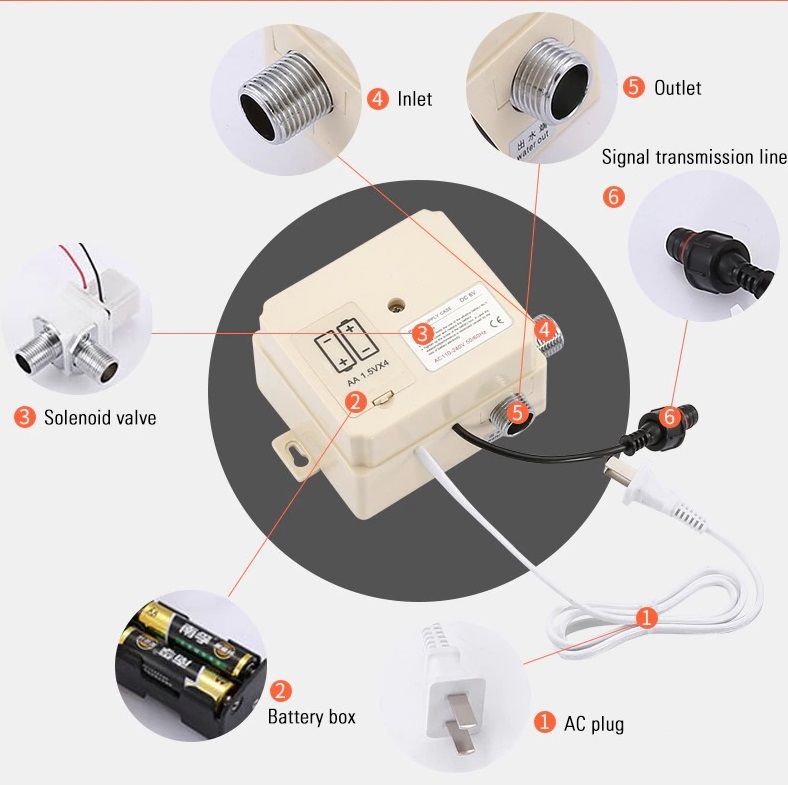
When hands enter the faucet's designed sensing field, the electronic control can activate the water path through a valve or solenoid assembly. Sensor technology and detection behavior vary by model; some configurations may use infrared or other advanced sensing methods.
Sensor specification note:
verify detection range, basin geometry, reflective surfaces, power requirements, and adjustment options for the exact model being specified.
Temperature Control: Two Common Architectures
A)Integrated mixing (user-adjustable at the body) – temperature can be tuned on demand.
B)Remote/preset mixing valve (under-sink or in-wall) – temperature is set during commissioning for consistent output.
Specify integrated mixing when the design intent is user-driven comfort and quick adjustment.
Specify remote mixing when you need tightly managed temperature policies and centralized controls.
Power Options for Spec-Grade Projects
Power architecture should be selected according to the faucet model, electrical access, service requirements, and project maintenance strategy. Battery, AC, or hybrid options may be available depending on the product.
Mode
Best fit
DC (Battery)
Retrofits, limited electrical access, or redundancy planning—verify service intervals and access.
AC (Transformer)
Projects with suitable electrical access where hardwired operation is supported by the selected model.
Hybrid
Projects where the selected faucet specifically supports combined AC and battery-backup operation.
Controls + Serviceability
For AEC workflows, long-term satisfaction depends on protected wiring, accessible control modules,
and solenoids/controllers that can be serviced without full replacement.
Spec tip: document service access (battery door, transformer reach, controller placement) and define
commissioning ownership before turnover.
Temperature-Control Touchless Faucet Picks
Compare selected models and verify temperature-control method, installation configuration, power requirements, and product specifications.
Temperature-control touchless systems combine hands-free operation with a defined mixing strategy while supporting contemporary bathroom design. Confirm flow, temperature-control method, sensor configuration, and installation requirements for each model.
Temperature-control touchless faucets can suit hospitality, healthcare, office, institutional, and residential bathroom projects where hands-free activation and managed water temperature are part of the design intent.
Related system planning: where a coordinated hands-free washroom is required, complementary soap systems can be specified separately. See:
touchless faucet + soap systems.
Temperature-Control Faucet FAQs
Do touchless temperature-control systems prevent scalding?
Hands-free activation alone is not an anti-scald device. Scald mitigation depends on the project's temperature strategy
(integrated mixing or a properly commissioned mixing valve). Define maximum outlet targets and commissioning steps in the spec.
Does sensor technology vary between models?
Yes. Sensor platform, detection range, adjustment capability, and response behavior can vary by model. Review the individual faucet specifications when coordinating the sensor with the basin and installation environment.
When should a project specify hybrid power (AC + battery backup)?
Specify hybrid power only where the selected faucet supports it and the project benefits from both hardwired operation and battery backup. Confirm electrical requirements and service access before specification.
Where do specifiers find documentation for approval workflows?
Architect-focused guidance for specifying hands-free faucets with integrated or preset temperature-control strategies, sensor activation, power planning, finish coordination, and service access.
Have Inquiries Contact Us
Temperature StrategyHands-Free ActivationPower PlanningMixing OptionsServiceability
IR vs ToFSpecification Overview
Temperature PlanningSensor Faucet Planning
Join Us
Find Out First
Get BathSelect emails of inspiration, new product releases, and spec-focused guidance for architects, designers, and contractors.
Specifier Snapshot
Use this page as a quick reference for sensor behavior + planning assumptions.
High DutyVandal ResistanceServiceability
Temperature-Control Pathways
Explore Temperature-Control Faucets
Temperature-control touchless faucets combine hands-free activation with a defined hot-and-cold water mixing strategy. For AEC teams, selection should account for temperature adjustment, sensor behavior, installation configuration, power requirements, and service access.
Specifier note: verify the selected model's temperature-control method, sensor configuration, power requirements, plumbing connections, and service access.
Architect Resources
Architectural Specification Resources
For design teams, coordinate faucet geometry, mounting style, finish, temperature-control method, basin relationship, and access to mixing and electronic components.
Design intent: finish choice is a performance spec—validate cleaning chemistry compatibility and scratch visibility.
Spec TrendsModel Insert
Temperature-Control Specification Visuals
AEC-styled visuals for sensor selection, power planning, temperature-control coordination, and finish considerations. Illustrative values are planning examples only; verify all requirements against the exact faucet model.
Performance decision matrix under cleaning chemistry and traffic.
Technical FAQs for AC/DC Sensor Mixing Strategys
Technical FAQs covering temperature-control architecture, sensor behavior, power configuration, installation, commissioning, and maintenance considerations for hands-free faucets. Product capabilities vary by model, so published specifications should guide final selection.
What temperature-control methods are common in touchless faucets?
Depending on the model, temperature may be adjusted through an integrated mixing control or managed by a remote or preset mixing valve. Confirm the exact configuration before specification.
Does sensor technology vary by faucet model?
Yes. Sensor type, detection range, adjustment capability, and response behavior can vary by faucet model. Review the individual product specifications.
What should be checked when coordinating the sensor with the basin?
Review detection range, basin geometry, reflective surfaces, spout position, and model-specific sensor adjustments to support reliable activation.
How is water temperature managed?
Temperature management depends on the selected faucet architecture. Integrated mixing allows adjustment at the fixture, while remote or preset mixing can establish a defined supply temperature.
What components should remain accessible for service?
Access to the valve or solenoid, controller, power components, supply connections, and any mixing device should be considered during installation planning.
How should power requirements be specified?
Confirm whether the selected faucet uses battery, AC, or a compatible hybrid configuration, along with electrical requirements and access for future service.
Does every model use the same mixing configuration?
No. Temperature-control architecture varies by model. Verify whether mixing is integrated, user-adjustable, remote, preset, thermostatic, or otherwise specified by the manufacturer.
What installation details should specifiers verify?
Verify mounting type, hole configuration, supply connections, mixing-valve location, power source, control-box placement, basin clearance, and service access for the selected model.
Why does faucet construction material matter?
Construction material can affect durability, corrosion resistance, weight, and maintenance. Confirm body material and finish specifications for each selected faucet.
How should integrated and preset mixing be compared?
Integrated mixing can provide adjustment at the faucet, while preset or remote mixing can support a defined temperature strategy. The appropriate approach depends on project requirements and the specific product.
What water-supply information should be checked?
Verify the model's required supply pressure, hot and cold connections, flow characteristics, and any mixing-valve requirements before installation.
Do power choices matter for temperature-control sensor faucets?
Yes. Power architecture affects installation and service planning. Use only the battery, AC, or hybrid configuration supported by the selected model.
What should be checked for long-term maintenance?
Confirm sensor access, valve or solenoid serviceability, mixing-component access, power-component access, cleaning requirements, and replacement-part availability.
How should finish performance be considered?
Review finish-care guidance, cleaning-product compatibility, abrasion exposure, and visual coordination with surrounding bathroom fixtures.
What should be verified before final specification?
Confirm temperature-control method, sensor configuration, mounting, supply requirements, power source, flow characteristics, finish, service access, and all model-specific installation documentation before approval.
Professional Temperature-Control Sensor Faucet Buying Considerations
Temperature-controlled touchless faucets are designed to improve hygiene, user safety, water conservation, and operational efficiency in commercial buildings, healthcare facilities, hospitality properties, educational campuses, airports, and modern residential projects. Before selecting a touchless faucet, buyers should compare sensor technology, adjustable temperature control, thermostatic or mixing valve compatibility, water efficiency, activation distance, power options, solid brass construction, maintenance accessibility, and long-term reliability. BathSelect
® offers an extensive collection of advanced touchless bathroom faucets, commercial commercial sensor faucets, hygienic automatic soap dispensers, and coordinated automatic sensor shower systems for demanding commercial and institutional environments. Industry professionals frequently reference EPA WaterSense bathroom faucet recommendations for water efficiency, IAPMO plumbing standards for code development, NSF public health standards for drinking water system components, WELL Building Standard for occupant health and wellness, and American Institute of Architects (AIA) resources when specifying commercial plumbing fixtures. These industry resources help architects, engineers, facility managers, contractors, healthcare planners, and building owners evaluate water conservation, code compliance, hygiene, accessibility, sustainability, and long-term building performance while selecting the most appropriate temperature-controlled touchless faucet for their project.



.jpg)