Water Efficiency Must Be Specified with Functional Performance
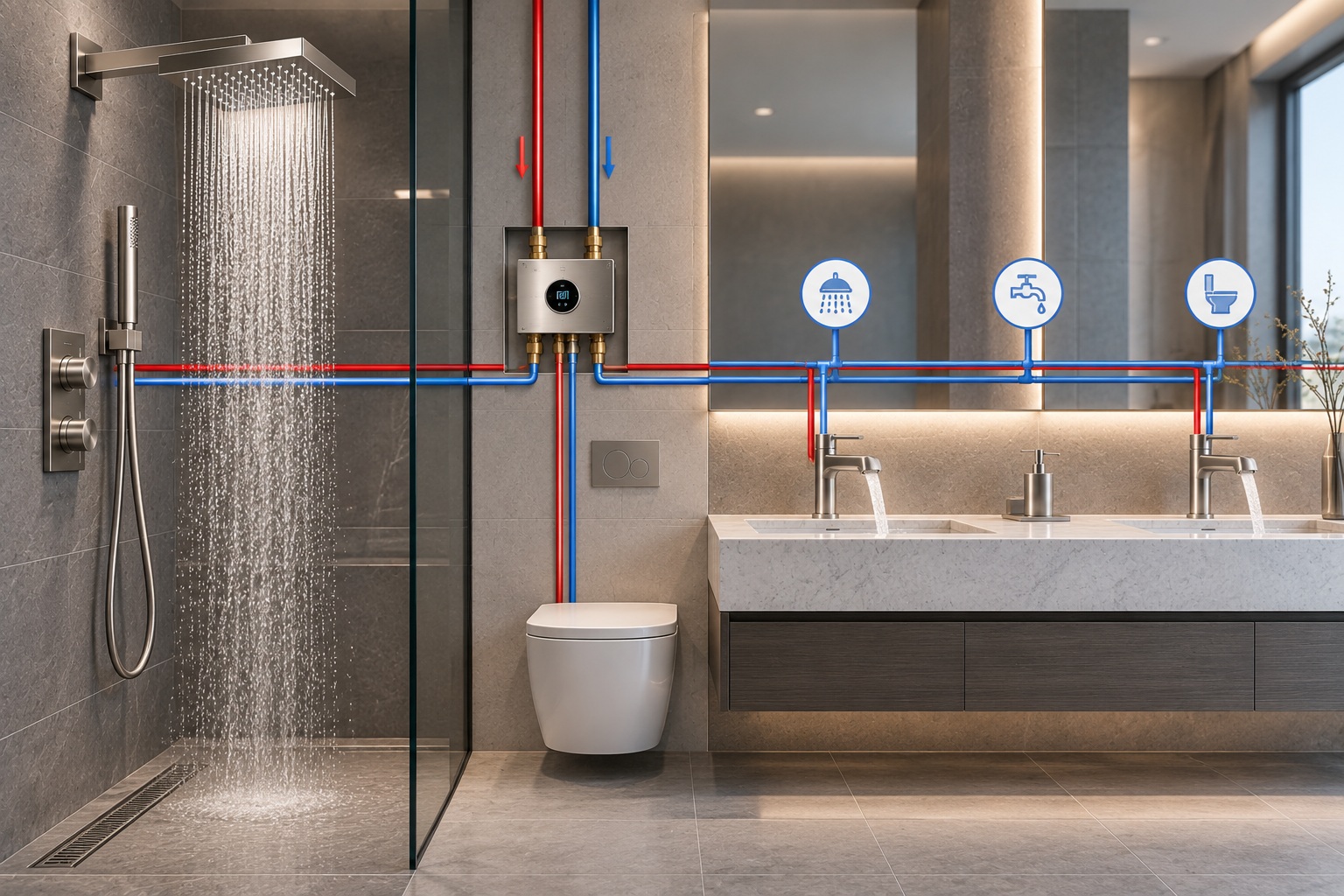
A lower flow rate is valuable only when the complete fixture still supports its intended use. Project teams should coordinate rated flow, pressure, spray pattern, sensing, temperature control, simultaneous demand, drainage and the user experience.
Performance criteria should be model-specific and measurable. Calculations establish the design basis; submittals confirm selected products; field verification establishes whether the installed system performs under representative project conditions.
Water-efficient bathroom fixture specification should connect the scheduled flow value to the hydraulic conditions, commissioning criteria, and maintenance practices that determine whether that performance is preserved after installation. Architects, Engineers, Consultants, and facility teams should evaluate available dynamic pressure, fixture diversity, simultaneous demand, outlet characteristics, temperature-control strategy, drainage capacity, sensor or valve settings, and service access before treating a published flow rate as the final measure of water performance. Project teams can evaluate pressure loss, supply capacity, and combined outlet demand through BathSelect Hydraulic Engineering, document actual flow, temperature, sensing, outlet operation, and corrective testing through the Bathroom Fixture Installation, Commissioning & Handover guide, and preserve access to aerators, filters, cartridges, valves, sensors, and other field-service components through BathSelect Serviceability Engineering so water-efficiency targets remain measurable and maintainable throughout the installed life of the fixture rather than existing only as a value on the original product schedule.
Coordinate Pressure, Simultaneous Demand and Sensitive Components
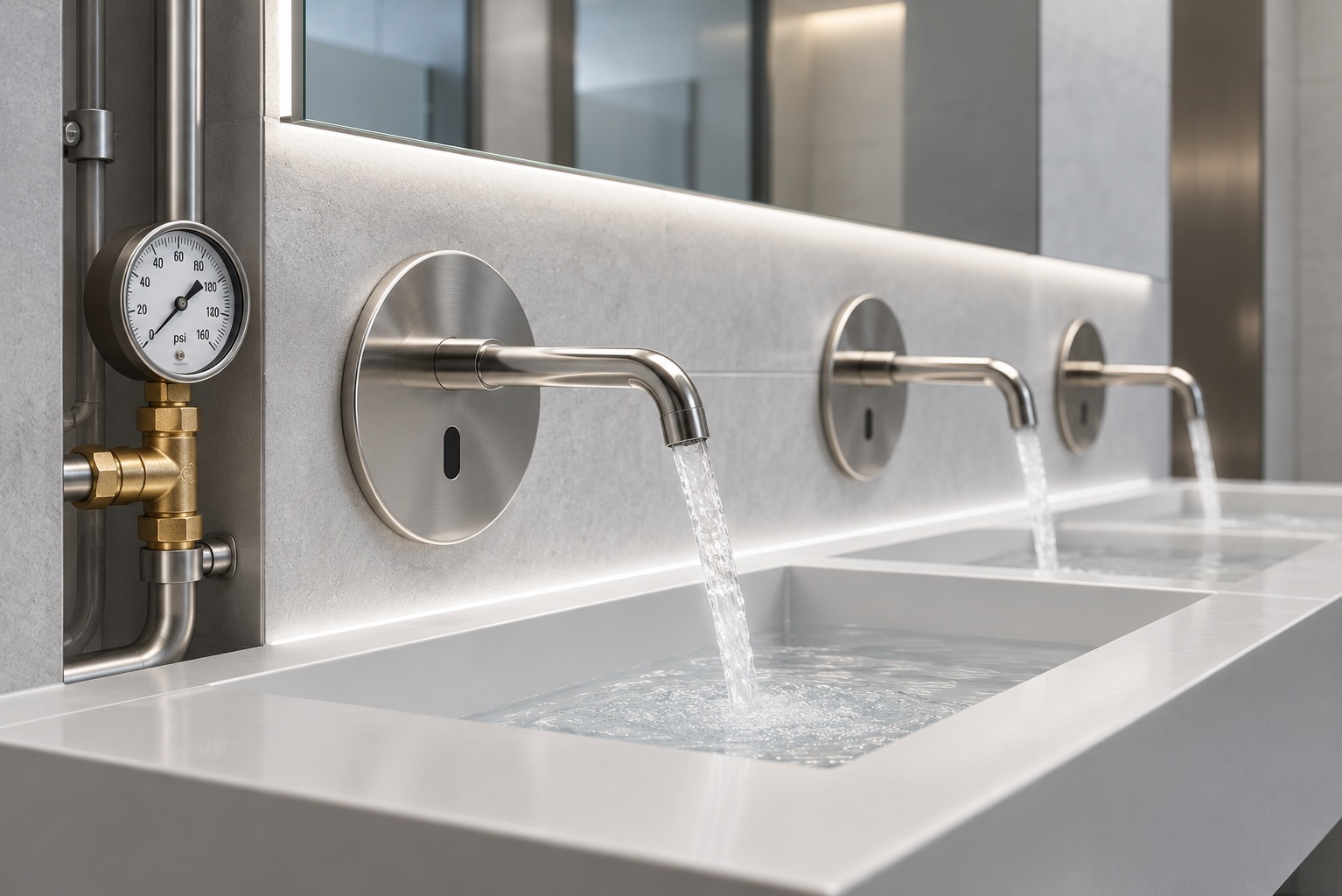
Coordinate system flushing before final fixture connections according to project and product requirements. Debris can affect cartridges, filters, aerators, solenoids, check valves, thermostatic controls and small water passages.
Preparation Step
Control Objective
Isolation
Identify accessible shutoffs and prevent uncontrolled discharge
Flushing
Remove construction debris before sensitive components are exposed
Filter Inspection
Confirm strainers and filters are clean, oriented and accessible
Pressure Check
Confirm project pressure is within exact-model limits
Leak Test
Inspect connections and concealed assemblies before closure and turnover
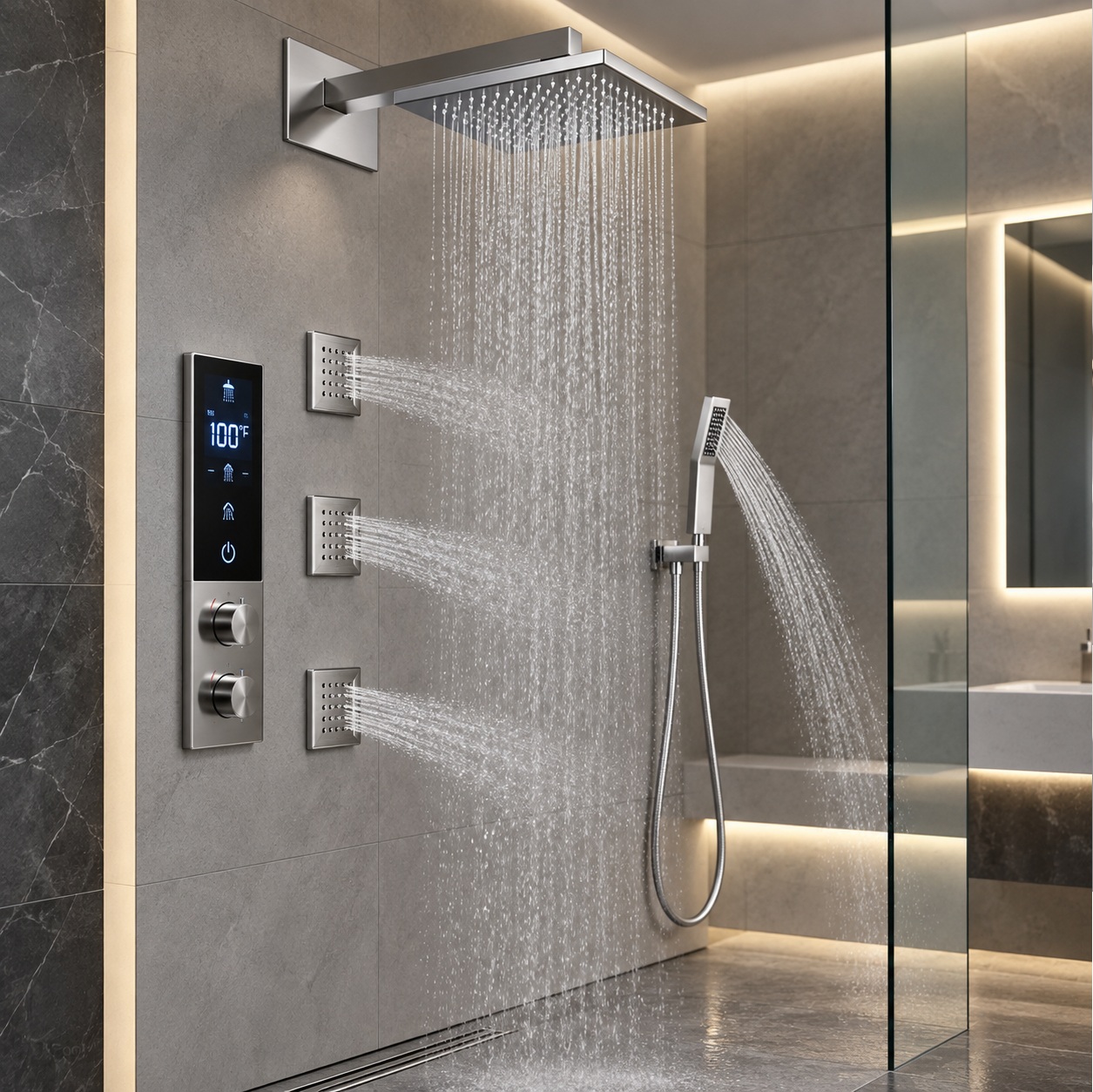
Temperature Setup
Adjust the approved control method under actual operating conditions
Record
Retain pressure, temperature, leak and corrective-action results
See
Hydraulic Engineering for related planning principles. Plumbing calculations and water-treatment procedures remain project-specific.
Fixture Performance Matrix
Verify Output Without Separating It from Function
Performance Test
Acceptance Question
Required Record
Mounting
Is the fixture secure, aligned and undamaged?
Location and installer
Operation
Do handles, valves, diverters and moving parts operate correctly?
Observed condition
Flow
Does output match the intended configuration and project conditions?
Test condition and result
Temperature
Does the approved temperature-control strategy function as required?
Setting and measured condition
Drainage
Does water land, drain and clear without avoidable leakage or overflow?
Observed performance
Connections
Are supplies, drains and concealed joints free of leaks?
Inspection and corrective action
Finish
Is the visible product clean and free of installation damage?
Condition and exception log
Touchless Faucet Water Performance
Verify Flow, Cycle and Shutoff in the Selected Sink
Commissioning Item
Verification
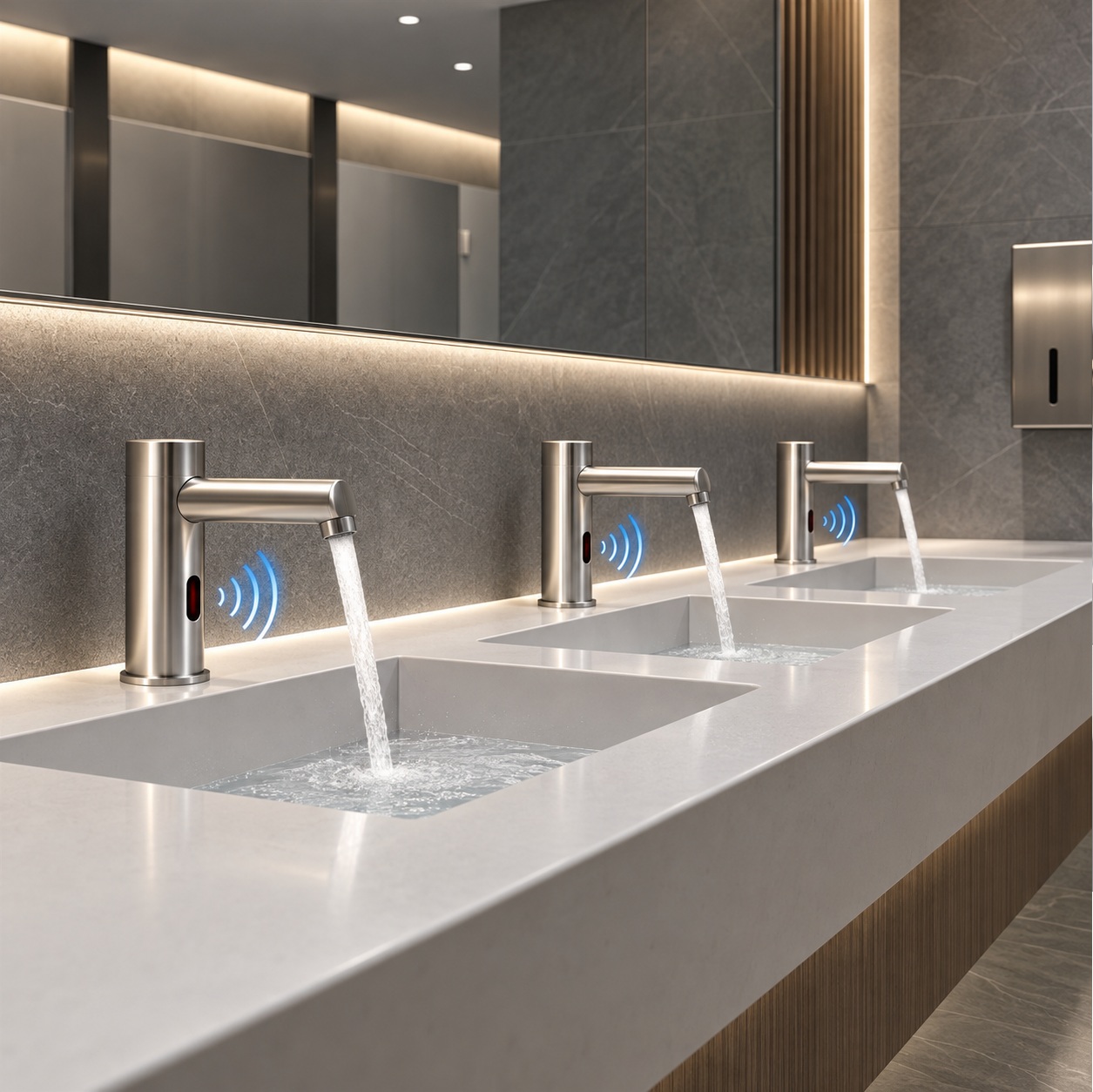
Power
Correct battery, transformer, voltage, connections and access
Detection
Reliable activation for the intended user approach without avoidable false triggering
Water Landing
Flow reaches the usable bowl area without excessive splash
Shutoff
Water stops consistently under intended operation and time limits
Temperature
Approved mixing or tempering arrangement is adjusted and documented
Flow Device
Correct model-specific outlet and flow rating are installed
Service Components
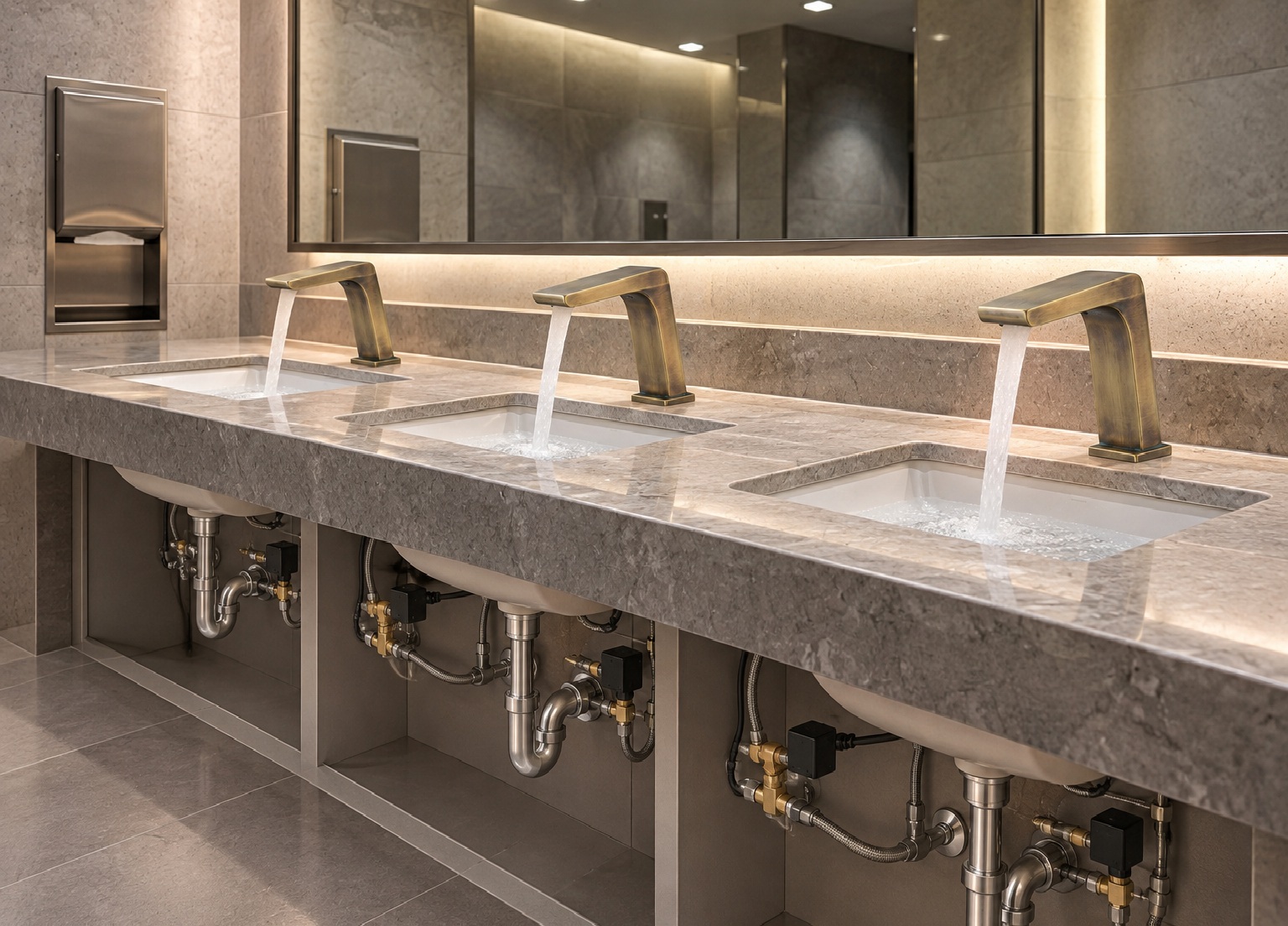
Filter, solenoid, control box, isolation and power remain accessible
Settings
Final adjustments and responsible technician are recorded
Do Not Defeat Approved Performance During Maintenance
Maintain the specified outlet, aerator, spray face, filter, sensor and control settings. Unapproved replacement parts or field adjustments can change flow, cycle time, sensing, spray quality and water use.
Track leaks, run-on, false activation, pressure complaints, temperature instability and abnormal consumption. Investigate system conditions before assuming the fixture alone is responsible. See
Material Engineering and Quality Engineering.
Owner Performance Package
Transfer the Criteria Needed to Maintain Verified Results
Performance Record
Required Content
Approved Schedule
Exact models, flow options, quantities and locations
Product Documents
Product data, rated output, pressure range and operating instructions
Commissioning Records
Measured flow, temperature, cycle, sensing and functional results
Access Record
Isolation, filters, valves, controls, mixing devices and service access
Finish Care
Approved methods that preserve outlets, sensors, seals and finishes
Warranty
Applicable product terms, records and support process
Parts & Spares
Correct replacement outlets, filters, cartridges, sensors and controls
Training
Performance criteria, monitoring, adjustment limits and escalation contacts
A generic maximum flow without an exact model, reference pressure or test basis is difficult to verify and may not protect functional performance.
Pressure Ignored
Available and dynamic pressure affect output and simultaneous operation; verify design assumptions against actual project conditions.
Demand Not Calculated
Ignoring fixture counts, diversity, simultaneous outlets and peak occupancy can understate supply, hot-water or drainage demand.
Drainage Uncoordinated
High-output showers and simultaneous functions require drainage coordination under the maximum approved operating condition.
Unapproved Flow Device
Replacing an approved aerator, outlet or control with a different component can change flow, spray, pressure response and certification basis.
No Field Verification
Without measured field results, the team cannot confirm that selected products and installed systems meet the stated performance criteria.
Frequently Asked Questions
Water Efficiency and Performance Questions
Is lower flow always better?
Not necessarily. Select the lowest output that still meets intended use, applicable requirements and acceptable functional performance.
At what pressure is flow rated?
Use the pressure stated in the exact product data and test method. Do not compare flow values without understanding their reference conditions.
How is simultaneous demand handled?
Use project hydraulic calculations and exact outlet configurations to evaluate peak combinations, supply pressure, hot-water demand and drainage.
Should installed flow be verified?
Yes when required by the project. Define representative conditions, calibrated instruments, sample scope, tolerances and corrective action before testing.
What can change water use?
Outlet substitutions, pressure changes, leakage, run-on, sensor settings, cycle time, simultaneous use and unauthorized adjustments can all change consumption.
What belongs at handover?
Transfer exact models, rated data, approved settings, measured results, replacement components, maintenance limits and monitoring responsibilities.
From Water-Use Criteria to Verified Performance.
BathSelect supports architects, engineers and project teams with exact-product data, coordinated systems, performance planning, finish options and project support.
Professional responsibility: BathSelect information does not replace adopted plumbing or energy codes, hydraulic calculations, manufacturer data, testing requirements or qualified professional judgment. Performance varies by exact product, configuration and field conditions. Verify current standards, rated data, pressure, supply, drainage and acceptance criteria before specification and approval.




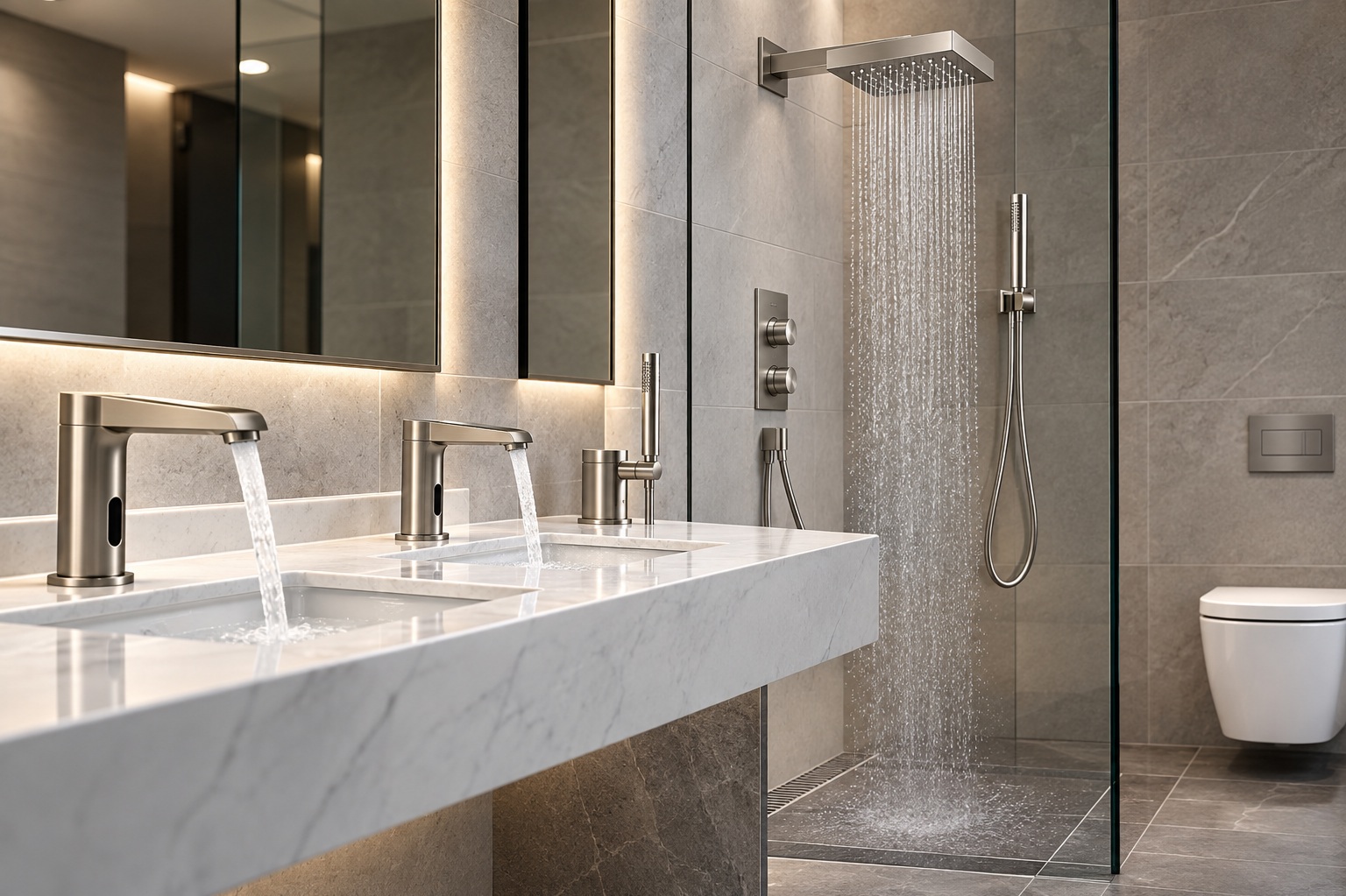 WaterSense Fixture
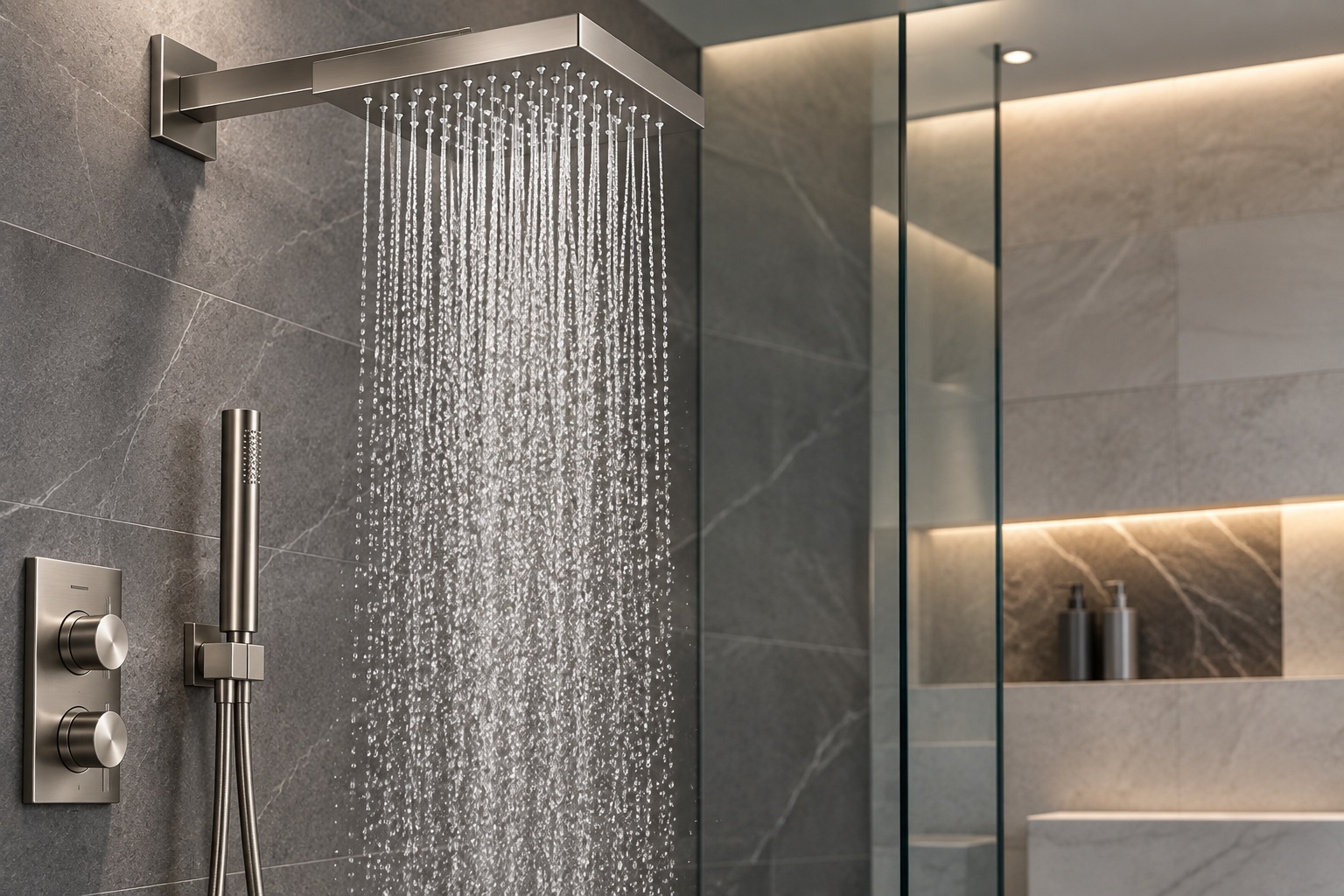 Low-Flow Shower
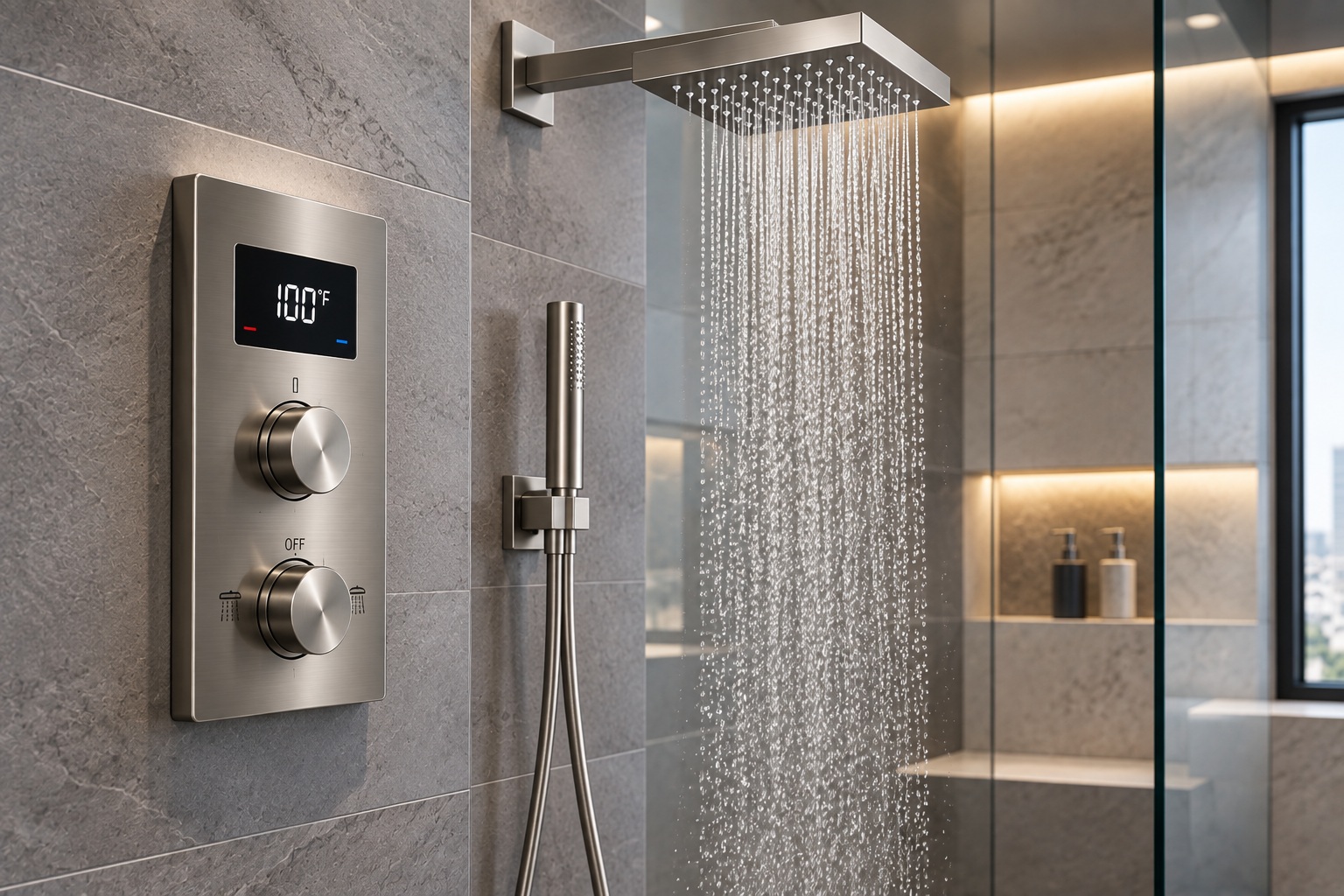 Thermostatic Water
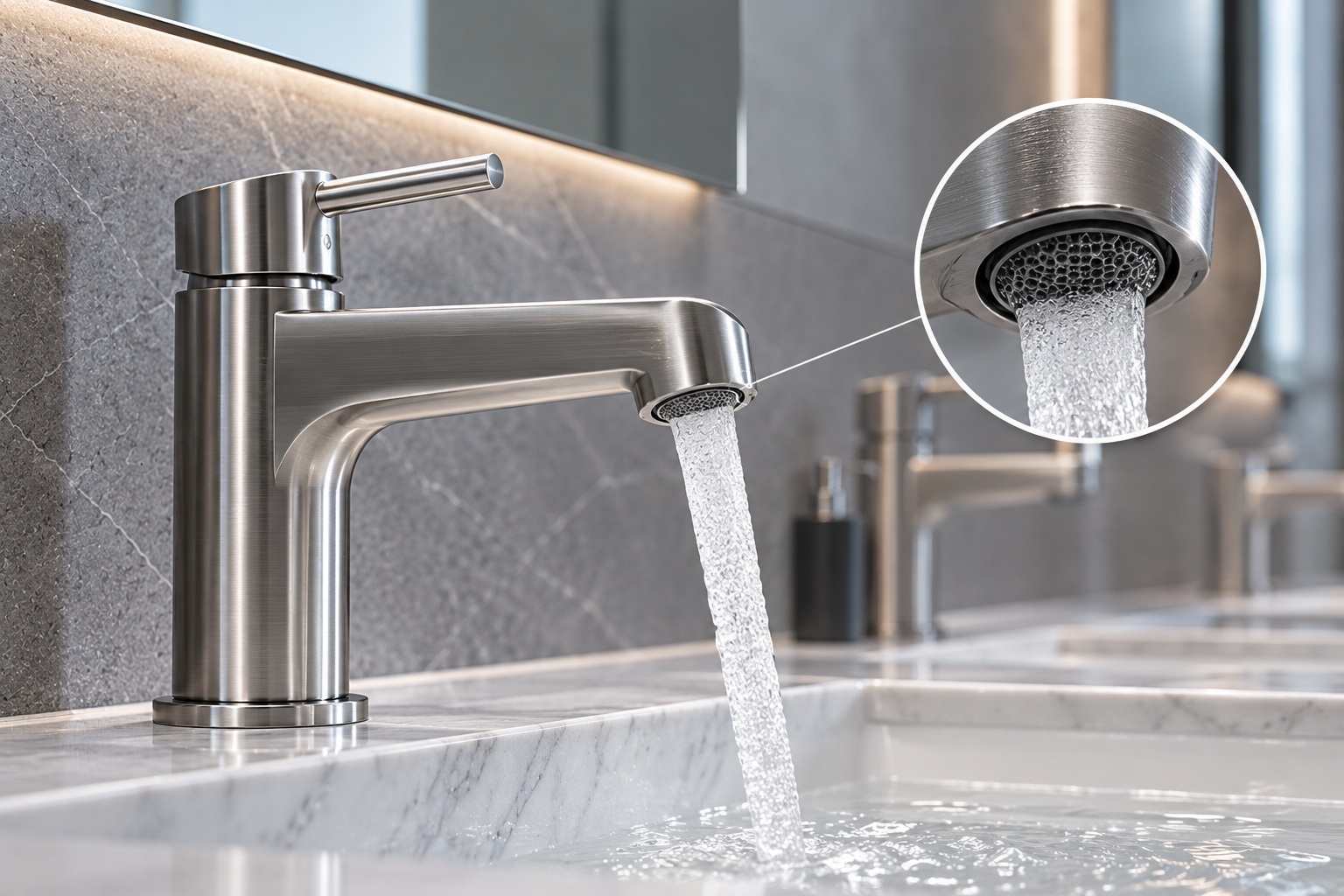 Faucet Flow &
 Whole-System Water