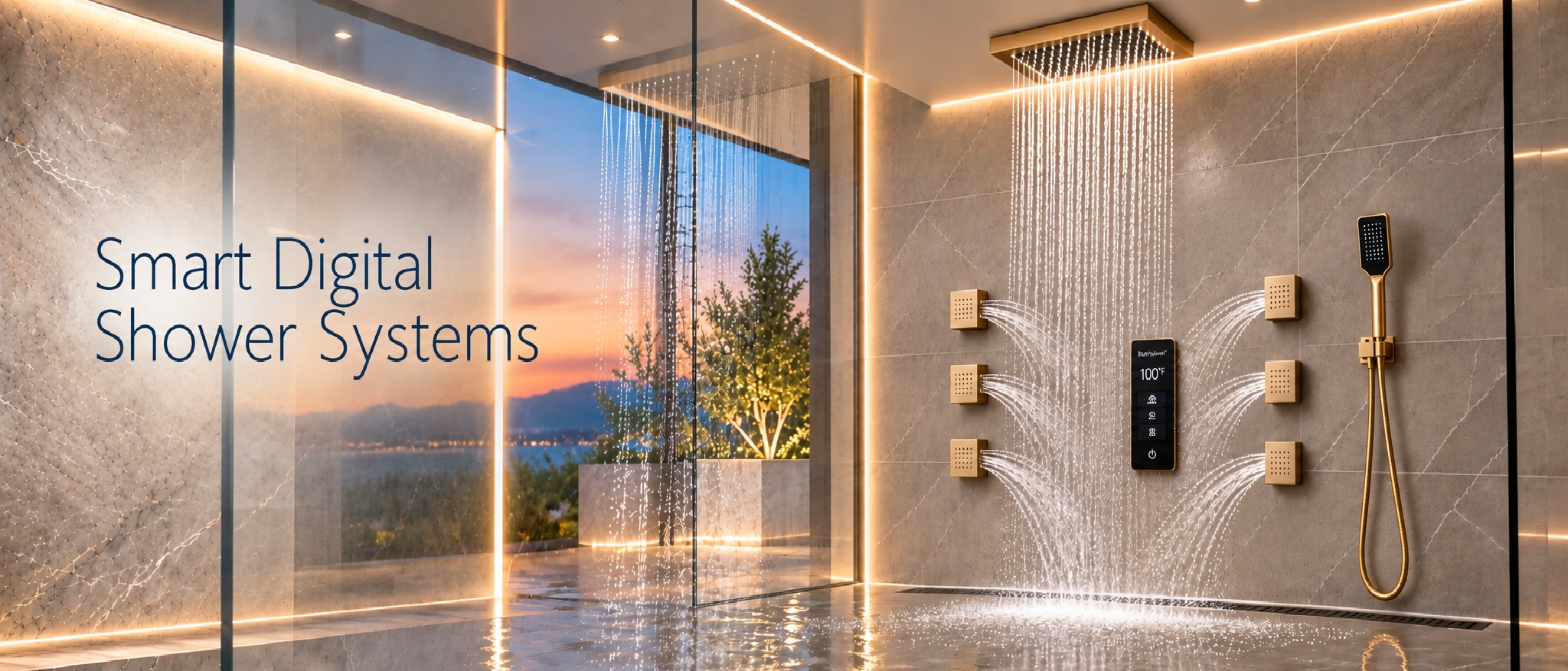
Smart Digital Shower Systems
Electronically controlled shower environments combining precise user interfaces,
thermostatic water control, selectable outlets and coordinated architectural finishes.
Digital
Temperature
Interface
Electronic
Valve
Control
Selectable
Outlet
Zones
Connected
Options by
Model
Project
Specification
Support
From Mechanical Trim to Digital Interface
What Defines a Smart Digital Shower System?
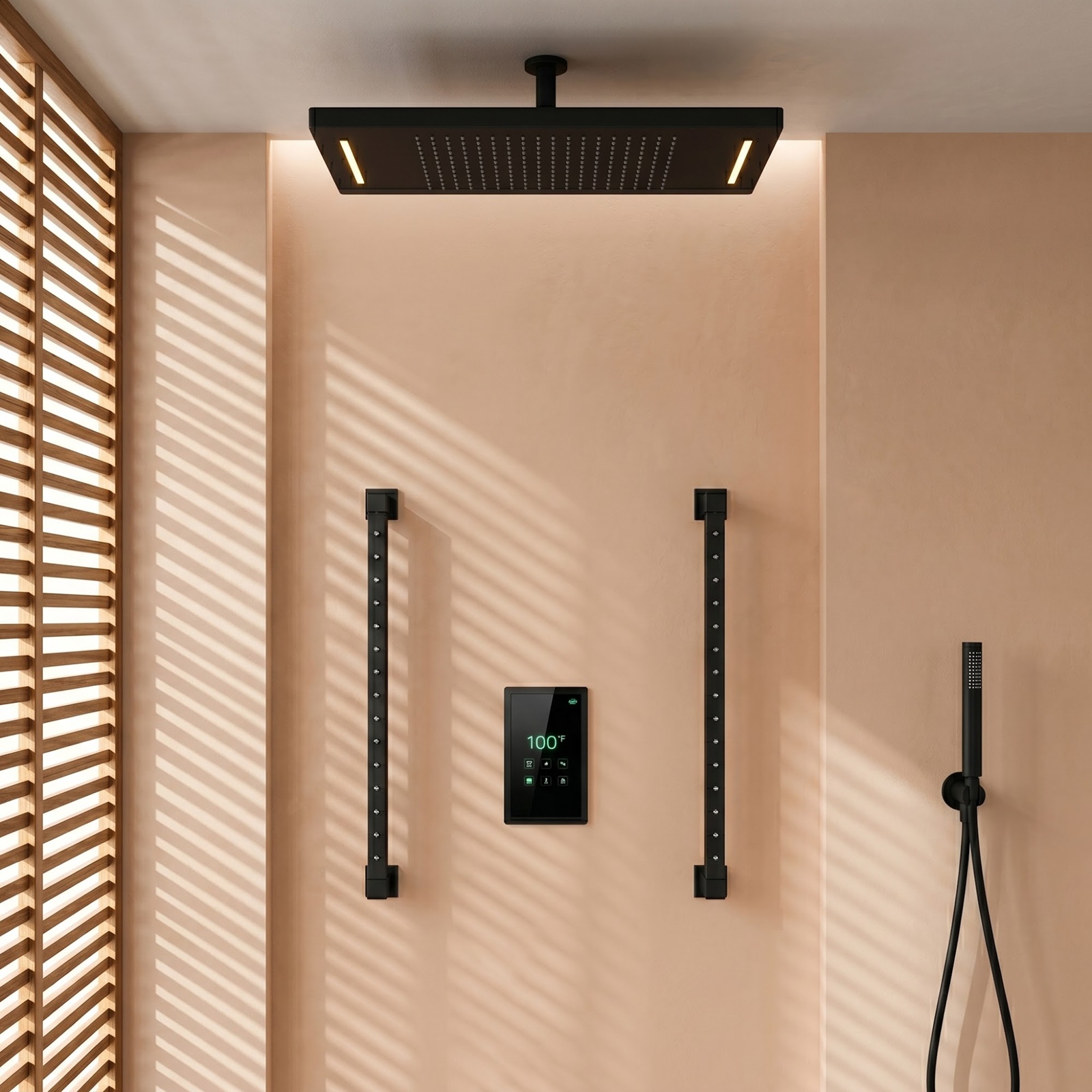
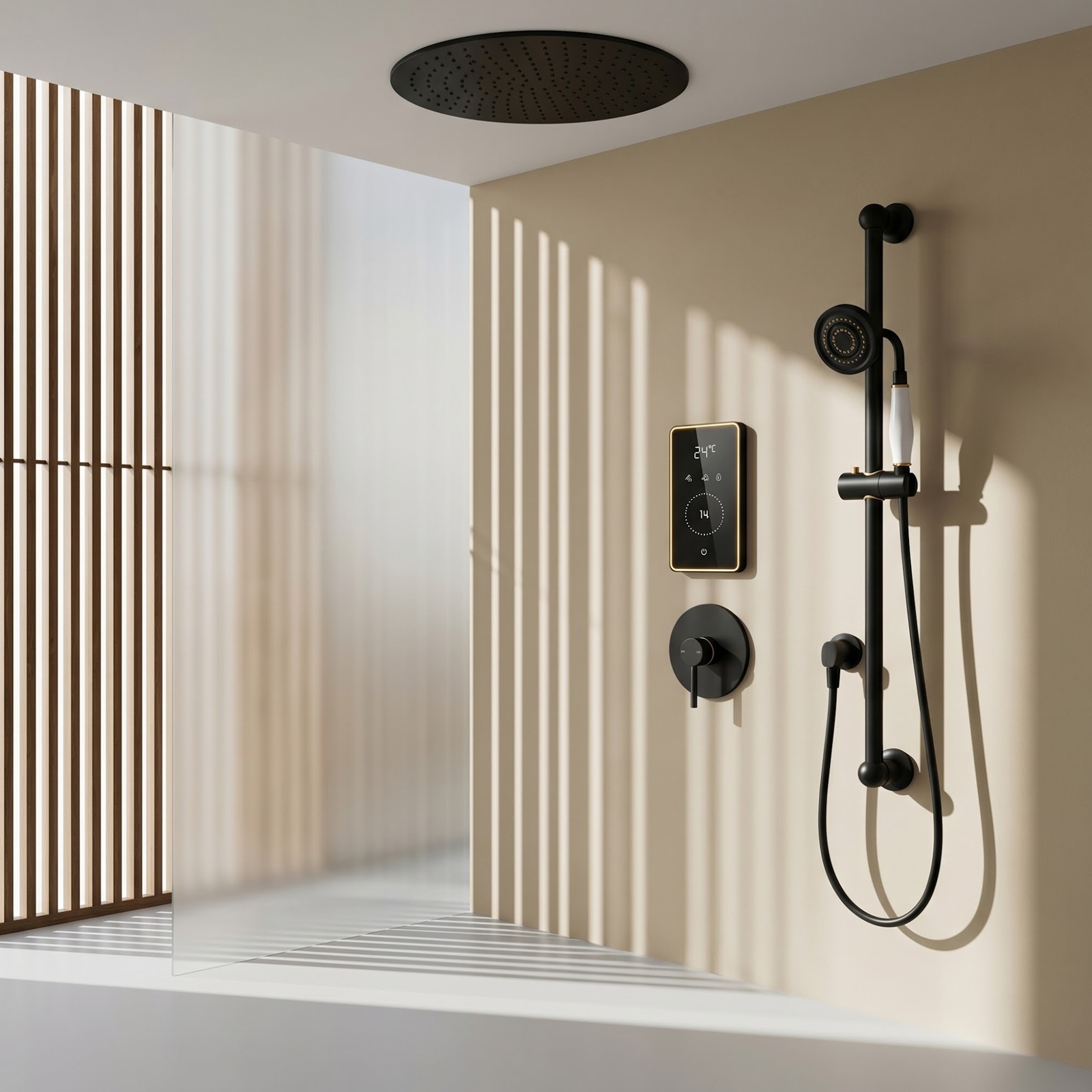
A digital shower uses an electronic interface to command a compatible valve or control module. Depending on the model, the user may select temperature, start or stop water, choose outlets, view system status or recall saved settings. Connected functions such as an app, remote control, wireless communication or voice integration are separate capabilities and must be verified model by model.
The visible interface is only one part of the system. Successful installation requires coordination among the controller, electronic valve, temperature sensing, power supply, water outlets, mixing arrangement, plumbing capacity and service access. These components should be specified as a compatible system rather than assembled from unrelated products.
Digital Shower Configurations
Select Technology According to the Required User Experience
Not every project needs the same level of automation. A straightforward digital temperature controller may be appropriate for one bathroom, while another may require independent outlet zones, remote start, stored profiles or integration with a larger room-control strategy. Extra features should be selected only when their use and service requirements are understood.
Digital-System Coordination
Four Reviews Before Electrical and Plumbing Rough-In.
The controller, electronic valve, outlets and building services must be coordinated before concealed work is closed.
Digital Temperature and Flow Control
Electronic Precision Still Depends on Hydraulic Conditions
A digital interface can present a precise setpoint, but actual performance depends on hot- and cold-water supply temperatures, dynamic pressure, valve capacity, flow demand and correct installation. The selected control valve must be rated for the project’s supply conditions and the outlet combinations it will operate.
The responsible plumbing professional should verify pipe sizing, pressure loss, hot-water recovery and the maximum simultaneous flow. A controller cannot compensate for insufficient supply, an undersized valve or inadequate heater capacity.
Temperature protection must be confirmed through the complete listed or certified assembly and the requirements adopted by the authority having jurisdiction. Marketing terms such as “thermostatic,” “digital” or “precision” do not replace model-specific technical documentation.
User Interface and Control Location
Make the Shower Understandable Before Water Begins to Flow
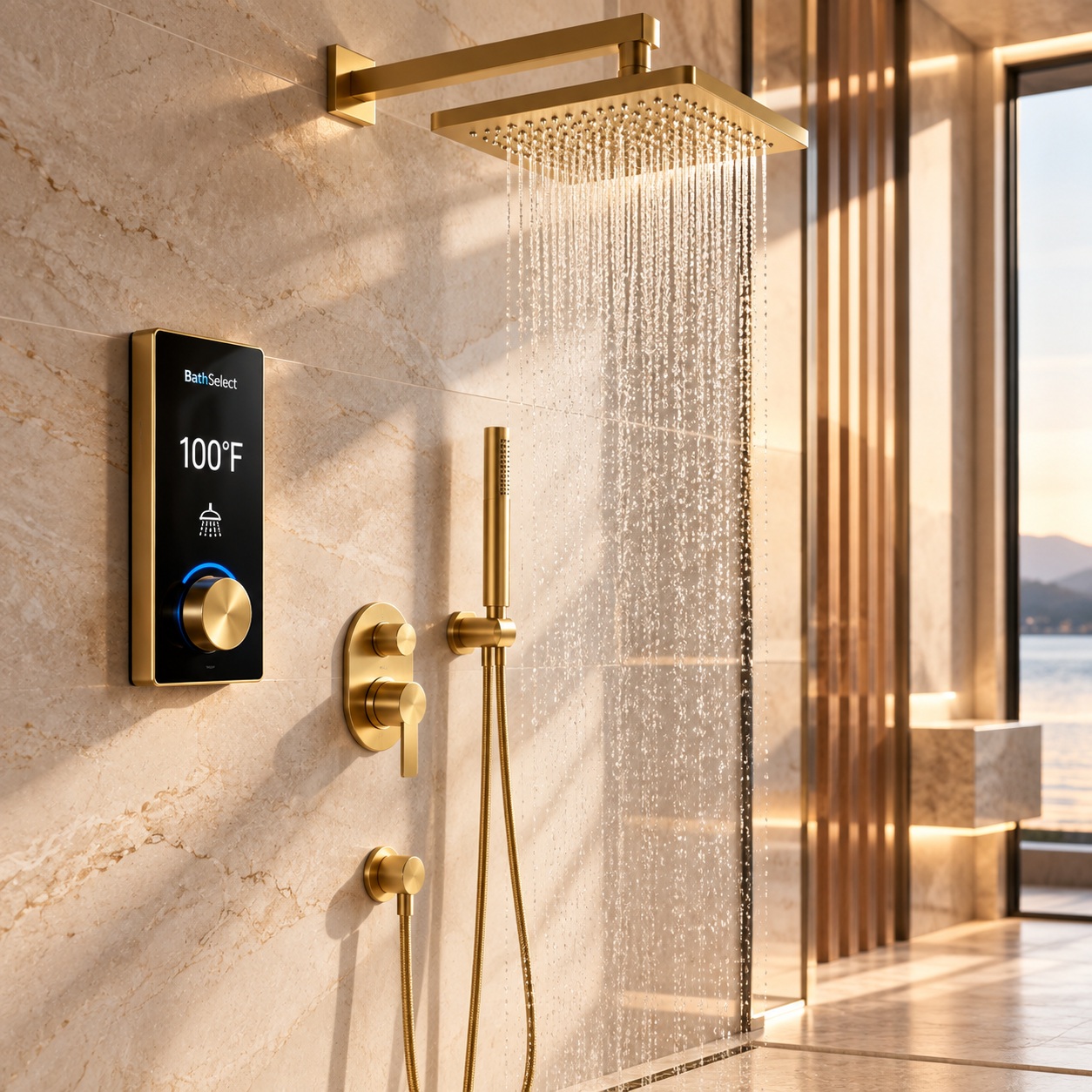
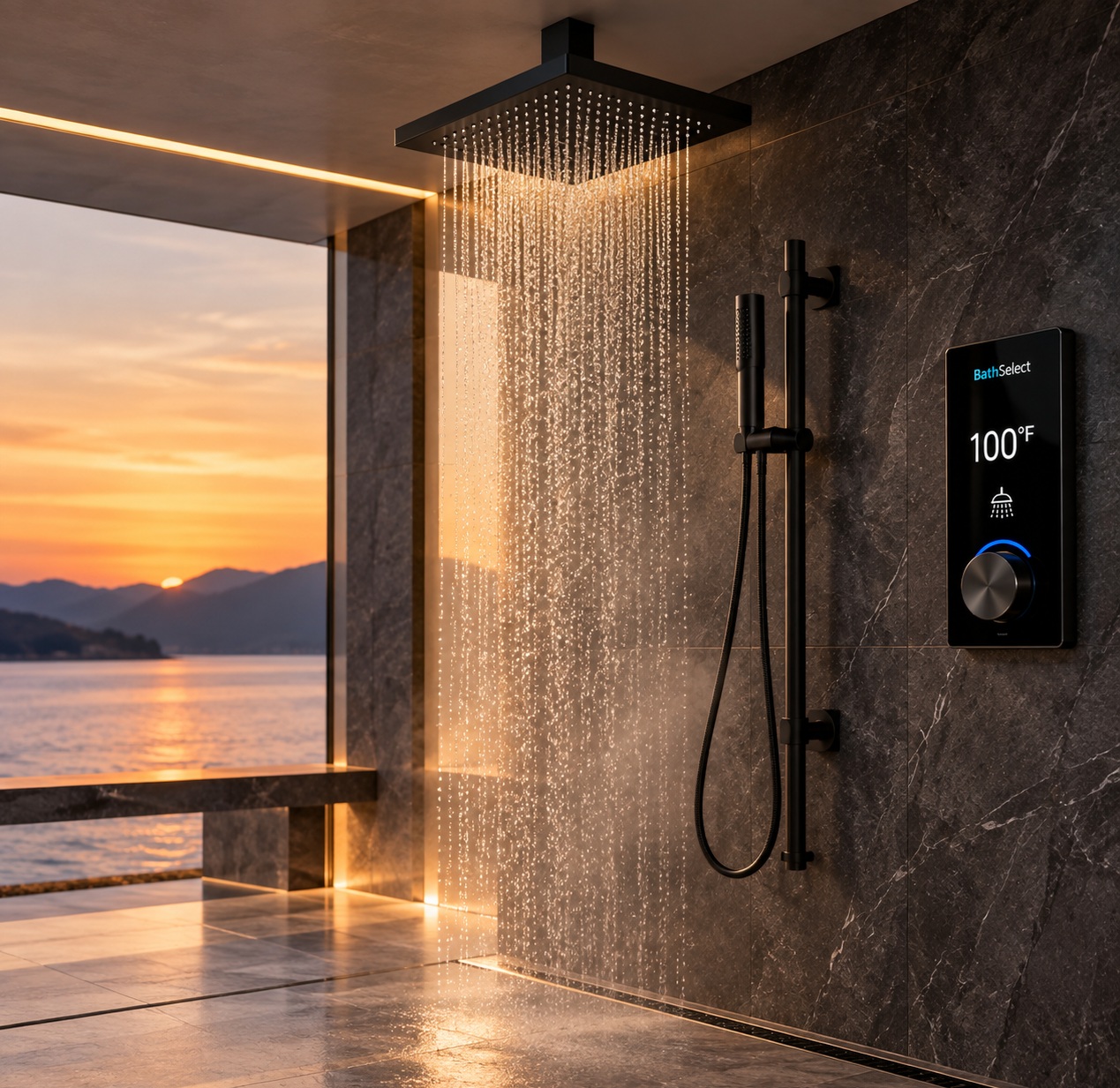
The interface should clearly communicate temperature, active outlet and system status. Controls should be located where the user can operate them without standing beneath an active spray. A second entrance control may be useful where supported by the system and justified by the room layout.
Touch targets, display contrast, symbols, audible feedback and screen behavior should suit the intended users. Presets should be simple to select and simple to override. In hospitality projects, the system must remain intuitive for a first-time guest who has not read a manual.
The project should also define behavior after a power interruption: whether settings return to default, whether water remains closed and what steps are required to restore operation.
Power, Wiring and Wet-Area Coordination
Identify Every Powered Component Before Walls Close
Digital shower systems may include a power supply, controller, electronic mixing valve, temperature sensor, communication cable, illuminated outlet or additional interface. Required voltage, transformer location, cable length, connection type and environmental protection vary by model.
Power and control modules should be accessible for testing and replacement without destructive work. Equipment must be installed in approved locations in accordance with its instructions, listing and applicable electrical requirements. Low voltage should not be interpreted as permission to ignore wet-location rules.
Where battery backup or another continuity feature is required, it must be specified explicitly and verified in the selected system. The project should not assume that a digital shower remains operational during loss of power.
Connected Features and Data
Treat Connectivity as a Lifecycle Commitment
If a shower includes Wi-Fi, Bluetooth, an app, cloud service or integration with another platform, the owner should understand what data is created, where it is processed, which permissions are required and whether the core shower functions remain usable without the connection.
The specification should address account ownership, password management, device identification, secure configuration, software updates, support duration, reset procedures and transfer to a future owner or operator. Networked controls in hospitality or multifamily projects may also require review by the owner’s information-technology and privacy teams.
The
NIST consumer IoT cybersecurity program provides a useful framework for evaluating connected-product configuration, data protection, access control, software updates and lifecycle documentation.
Smart digital shower specification should coordinate electronic controls, thermostatic mixing, outlet zoning, valve capacity, power requirements, user presets, and service access as one integrated control architecture. Project teams can compare complete digital shower system configurations, evaluate smart and dual shower systems for multi-outlet applications, and review compatible shower mixer valve configurations when aligning the interface, concealed water-control components, operating modes, and long-term service requirements.
Outlet Zoning and Complete Shower Performance
Program Only the Combinations the Plumbing Can Support
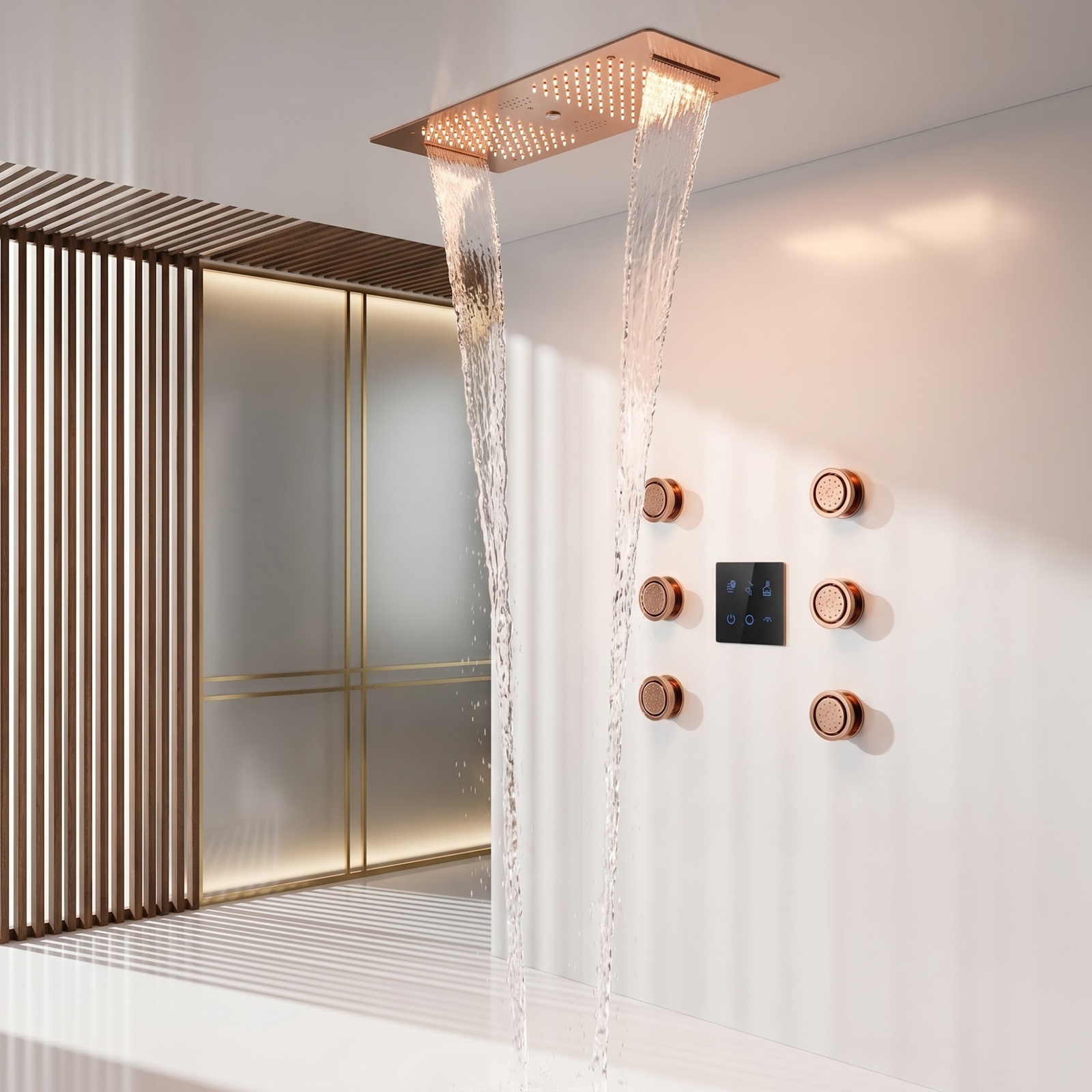
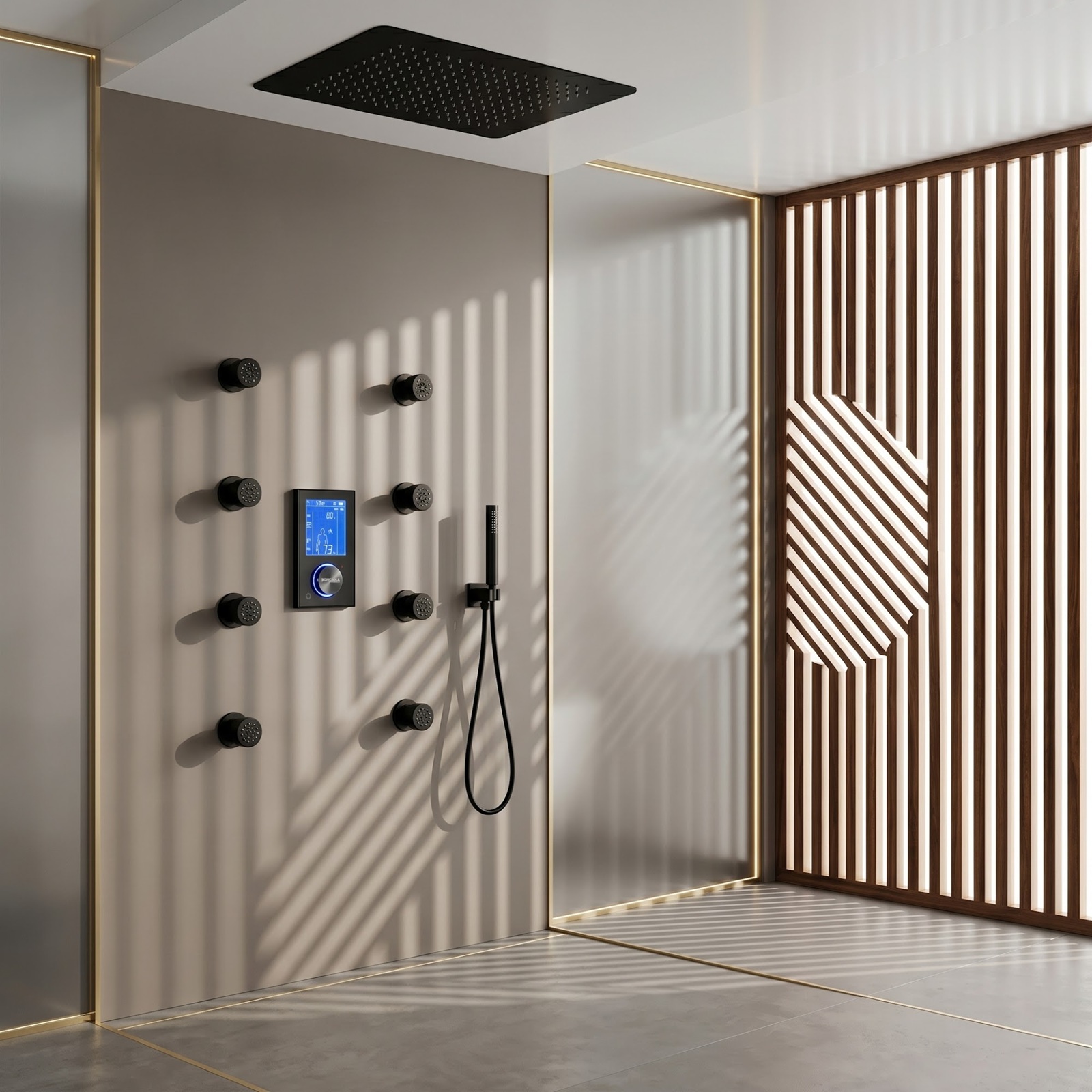
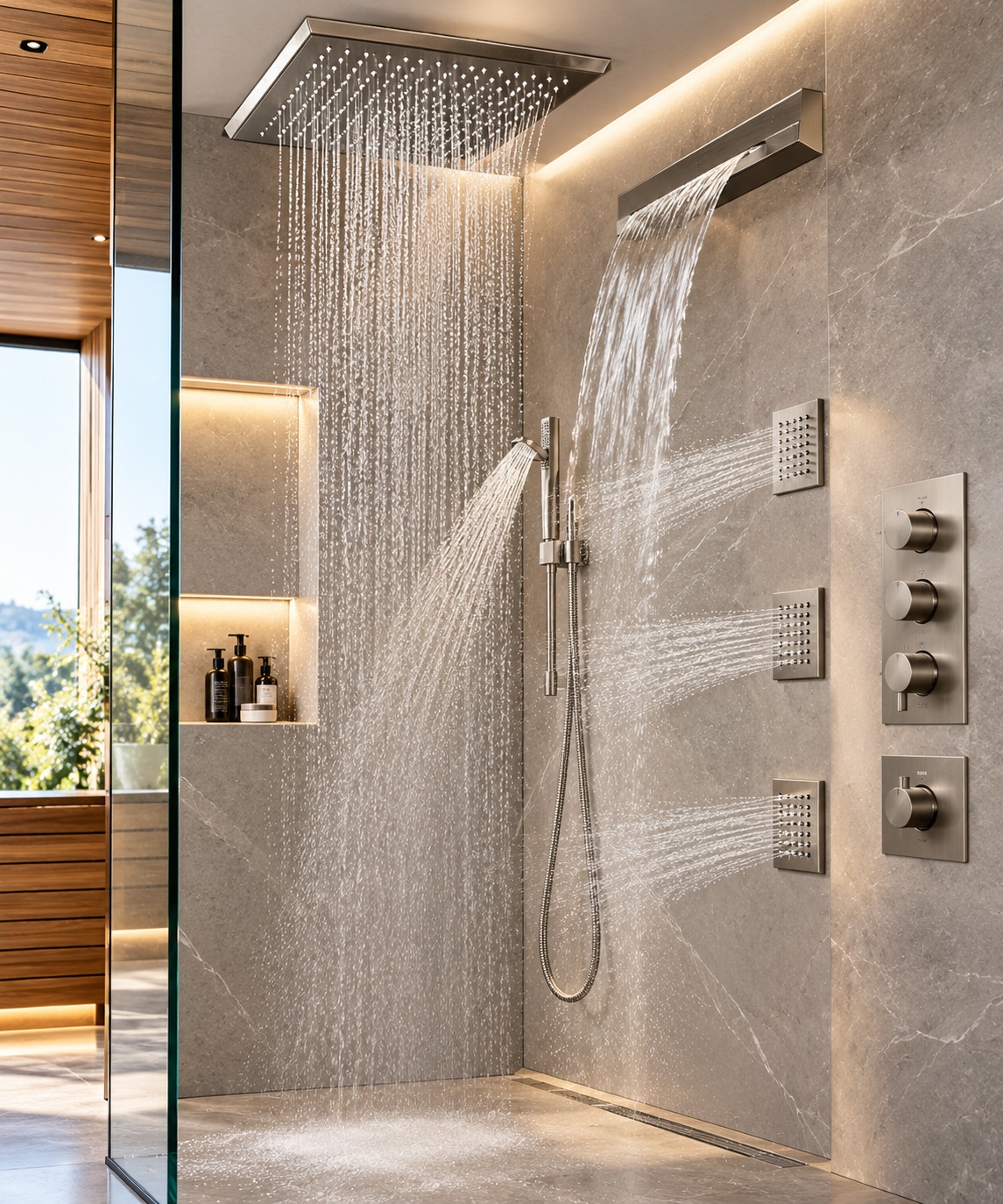
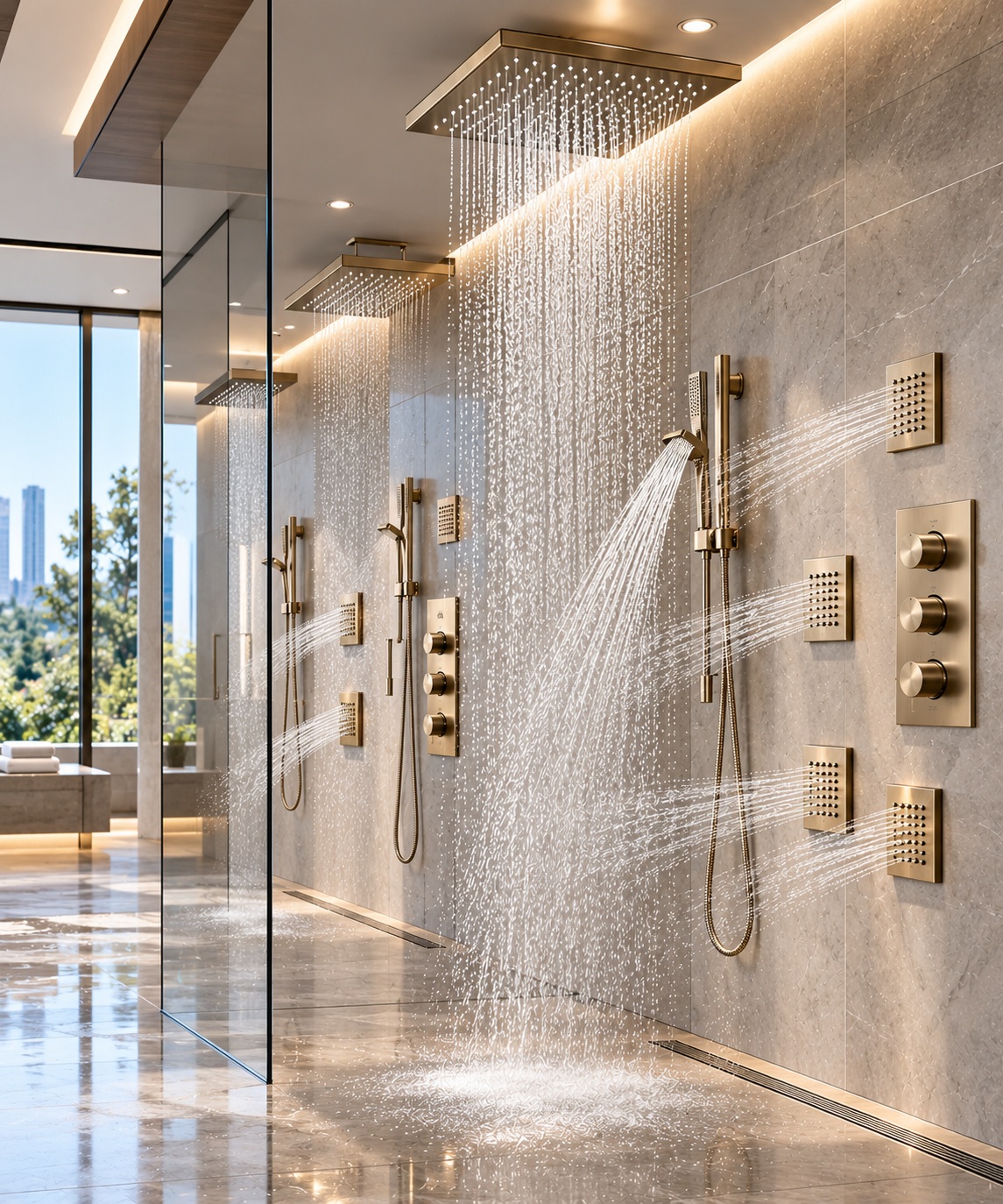
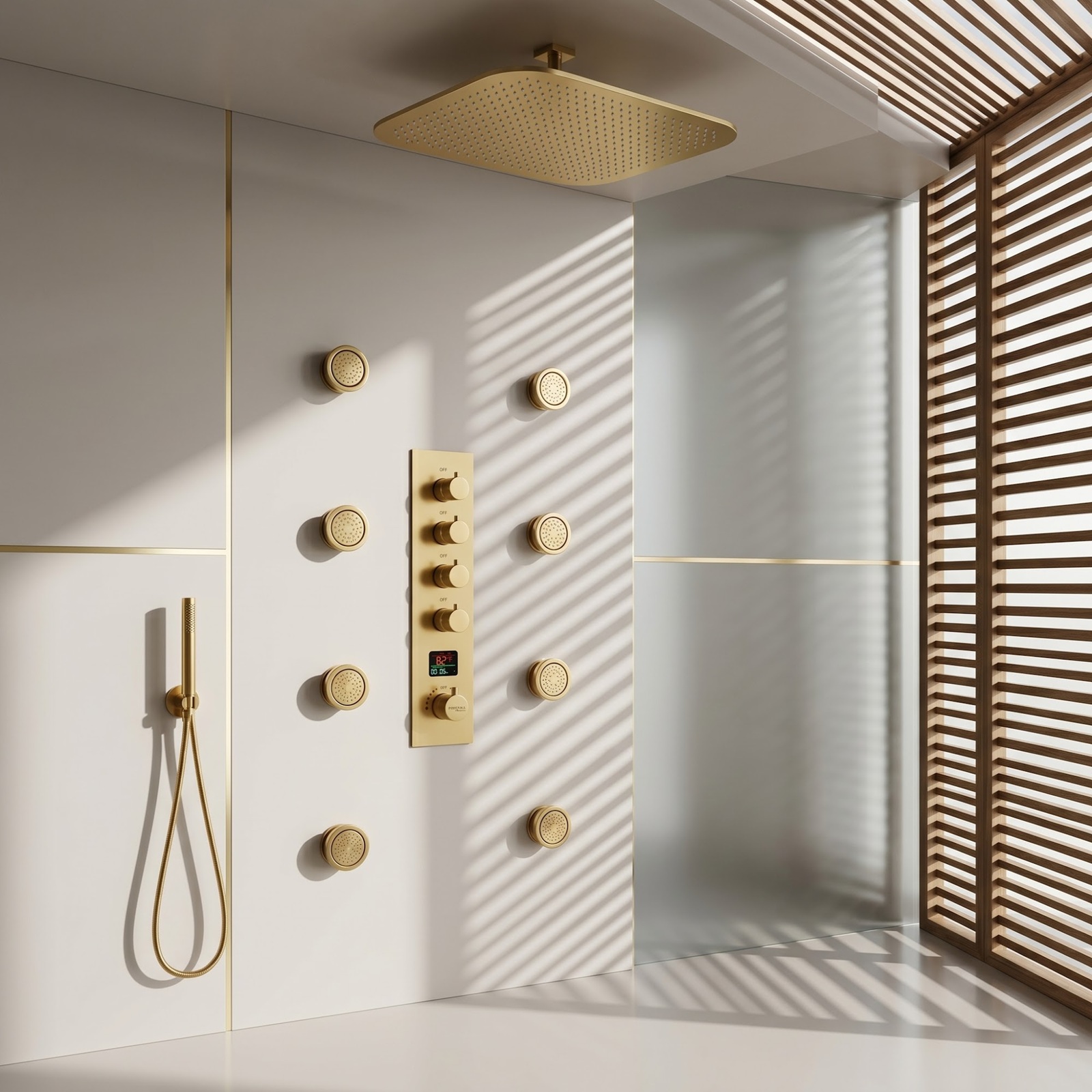
Digital controls can make multiple shower outlets easy to select, but the permitted combinations must reflect the actual capacity of the valve, supply piping, hot-water system and drain. Rainfall, waterfall, body sprays and hand showers should not be enabled simultaneously unless the complete system is designed for that demand.
Each zone should have a clear name or symbol, and the commissioning record should document which combinations are available. If software settings limit maximum flow or simultaneous outlets, those settings become part of the project configuration and should be protected from accidental change.
Water and Energy Management
Measure Runtime and Combined Flow, Not Technology Labels
A smart interface does not automatically reduce water or energy use. Savings depend on outlet flow rates, warm-up behavior, shower duration, standby consumption, hot-water efficiency and the number of devices permitted to operate together.
The EPA’s
WaterSense showerhead guidance explains independently certified showerhead efficiency and performance. Its technical sheet recommends determining maximum flow when multiple showering devices operate within one compartment.
Any warm-up, pause or automatic shutoff function should be verified against the model documentation and tested during commissioning. The operational result matters more than the feature name.
Commissioning, Updates and Service Access
A Digital Shower Requires a Digital Handover
Commissioning should confirm temperature accuracy, maximum-temperature settings, outlet mapping, flow, drainage, screen behavior, presets, connected features and response after power interruption. The final configuration should be recorded for the owner.
Service access is required to the electronic valve, power supply, filters, control connections and replaceable modules. The handover package should include model numbers, wiring and plumbing diagrams, reset instructions, software or app requirements, replacement parts and technical-support information.
For hospitality and multifamily portfolios, ownership of administrator accounts and connected services should be transferred formally. The owner should know whether updates are automatic, optional or necessary to maintain supported operation.
Smart Digital Shower Specification Checklist
Information to Establish Before Product Selection
Use these categories to coordinate plumbing, electrical work, user experience, connectivity and facility handover.
Functions
Hydraulics
Electrical
Interface
Connectivity
Handover
BathSelect®’s Role in Smart Digital Shower Projects
BathSelect
® helps architects, designers, builders and owners organize compatible digital controls, electronic valves, shower outlets, finishes, model-specific documentation and procurement as one coordinated system.
Project Support →
Compatibility Review
Coordinate the controller, valve, outlets and required functions.
Technical Documentation
Support review of model-specific plumbing, power and control information.
Finish Coordination
Align digital shower components with the complete bathroom design.
Project Procurement
Support quantities, schedules and replacement-component planning.
Professional References
Shower Performance, Efficiency and Connected-Product Guidance
Features vary significantly by model. Do not assume that every digital shower includes presets, remote control, app access, wireless connectivity, voice control or backup operation. Verify valve certifications, temperature protection, flow, power, network, environmental and installation requirements against current model documentation and applicable codes.
|
|
Smart Digital Shower Systems and BathSelect®
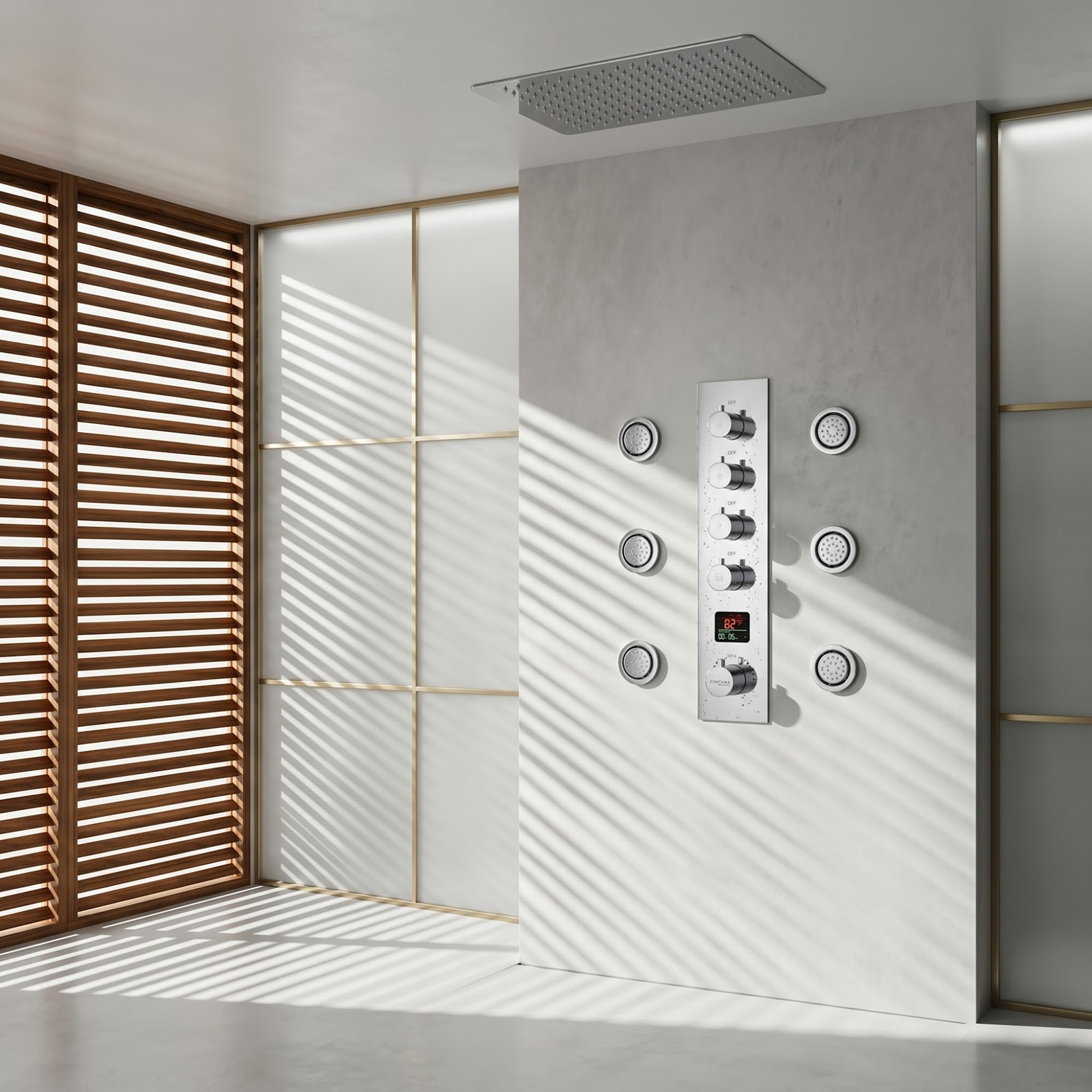
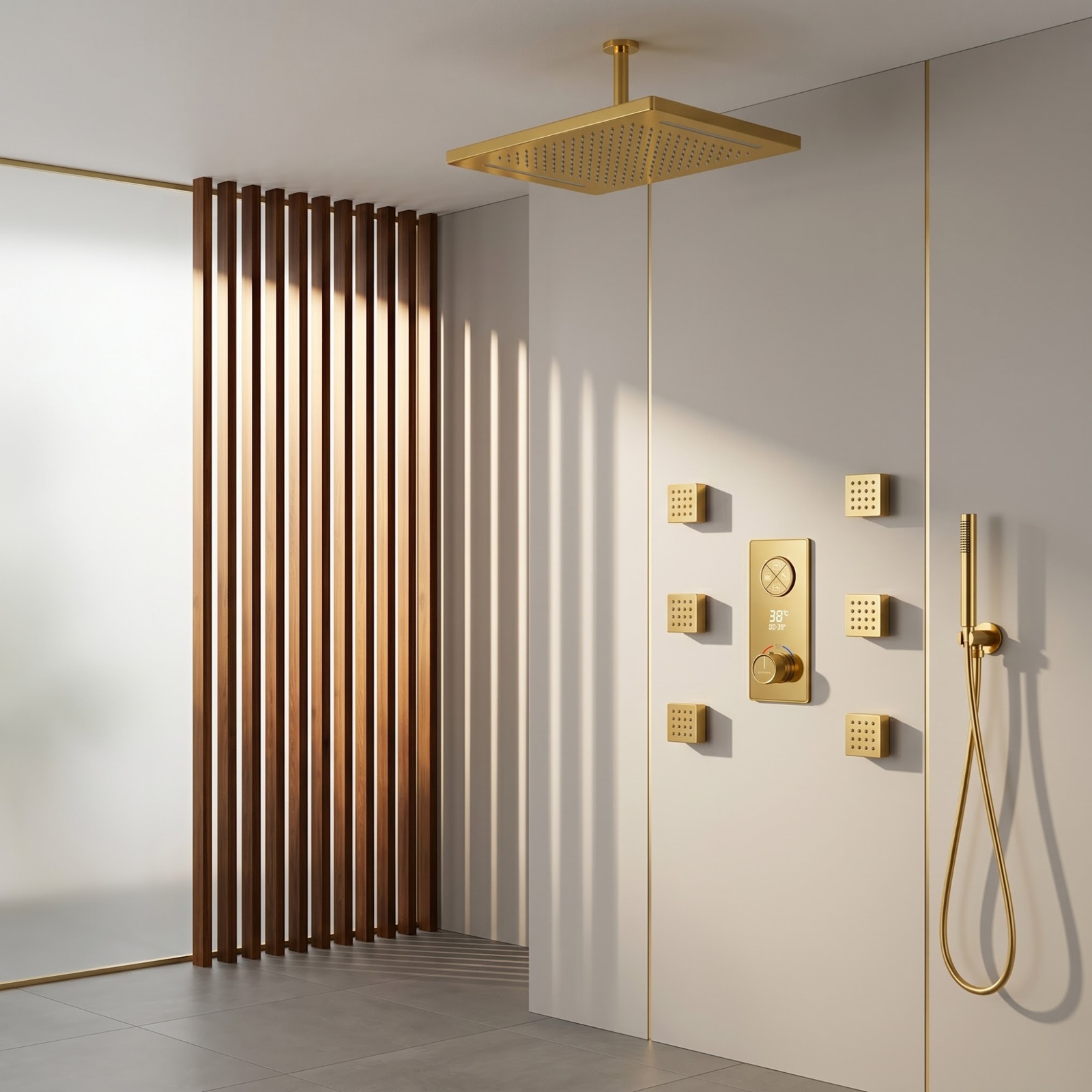
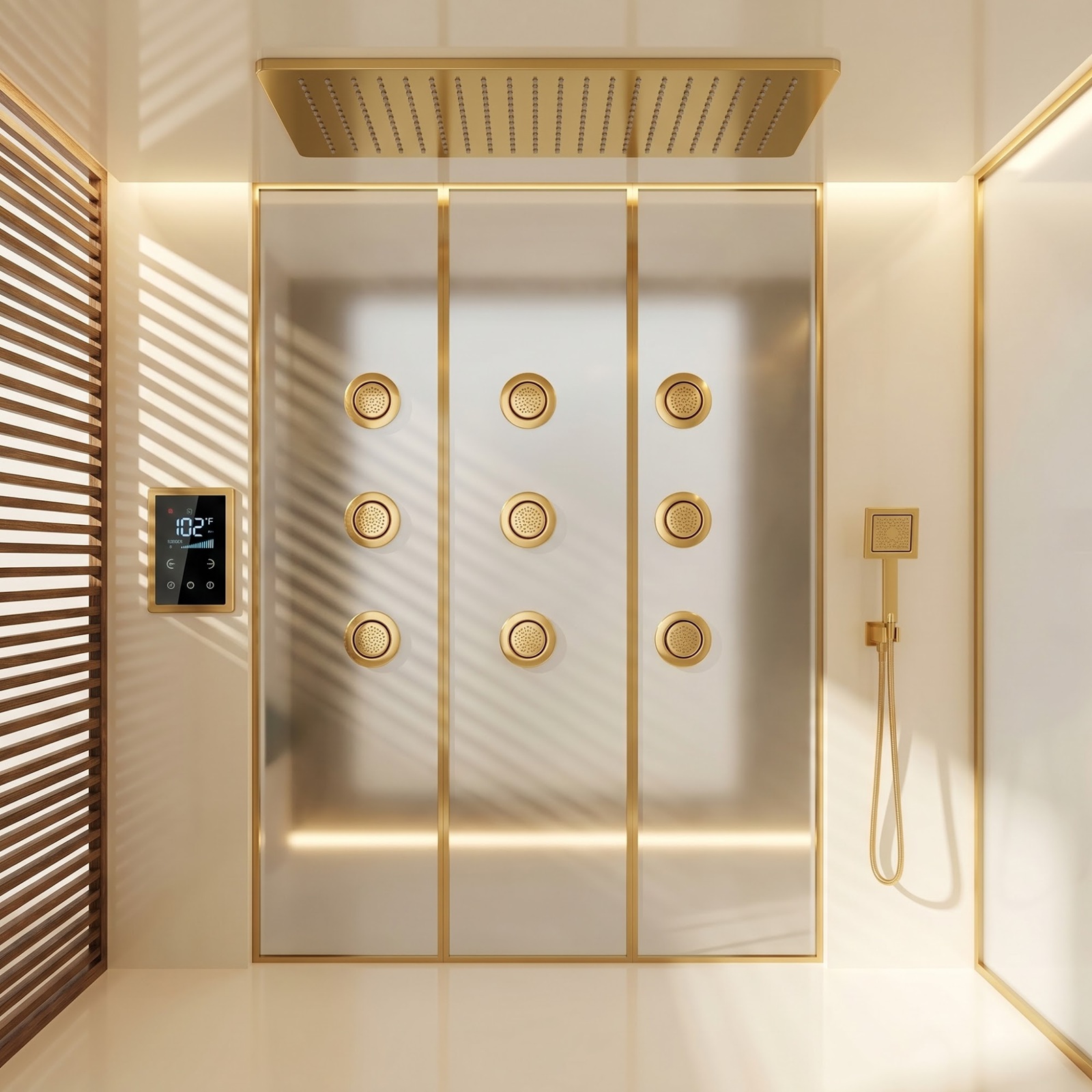
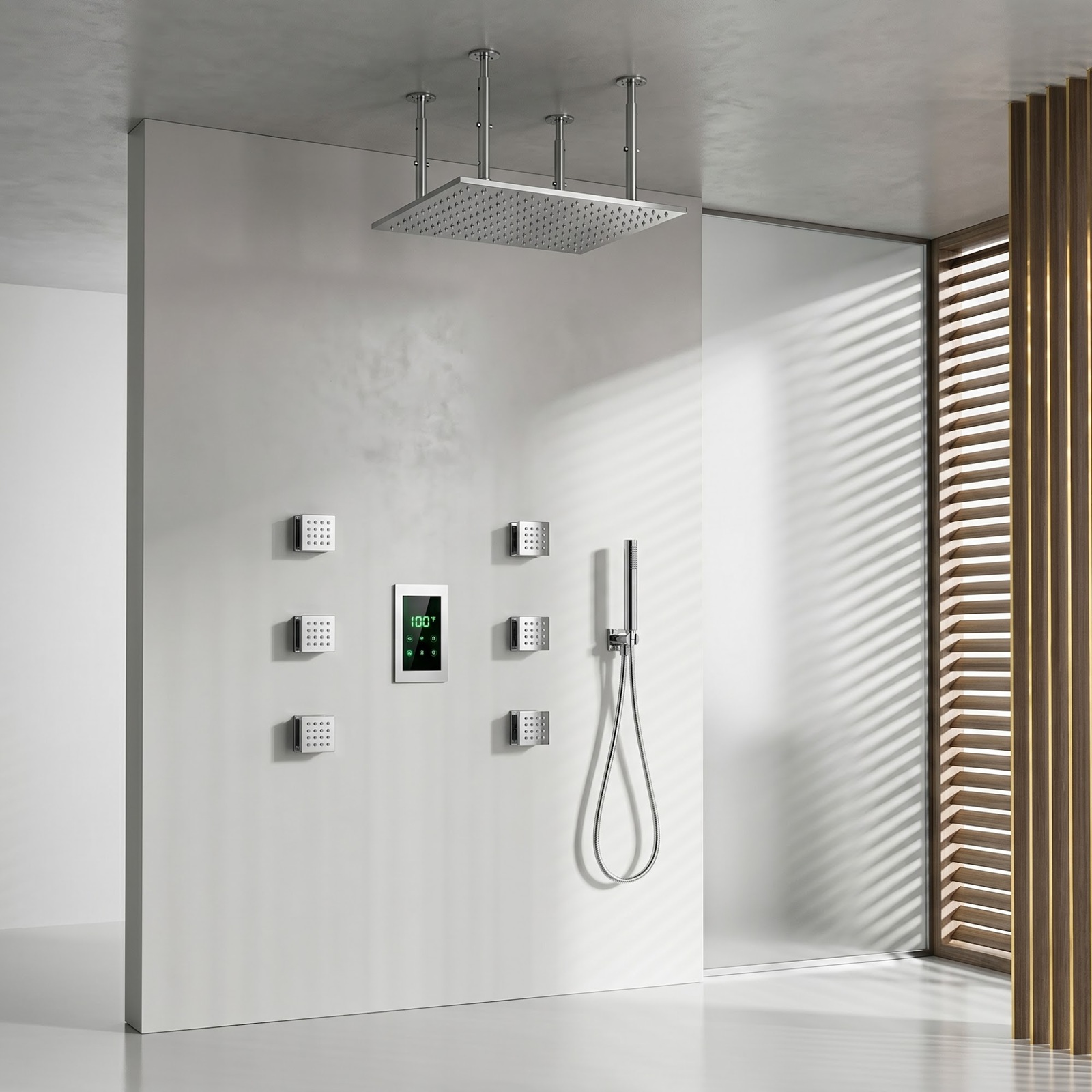
BathSelect® smart digital shower systems range from complete rainfall and handheld sets to individual mixers, valves, and shower heads. Compare the parts included in each listing before choosing a system. Digital displays, thermostatic adjustment, remote functions, LED lighting, and connected audio are model-specific; no single feature defines the whole collection.
Choose a layout that fits the bathroom and the intended use, then verify valve rough-in, hot and cold supplies, outlets, mounting space, drainage, electrical needs where applicable, and future service access. The linked collections below organize systems, controls, hotel applications, and selection resources. Three BathSelect® products provide concrete digital, remote, and LED examples, and the central digital hub offers another route through the range.
Digital Shower Collections
Compare Control Types
Project Applications
Planning & Research
|
|
|



 Digital
 Multi-Outlet
 Complete
 Ceiling
 LED
LED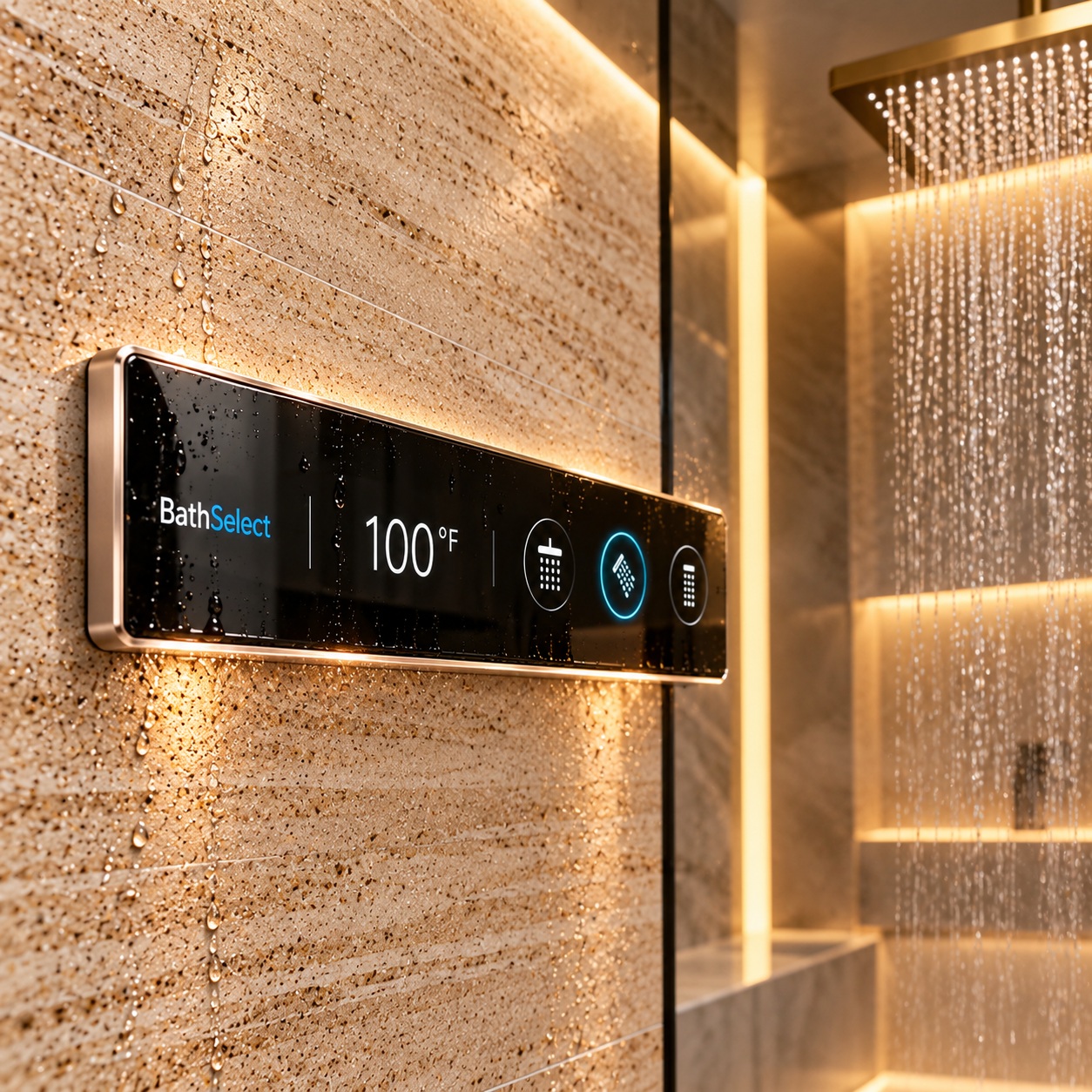
.png)