A consultant-grade technical reference for evaluating European precision-engineered
faucet ecosystems versus adaptive, field-configurable commercial platforms deployed
in institutional and high-traffic restroom environments.
This page provides a specification-focused comparison of
GROHE and BathSelect touchless faucet systems,
with emphasis on
sensor behavior stability, electronic robustness,
ADA usability, power architecture resilience,
lifecycle risk exposure, and long-term asset performance
—
not brand positioning, visual differentiation, or aesthetic preference.
All evaluations are framed through operational variance, failure exposure,
and lifecycle cost impact to support specification decisions,
peer reviews, and submittal evaluations—rather than marketing-driven comparisons.
Core Engineering Question:
Factory-calibrated sensor precision versus field-adjustable adaptability when exposed to real-world installation variance, user behavior diversity, and environmental interference.
Critical Performance Distinction:
Repeatable behavior in controlled laboratory geometries versus sustained reliability in high-traffic, multi-user operational environments.
Primary Failure Origin:
Misalignment between assumed basin geometry, reflective surfaces, user interaction patterns, and actual site-specific conditions encountered post-installation.
Specification Imperative:
Defined operational risk tolerance and service response strategy outweigh brand familiarity, aesthetic preference, or market positioning.
Consultant & Facility Mandate:
Long-term lifecycle resilience, service accessibility, and predictable performance stability across the full asset lifespan.
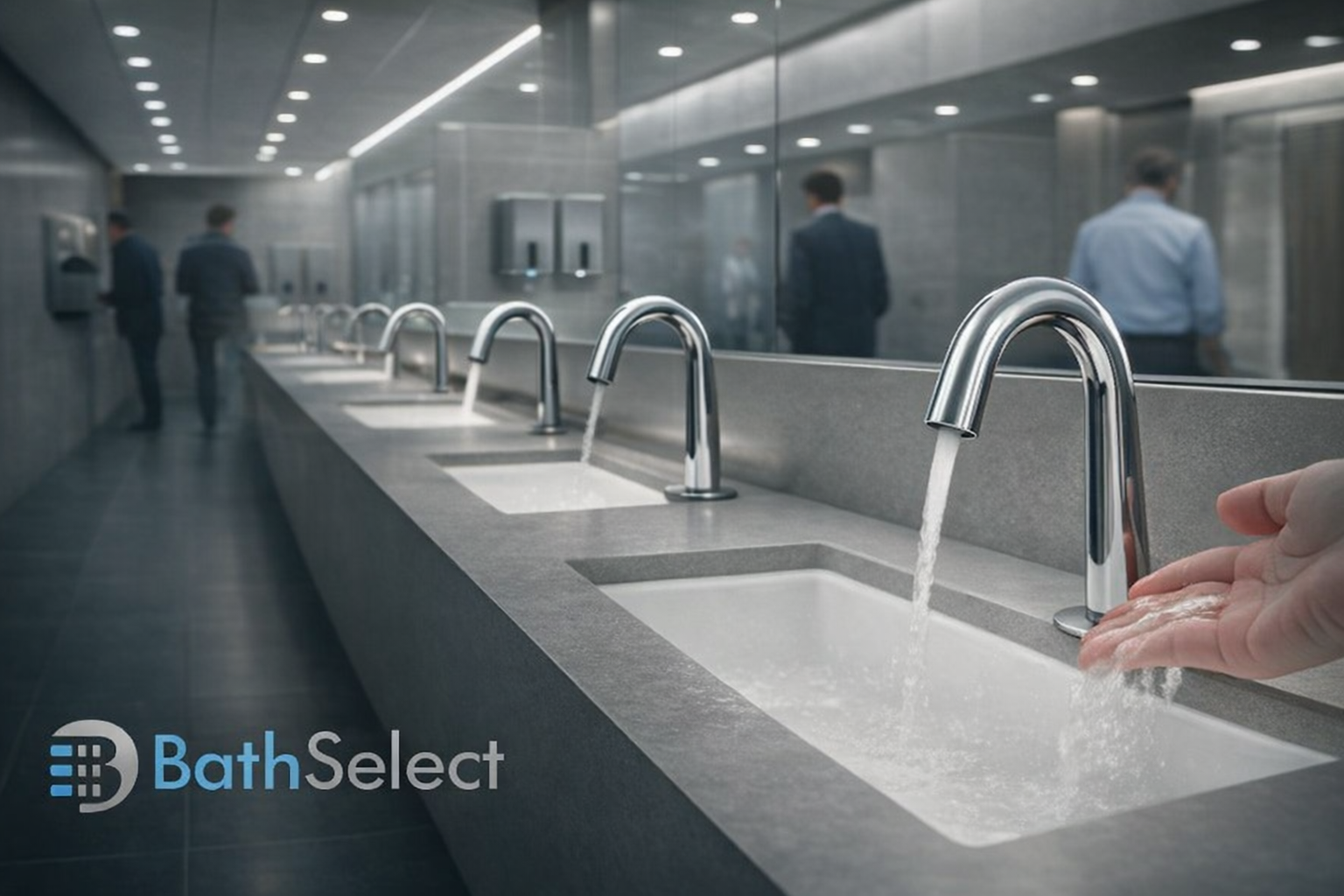
Field-configurable platforms such as the
BathSelect TerraLuxe Series
are commonly specified where post-installation adaptability and serviceability are required under variable site conditions.
Risk Allocation Matrix: Where Operational Risk Ultimately Resides
Risk Philosophy — Allocation, Not Elimination
GROHE:
Operational risk is front-loaded into the design, planning, and installation phase.
When geometric assumptions, power quality, and site conditions align with design intent,
system performance remains stable.
Retrofit Risk
Performance in existing, non-ideal infrastructure
High
Legacy installations frequently require infrastructure modification to meet design assumptions
Low
Explicitly engineered for retrofit scenarios and non-ideal field conditions
Consultant Insight — The Hidden Cost Vector
In institutional facilities, the dominant cost driver is rarely the faucet itself—it is
unplanned downtime, repeated service intervention, and operational disruption.
GROHE mitigates risk through upfront precision and controlled assumptions; BathSelect mitigates
risk through adaptability and field tolerance, supported by
operational and installation technical FAQs
that address real-world sensor behavior, field adjustment, and commissioning variability.
The appropriate choice depends on where the organization is structurally equipped to absorb
and manage operational risk.
GROHE Failure Exposure Map
Critical Failure Exposure Points:
Sensor Misalignment:
Fixed detection geometry exhibits low tolerance to basin depth, reflectivity, and user variance
Power Quality Deviation:
Assumes stable voltage and clean grounding; performance degrades under fluctuating or noisy power
Infrared Crosstalk:
Increased susceptibility in dense, mirrored, or non-standard fixture layouts
Grounding Sensitivity:
Electronic reliability depends heavily on correct grounding execution
Mitigation Strategy:
Front-loaded precision:
Operational risk is minimized through exact design assumptions, precise installation execution,
and tightly controlled operating environments.
BathSelect Failure Exposure Map
Failure Management & Control Points:
Commissioning Competency:
System performance depends on correct field calibration and commissioning discipline
Facilities Staff Enablement:
Maintenance personnel must understand adjustment ranges and failure indicators
Documentation Dependency:
Consistent performance requires adherence to setup and service documentation
Mitigation Strategy:
Distributed resilience:
Risk is managed through adjustable sensor parameters, modular component architecture,
and the ability to adapt performance in response to real-world operational conditions.
Electrically noisy environments typical of older buildings or complex MEP systems
Operational adaptability requirements where post-installation tuning is expected
Project Scenario Analysis
Select a project type to view tailored specification recommendations based on operational
requirements, institutional standards, and lifecycle considerations.
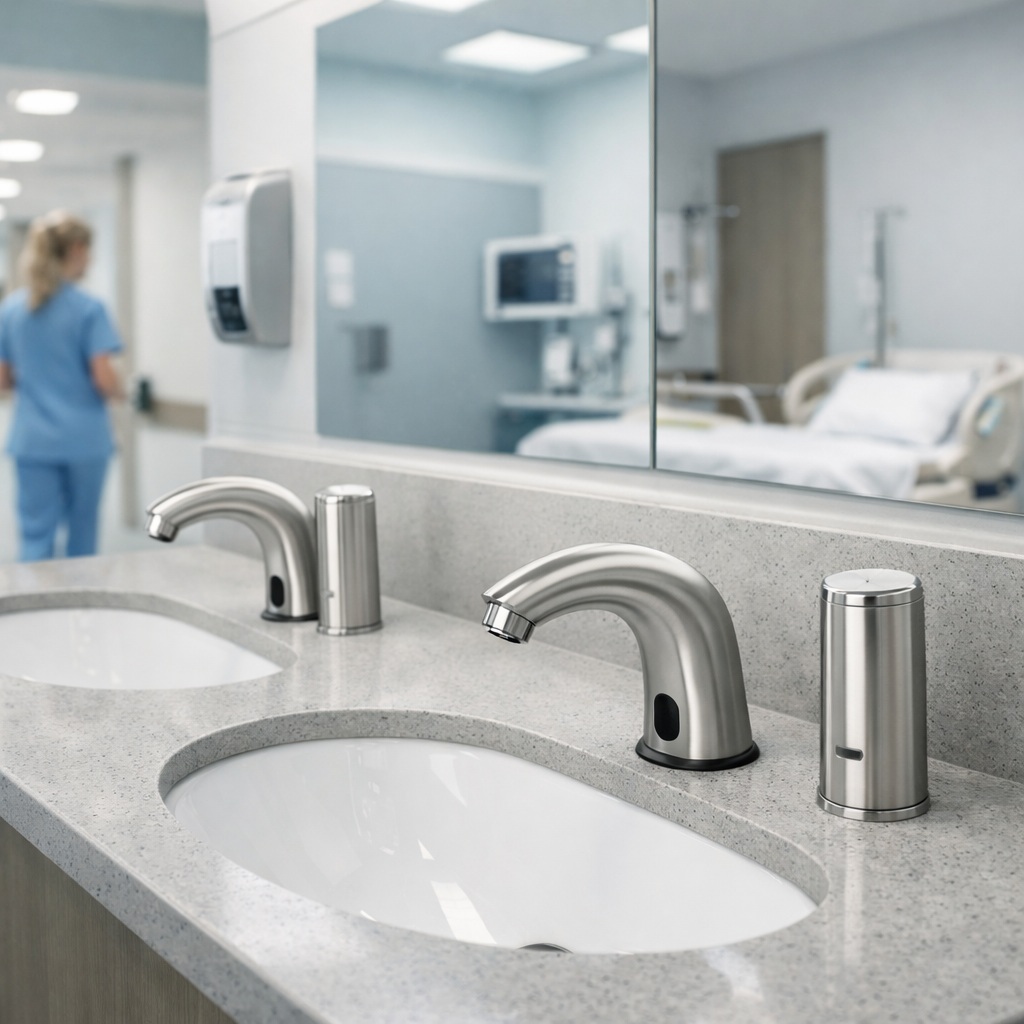
Healthcare Facilities
Hospitals, clinics, medical centers
Infection Control
24/7 Reliability
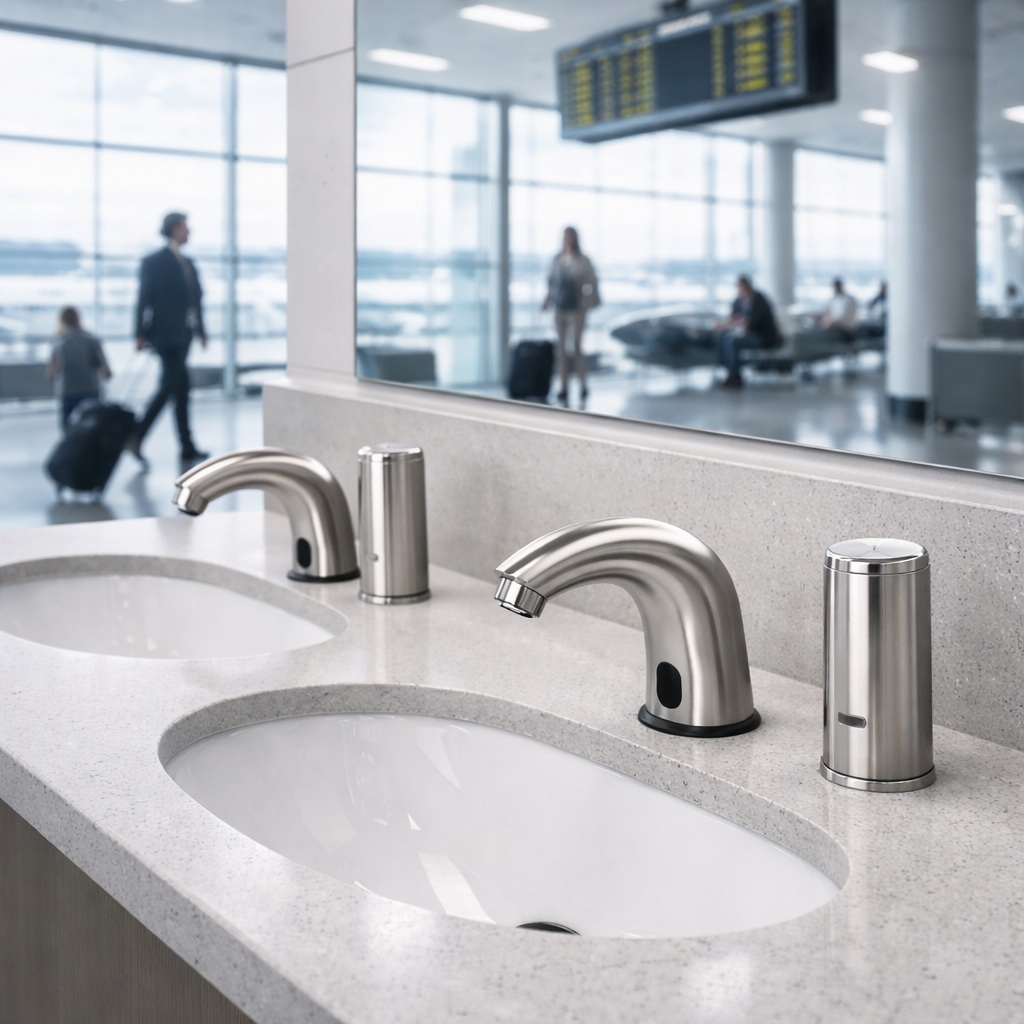
Airport Terminals
Terminals, concourses, transit hubs
High Traffic
Vandal Resistant
Educational Facilities
Schools, universities, campuses
Durability
Budget Conscious
Select a Project Scenario
Click on any project type above to view detailed specification recommendations,
critical requirements, and system selection guidance tailored to that specific environment.
Recommended Approach: BathSelect's adaptive platform due to higher tolerance
for frequent chemical cleaning protocols and modular serviceability for rapid repair cycles
in critical care environments.
Recommended Approach: BathSelect's platform for electrical noise resilience
in airport environments and rapid Mean Time To Repair (MTTR) capabilities for minimal
service disruption in high-traffic terminals.
Recommended Approach: BathSelect's adaptive platform for lower lifecycle costs,
easier in-house maintenance capabilities, and flexibility to accommodate varied user heights
from elementary to university level facilities.
Critical Requirements
Durable commercial-grade finishes
Easy-access maintenance panels
ADA-compliant sensor placement
Water conservation features
Vandal-resistant mechanical parts
Note: These recommendations are based on typical project requirements.
Final specifications should be validated against specific project conditions, local codes,
and institutional standards.
🏥 Healthcare Facility Recommendation
Primary Concern: Infection control, reliability, ADA usability Recommended System:BathSelect Rationale: Higher tolerance for aggressive cleaning protocols, modular serviceability enabling rapid MTTR, and adjustable sensors accommodating varied user mobility profiles.
✈️ Airport Terminal Recommendation
Primary Concern: Continuous uptime, vandal resistance, extreme traffic variability Recommended System:BathSelect Rationale: Superior resilience to electrical noise, reduced downtime through modular repair, and field-tunable sensors optimized for dense user flow.
🏫 Educational Facility Recommendation
Primary Concern: Durability, maintenance simplicity, long-term cost control Recommended System:BathSelect Rationale: Lower lifecycle cost exposure, ease of in-house maintenance, and adaptability across a wide range of user heights and behaviors.
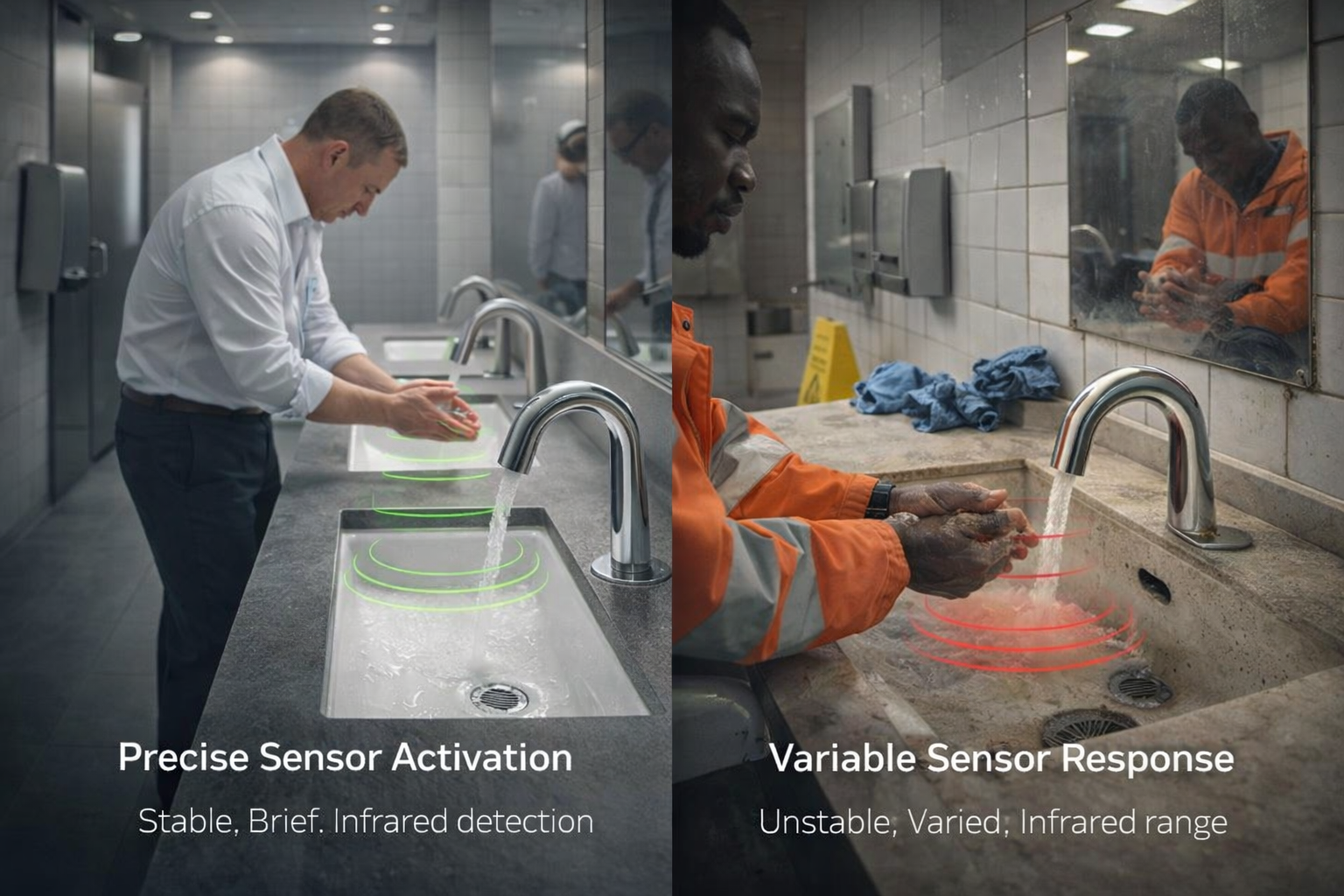
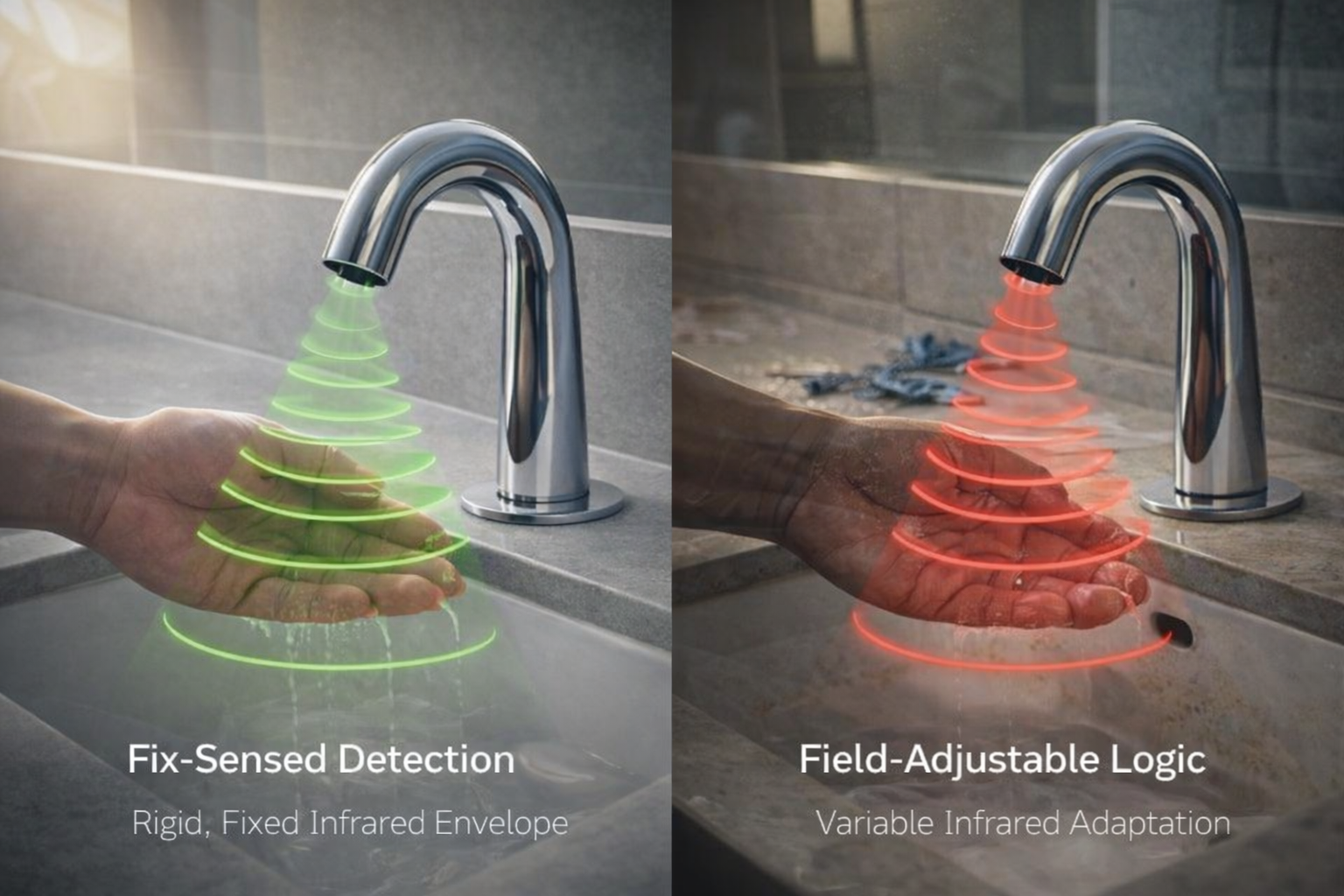
Infrared sensor performance is governed less by advertised detection range and more by
how detection logic responds to real-world variability in geometry, reflectivity,
ambient light, and user behavior.
GROHE Precision Architecture:
Factory-calibrated infrared sensing arrays with predefined detection envelopes.
Performance is optimized for controlled lighting conditions, predictable basin geometry,
and consistent user approach angles.
BathSelect Adaptive Logic:
Field-adjustable sensitivity and timing parameters allowing calibration to basin depth,
surface reflectivity, ambient infrared noise, and variable user positioning encountered
in high-traffic environments.
Engineering Implication:
Precision-tuned systems reduce false activations in ideal conditions, while adaptive
systems reduce missed activations and nuisance shutoffs as environmental variance increases.
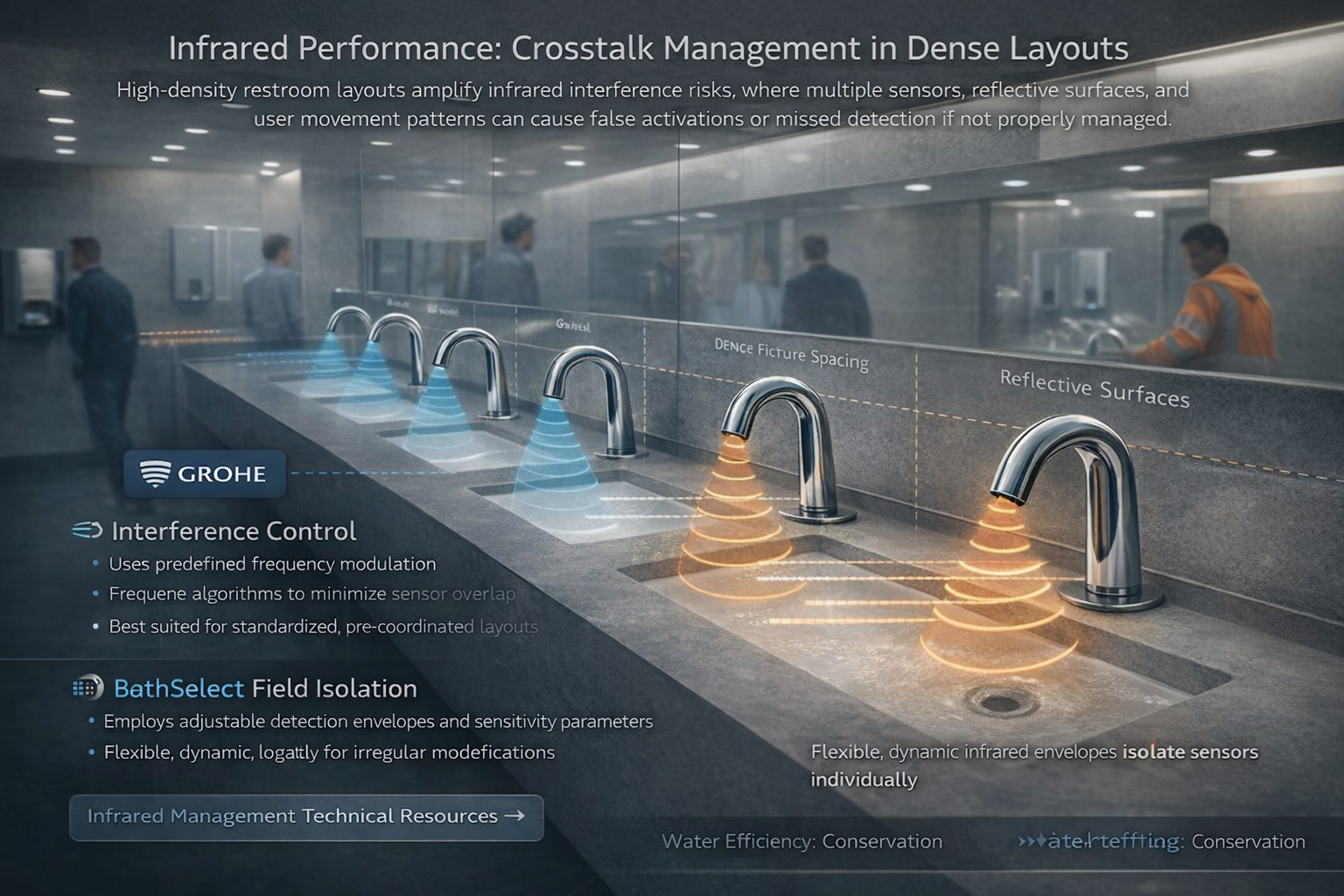
Infrared Performance: Crosstalk Management in Dense Layouts
High-density restroom layouts amplify infrared interference risks, where multiple sensors,
reflective surfaces, and user movement patterns can cause false activations or missed detection
if not properly managed.
GROHE Interference Control:
Uses predefined frequency modulation and timing algorithms to minimize sensor overlap.
This approach performs best in standardized, pre-coordinated layouts where fixture spacing
and reflective surfaces align closely with design assumptions.
BathSelect Field Isolation:
Employs adjustable detection envelopes and sensitivity parameters that allow post-installation
optimization when fixtures are closely spaced, sightlines overlap, or reflective interference
is discovered during commissioning.
Operational Insight:
In dense or irregular layouts, the ability to isolate and tune individual sensors in the field
reduces crosstalk-related service calls and improves long-term user experience.
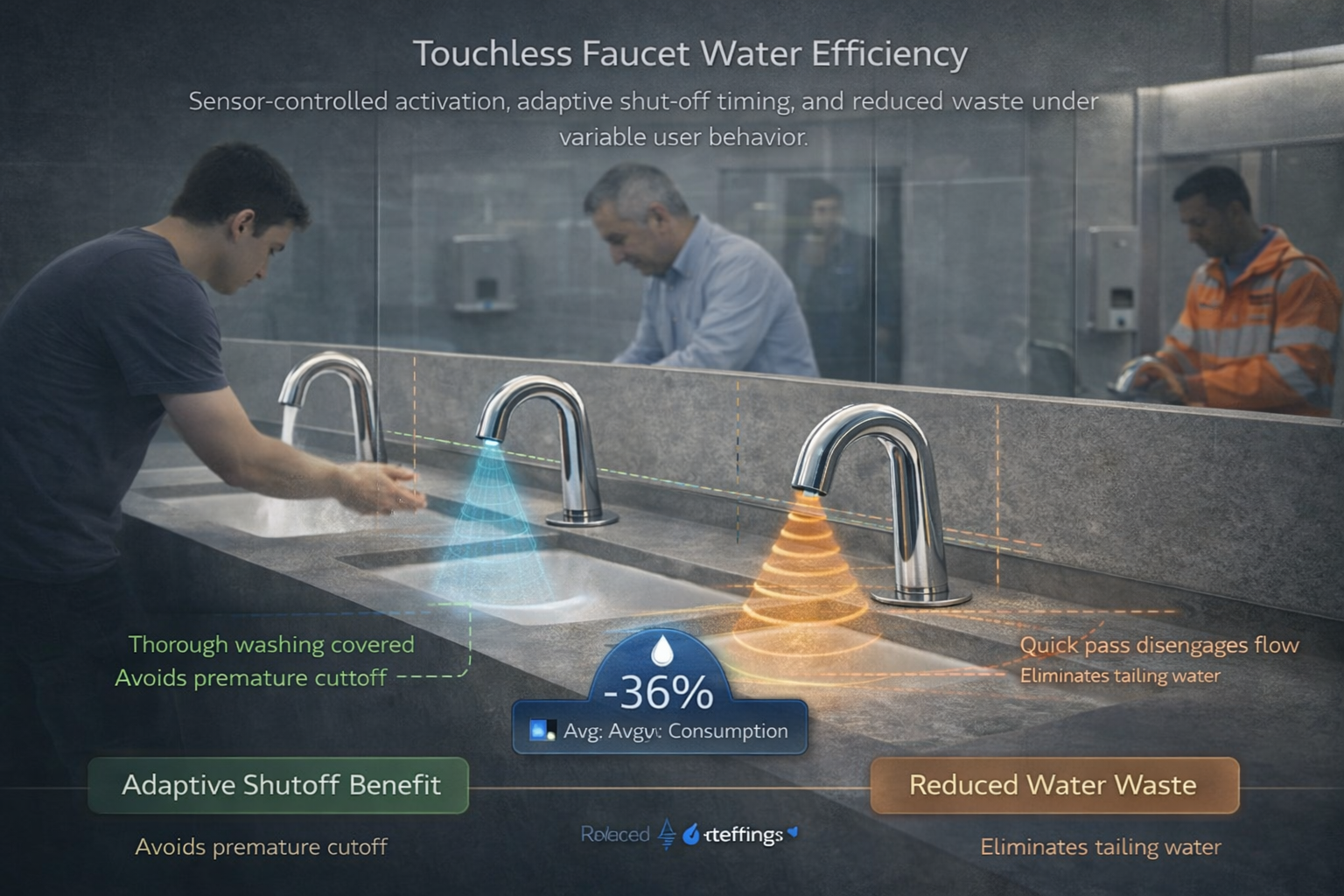
Water Efficiency: Conservation Through Sensor Intelligence
Effective water conservation is driven not only by nominal flow rates, but by
how accurately a system initiates flow, sustains delivery, and terminates output
in response to real user behavior.
GROHE Predictable Conservation:
Fixed activation logic and consistent run-time profiles enable reliable water-use
modeling and predictable consumption patterns, supporting compliance-driven facilities
with strict usage forecasting requirements.
BathSelect Adaptive Efficiency:
Configurable run-time thresholds and adaptive shut-off behavior allow water delivery
to align with actual hand-washing duration, reducing waste in environments with
highly variable user interaction.
Operational Insight:
In high-traffic or mixed-use facilities, adaptive shut-off logic typically delivers
greater real-world savings than static flow assumptions, particularly during peak
occupancy cycles.
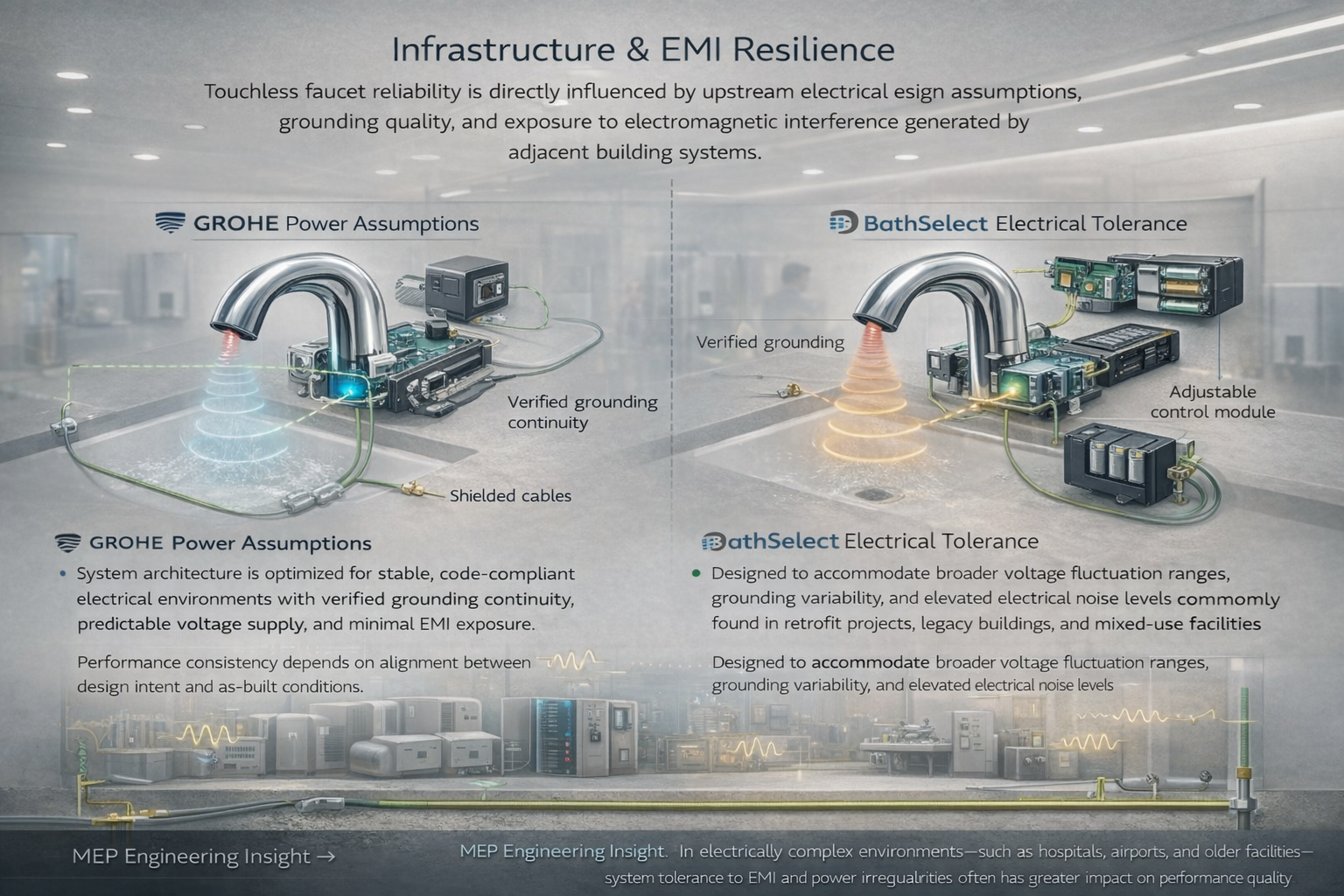
MEP Engineering: Power Infrastructure & EMI Resilience
Touchless faucet reliability is directly influenced by upstream electrical design
assumptions, grounding quality, and exposure to electromagnetic interference generated
by adjacent building systems.
GROHE Power Assumptions:
System architecture is optimized for stable, code-compliant electrical environments
with verified grounding continuity, predictable voltage supply, and minimal EMI exposure.
Performance consistency depends on alignment between design intent and as-built conditions.
BathSelect Electrical Tolerance:
Designed to accommodate broader voltage fluctuation ranges, grounding variability,
and elevated electrical noise levels commonly found in retrofit projects,
legacy buildings, and mixed-use facilities.
MEP Engineering Insight:
In electrically complex environments—such as hospitals, airports, and older facilities—
system tolerance to EMI and power irregularities often has greater impact on lifecycle
performance than nominal component quality.
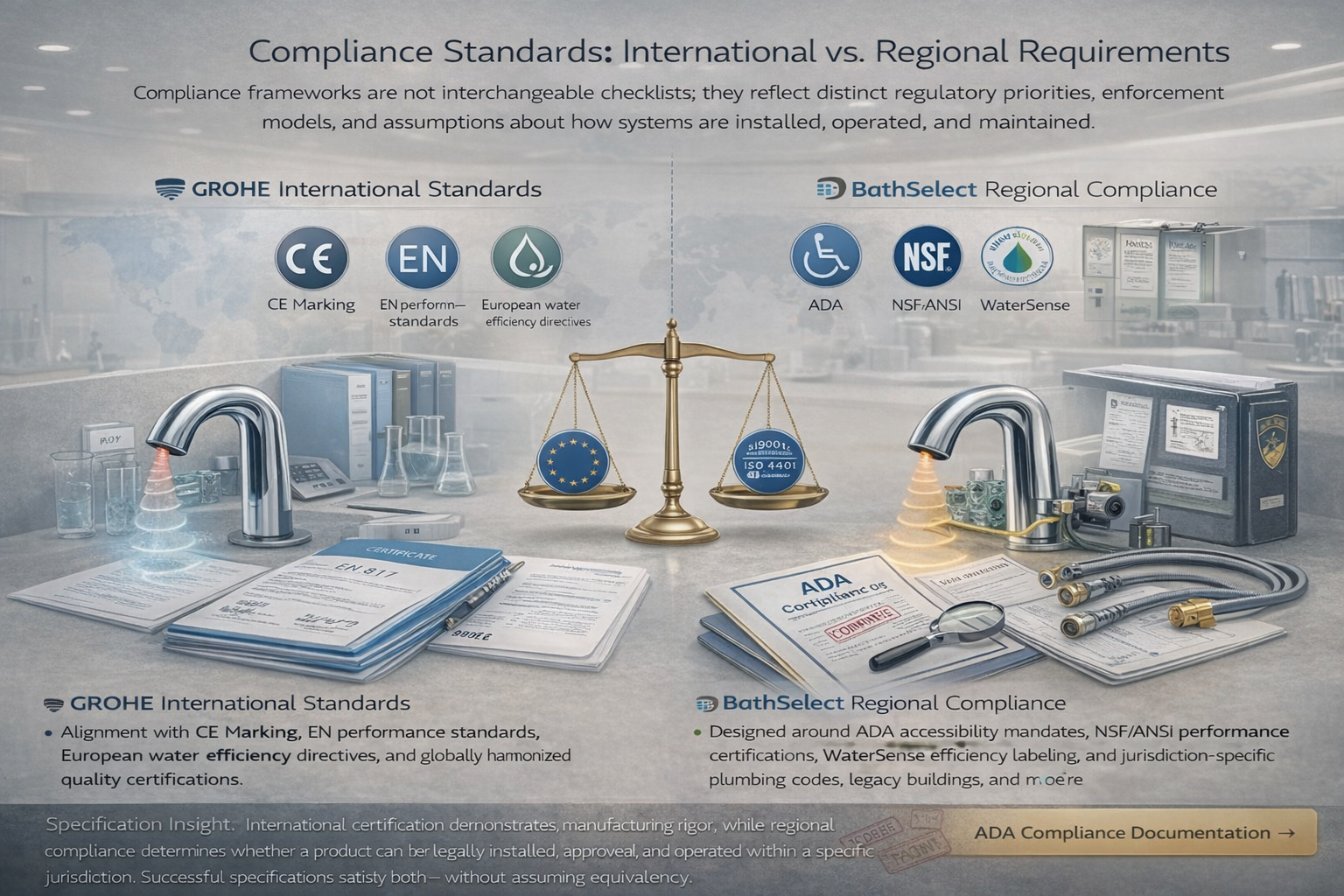
Compliance Standards: International vs. Regional Requirements
Compliance frameworks are not interchangeable checklists; they reflect distinct
regulatory priorities, enforcement models, and assumptions about how systems are
installed, operated, and maintained.
GROHE International Standards:
Alignment with CE Marking, EN performance standards, European water efficiency
directives, and globally harmonized quality certifications. These frameworks emphasize
product conformity, manufacturing consistency, and performance under standardized
test conditions.
BathSelect Regional Compliance:
Designed around ADA accessibility mandates, NSF/ANSI performance certifications,
WaterSense efficiency labeling, and jurisdiction-specific plumbing codes.
These requirements prioritize real-world usability, accessibility, and local
inspection approval.
Specification Insight:
International certification demonstrates manufacturing rigor, while regional compliance
determines whether a product can be legally installed, approved, and operated within a
specific jurisdiction. Successful specifications satisfy both—without assuming
equivalency.
Material Durability: European Engineering vs. Commercial Construction
Material durability is defined not only by initial finish quality, but by how surfaces,
internal components, and coatings perform under repeated use, aggressive cleaning
protocols, and long-term exposure to moisture and chemicals.
GROHE Material Technology:
Emphasizes stainless steel construction, advanced PVD coating processes, and precision
manufacturing aimed at maintaining visual integrity and surface consistency over time.
This approach prioritizes finish longevity and appearance retention under controlled
maintenance conditions.
BathSelect Commercial Construction:
Utilizes solid brass bodies, commercial-grade finish treatments, and materials selected
for tolerance to harsh cleaning agents, frequent contact, and impact typical of
high-traffic institutional environments.
Lifecycle Insight:
In facilities with aggressive sanitation protocols or limited finish maintenance,
base material resilience and chemical compatibility often have greater impact on
service life than premium surface coatings alone.
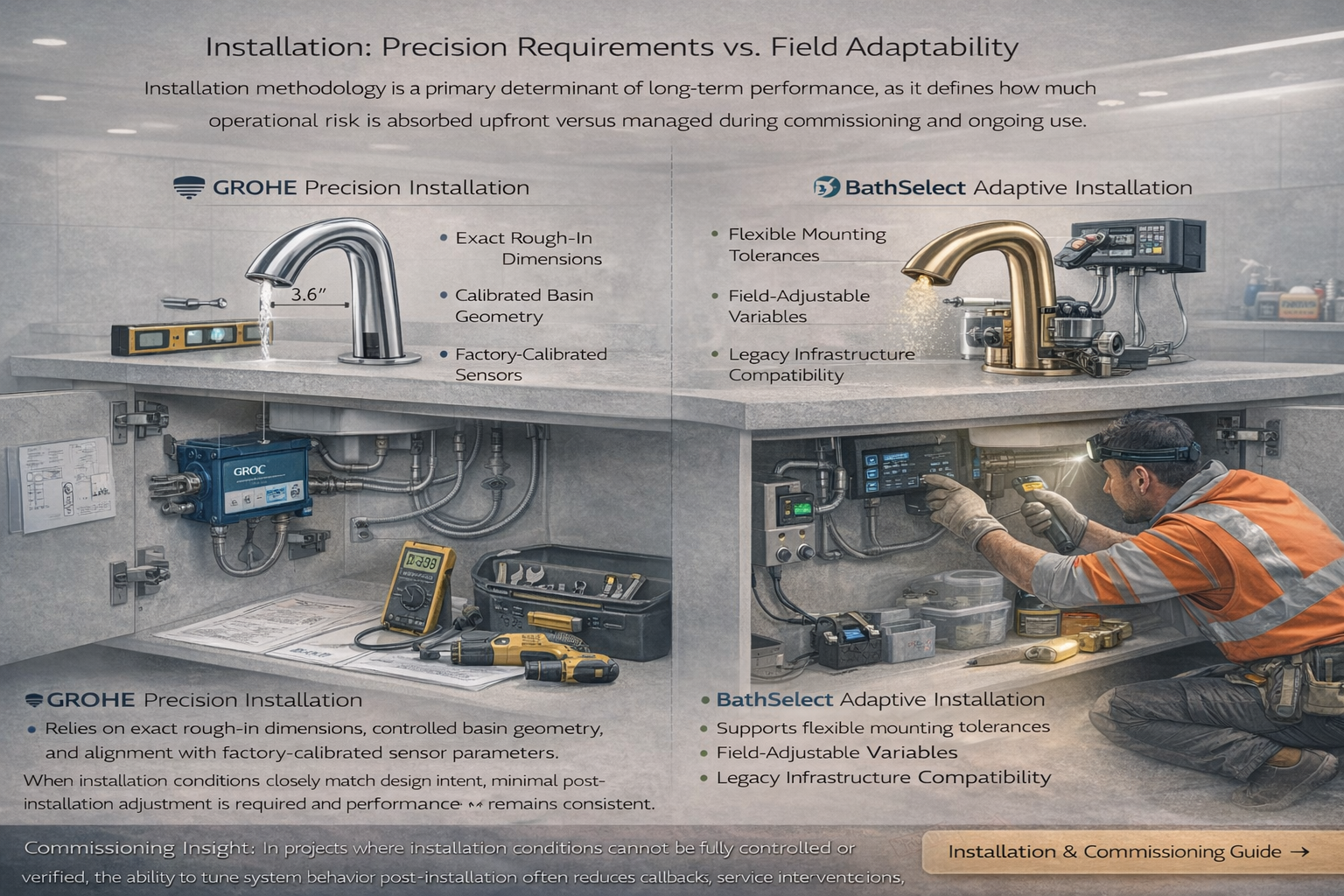
Installation: Precision Requirements vs. Field Adaptability
Installation methodology is a primary determinant of long-term performance,
as it defines how much operational risk is absorbed upfront versus managed
during commissioning and ongoing use.
GROHE Precision Installation:
Relies on exact rough-in dimensions, controlled basin geometry, and alignment
with factory-calibrated sensor parameters. When installation conditions closely
match design intent, minimal post-installation adjustment is required and
performance remains consistent.
BathSelect Adaptive Installation:
Supports flexible mounting tolerances and field-adjustable sensor and timing
parameters, allowing installers and commissioning teams to compensate for
unforeseen site conditions, legacy infrastructure, and real-world variance.
Commissioning Insight:
In projects where installation conditions cannot be fully controlled or verified,
the ability to tune system behavior post-installation often reduces callbacks,
service interventions, and early-life performance complaints.
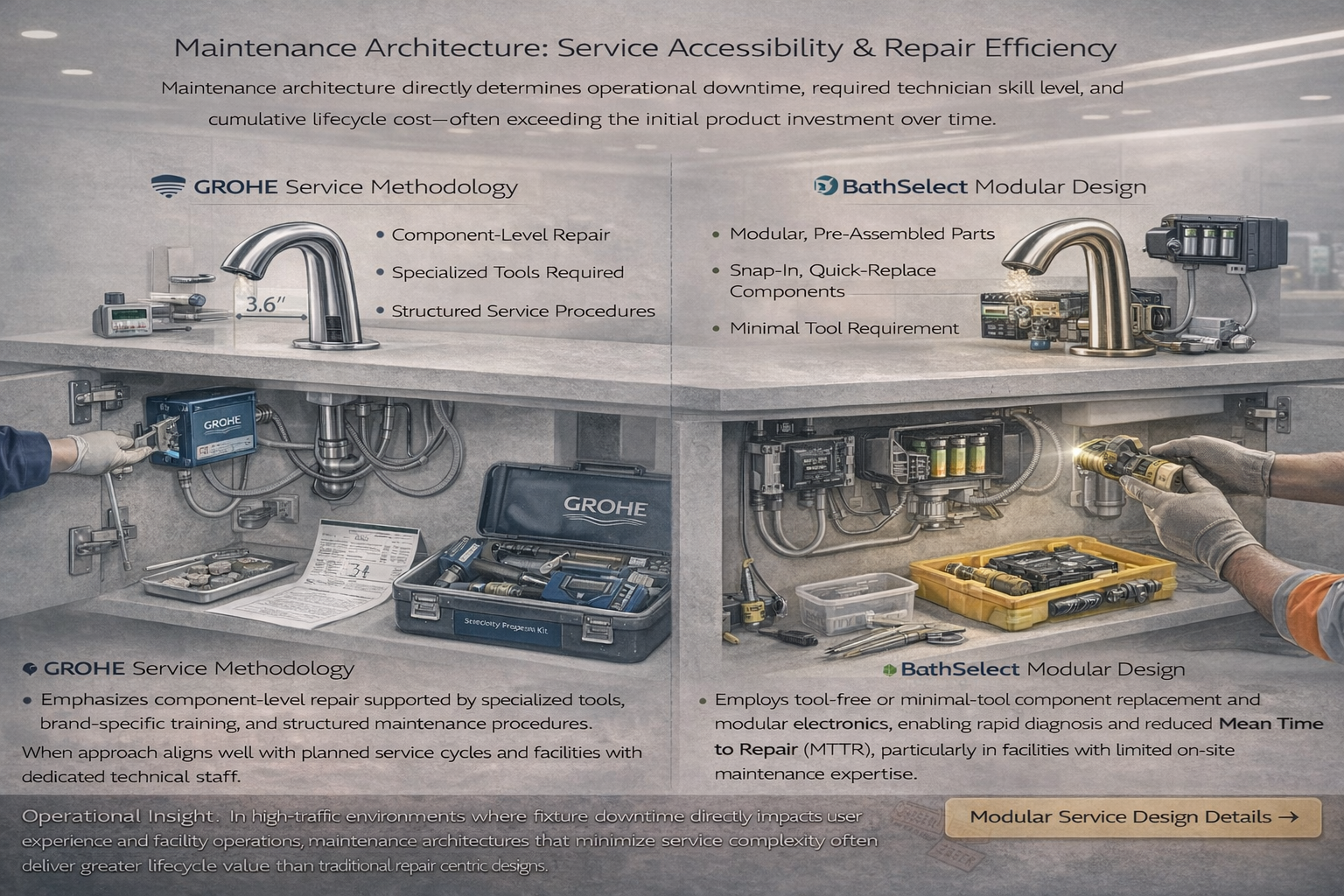
Maintenance Architecture: Service Accessibility & Repair Efficiency
Maintenance architecture directly determines operational downtime,
required technician skill level, and cumulative lifecycle cost—
often exceeding the initial product investment over time.
GROHE Service Methodology:
Emphasizes component-level repair supported by specialized tools,
brand-specific training, and structured maintenance procedures.
This approach aligns well with planned service cycles and facilities
with dedicated technical staff.
BathSelect Modular Design:
Employs tool-free or minimal-tool component replacement and modular
electronics, enabling rapid diagnosis and reduced mean time to repair (MTTR),
particularly in facilities with limited on-site maintenance expertise.
Operational Insight:
In high-traffic environments where fixture downtime directly impacts
user experience and facility operations, maintenance architectures that
minimize service complexity often deliver greater lifecycle value than
traditional repair-centric designs.
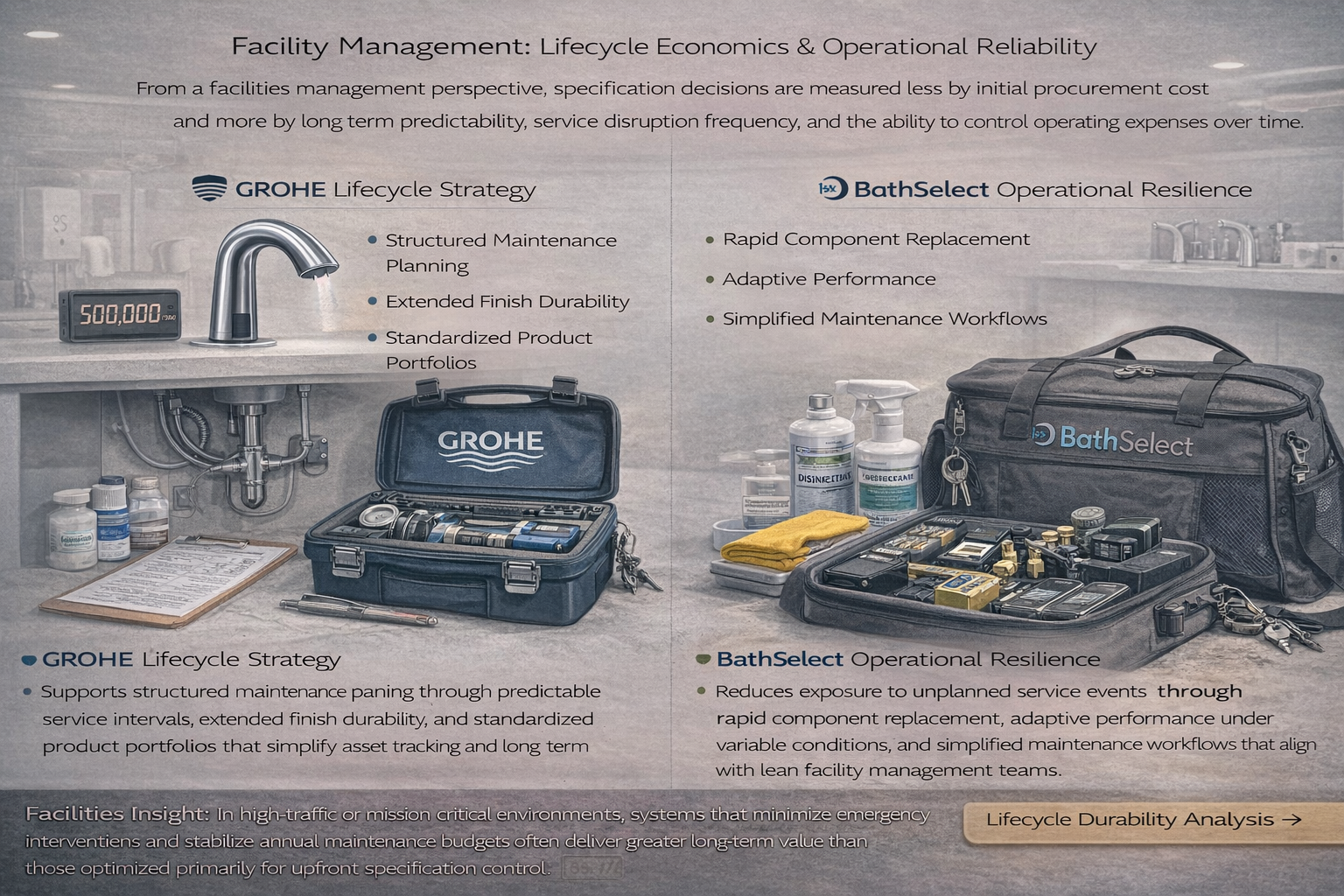
From a facilities management perspective, specification decisions are measured
less by initial procurement cost and more by long-term predictability, service
disruption frequency, and the ability to control operating expenses over time.
GROHE Lifecycle Strategy:
Supports structured maintenance planning through predictable service intervals,
extended finish durability, and standardized product portfolios that simplify
asset tracking and long-term capital planning.
BathSelect Operational Resilience:
Reduces exposure to unplanned service events through rapid component replacement,
adaptive performance under variable conditions, and simplified maintenance workflows
that align with lean facility management teams.
Facilities Insight:
In high-traffic or mission-critical environments, systems that minimize emergency
interventions and stabilize annual maintenance budgets often deliver greater
long-term value than those optimized primarily for upfront specification control.
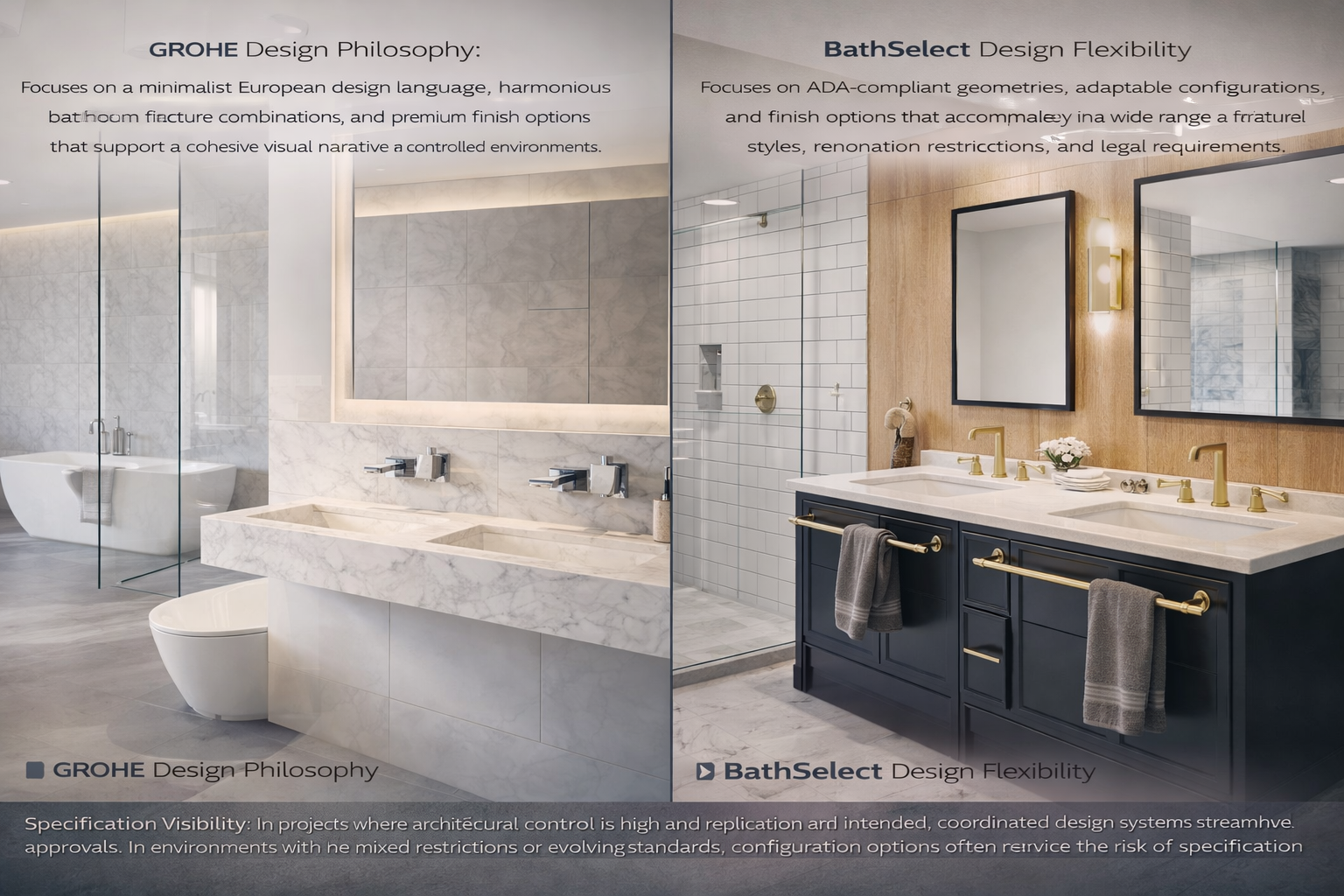
Architectural Integration: Design Language & Specification Alignment
Architectural integration extends beyond visual consistency to include how fixtures
align with design standards, accessibility requirements, and repeatability across
multi-space or multi-building projects.
GROHE Design Philosophy:
Emphasizes minimalist European design language, tightly coordinated fixture families,
and premium finish options that support cohesive visual narratives in architecturally
controlled environments.
BathSelect Design Flexibility:
Focuses on ADA-compliant geometries, adaptable configurations, and finish options
compatible with a wide range of architectural styles, renovation constraints,
and jurisdictional requirements.
Specification Insight:
In projects where architectural control is high and repetition is intentional,
coordinated design systems streamline approvals. In environments with mixed constraints
or evolving standards, configurability often reduces re-specification risk.
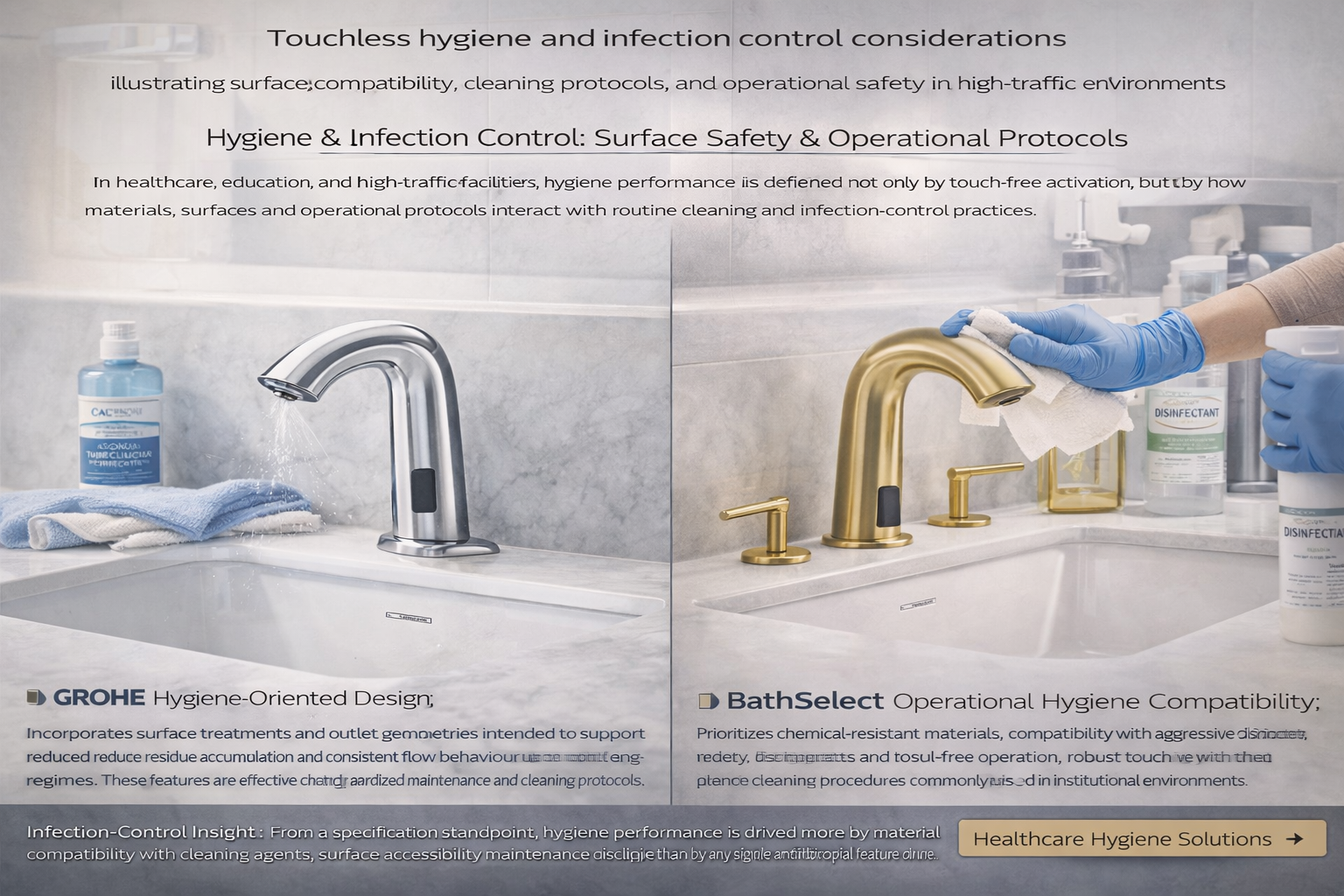
In healthcare, education, and high-traffic facilities, hygiene performance is defined
not only by touch-free activation, but by how materials, surfaces, and operational
protocols interact with routine cleaning and infection-control practices.
GROHE Hygiene-Oriented Design:
Incorporates surface treatments and outlet geometries intended to support reduced
residue accumulation and consistent flow behavior under controlled cleaning regimes.
These features are most effective when paired with standardized maintenance and
cleaning protocols.
BathSelect Operational Hygiene Compatibility:
Prioritizes chemical-resistant materials, compatibility with aggressive disinfectants,
and robust touch-free operation that aligns with diverse cleaning procedures commonly
used in institutional environments.
Infection-Control Insight:
From a specification standpoint, hygiene performance is driven more by material
compatibility with cleaning agents, surface accessibility, and maintenance discipline
than by any single antimicrobial feature alone.
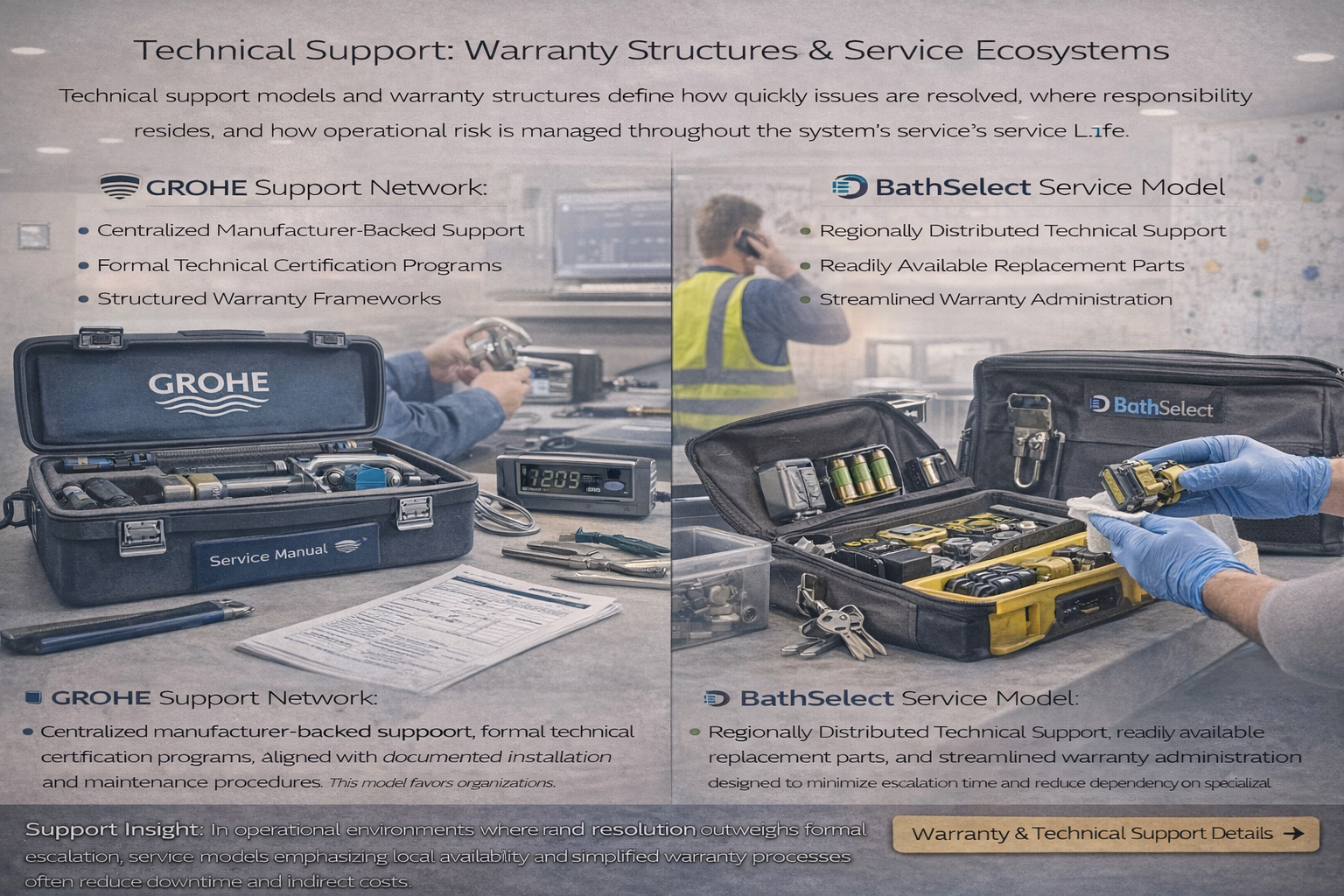
Technical Support: Warranty Structures & Service Ecosystems
Technical support models and warranty structures define how quickly issues are resolved,
where responsibility resides, and how operational risk is managed throughout the
system’s service life.
GROHE Support Network:
Centralized manufacturer-backed support, formal technical certification programs,
and structured warranty frameworks aligned with documented installation and
maintenance procedures. This model favors organizations with established service
workflows and access to trained technicians.
BathSelect Service Model:
Regionally distributed technical support, readily available replacement parts,
and streamlined warranty administration designed to minimize escalation time
and reduce dependency on specialized certification.
Support Insight:
In operational environments where rapid resolution outweighs formal escalation,
service models emphasizing local availability and simplified warranty processes
often reduce downtime and indirect costs.
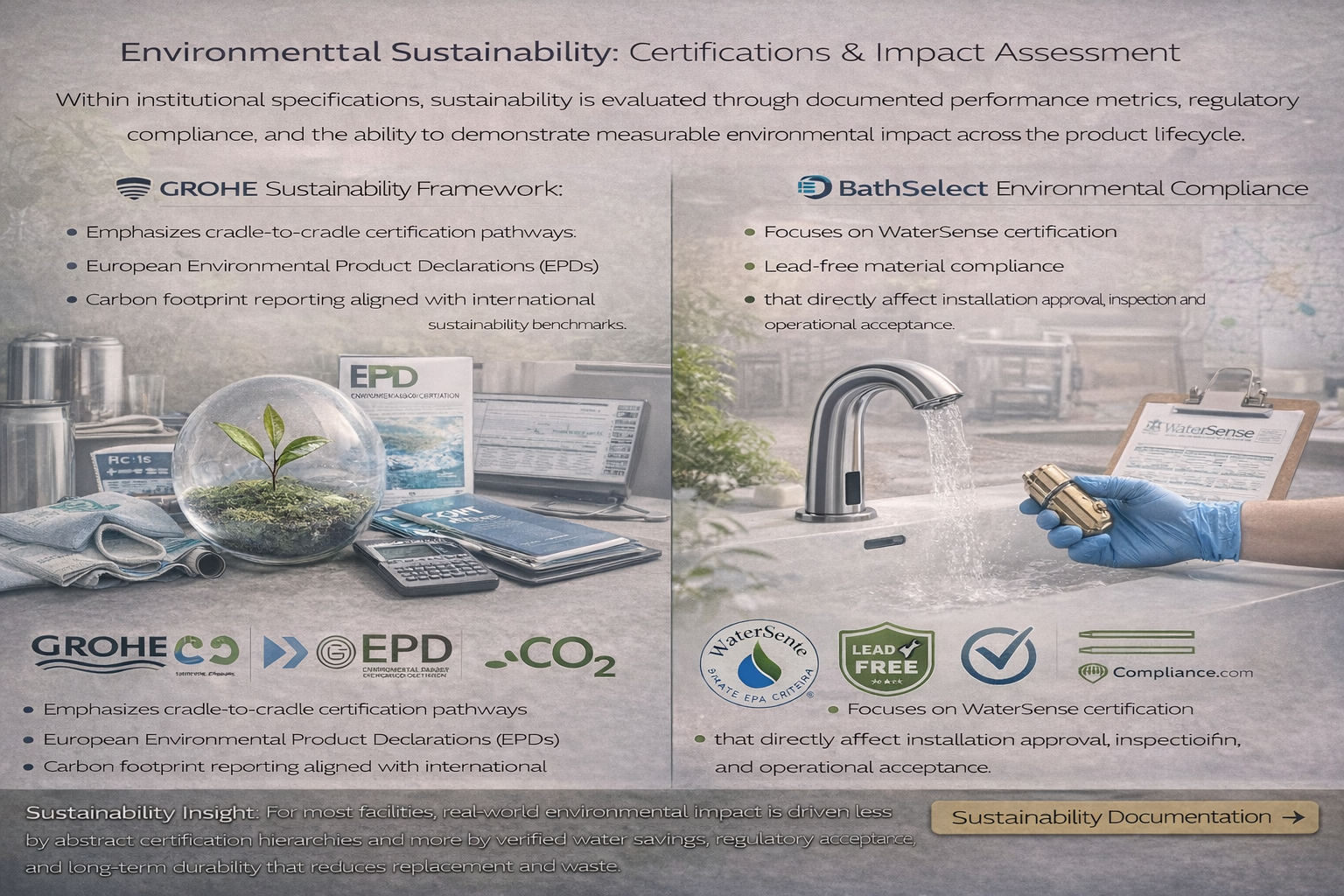
Within institutional specifications, sustainability is evaluated through
documented performance metrics, regulatory compliance, and the ability to
demonstrate measurable environmental impact across the product lifecycle.
GROHE Sustainability Framework:
Emphasizes cradle-to-cradle certification pathways, European environmental
product declarations (EPDs), and carbon footprint reporting aligned with
international sustainability benchmarks. This approach supports projects
with formal environmental reporting requirements.
BathSelect Environmental Compliance:
Focuses on WaterSense certification, lead-free material compliance, and
adherence to regional environmental regulations that directly affect
installation approval, inspection, and operational acceptance.
Sustainability Insight:
For most facilities, real-world environmental impact is driven less by
abstract certification hierarchies and more by verified water savings,
regulatory acceptance, and long-term durability that reduces replacement
and waste over time.
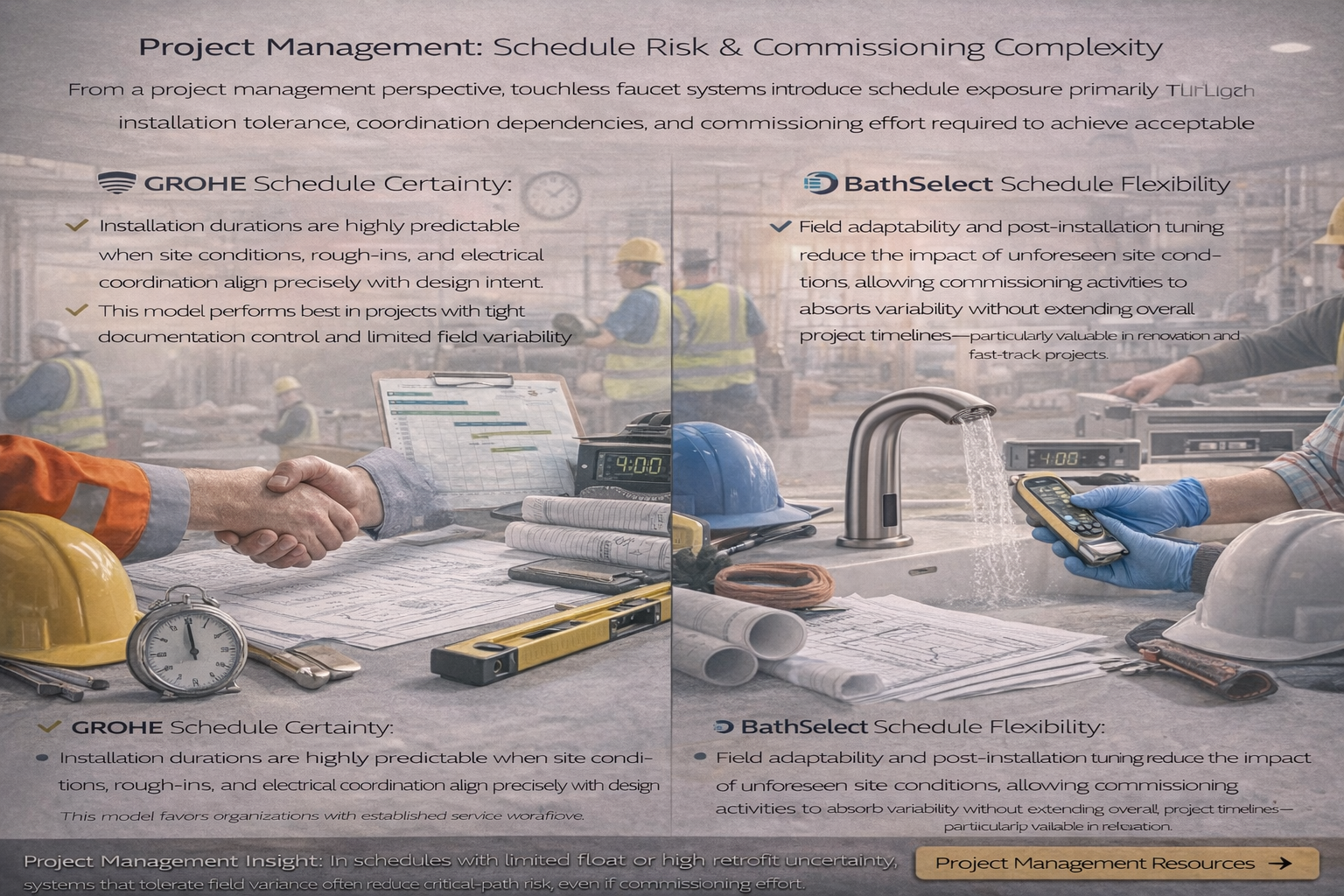
From a project management perspective, touchless faucet systems introduce
schedule exposure primarily through installation tolerance, coordination
dependencies, and commissioning effort required to achieve acceptable performance.
GROHE Schedule Certainty:
Installation durations are highly predictable when site conditions, rough-ins,
and electrical coordination align precisely with design intent. This model performs
best in projects with tight documentation control and limited field variability.
BathSelect Schedule Flexibility:
Field adaptability and post-installation tuning reduce the impact of unforeseen
site conditions, allowing commissioning activities to absorb variability without
extending overall project timelines—particularly valuable in renovation and
fast-track projects.
Project Management Insight:
In schedules with limited float or high retrofit uncertainty, systems that tolerate
field variance often reduce critical-path risk, even if commissioning effort is
slightly increased.
✔ Sensor alignment verified against basin geometry✔ Ground continuity verified and documented✔ Reflection behavior tested across all adjacent surfaces✔ Crosstalk validation with neighboring fixtures active✔ Power stability confirmed under operational load
⚠️ Most Common Commissioning Failure:
Omitting the
adjacent-fixture interference test,
accounting for a majority of early-life performance complaints in dense installations.
New construction, design-controlled, premium environments
Retrofit, mixed-use, high-variability facilities
This decision matrix is intended as a specification guidance tool.
Final product selection should align with project conditions,
commissioning capability, and lifecycle management strategy.
For detailed installation parameters, dimensional constraints,
and performance requirements used during submittals and site coordination,
refer to the official
Installation & Specification documentation
,
which should be reviewed in parallel with project drawings and
local authority requirements.
Final Technical Recommendation
Senior Technical Consultant
Based on 15+ years of commercial plumbing system specification and institutional project analysis
The Hansgrohe vs. BathSelect specification decision is fundamentally a
risk-allocation strategy rather than a comparison of
product quality or brand positioning.
Hansgrohe is optimally suited for projects where installation conditions,
electrical infrastructure, and spatial geometry can be tightly defined,
controlled, and verified throughout execution.
Hansgrohe Strategy
Risk Management: Front-loaded in design phase Optimal For: New construction, controlled environments Value Proposition: Predictability & standardization
BathSelect Strategy
Risk Management: Intentionally shifted to the operational phase, reducing design-stage rigidity while enabling controlled post-installation risk mitigation Optimal For: Retrofit-driven projects, mixed-condition sites, and facilities where installation parameters cannot be fully standardized. Value Proposition: Platform-level flexibility and adaptability engineered to sustain performance under real-world operating conditions.
BathSelect is better aligned with environments characterized by retrofit
constraints, real-world variability, and operational uncertainty—where
post-installation adaptability, rapid service recovery, and tolerance
for field conditions outweigh the benefits of strict standardization.
This reflects a system philosophy built around field execution realities
and long-term operational resilience.
Consultant's Perspective
Final system selection should align with where the project is prepared to
absorb and manage risk—during design and installation, or during
operation, maintenance, and long-term facility management.
Platform evaluation should be conducted holistically, considering
documentation depth, service accessibility, and lifecycle impact.
Need Project-Specific Guidance?
Contact for a detailed specification review or to discuss how this framework applies to your specific institutional, healthcare, or hospitality project.
This comparison is not intended to replace project-specific engineering judgment.
It is structured as a decision-support reference for professionals evaluating
touchless faucet systems under real-world installation, commissioning, and
operational constraints.
Final selection should be based on site conditions, electrical infrastructure quality,
maintenance capability, commissioning resources, and long-term facility management
strategy — not brand familiarity or nominal specifications alone.
PROFESSIONAL NOTE
Critical Insight:
When performance accountability, lifecycle risk, and operational resilience matter,
system behavior in the field outweighs catalog claims. Empirical validation
through controlled testing provides the most reliable foundation for
long-term specification decisions.