Digital thermostatic control in a smart shower—how is this concept used?
Digital thermostatic control is a closed loop system that reads outlet temperature (and sometimes inlet conditions) and continuously modulates the mixing element to hold a target setpoint. In AEC specifications, the key technical checks are the control architecture (true feedback control vs fixed ratio), stabilization behavior under pressure swings, and fail safe behavior if sensing is lost. Where available, request any documented tolerance, response characteristics, and commissioning steps for the selected BathSelect system.
Smart mixing valve—how would you describe its role in BathSelect systems?
A smart mixing valve is an electronically actuated blending assembly that replaces manual balancing with motor driven modulation. It typically combines an actuator (stepper or servo), mixing body, temperature sensing, and control electronics. For coordination and maintenance planning, verify where the valve is located (in wall module vs accessible chase), whether it is front serviceable, and how the valve behaves on power loss (fail closed, cold bias, or last state).
BathSelect offering—where do electronic or smart valve solutions appear?
BathSelect includes shower systems and sets that may incorporate thermostatic and in some cases advanced control concepts depending on the product family. For accurate submittals, confirm per SKU whether control is mechanical thermostatic, digital assisted, or fully electronic, and list the included components separately (rough in module, trim controller, diverter, power module). Do not generalize features across the entire category without model specific documentation.
Electronic diverter valve—how does it manage multiple outlets?
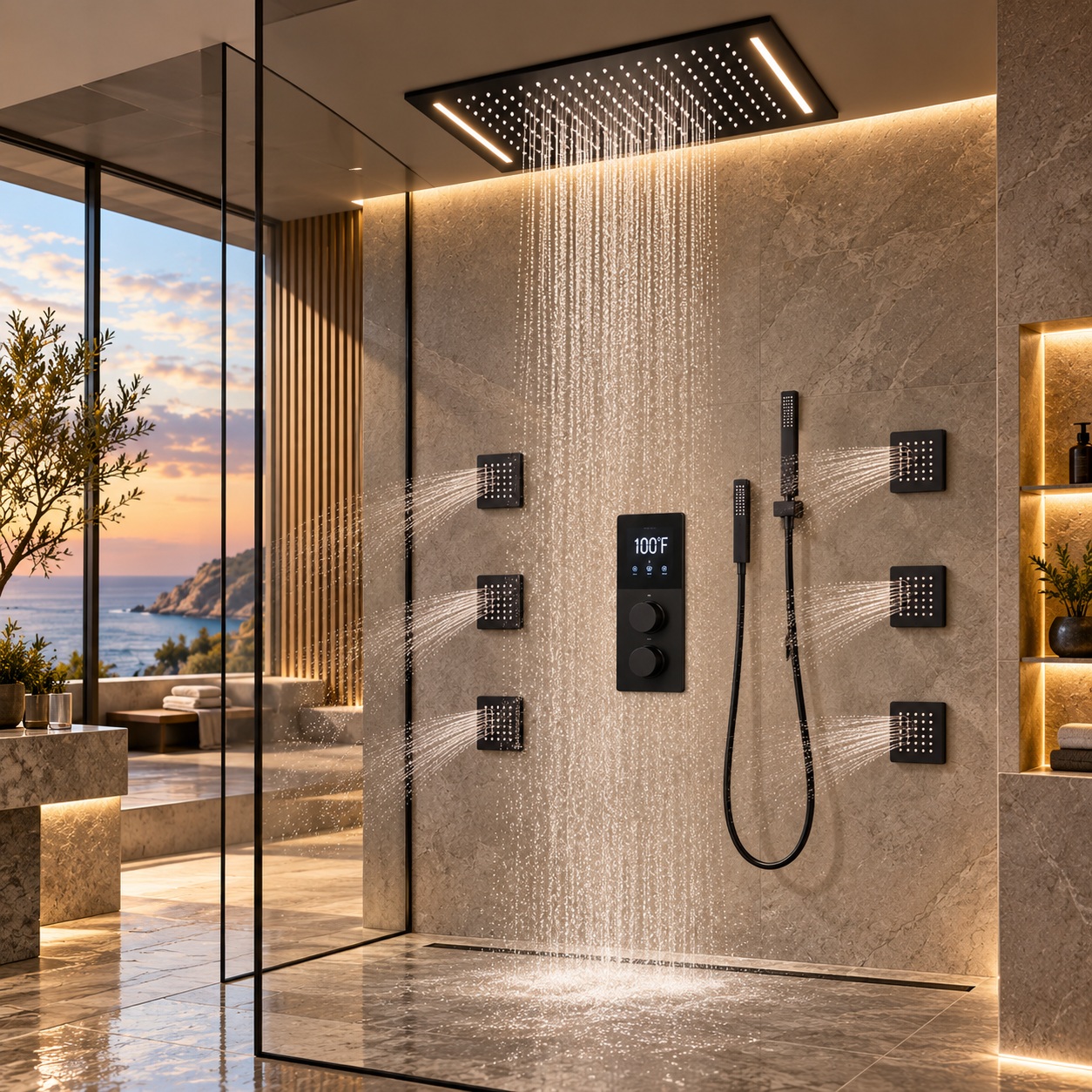
An electronic diverter routes mixed water to different outlets using motorized porting controlled by the logic board and user interface. For multi outlet shower designs, confirm whether outlets can run simultaneously or are mutually exclusive, whether there is flow sharing, and whether the diverter is integrated into the mixing module or installed as a separate in wall component. This affects pipe routing, pressure drop, and user experience consistency across rooms.
Digital rough in module—what does it typically include?
A digital rough in module is the concealed assembly that consolidates the mixing function, diverter routing (if included), and low voltage connections into a defined in wall footprint. From an AEC standpoint, the important coordination items are stud bay depth, waterproofing interface at penetrations, service access strategy, and separation from insulation or vapor barriers that could trap moisture around electronics.
Smart shower controller—what main functions does it handle?
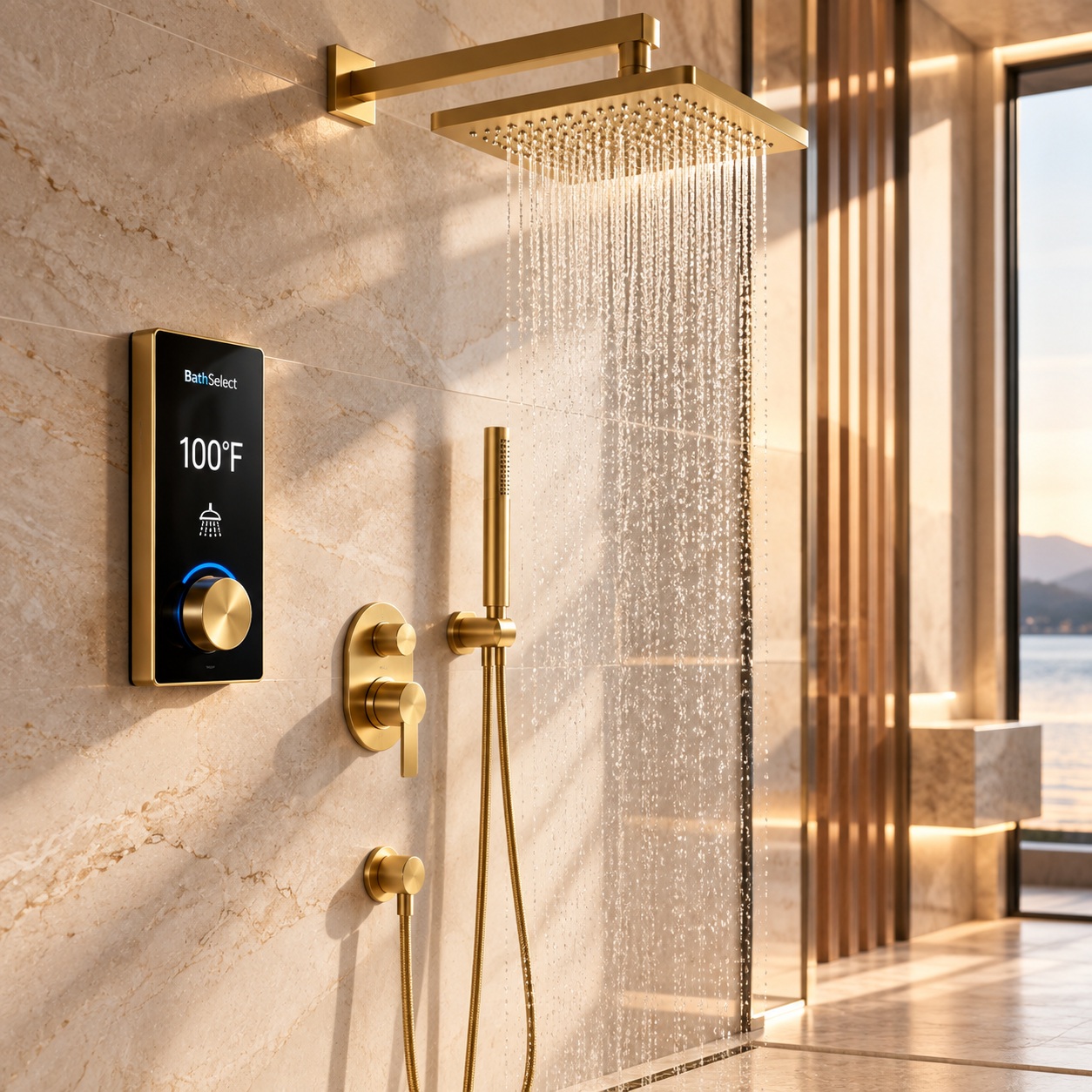
The controller is the HMI that sets temperature targets, selects outlets, manages timers, and triggers presets. In technical specs, define whether the controller is purely a command device or also hosts control logic and sensors, and confirm cable types and maximum run lengths between controller and valve module. For hospitality and multifamily, confirm whether settings persist per room and whether there is a reset method for turnover.
Touchscreen or digital interface—how does BathSelect approach controls?
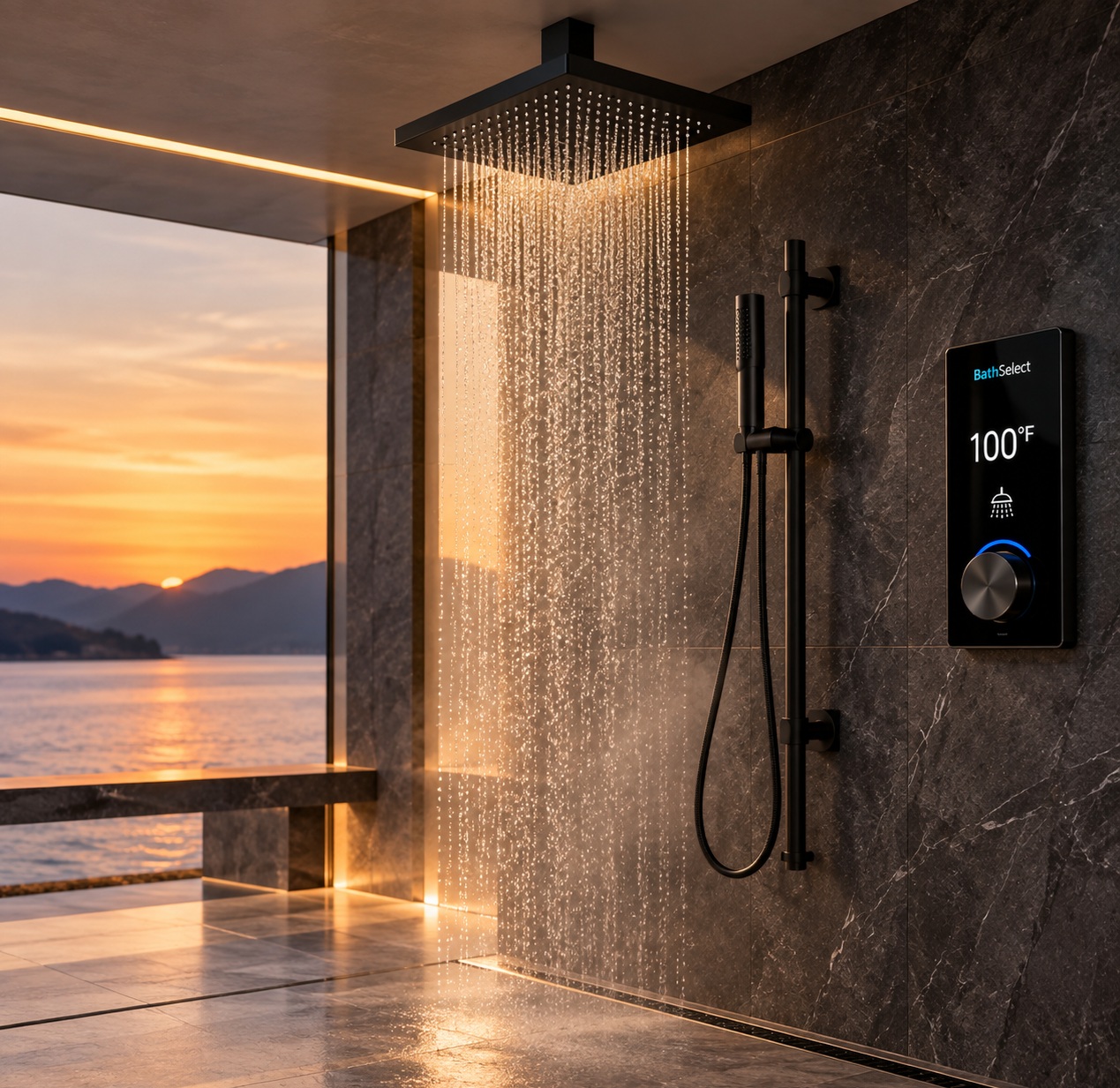
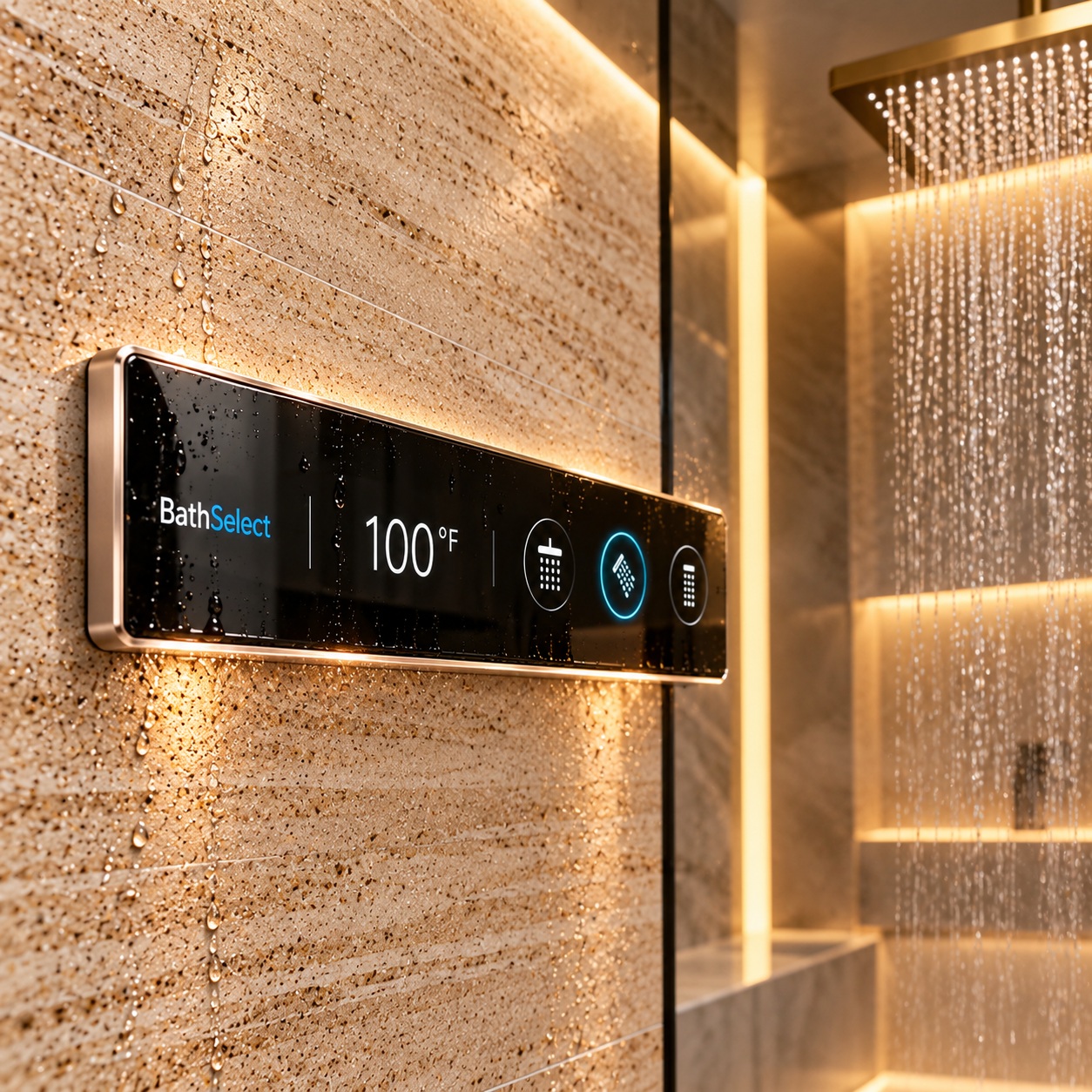
Smart style controls can use touch panels, button clusters, or display based interfaces. For AEC teams, the functional requirement is more important than the look: confirm wet finger performance, cleaning compatibility, mounting method (flush vs surface), and whether the interface supports lockouts, maximum temperature limits, and time limits. If the control is installed within a wet zone, confirm the appropriate ingress protection approach for that component.
Capacitive touch and HMI concepts—how do they apply to smart showers?
Capacitive HMI surfaces reduce mechanical wear and can improve cleanability, but they can be sensitive to moisture films and electrical noise. For design and commissioning, specify expected behavior in wet operation, define grounding and cable routing best practices, and confirm whether the controller includes debounce logic or lockout intervals to prevent accidental changes while water is running.
Microprocessor controlled valve logic—what advantages does it bring?
Microprocessor control enables proportional modulation, ramping sequences, and safety supervision that manual valves cannot provide. In practical terms it can reduce temperature hunting, provide repeatable presets, and enforce policy limits. For AEC documentation, ask how the system detects faults (sensor out of range, actuator stall, abnormal flow) and what the safe state is during a fault or power interruption.



.png)