BathSelect Automatic Sensor Faucets & Soap Dispensers — Commercial Touchless Fixtures
BathSelect® | Touchless Sensor Faucet & Soap Dispenser Systems
Automatic Hand Motion Sensor Touchless Soap Dispenser Lysol
On Sale Motion Sensor Touchless Soap Dispenser
Motion Sensor Dispensing Touchless Hygiene Commercial & Residential Use Competitive Pricing
Shop This Collection Automatic Soap Dispensers BathSelect Home
Automatic Hand Motion Sensor Touchless Soap Dispenser Lysol
Product Overview On Sale Motion Sensor Touchless Soap Dispenser Safe Trading Automatic Soap Dispenser on Leading BathSelect, Platform like Automatic Infrared Soap Dispenser, Hands Free Automatic Sensor Liquid Soap Dispenser, Automatic Liquid Foam Soap Dispenser Type F, Dual Sensor Faucet with Sensor Soap Dispenser, Touchless Electronic Soap Dispenser at very competitive price.
Motion Sensor Dispensing
Touchless Hygiene
Commercial & Residential Use
Competitive Pricing
Collection Link
Product Overview
Overview
On Sale Motion Sensor Touchless Soap Dispenser
Platform
Safe Trading Automatic Soap Dispenser on Leading BathSelect
Variants
Automatic Infrared Soap Dispenser, Hands Free Automatic Sensor Liquid Soap Dispenser
Foam Type
Automatic Liquid Foam Soap Dispenser Type F
Combination
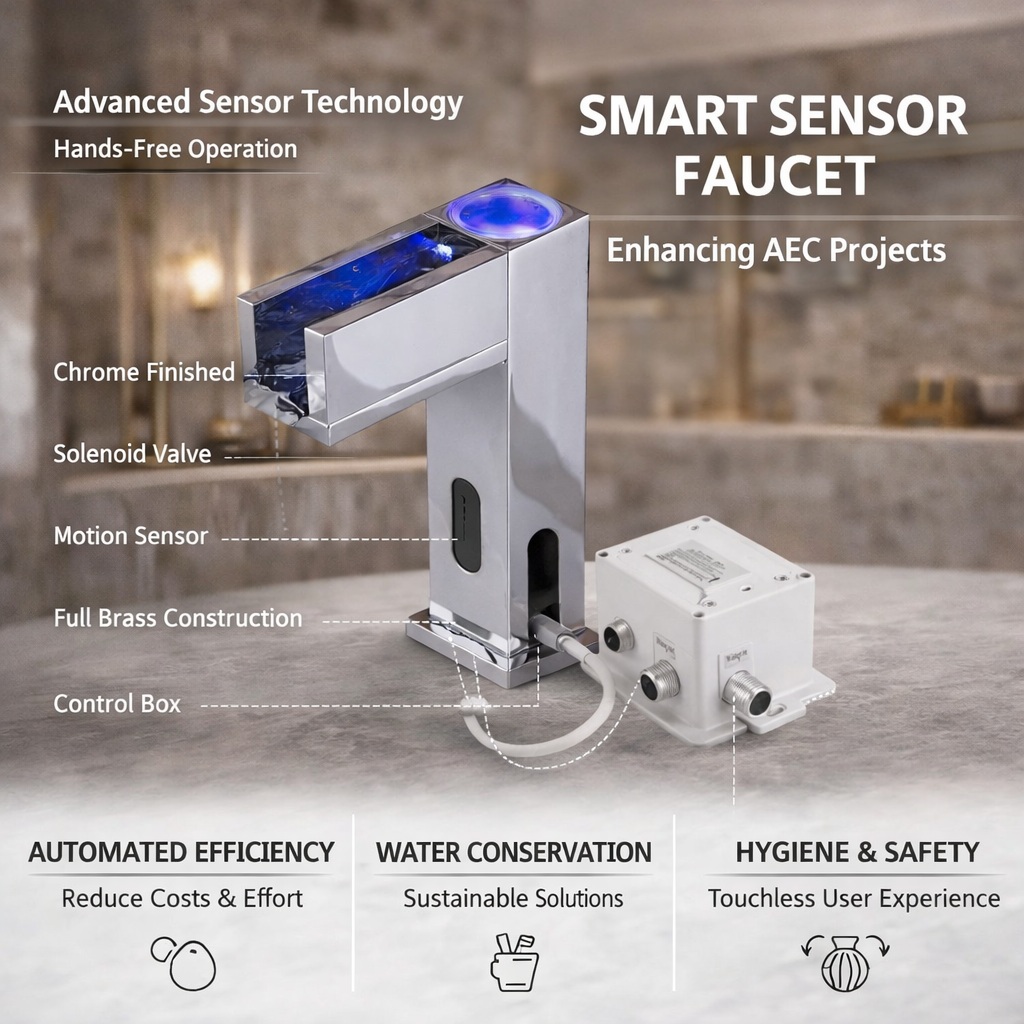
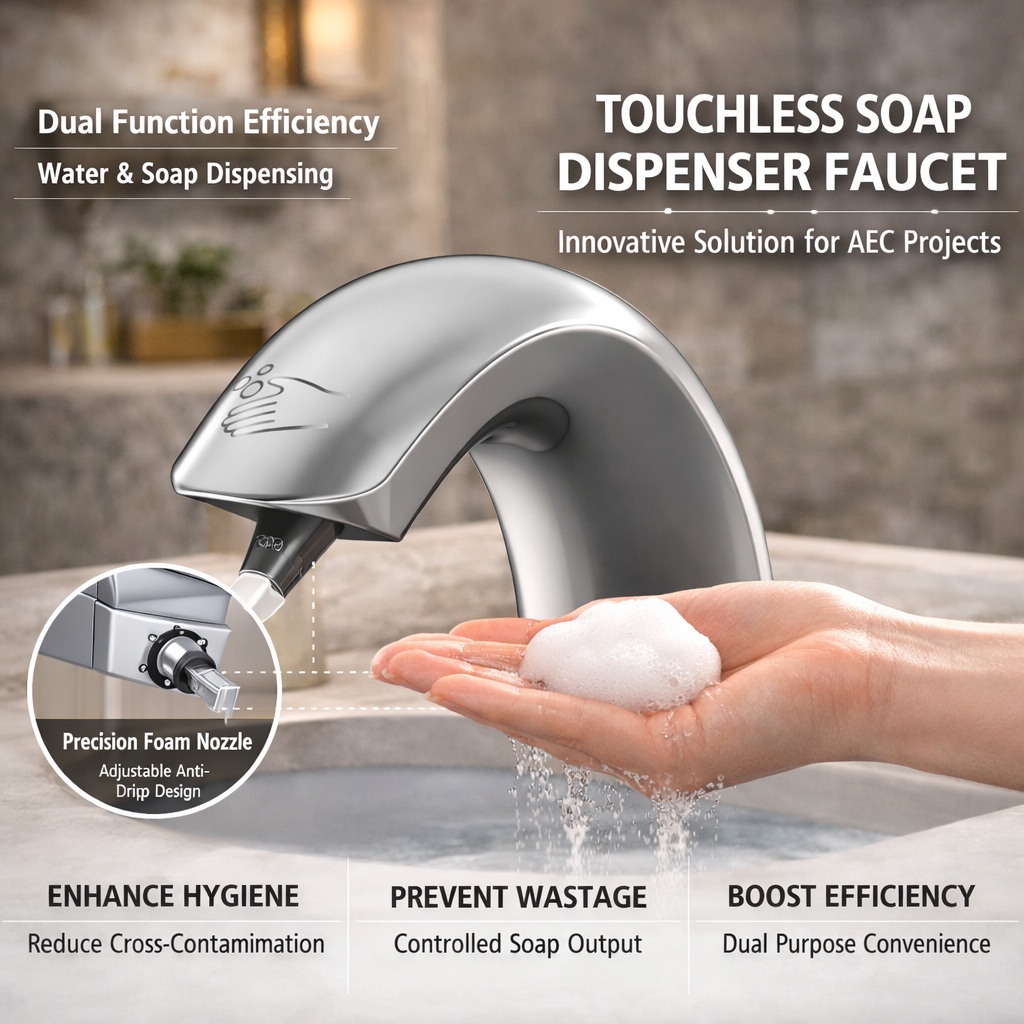
Dual Sensor Faucet with Sensor Soap Dispenser
Pricing
Touchless Electronic Soap Dispenser at very competitive price
Related Links

Technical Specifications
|
Product
|
Automatic Hand Motion Sensor Touchless Soap Dispenser Lysol
|
|
Type
|
Motion Sensor Touchless Soap Dispenser
|
|
Collection
|
Motion Sensor Faucets & Automatic Soap Dispensers
|
|
Notes
|
Compatible options include liquid and foam dispenser models as described in the overview text.
|
Professional Automatic Soap Dispenser Buying Considerations
Automatic touchless soap dispensers have become an important component of modern hygiene-focused restroom design by reducing contact with shared surfaces while providing consistent soap dispensing and simplified maintenance. Before selecting a touchless soap dispenser, buyers should evaluate sensor responsiveness, dispensing accuracy, liquid or foam soap compatibility, refill capacity, AC, battery, or hybrid power options, vandal-resistant construction, finish durability, maintenance accessibility, and compatibility with coordinated touch-free restroom fixtures. These considerations are particularly important in healthcare facilities, airports, hotels, office buildings, educational campuses, restaurants, and other high-traffic environments where hygiene and long-term reliability are essential. BathSelect® offers an extensive collection of premium commercial automatic soap dispensers, coordinated touchless faucet and soap dispenser systems, advanced commercial sensor faucets, and elegant automatic touchless soap dispensers designed for demanding commercial and institutional applications. Industry professionals frequently reference CDC hand hygiene recommendations to support infection prevention strategies, NSF public health standards when evaluating plumbing-related materials, IAPMO plumbing standards for code-conscious restroom specification, LEED green building guidance for sustainable building projects, and BIMobject for BIM and Revit coordination during design and construction. Comparing these related BathSelect collections and recognized industry resources helps architects, engineers, designers, contractors, facility managers, healthcare planners, and building owners specify automatic soap dispensing systems that support hygiene, sustainability, efficient maintenance, and dependable long-term lifecycle performance.
|
|
Frequently Asked Questions
How does the infrared sensing system in the Lysol dispenser accurately detect hand presence without false triggering?
The Lysol automatic dispenser relies on an active infrared (IR) proximity sensing system that combines an IR emitter diode and a photodiode receiver, controlled by a low-power microcontroller unit (MCU). The emitter sends out modulated IR signals at a specific frequency rather than continuous light, which allows the receiver to filter out ambient infrared noise from sources like sunlight or indoor lighting. When a hand enters the detection zone, the reflected IR signal intensity increases sharply, and the MCU compares this change against a calibrated threshold. Advanced filtering algorithms, including time-domain sampling and signal averaging, are used to prevent false triggers caused by environmental fluctuations, reflective surfaces, or transient motion. The system typically operates within a narrow detection range of 3–8 cm, ensuring precise activation while maintaining energy efficiency.
What is the internal pump architecture, and how does it ensure consistent volumetric dispensing?
The dispenser uses a motor-driven micro-pump system, commonly a piston-based linear actuator or a compact peristaltic mechanism, optimized for controlled volumetric output. In piston configurations, a DC motor drives a cam or gear assembly that converts rotational motion into linear displacement, pushing a fixed volume of liquid through a check-valve system that prevents backflow. In peristaltic designs, rotating rollers compress flexible tubing to move fluid forward in discrete segments. Both systems are engineered to deliver a repeatable dose, typically between 0.8 mL and 1.5 mL per cycle, with tolerances controlled by motor speed, stroke length, and fluid resistance. The internal geometry of the pump and nozzle is tuned specifically to Lysol’s soap viscosity range, ensuring laminar flow and minimizing splatter or dripping.
How does soap viscosity influence pump performance and system reliability?
Soap viscosity plays a critical role in the dispenser’s mechanical and electrical performance. Lysol formulations are engineered within a specific viscosity window (approximately 1,000–3,500 centipoise) to match the torque output of the internal DC motor and the flow characteristics of the pump. If the viscosity is too high, the motor experiences increased load, leading to higher current draw, slower dispensing, and potential motor stall conditions. Conversely, low-viscosity liquids can result in over-dispensing, dripping, or failure of the check-valve system to maintain proper sealing. The system’s design assumes non-Newtonian fluid behavior typical of liquid soaps, and deviations from the intended formulation can disrupt flow rate consistency and long-term reliability.
What power management strategies are implemented to maximize battery efficiency?
The Lysol dispenser incorporates several low-power design strategies to extend battery life while maintaining responsiveness. The MCU operates in a deep sleep mode when idle, drawing microamp-level current, and periodically wakes to sample the IR sensor at defined intervals. The IR emitter itself is pulsed rather than continuously active, significantly reducing energy consumption. During dispensing, the motor draws a short burst of higher current (typically 200–500 mA), but this event lasts only a fraction of a second. The system may also include voltage monitoring circuitry to detect low battery conditions and adjust motor operation accordingly. These combined strategies allow the device to achieve several months of operation on standard AA alkaline batteries under typical usage patterns.
What are the primary mechanical and electrical failure modes in long-term use?
Over extended use, the dispenser is subject to both mechanical wear and electronic degradation. Mechanically, the most common issues include pump fatigue, where repeated stress on seals, valves, or tubing leads to reduced efficiency or leakage, and motor wear, particularly in the brushes and bearings of the DC motor. Soap residue can also dry and crystallize within the nozzle or pump chamber, causing partial or complete blockages. Electrically, failure modes include battery leakage leading to terminal corrosion, degradation of solder joints on the printed circuit board (PCB), and reduced sensitivity or failure of the IR sensor components. Environmental factors such as humidity and temperature fluctuations can accelerate these processes.
How does the dispenser maintain hygiene at a microbiological level compared to manual systems?
From a technical hygiene standpoint, the touchless design eliminates fomite-based transmission pathways, which are a primary vector for microbial spread in shared environments. The sealed refill system reduces exposure of the soap reservoir to airborne contaminants, while the absence of physical contact prevents the accumulation of biofilms typically found on manual pump surfaces. Additionally, controlled dosing ensures that each user receives an adequate volume of soap for effective handwashing, which is critical for disrupting lipid membranes of pathogens. The combination of touchless activation and antimicrobial soap formulations enhances overall sanitation efficiency compared to traditional dispensers.
How do environmental factors like temperature, humidity, and lighting conditions affect system performance?
Environmental conditions can significantly influence the dispenser’s operation. Temperature affects soap viscosity; lower temperatures increase resistance to flow, potentially reducing dispensing efficiency, while higher temperatures decrease viscosity, increasing the risk of dripping. Humidity can impact both the electronic components and the mechanical system, potentially leading to condensation on internal circuits or degradation of seals over time. Lighting conditions, particularly strong direct sunlight, can introduce additional infrared noise, but the system’s modulated IR detection and filtering algorithms are designed to mitigate this effect. However, extreme conditions may still reduce sensor sensitivity or cause intermittent triggering issues.
|
|
|