Bradley vs BathSelect — Touchless Faucet Systems
Architects · MEP Engineers · Healthcare · Airports · Government
Bradley vs BathSelect
Touchless Faucet Systems
This page is engineered as a consultant-grade technical reference
comparing Bradley and BathSelect touchless faucet platforms for
commercial, institutional, and high-traffic environments. The focus
is on system integration, electronic reliability, lifecycle risk,
and long-term asset performance—not marketing claims.
System Integration
Sensor Technology
Power & EMI
Water Efficiency
Lifecycle Risk
Executive Summary — Specification Perspective
-
Purpose:
Consultant-grade technical reference comparing Bradley and BathSelect
touchless faucet platforms in commercial and institutional environments.
-
Decision focus:
System integration, sensor reliability, power architecture, commissioning
discipline, and lifecycle asset risk—not feature marketing.
-
When Bradley fits:
Large institutional portfolios prioritizing standardization,
predictability, and portfolio-wide operational consistency.
-
When BathSelect fits:
Projects requiring adaptability, retrofit flexibility, sensor-level tuning,
and accommodation of non-standard architectural or infrastructure constraints.
-
Consultant guidance:
Optimal specifications align platform selection with system-level constraints,
commissioning capability, and long-term asset management strategy.
Commercial Design & Technical Context
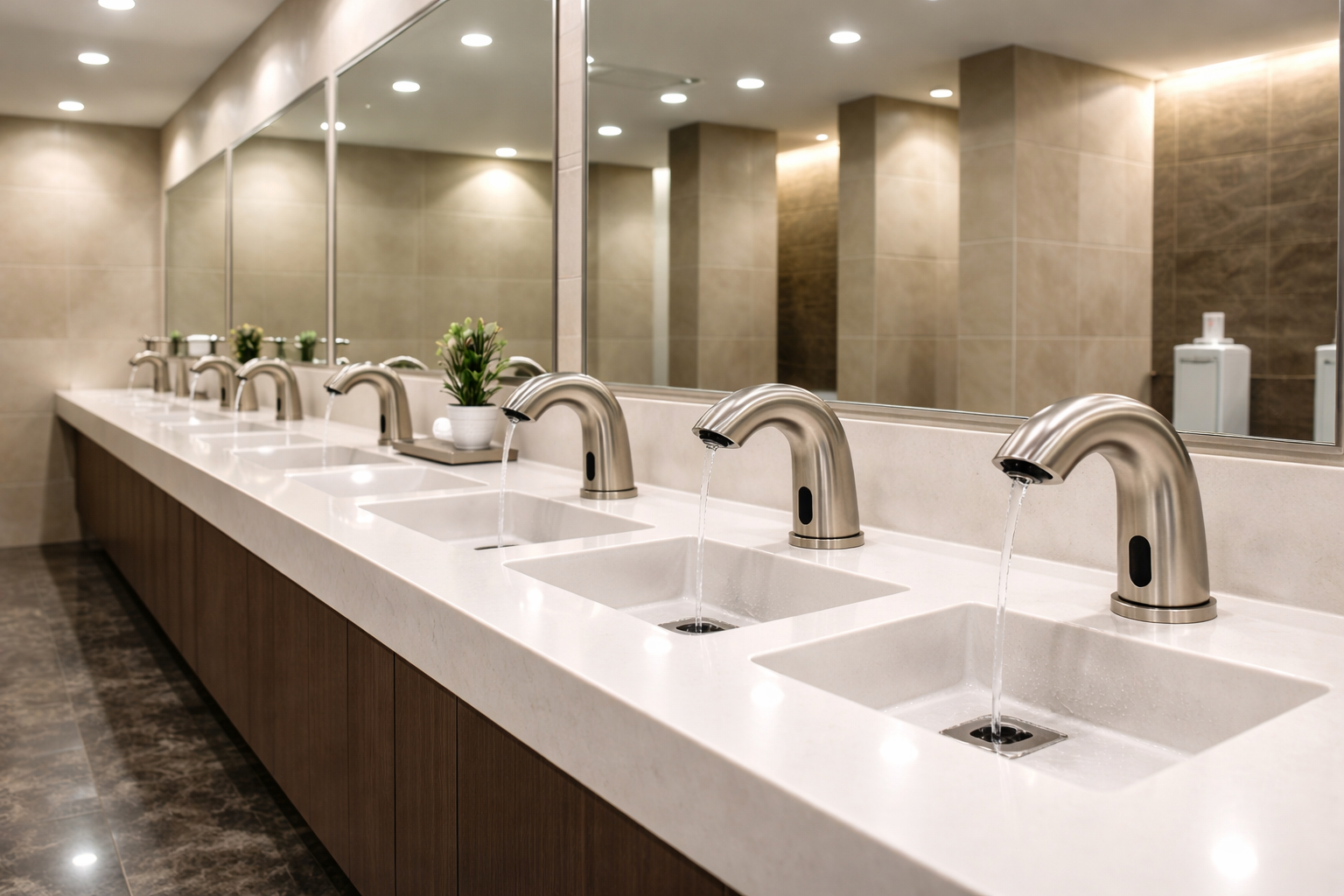
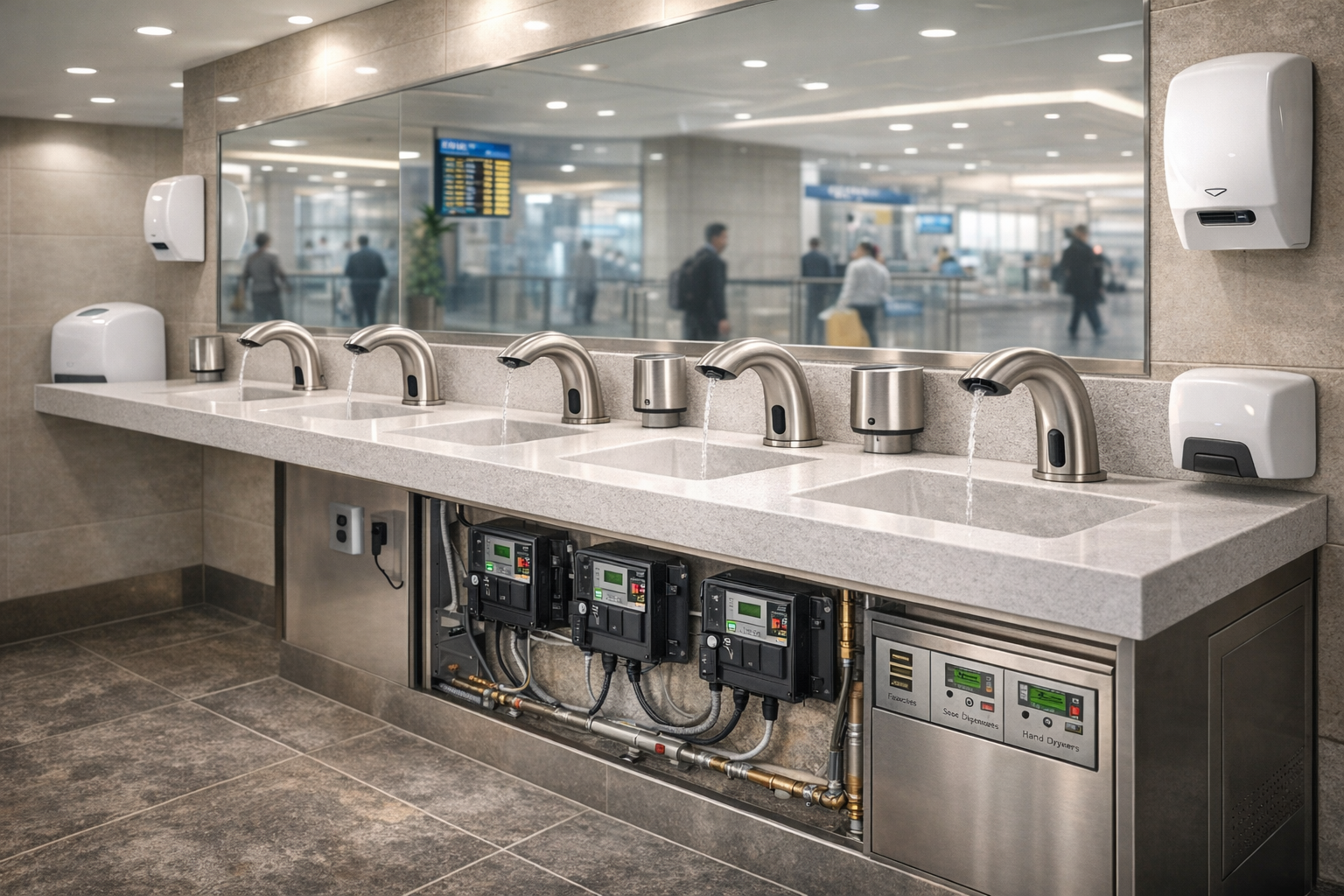
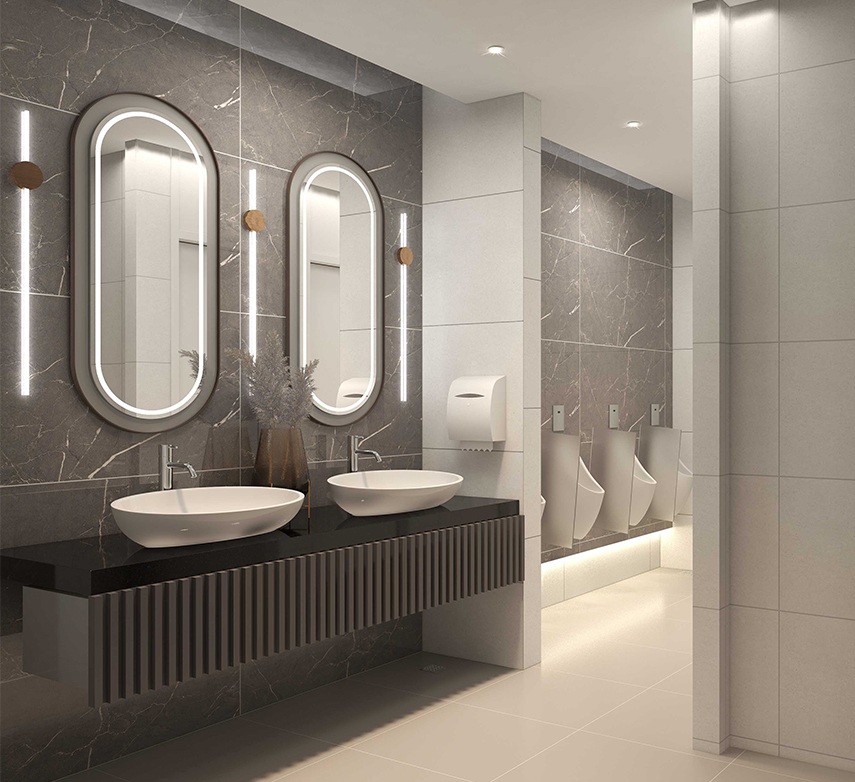
In high-traffic commercial restroom environments, touchless faucet systems
must operate reliably under dense fixture layouts, reflective materials,
variable ambient lighting, and continuous daily usage.
Commercial touchless faucet system selection should evaluate the complete operating platform—including sensor logic, power architecture, basin coordination, flow control, commissioning requirements, service access, and long-term component support. Architects and engineers can reference the BathSelect installation and specification resources, review architectural touchless faucet system coordination guidance, and use the commercial restroom touchless faucet specification guide when developing basis-of-design requirements for airports, healthcare facilities, universities, hospitality properties, offices, and other high-traffic buildings.
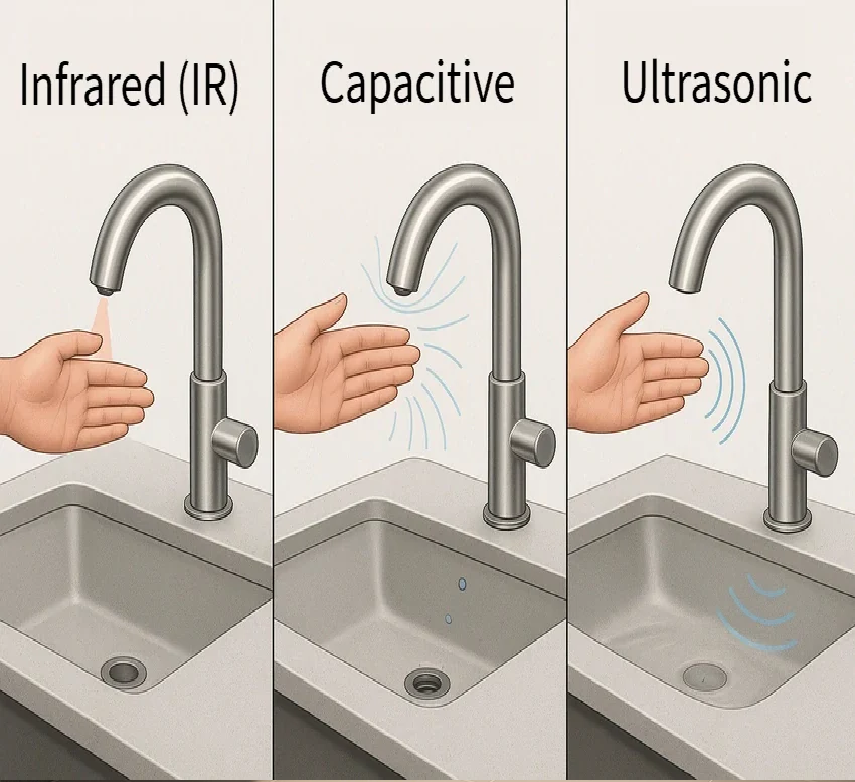
Sensor Technology & Activation Logic
Sensor technology directly governs reliability, water efficiency,
and user experience in commercial touchless faucet systems.
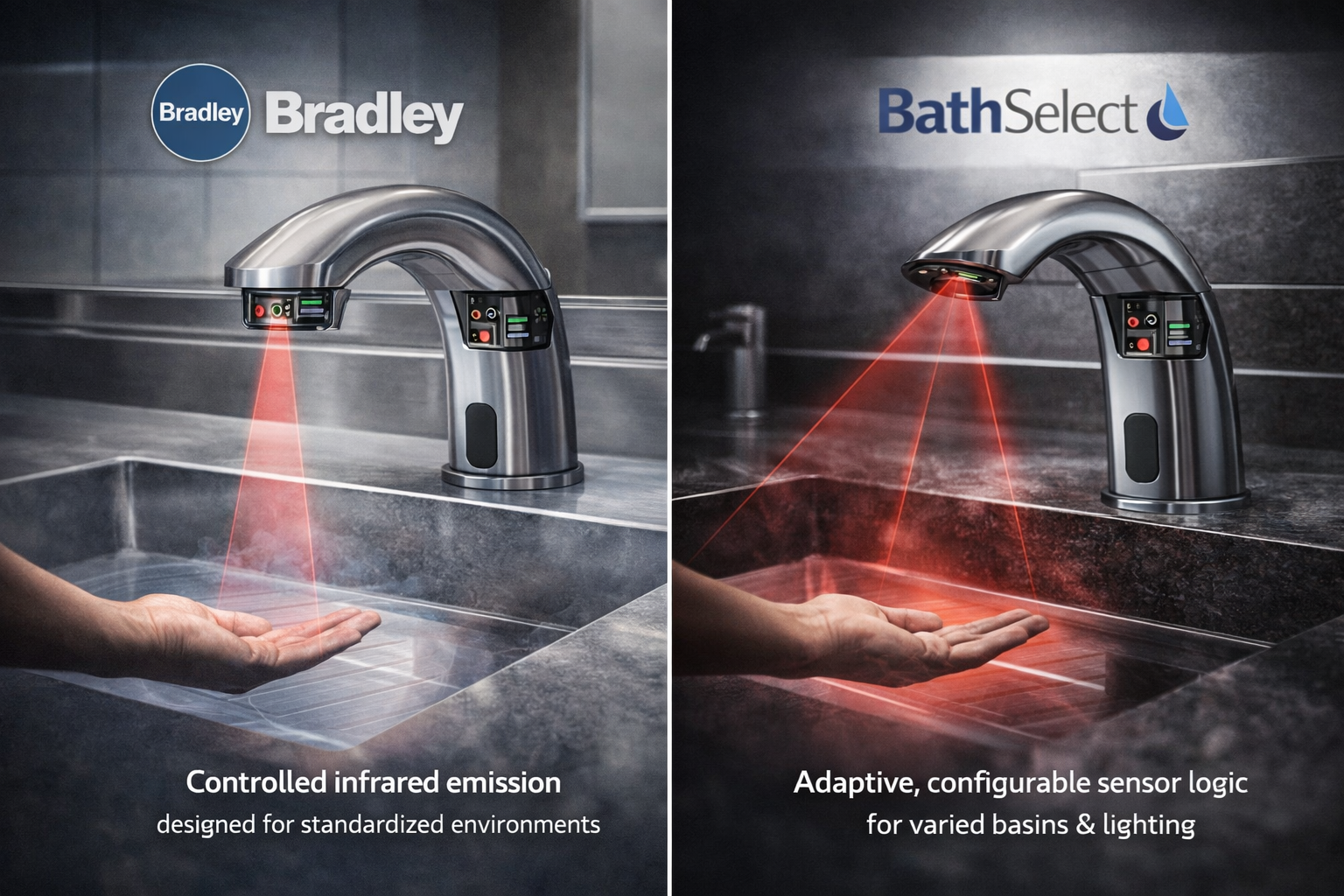
Infrared detection geometry and sensor logic directly affect activation
accuracy, water efficiency, and user interaction consistency.
Installation Predictability & Retrofit Flexibility
Installation predictability is a critical variable in commercial restroom
projects where inspection timelines, commissioning workflows, and
multi-trade coordination must align with precision. Clearly defined
rough-in dimensions and mounting parameters reduce field uncertainty,
rework, and schedule risk.
Bradley commercial platforms typically rely on standardized mounting
configurations and predictable service-access layouts, supporting
regulated environments with strict inspection and commissioning
requirements.
BathSelect adopts a more adaptable installation philosophy, emphasizing
flexible mounting footprints, adjustable control-module placement, and
multiple power-routing options. This approach accommodates retrofit
projects, mixed-infrastructure facilities, and architecturally
constrained installations.
From a specification standpoint, these differences materially influence
commissioning predictability, inspection outcomes, and long-term
serviceability—particularly in high-traffic facilities where downtime
carries operational risk.
Installation references:
Bradley Installation & Support Resources
|
BathSelect Installation & Technical Guides
Standardized rough-ins and adaptable mounting strategies directly
influence inspection success, commissioning efficiency, and retrofit
feasibility in commercial restroom installations.
System Integration & Multi-Fixture Coordination
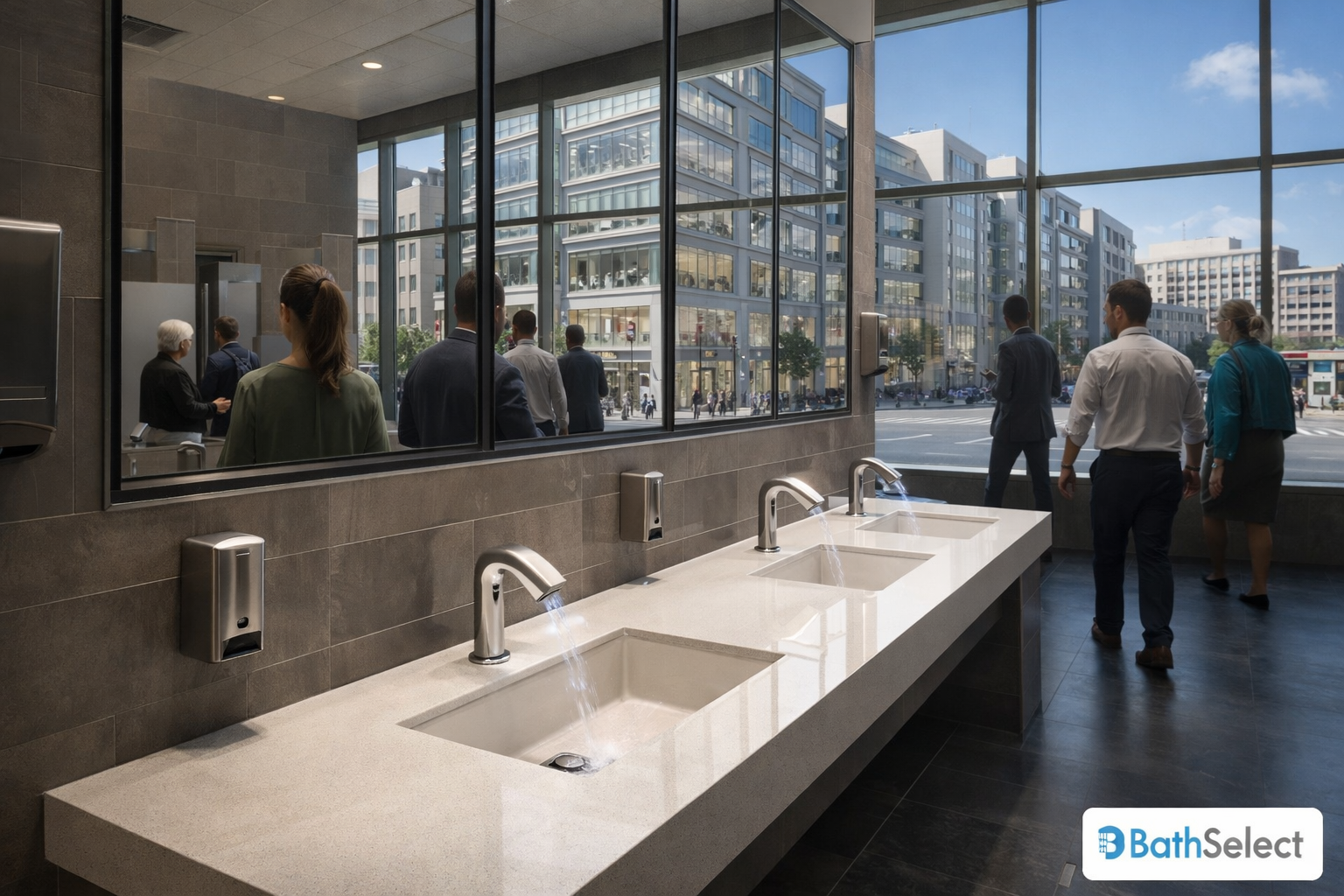
In dense commercial restroom environments, touchless faucets must be
evaluated as components within an integrated system that includes soap
dispensers, hand dryers, lighting controls, mirrors, and other
infrared-based devices. Performance degradation often originates not
from the faucet itself, but from unmanaged interaction between adjacent
fixtures.
Infrared crosstalk, overlapping detection fields, and uncoordinated
response timing are among the primary causes of false activation,
inconsistent user experience, and elevated water consumption in
high-traffic facilities such as airports, hospitals, and universities.
Bradley commercial platforms generally favor standardized fixture spacing
and predictable sensor behavior across institutional portfolios.
BathSelect adopts a more adaptive integration strategy, supporting
adjustable sensor logic and configurable detection behavior to
accommodate complex layouts, retrofit conditions, and architecturally
constrained environments.
From a specification standpoint, effective system integration requires
early coordination between all sensor-based fixtures, lighting systems,
and reflective surfaces to ensure predictable performance, minimize
nuisance activations, and reduce long-term operational risk.
Integration references:
Bradley Integrated Washroom Systems
|
BathSelect Commercial Touchless Systems
Coordinated sensor behavior across faucets, dispensers, and hand dryers
is critical to maintaining reliability in dense commercial restroom
installations.
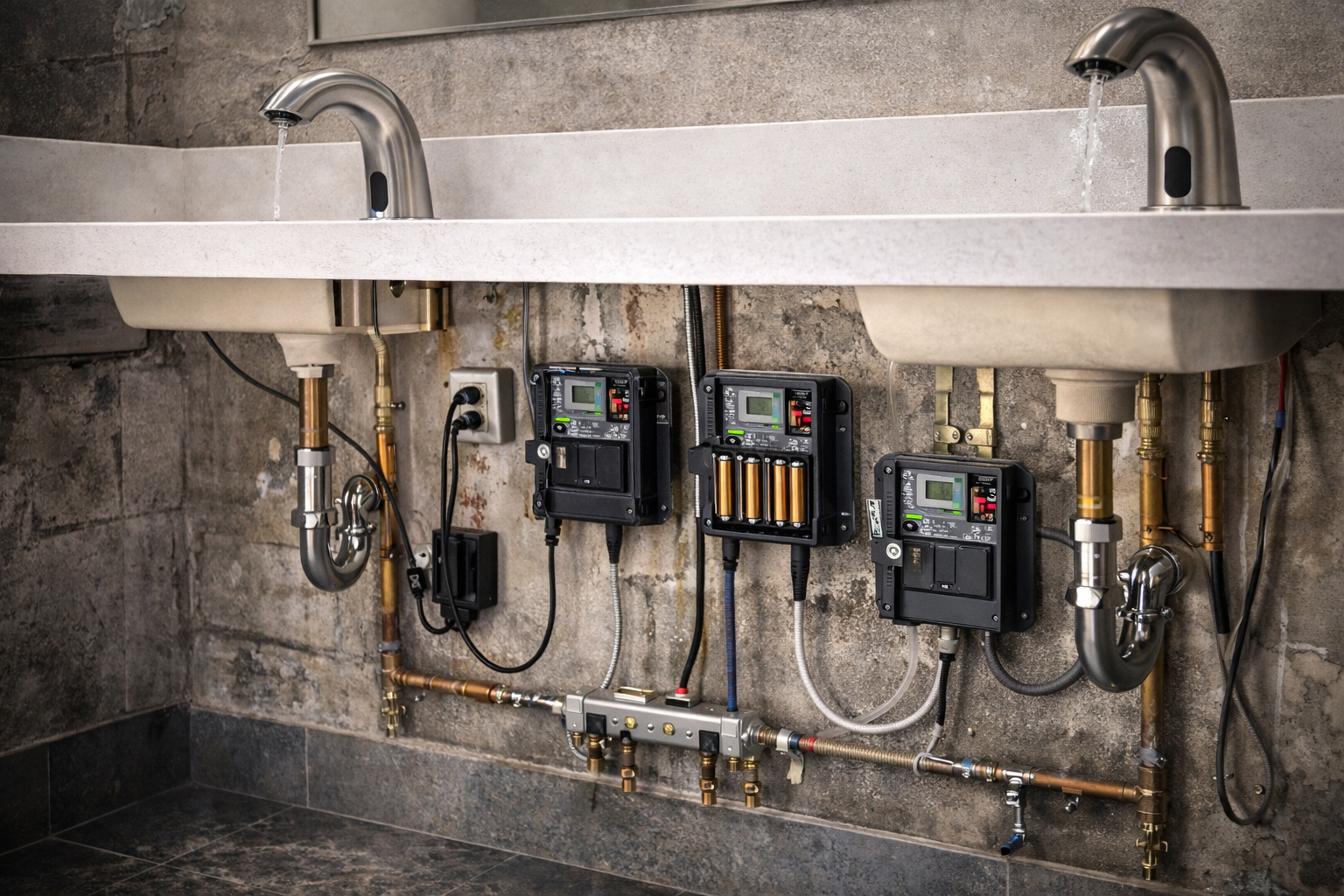
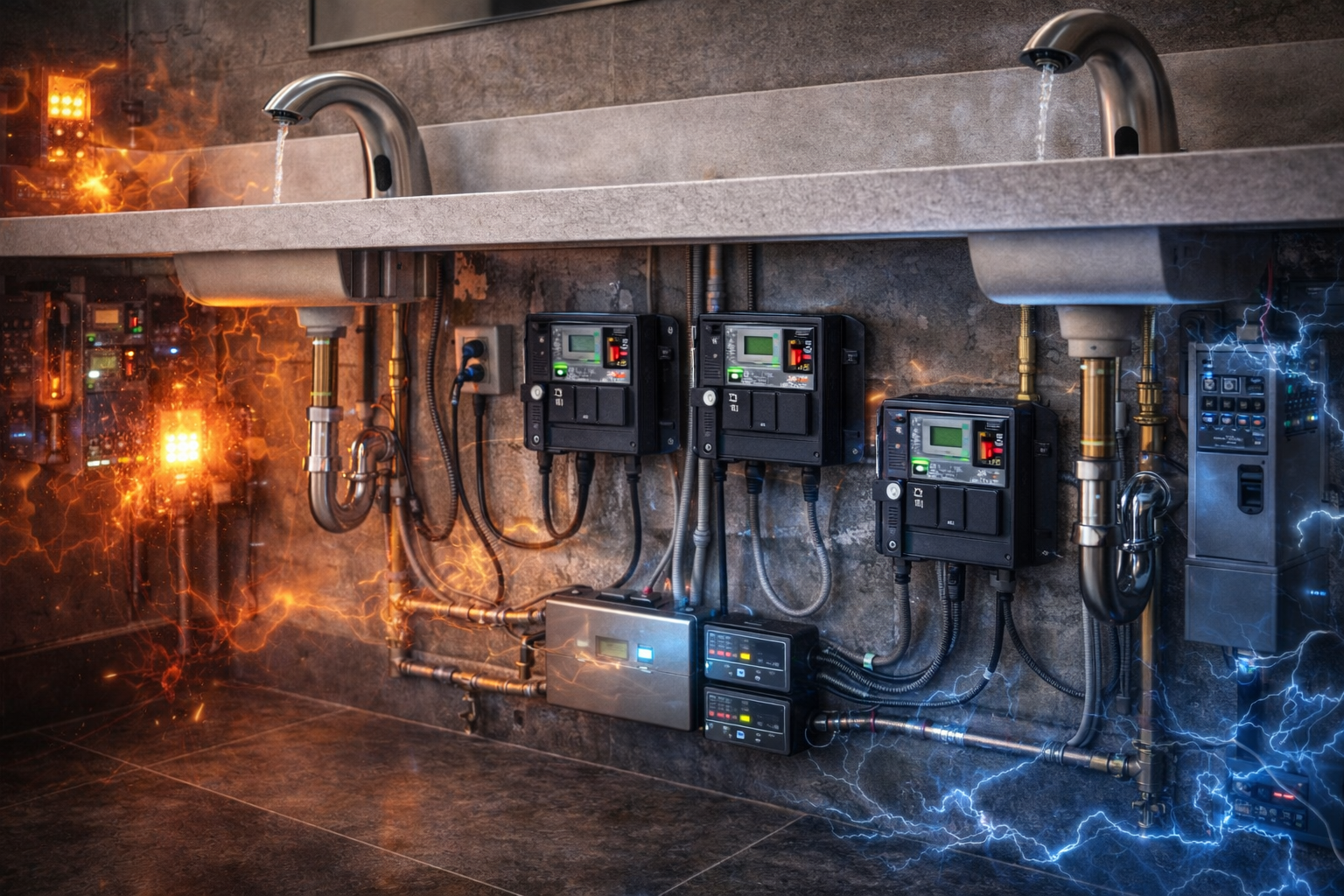
Electromagnetic interference and unstable power conditions are primary
contributors to intermittent electronic failures in commercial restrooms.
Electronic Reliability in High-Noise Environments
Touchless faucet electronics deployed in commercial restrooms routinely
operate within electrically noisy environments generated by LED lighting
drivers, elevator systems, variable frequency drives, and building
automation infrastructure. Under these conditions, control modules must
maintain stable sensor logic, valve actuation, and power regulation without
signal degradation.
Inadequate grounding paths, poor cable separation, or inconsistent power
quality can result in intermittent sensor behavior, unintended activation,
or premature component wear—issues that become highly visible in
uptime-critical facilities such as hospitals, airports, and government
buildings.
Bradley commercial platforms generally assume controlled electrical
environments and emphasize standardized grounding practices aligned with
institutional design standards. BathSelect adopts a more mitigation-focused
approach, providing guidance on electronic isolation, control-module
placement, and power routing for mixed-use and retrofit facilities where
ideal power conditions cannot be guaranteed.
Electronic reliability references:
Bradley Electronic Faucet Platforms
|
BathSelect Technical Documentation
Water Management, Flow Control & Sustainability
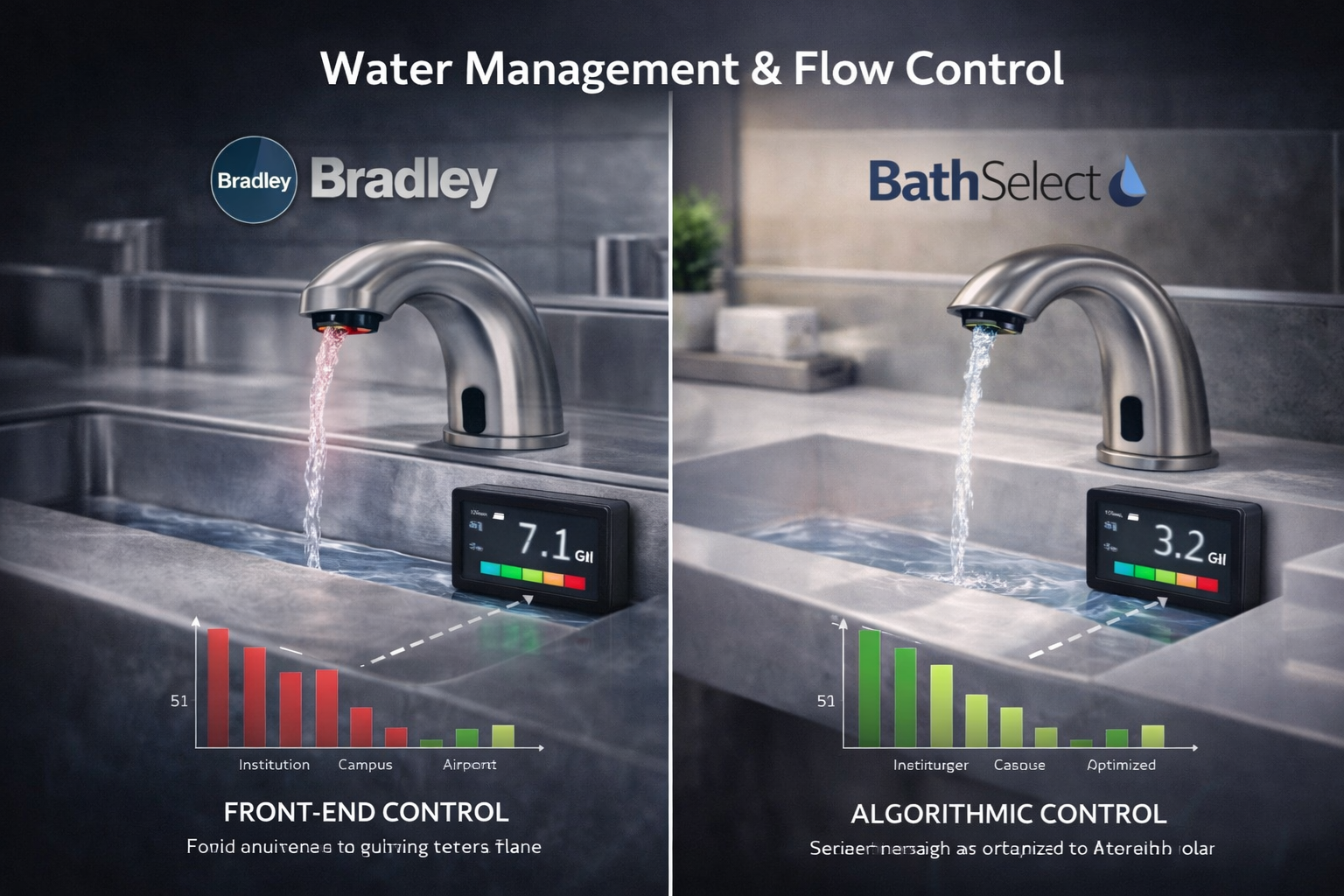
In high-traffic commercial restroom environments, overall water consumption
is influenced far more by sensor activation logic, shutoff accuracy, and
re-trigger suppression than by nominal flow rate selection alone. Even
systems specified at identical GPM values can exhibit materially different
consumption profiles over time.
Bradley commercial platforms typically rely on predefined operating profiles
engineered to deliver predictable institutional performance and compliance
consistency across large facility portfolios. This approach prioritizes
repeatability and simplified verification within regulated environments.
BathSelect places greater emphasis on algorithmic control and configurable
sensor behavior, enabling specifiers to fine-tune activation timing, shutoff
thresholds, and usage response based on basin geometry, usage intensity, and
project-specific sustainability objectives.
From a sustainability perspective, this distinction becomes especially
relevant in facilities pursuing long-term water-efficiency targets, where
incremental gains in control precision compound into significant lifecycle
savings across multi-site deployments.
Water-efficiency references:
Water Efficiency & Sensor Algorithm Modeling
Sensor-controlled activation logic and shutoff precision play a decisive
role in long-term water efficiency for high-use commercial restrooms.
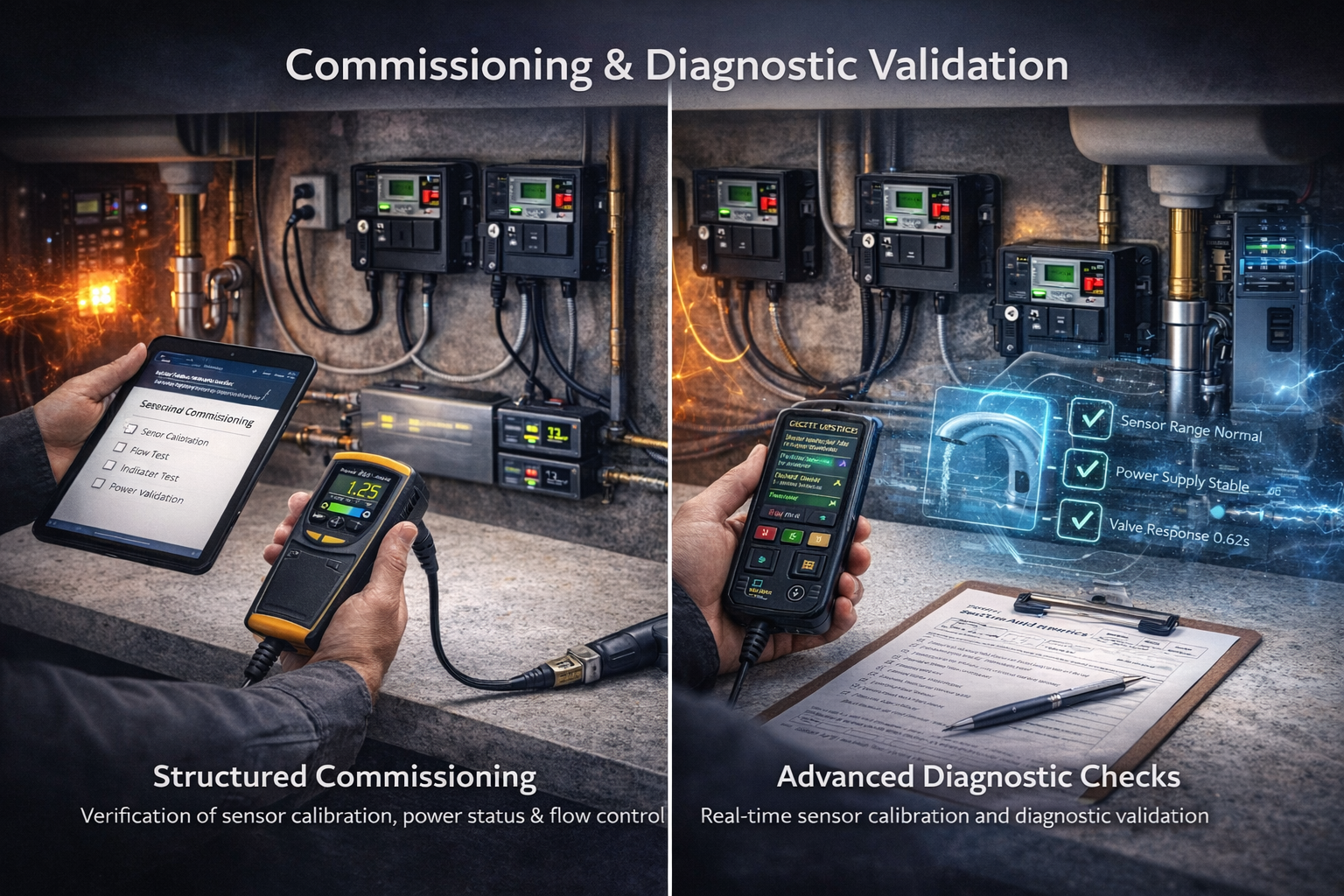
Commissioning, Diagnostics & Post-Installation Validation
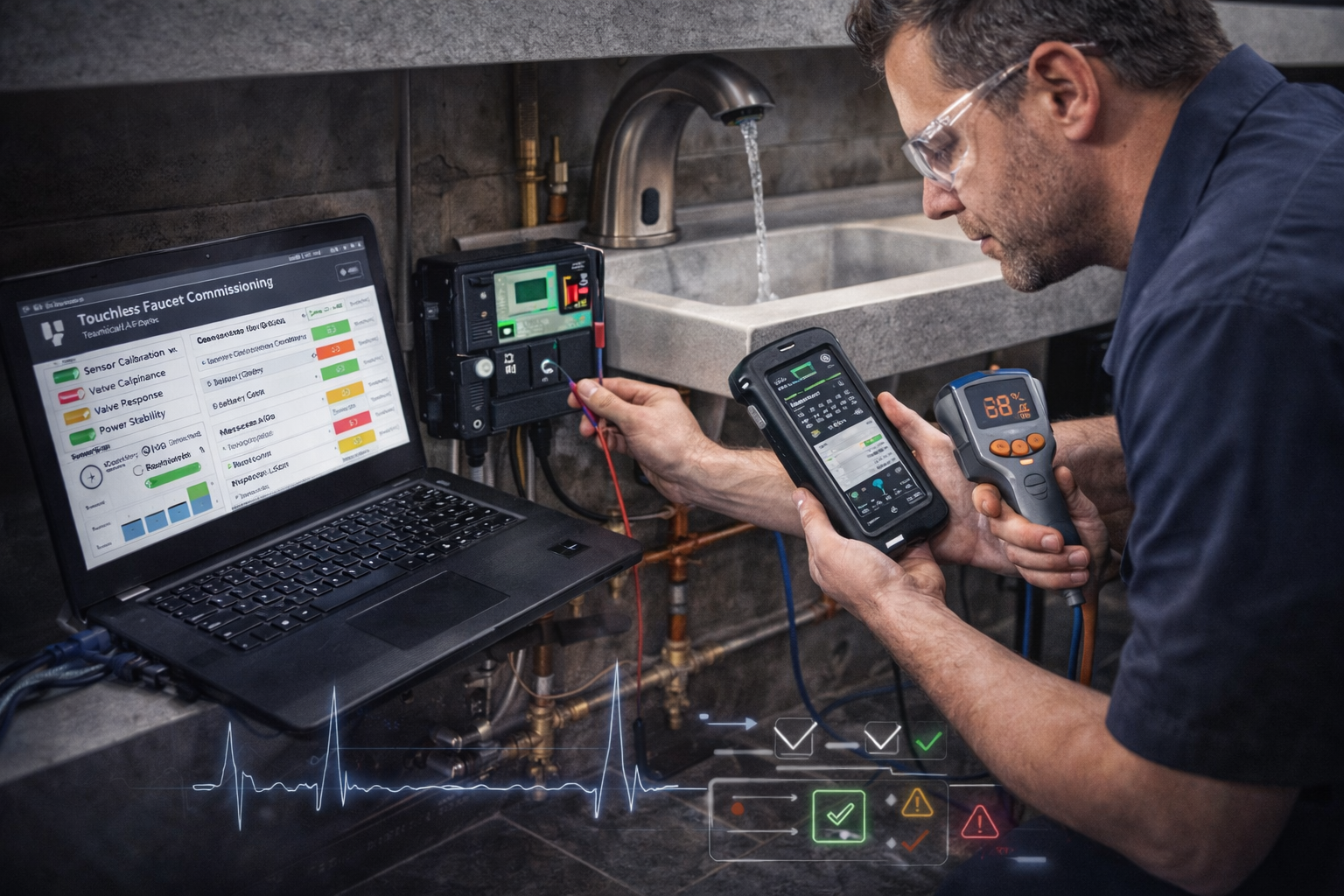
In specification-grade commercial restroom projects, system performance
must be validated through structured commissioning procedures rather than
assumed at installation. Commissioning confirms correct sensor calibration,
power stability, valve response, and diagnostic indicator behavior prior
to occupancy or Authority Having Jurisdiction (AHJ) sign-off.
Inadequate commissioning remains one of the most common root causes of
early-stage performance complaints, nuisance activations, and unplanned
service calls—particularly in high-use facilities such as hospitals,
airports, transportation hubs, and government buildings.
Bradley platforms reduce commissioning variability through standardized
configurations and predictable startup behavior. BathSelect systems,
by contrast, rely on explicit post-installation validation to ensure that
their adaptable sensor logic and power configurations are tuned correctly
for site-specific conditions.
Commissioning references:
Commissioning & Final Specification Checklist
Standardization vs Customization — Lifecycle Risk Analysis
From a consultant and asset-owner perspective, the choice between standardized
and customized touchless faucet platforms directly influences lifecycle risk,
operational predictability, and long-term maintenance exposure across facility
portfolios.
Bradley platforms prioritize standardization as a risk-mitigation strategy,
reducing variability across installations and simplifying training, diagnostics,
and spare-parts logistics in multi-site institutional environments.
BathSelect supports controlled customization when architectural intent,
non-standard basin geometry, or infrastructure constraints would otherwise
compromise system performance. In such cases, lifecycle risk is actively managed
through commissioning rigor, documentation, and service planning rather than
eliminated through uniformity.
Consultant insight:
Standardization minimizes uncertainty at scale, while customization is justified
only when its operational trade-offs are explicitly defined and managed.
Spare Parts Availability & Long-Term Asset Planning
In high-traffic commercial environments, long-term system reliability is less
dependent on initial specification and more influenced by spare-parts continuity,
component modularity, and Mean Time To Repair (MTTR) across the asset lifecycle.
Bradley platforms emphasize long-term parts continuity and portfolio familiarity,
allowing facility teams to standardize inventories and reduce diagnostic time
across multiple buildings or campuses.
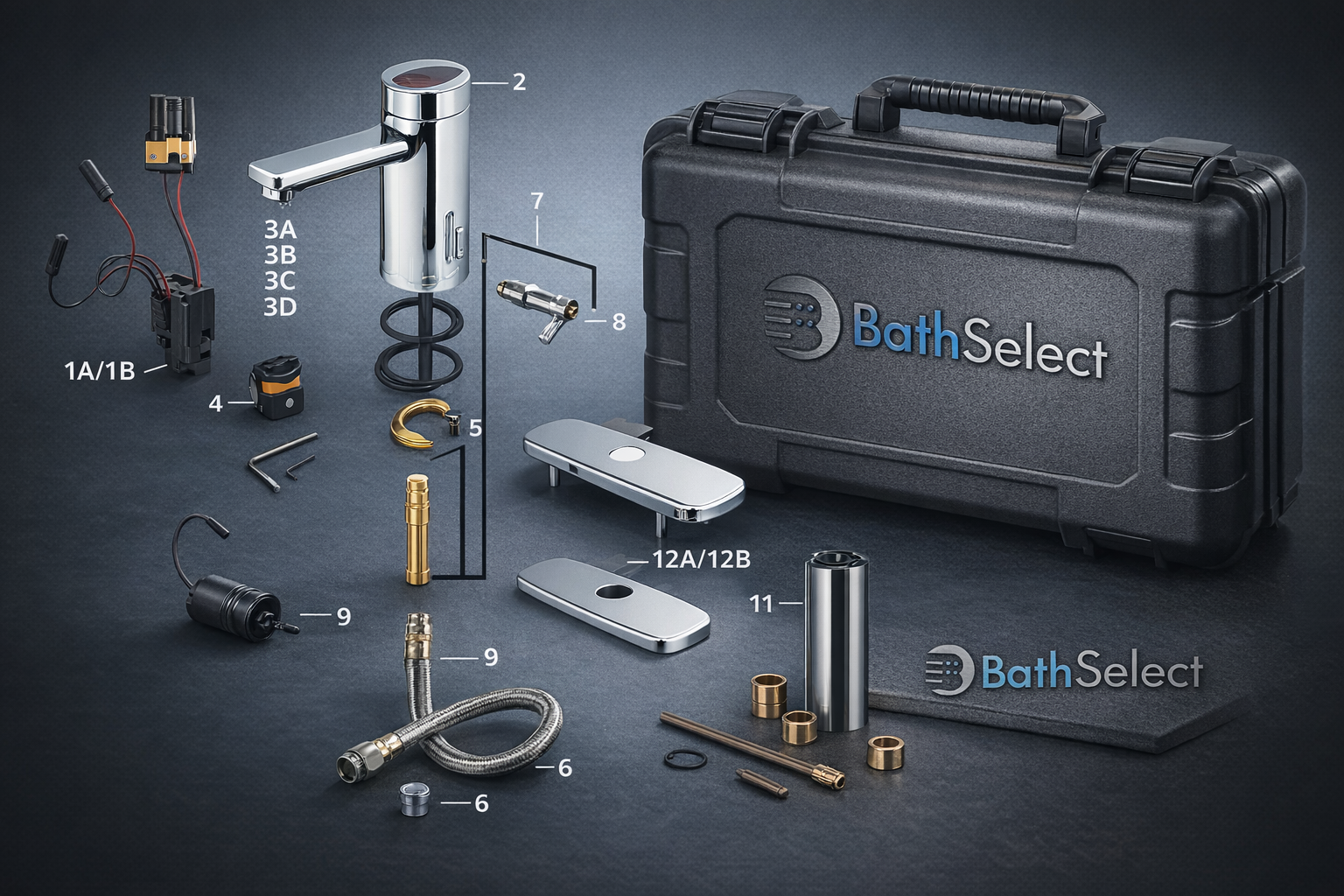
BathSelect systems leverage modular electronic components and accessible control
layouts to reduce localized downtime, enabling targeted repairs without broad
system disruption—an advantage in mixed-use or design-diverse portfolios.
Lifecycle reference:
Lifecycle Serviceability & Asset Management Analysis
Advanced Technical Review — Bradley vs BathSelect
Touchless Faucet Systems (Expert-Level)
System Integration
How do Bradley and BathSelect differ in managing infrared crosstalk in dense multi-fixture restrooms?
+
In high-density commercial restrooms, unmanaged infrared overlap is a leading cause of
false activation and excessive water use. Bradley systems rely on controlled fixture
spacing and fixed sensor geometry at the planning level, while BathSelect mitigates
crosstalk through adjustable detection fields and control-level tuning in constrained
or retrofit layouts.
More technical details →
EMI / Power
Which platform demonstrates greater resilience to EMI and power-quality disturbances?
+
EMI from LED drivers, elevators, and building automation systems is a frequent source
of instability. Bradley assumes controlled electrical environments with standardized
grounding, whereas BathSelect incorporates electronic isolation and mitigation guidance
for mixed-use and retrofit facilities where ideal power conditions cannot be assumed.
More technical details →
Lifecycle Risk
How should lifecycle risk be evaluated beyond initial sensor performance?
+
Lifecycle risk extends beyond sensor accuracy to include exposure to cleaning
chemicals, EMI, battery decay, and service accessibility. Bradley minimizes risk through
standardization, while BathSelect accepts controlled complexity to gain adaptability,
shifting risk management toward commissioning and maintenance strategy.
Lifecycle risk extends beyond sensor accuracy to include exposure to cleaning chemicals,
EMI, battery decay, and service accessibility. Bradley minimizes risk through
standardization, while BathSelect accepts controlled complexity to gain adaptability,
shifting risk management toward commissioning and maintenance strategy.
More technical details →
Water Efficiency
Does algorithmic control have a greater impact on water savings than flow rate alone?
+
Yes. In high-traffic restrooms, activation timing, shutoff precision, and retrigger
suppression typically influence total water usage more than nominal GPM values.
BathSelect emphasizes configurable control logic, while Bradley relies on predefined
institutional operating profiles.
More technical details →
Sensor Geometry
How does basin geometry alter sensor reliability between the two platforms?
+
Basin depth, reflectivity, and outlet projection affect infrared return signals.
Bradley systems perform best within standardized basin envelopes, whereas BathSelect
allows sensor tuning to maintain reliability in deeper or reflective basins commonly
found in retrofit and design-forward projects.
More technical details →
Commissioning
Which commissioning failures most commonly lead to early system dissatisfaction?
+
Skipped calibration, improper grounding, and unverified power stability are the most
frequent causes of early dissatisfaction. Bradley reduces these risks through predictable
configurations, while BathSelect depends on explicit commissioning validation to ensure
site-specific tuning accuracy.
More technical details →
Serviceability
How does modularity affect MTTR and operational uptime?
+
Modular control components reduce Mean Time To Repair by isolating failure points.
BathSelect emphasizes modular electronics and accessible layouts, while Bradley benefits
from component continuity and portfolio-wide familiarity in large institutional
deployments.
More technical details →
More technical details →
Failure Analysis
What are the most common root causes of intermittent faucet failures?
+
Intermittent failures most often result from marginal grounding, EMI exposure, battery
voltage decay, or reflective changes introduced during minor renovations. These issues
are more prevalent in mixed-infrastructure environments, where BathSelect provides
mitigation flexibility.
More technical details →
ADA / Usability
How should ADA compliance be evaluated beyond dimensional checks?
+
True ADA compliance includes activation distance, response timing, repeatability, and
ease of use—not just reach dimensions. Both platforms support compliant configurations,
but real-world usability depends heavily on sensor behavior under varied user interaction
patterns.
More technical details →
Specification Risk
When is customization technically justified despite increased lifecycle complexity?
+
Customization is justified when architectural constraints or power limitations would
otherwise compromise performance. BathSelect enables controlled customization with
explicit lifecycle trade-offs, while Bradley remains optimal where standardization and
predictability outweigh design variability.
More technical details →
Consultant Summary — Executive Closure
This technical review demonstrates that specifying touchless faucet systems
in commercial and institutional environments is not a product-level decision,
but a system-level risk management exercise. Sensor behavior, power architecture,
commissioning discipline, and lifecycle serviceability collectively determine
operational success far more than individual feature lists or aesthetic preference.
Bradley and BathSelect represent fundamentally different specification philosophies.
Bradley emphasizes standardization, predictability, and portfolio-wide consistency,
while BathSelect prioritizes adaptability, configurability, and site-specific
performance optimization. Neither approach is universally superior — suitability
depends on operational context, infrastructure constraints, and lifecycle risk tolerance.
The following decision guidance distills this analysis into practical specification
criteria for architects, engineers, and facility managers who require a clear
framework for selecting the appropriate platform across diverse project conditions.
Decision Anchor — Specification Guidance
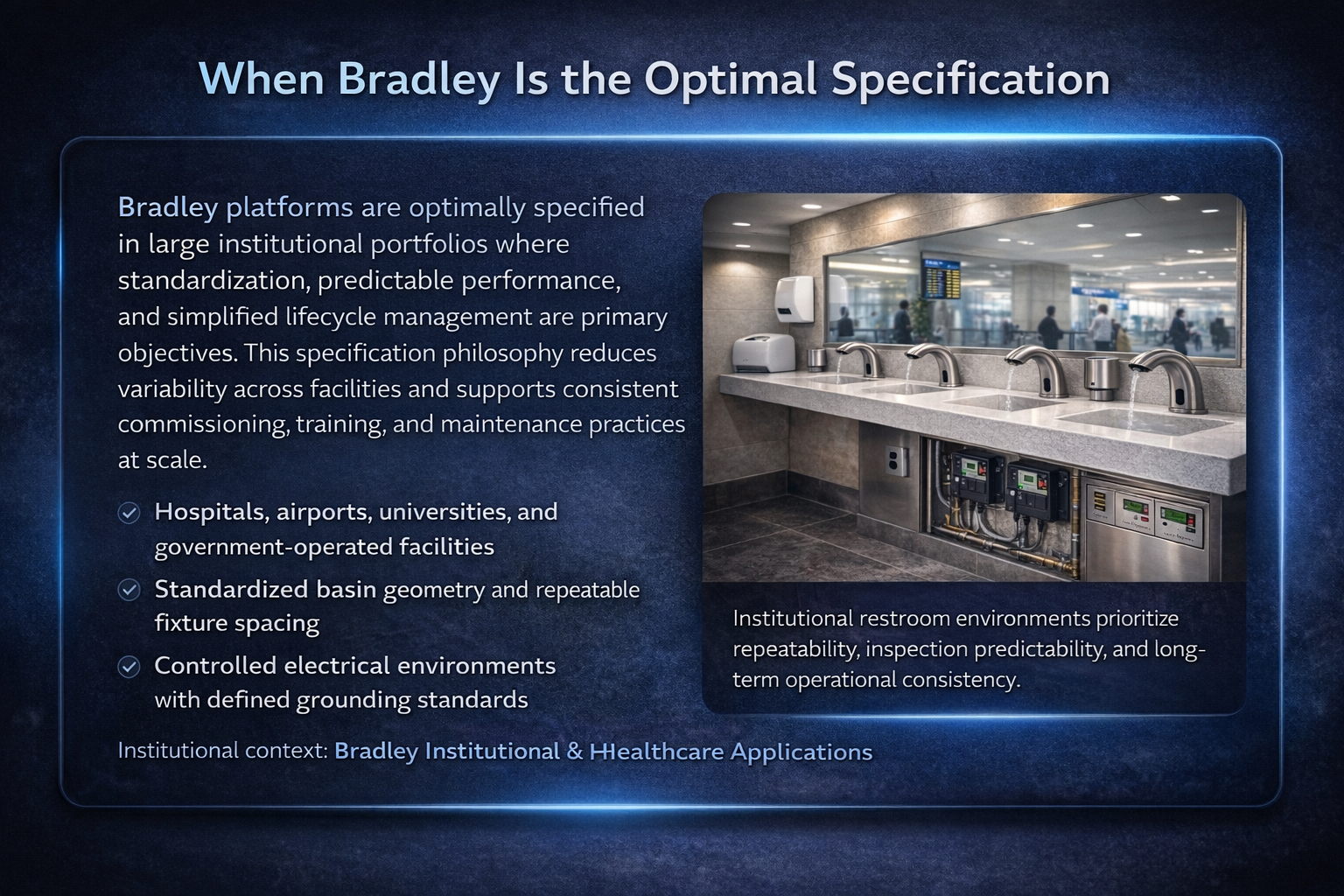
When Bradley Is the Optimal Specification
Bradley platforms are best specified in large institutional portfolios where
standardization, predictable performance, and simplified lifecycle management
are primary objectives. This approach minimizes variability across facilities
and supports consistent commissioning and maintenance practices.
- Hospitals, airports, universities, and government facilities
- Standardized basin geometry and fixture spacing
- Controlled electrical environments
- Portfolio-wide maintenance efficiency
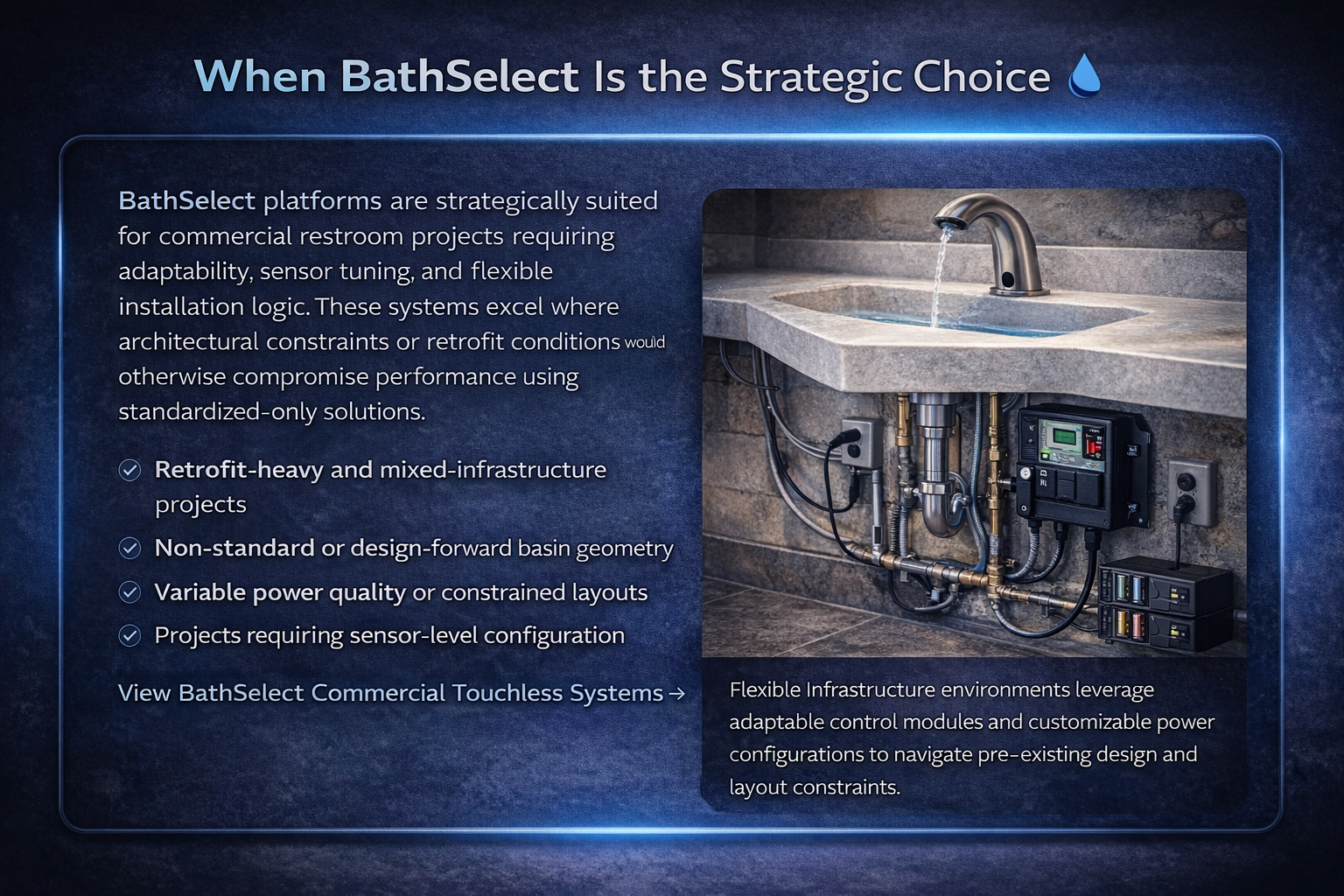
When BathSelect Is the Strategic Choice
BathSelect platforms are strategically suited for projects requiring adaptability,
sensor tuning, and flexible installation logic. These systems excel where
architectural constraints or retrofit conditions would otherwise compromise
performance using standardized-only solutions.
- Retrofit-heavy and mixed-infrastructure projects
- Non-standard or design-forward basin geometry
- Variable power quality or constrained layouts
- Projects requiring sensor-level configuration
View BathSelect Commercial Touchless Systems →
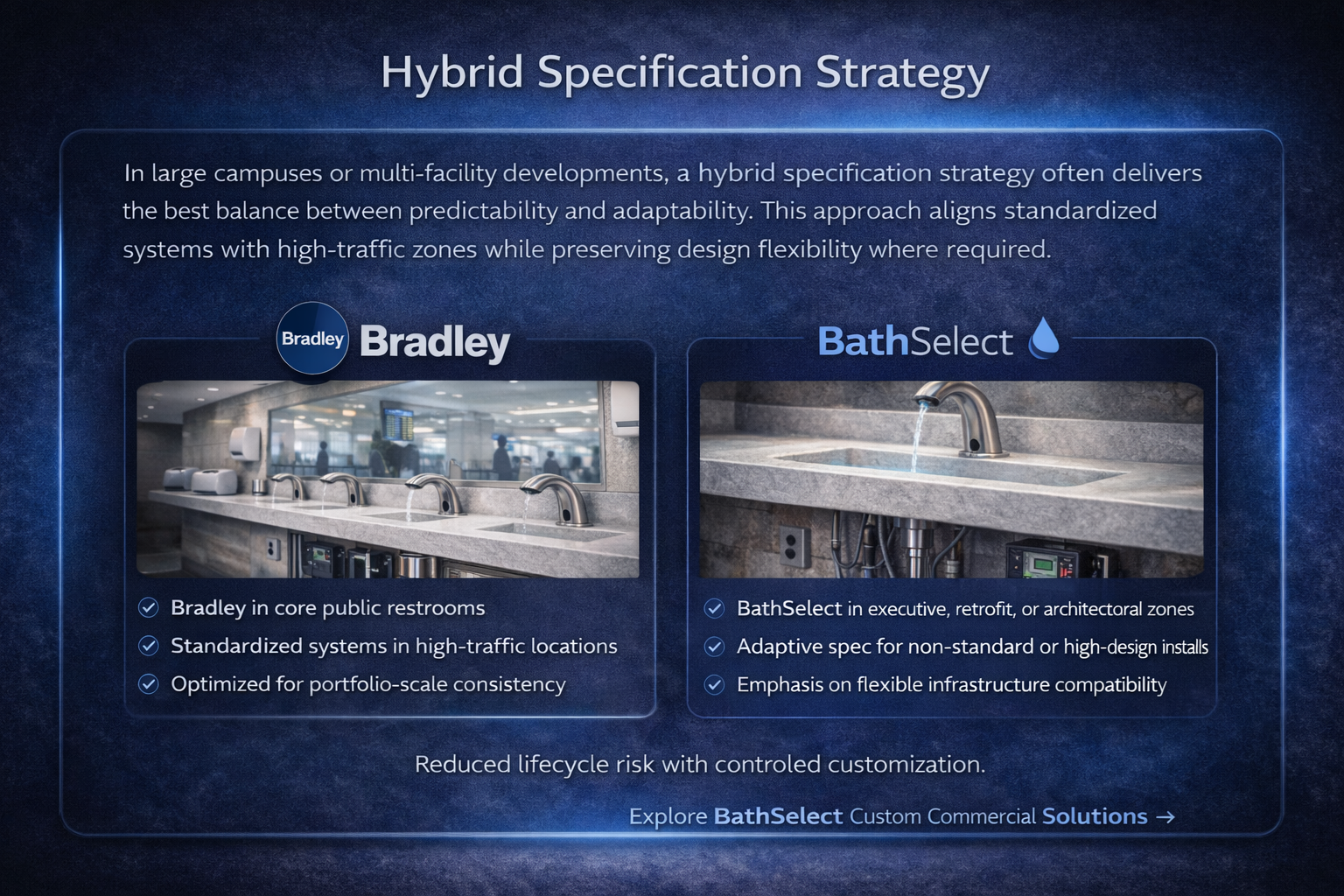
Hybrid Specification Strategy
In large campuses or multi-facility developments, a hybrid specification strategy
often delivers the best balance between predictability and adaptability. This
approach aligns standardized systems with high-traffic zones while preserving
design flexibility where required.
- Bradley in core public restrooms
- BathSelect in executive, retrofit, or architectural zones
- Reduced lifecycle risk with controlled customization
Explore BathSelect Custom Commercial Solutions →
Decision Matrix — Specification Selection Guide
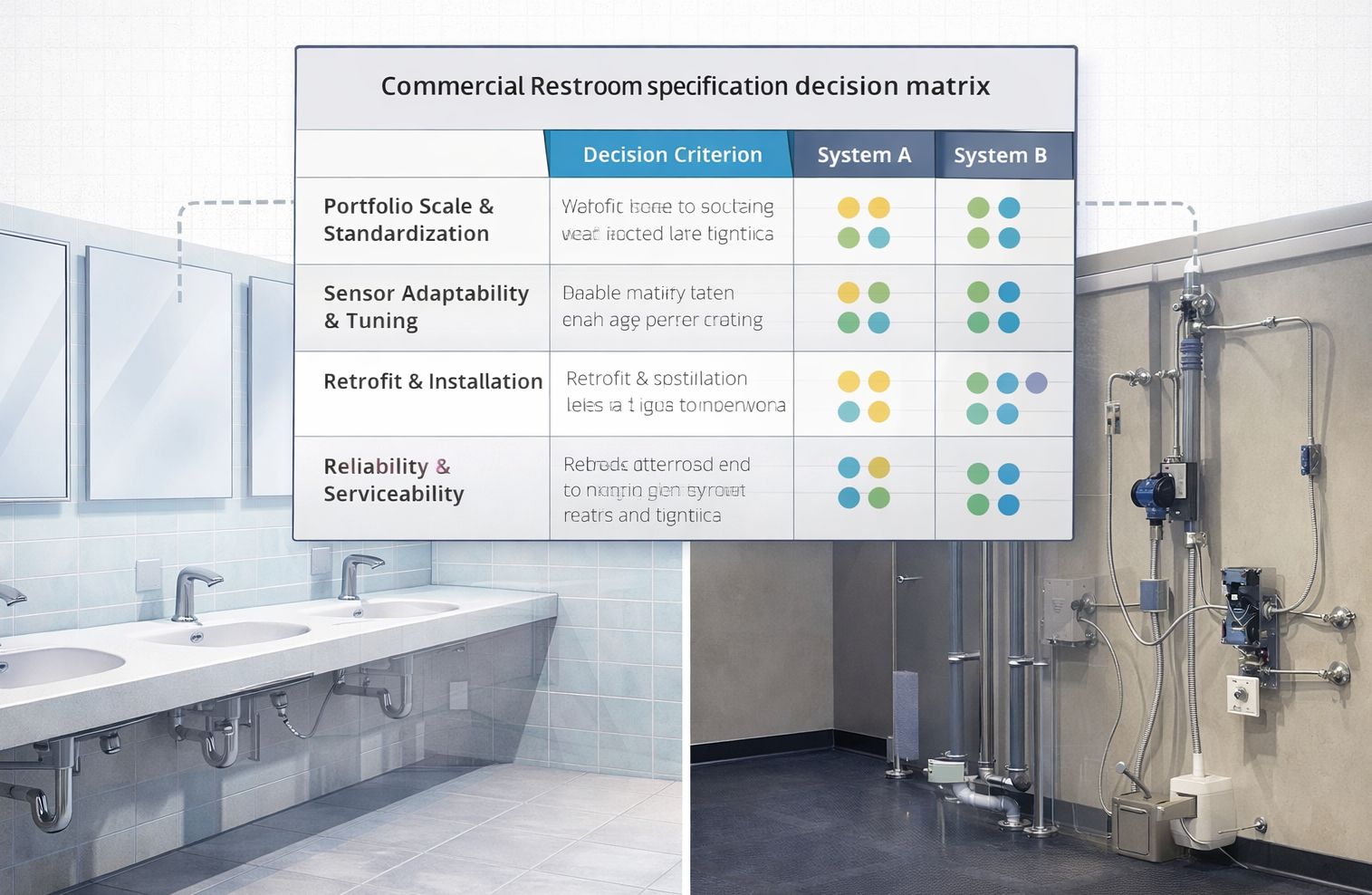
Portfolio Scale & Standardization
Bradley
Optimized for large institutional portfolios with standardized layouts and repeatable outcomes.
BathSelect
Best suited for mixed portfolios requiring site-specific adaptation.
Sensor Adaptability & Tuning
Bradley
Factory-defined detection behavior prioritizing predictability.
BathSelect
Adjustable detection fields and configurable sensor logic. (View systems)
Retrofit & Installation Flexibility
Bradley
Predictable results in standardized new construction environments.
BathSelect
Designed to accommodate retrofit conditions and constrained infrastructure.
Electronic Reliability
Bradley
Assumes controlled electrical environments with standardized grounding.
BathSelect
Mitigation-oriented approach for variable power quality and EMI exposure. (Technical docs)
Commissioning & Validation
Bradley
Lower variability through standardized startup behavior.
BathSelect
Requires explicit commissioning to unlock full adaptability.
Lifecycle Serviceability & MTTR
Bradley
Portfolio familiarity reduces diagnostic time across facilities.
BathSelect
Modular components enable targeted repairs and reduced local downtime.
This matrix is intended as a specification guidance tool. Final selection must align
with project constraints, commissioning capability, and long-term asset management strategy.
Final Consultant Recommendation
Both Bradley and BathSelect represent technically capable touchless faucet platforms
when specified within the operational conditions they are designed to serve. Bradley
remains the preferred solution for large institutional portfolios where standardization,
predictability, and long-term operational uniformity are primary risk-management
objectives. BathSelect delivers measurable advantages in projects requiring adaptability,
retrofit flexibility, and sensor-level tuning to address non-standard architectural or
infrastructure constraints.
From a consultant perspective, effective specifications are achieved by aligning platform
selection with system-level constraints, commissioning capability, maintenance resources,
and lifecycle asset management strategy—rather than relying on feature comparison or
product branding alone.
This reference is intended to support informed, risk-aware specification decisions. Final
selections should always be validated against project-specific requirements, authority
approvals, and long-term operational objectives.
|
|
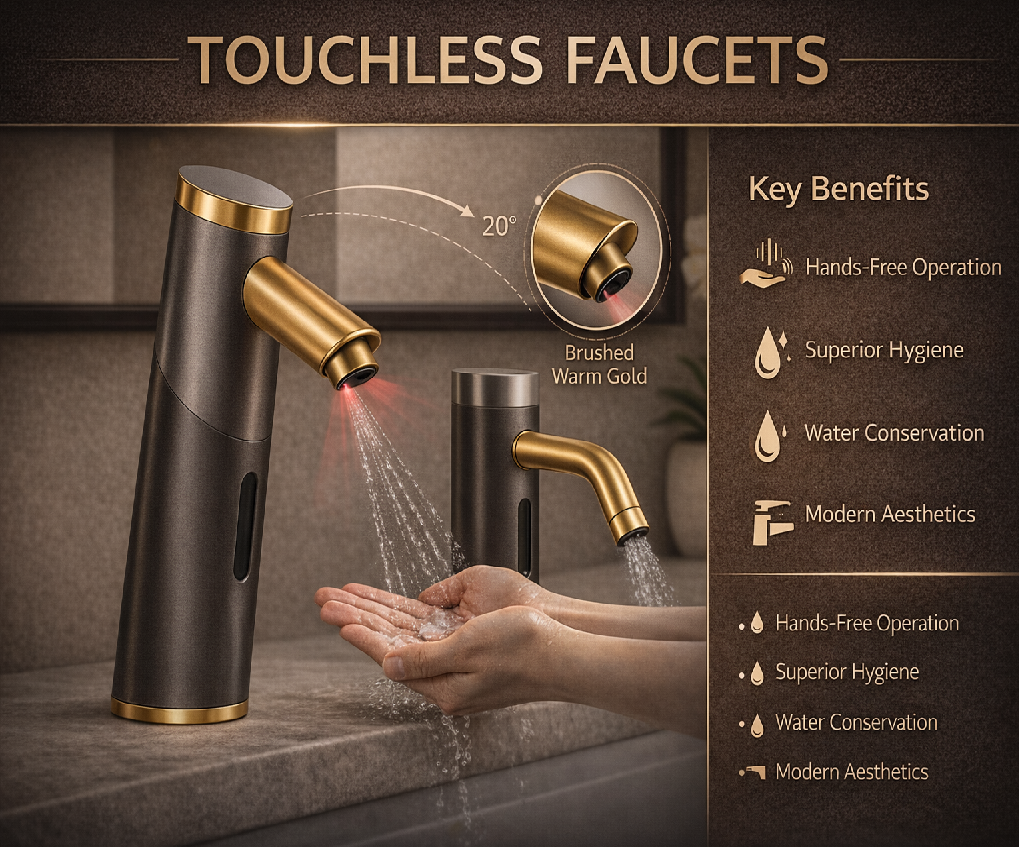
The product selections presented above represent a curated range of commercial
touchless faucet solutions aligned with varying specification priorities. While
individual product features differ, long-term performance is ultimately determined
by system integration, installation quality, commissioning discipline, and lifecycle
management strategy rather than component selection alone.
For projects requiring higher levels of predictability, standardization, or adaptability,
specifiers are encouraged to reference the detailed technical analysis and decision
guidance provided throughout this page.
|
|
|