BathSelect Sensor Technology Explained: IR vs. Radar in Commercial Faucets
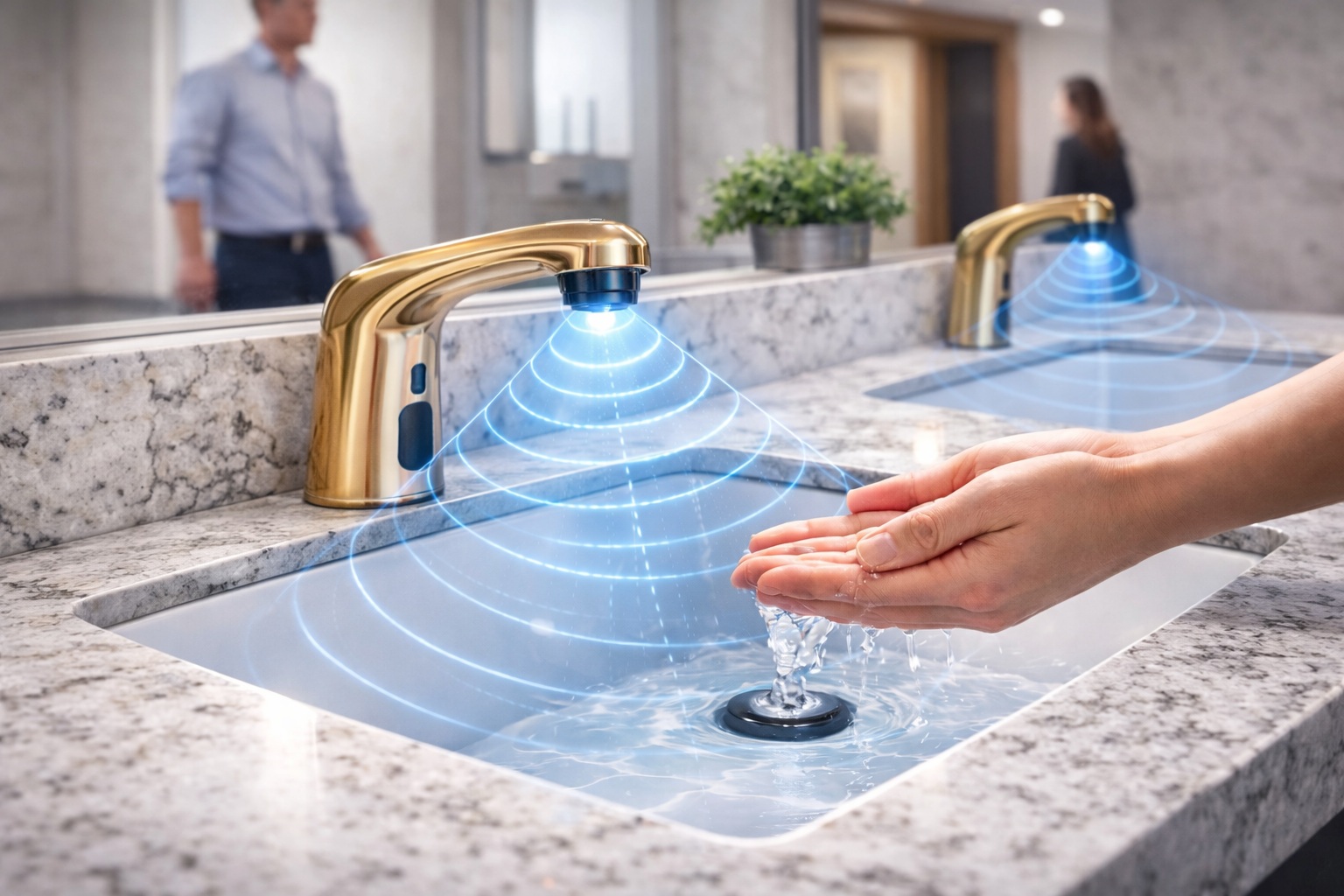
Infrared and radar detection behave differently in real restrooms. This page compares how each sensor sees users,
how activation zones behave at different sink depths, and what matters when you are specifying faucets for airports,
healthcare, campuses, and public buildings.
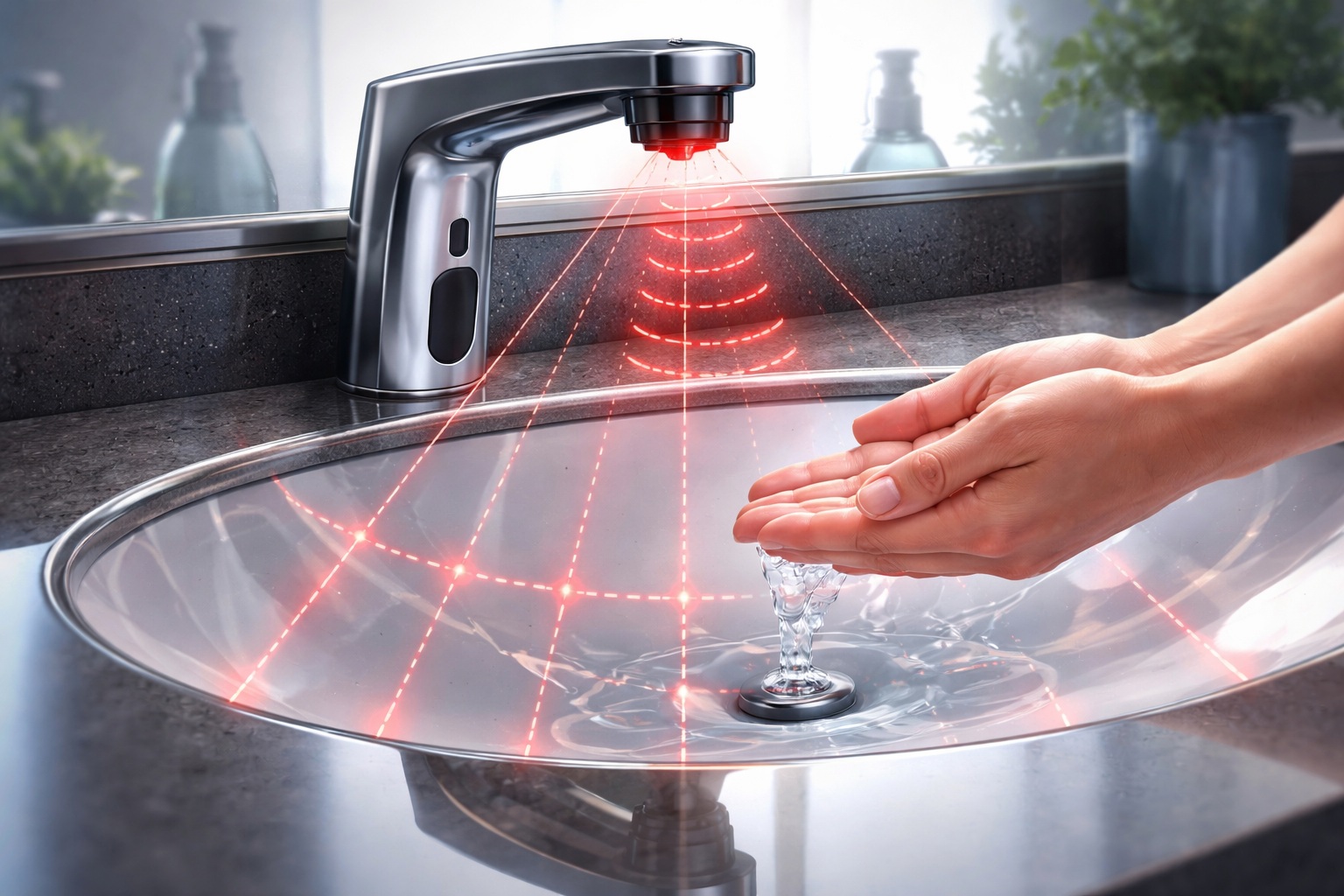
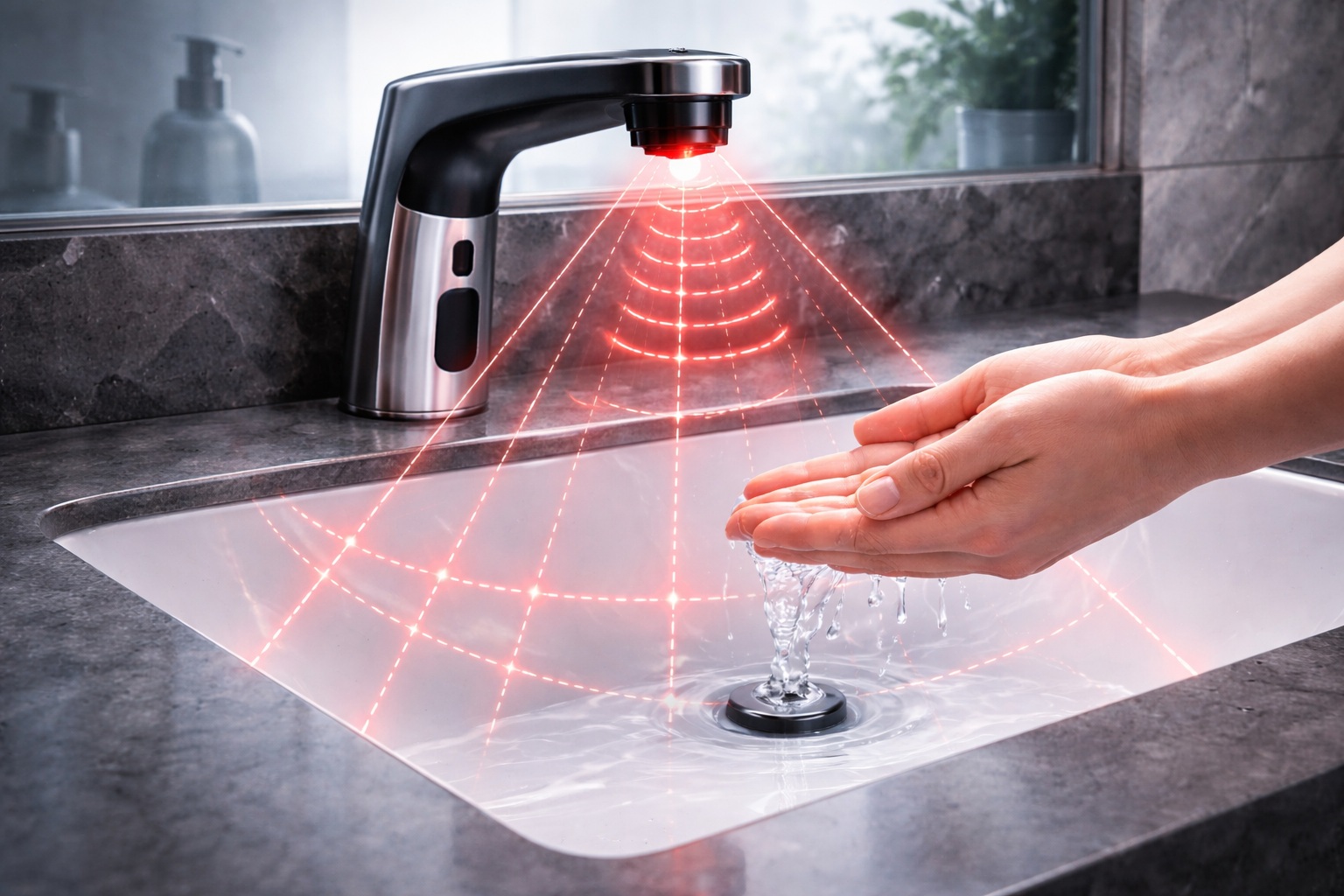
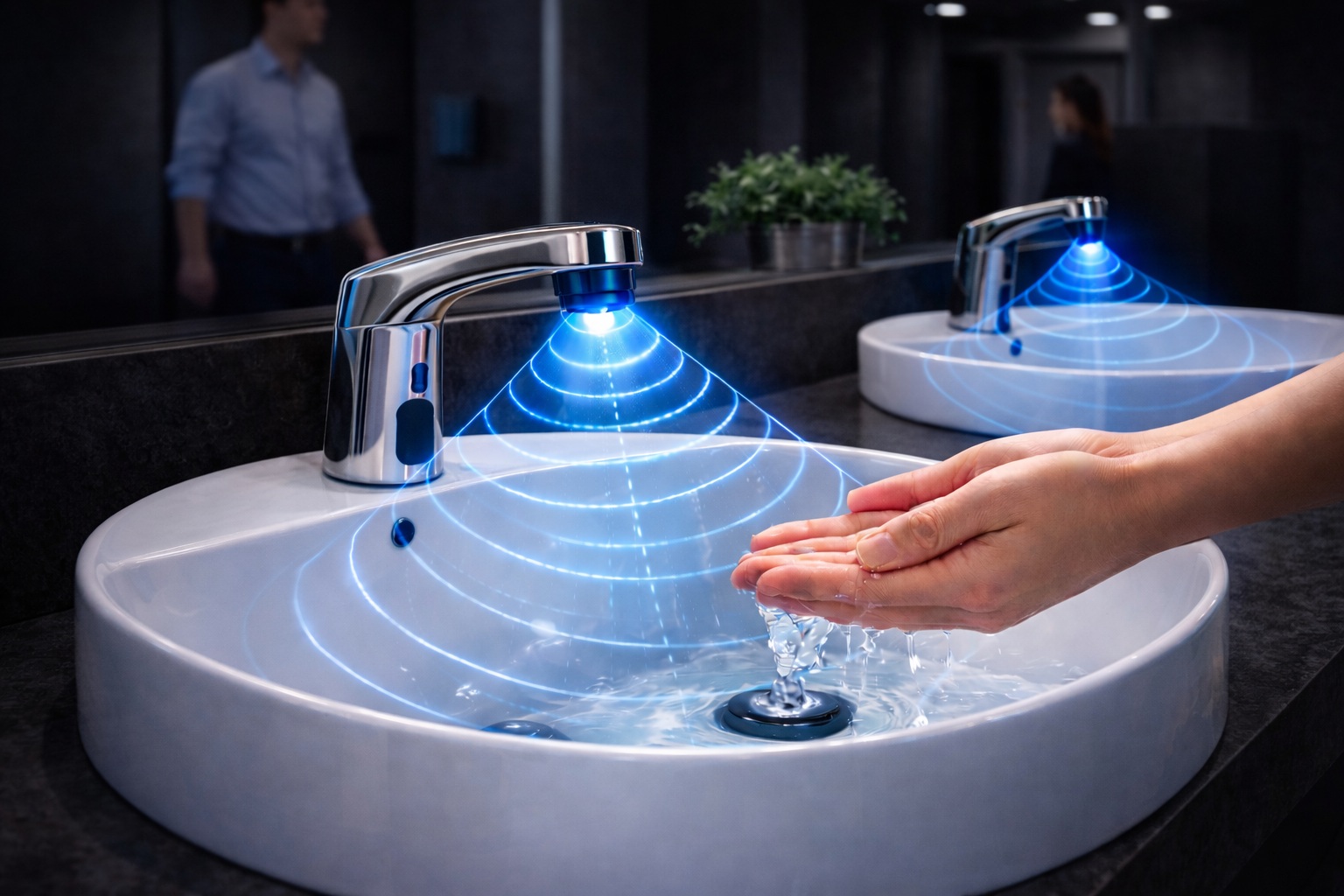
Infrared sensors emit IR light and measure the reflected signal. In the field, IR behavior is closely tied to distance, angle, and
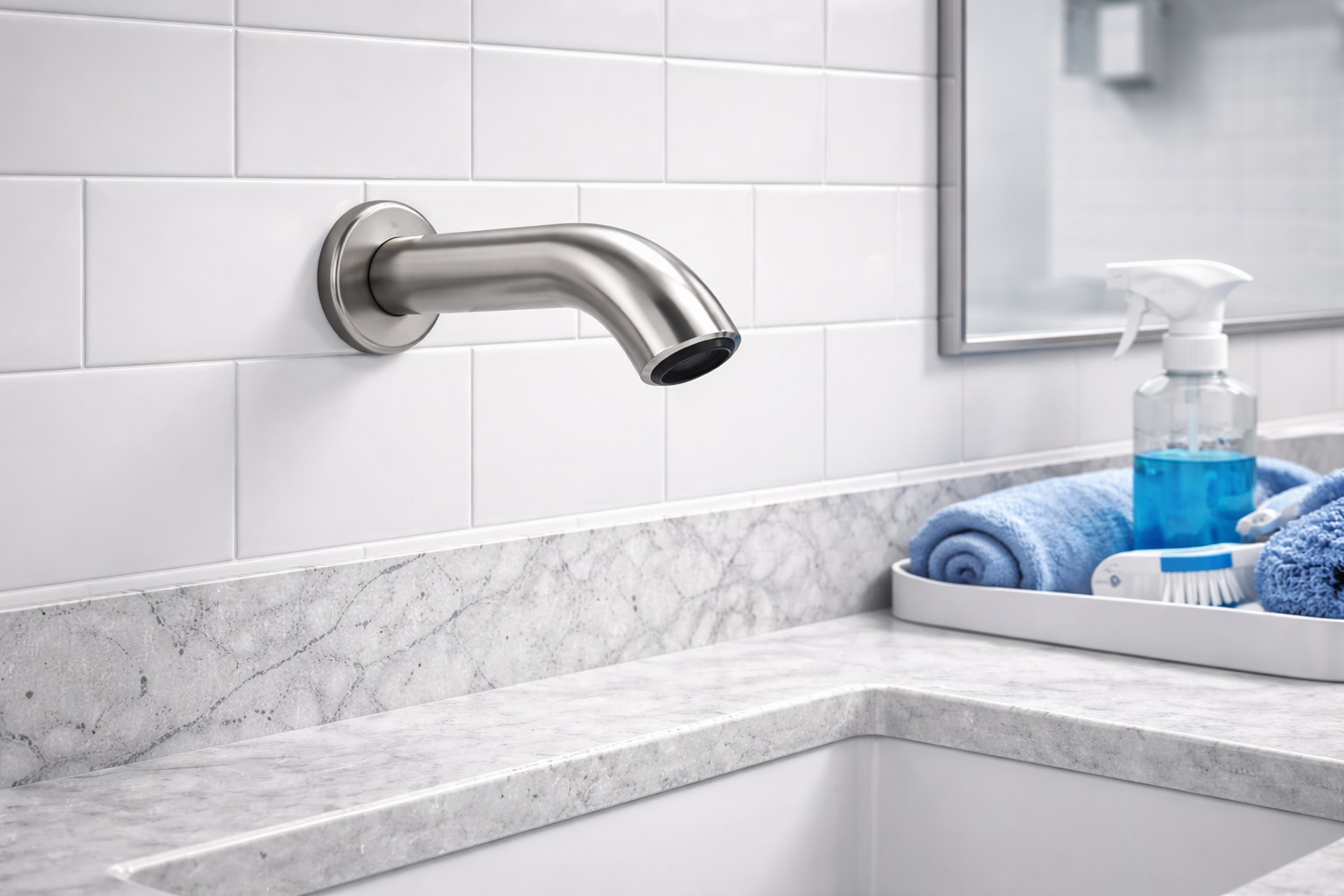
reflectivity. Polished basins, mirrored decks, and shallow sinks can create extra reflections that expand the effective activation zone.
Predictable zone edges
Good for bay planning
Sensitive to reflectivity
Field takeaway: IR is usually easiest to commission when mounting height and basin geometry are controlled. If nuisance activations show up,
check sink depth, spout reach, and whether glossy backsplash materials sit inside the sensor cone.
Stable geometry wins
Clear user intent
Commissioning matters
How Radar Detection Behaves in Commercial Restrooms
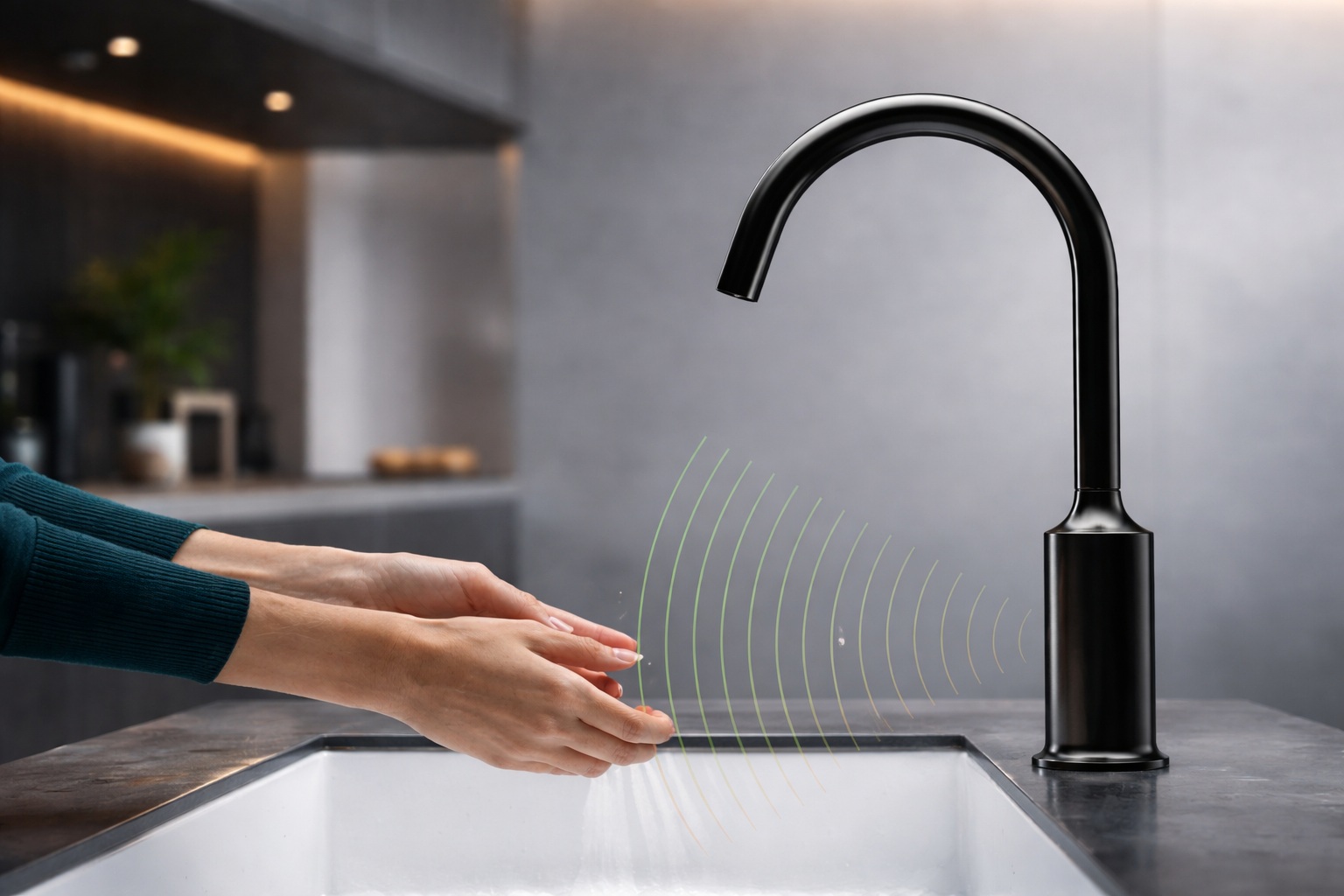
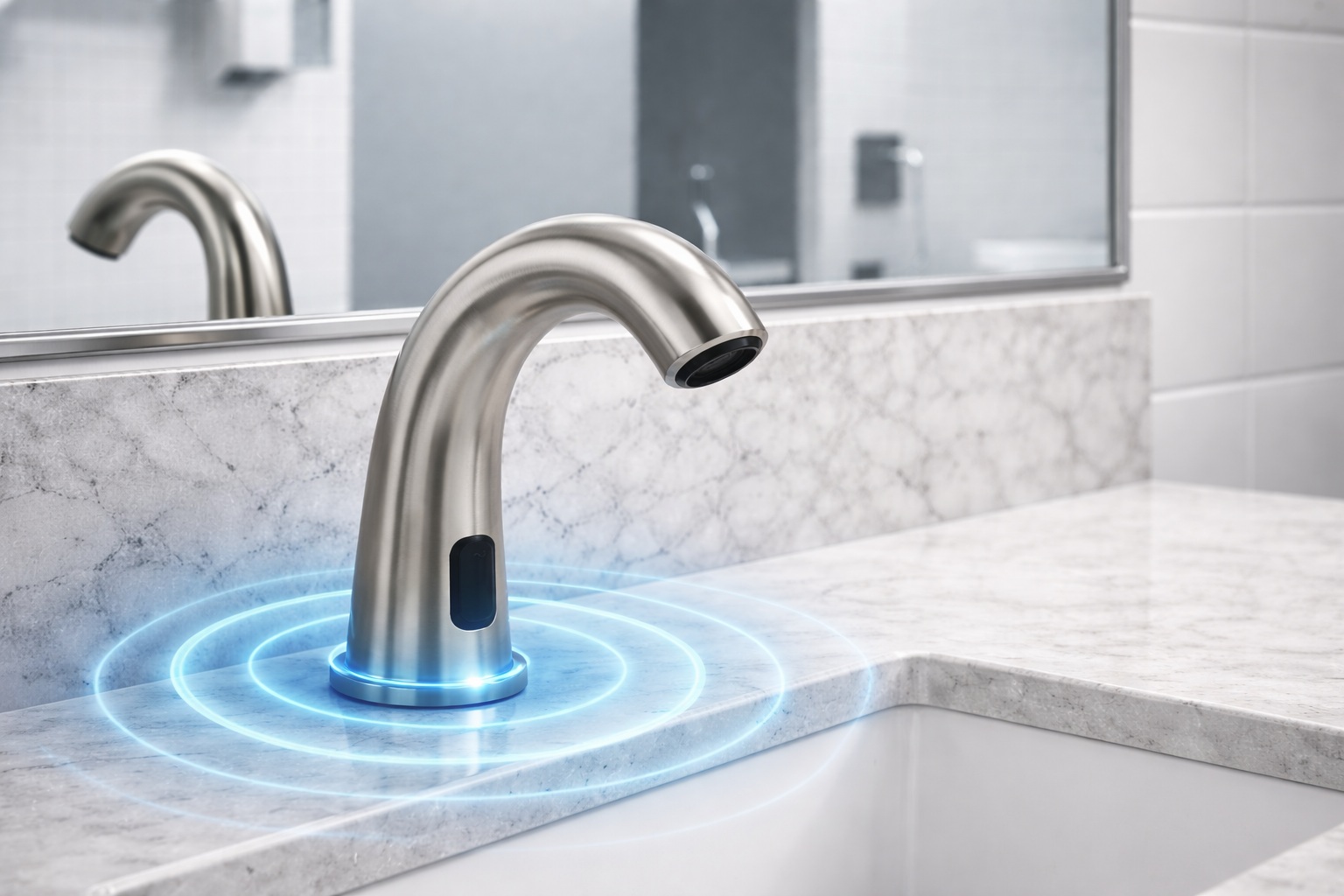
Radar sensing detects motion and presence differently than IR. In many layouts it is less dependent on shiny surface reflections,
but it can respond to movement near the bay if the wash area is open to traffic.
Less reflective sensitivity
Works in mixed lighting
Mind nearby motion
Field takeaway: radar can help when IR becomes difficult to tune due to reflectivity or awkward basins, but placement is critical near corridors.
If adjacent walk paths are close, consider partitions, spout reach, and commissioning verification with real users.
Good for tricky basins
Traffic-aware planning
Placement reduces triggers
IR vs. Radar: Spec Comparison That Matches Field Reality
Activation control
IR Sensor (Infrared): Distance + reflectivity dependent
Radar Sensor: Motion/presence dependent
What Contractors See in the Field: IR is predictable when geometry is stable. Radar needs attention near walk paths.
Shiny basins / mirrored decks
IR Sensor (Infrared): Can cause false reflections
Radar Sensor: Typically less affected
What Contractors See in the Field: IR nuisance activations often trace back to reflective angles and shallow sinks.
Adjacent traffic
IR Sensor (Infrared): Often less sensitive outside its cone
Radar Sensor: May react to nearby movement
What Contractors See in the Field: Open corridors near lavs can be a radar risk if zones are wide.
Commissioning
IR Sensor (Infrared): Often easier to tighten a zone
Radar Sensor: May need physical separation strategy
What Contractors See in the Field: Both work well when the sensor sees only the user, not the hallway.
Best-fit projects
IR Sensor (Infrared): Controlled layouts, standard basins
Radar Sensor: Challenging reflectivity or lighting
What Contractors See in the Field: Pick the sensor strategy that matches the space, not a headline feature.
Sensor technology should be evaluated against the finished restroom geometry because reliable touchless operation depends on more than the nominal sensing method or factory detection range. Architects, Engineers, Consultants, plumbing designers, contractors, commissioning teams, and facility personnel should coordinate the selected sensing technology with basin geometry, faucet projection, mounting height, backsplash material, mirrors, partitions, adjacent traffic paths, ambient light conditions, final detection zone, shutoff timing, power strategy, and service access before the fixture is accepted for operation. Mounting geometry, concealed conditions, access, and final fixture positioning can be coordinated through BathSelect Installation Engineering, repeatable activation, shutoff behavior, operating consistency, and field verification criteria can be evaluated through BathSelect Quality Engineering, and final detection-zone testing, false-trigger checks, corrective adjustment, operating verification, and retained commissioning records can be documented through the BathSelect Bathroom Fixture Installation, Commissioning & Handover guide so sensor selection, restroom geometry, detection performance, field adjustment, and future maintenance remain connected to one verified touchless-faucet operating condition.
Spec Notes: What to Put in the Drawings and Submittals
1) Mounting and geometry. Call out spout reach and mounting height assumptions. If you are using shallow basins or glossy decks, expect IR zones to shift.
2) Power strategy. Battery is fast for retrofit. Hardwired is better for long duty cycles and predictable maintenance planning.
3) Commissioning requirement. Add a note that zone tuning is part of closeout and must be verified after mirrors and partitions are installed.
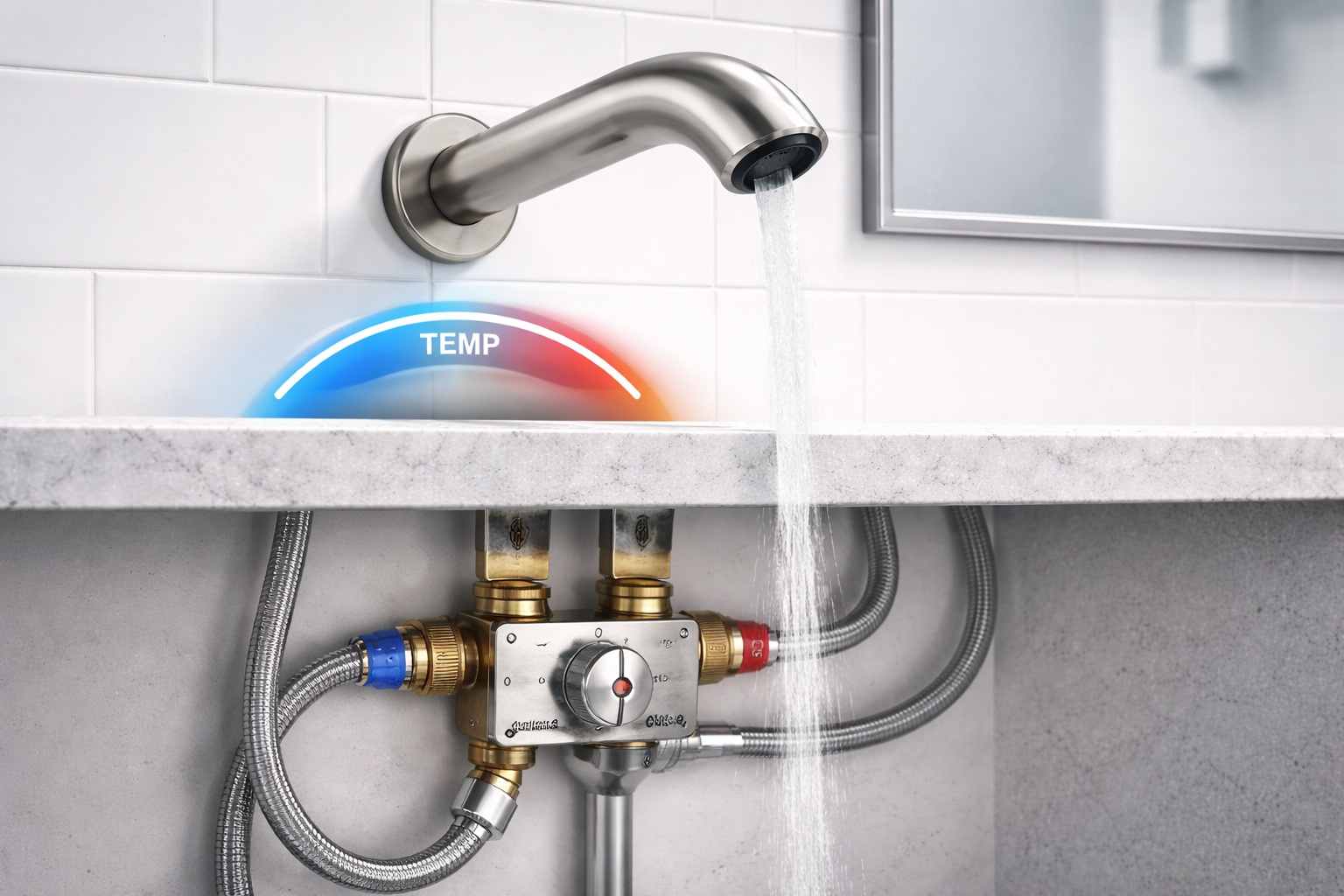
4) Temperature control. If you need controlled temperature, plan thermostatic mixing and access early so service does not require fixture removal.
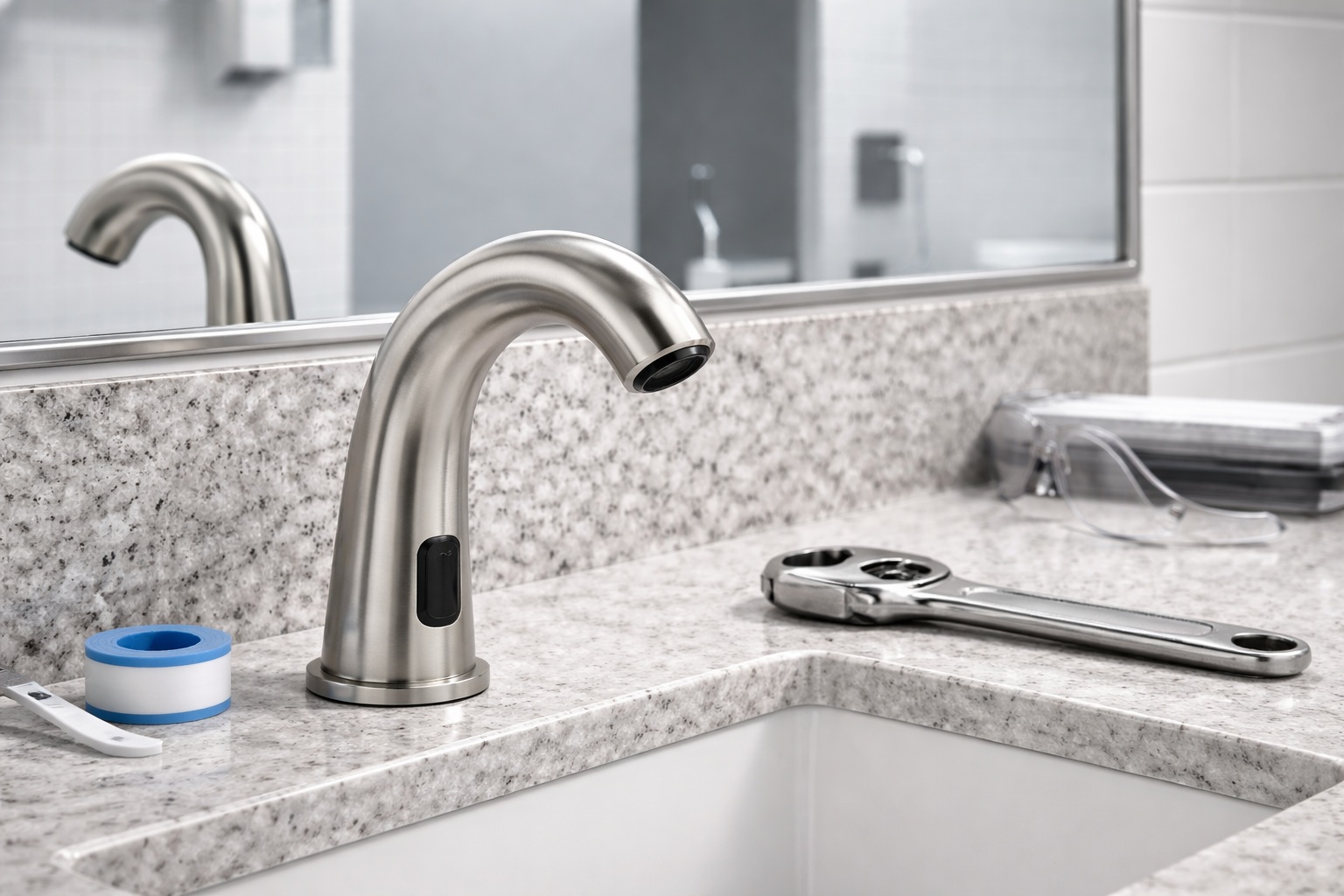
5) Service realities. Many sensor complaints trace back to geometry, power, or debris at the aerator. Include simple cleaning intervals in O&M.
Include access notes
Require zone verification
Plan for mixing valves
Files, Downloads, and Working BathSelect Links
Use these for submittal packets and contractor handoff. The PDF below includes technical information such as power options,
detection zone, and commissioning notes for model BST509NT.
If you paste 6 BathSelect product page links (PDP) from bathselect.com, I will fill all images in the product grid automatically
and match titles and models to the PDPs.
Product Walkthrough Videos
Temperature Control Sensor Faucet
A reference for controlled temperature specs and predictable user operation.
Brushed Nickel Sensor Faucet
A finish and form-factor reference for typical commercial installations.
BathSelect Product References (Finish the Images with PDP Links)
These cards are ready for real BathSelect product images. Paste a product image URL into each img src (or give me 6 PDP links and I will do it).
Product Slot 1
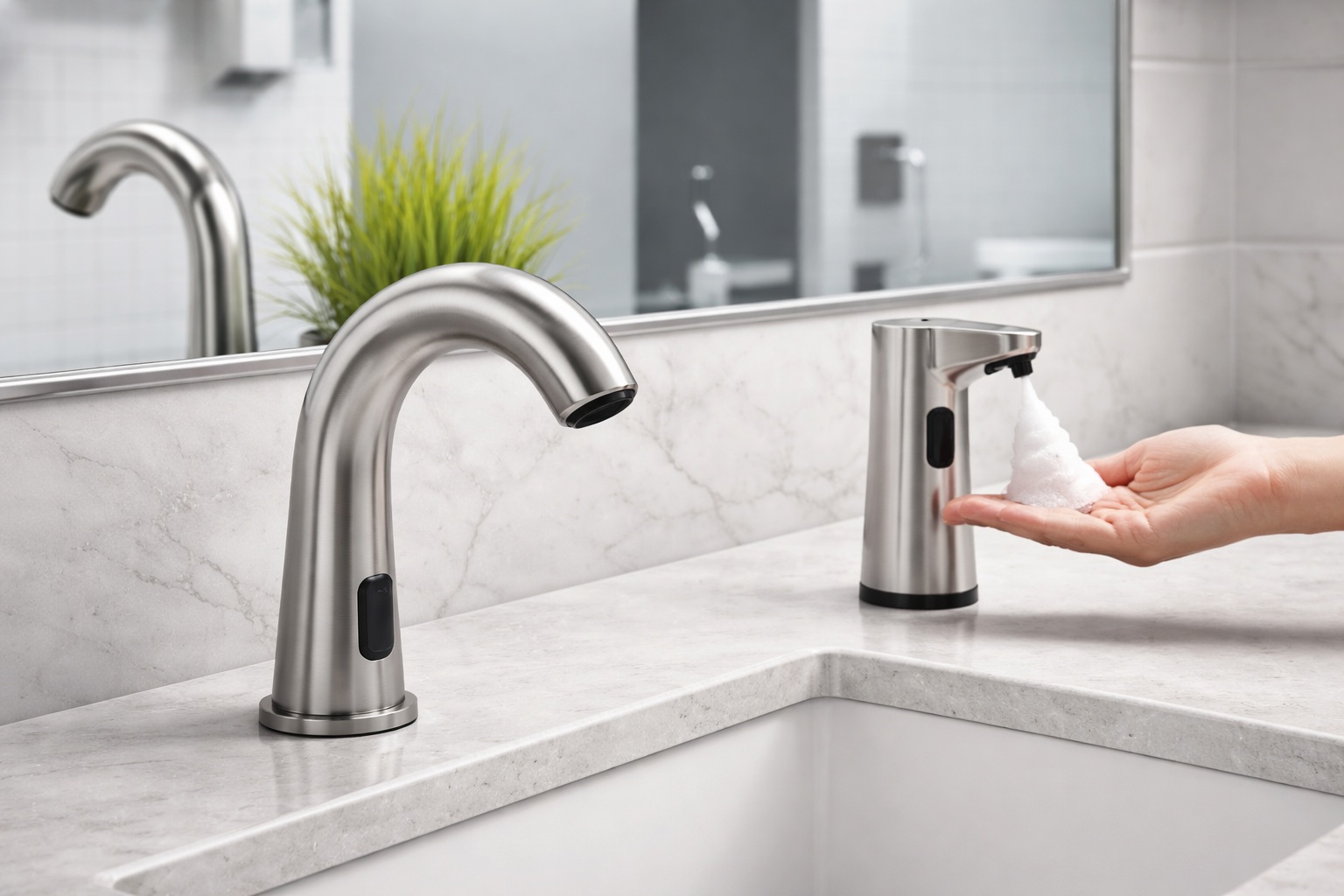
Use this for an IR faucet anchor or a combo faucet + dispenser system.
What causes random activations?
Most of the time it is reflective geometry, poor zone placement, or adjacent traffic. Verify final zone after mirrors and partitions.
Battery or hardwired?
Battery speeds retrofit. Hardwired supports predictable maintenance in high duty cycle facilities.
Simplest spec line to reduce call-backs?
Provide sensor faucet with field-verifiable detection zone. Contractor shall commission after final mounting height and finish materials are complete.
Where do mixing valves belong?
If you need controlled temperature, plan service access early so maintenance does not require fixture removal.
Secondary Description
Add your supporting text here. Example: summarize how to choose IR vs radar by layout type, and remind teams to
verify detection zones after mirrors/partitions and final mounting heights are complete.