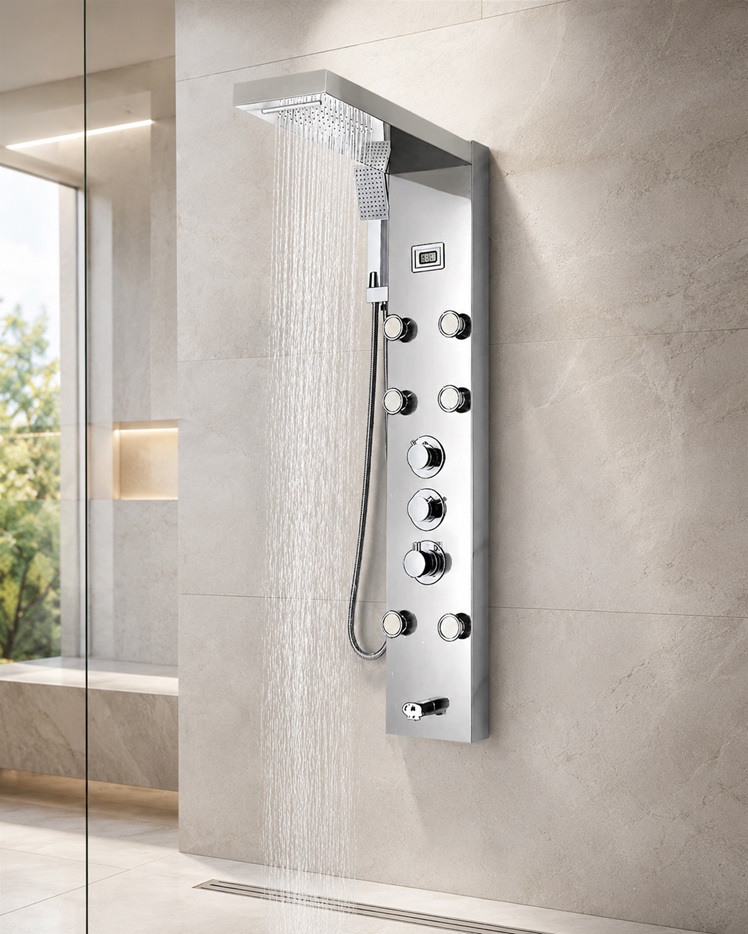
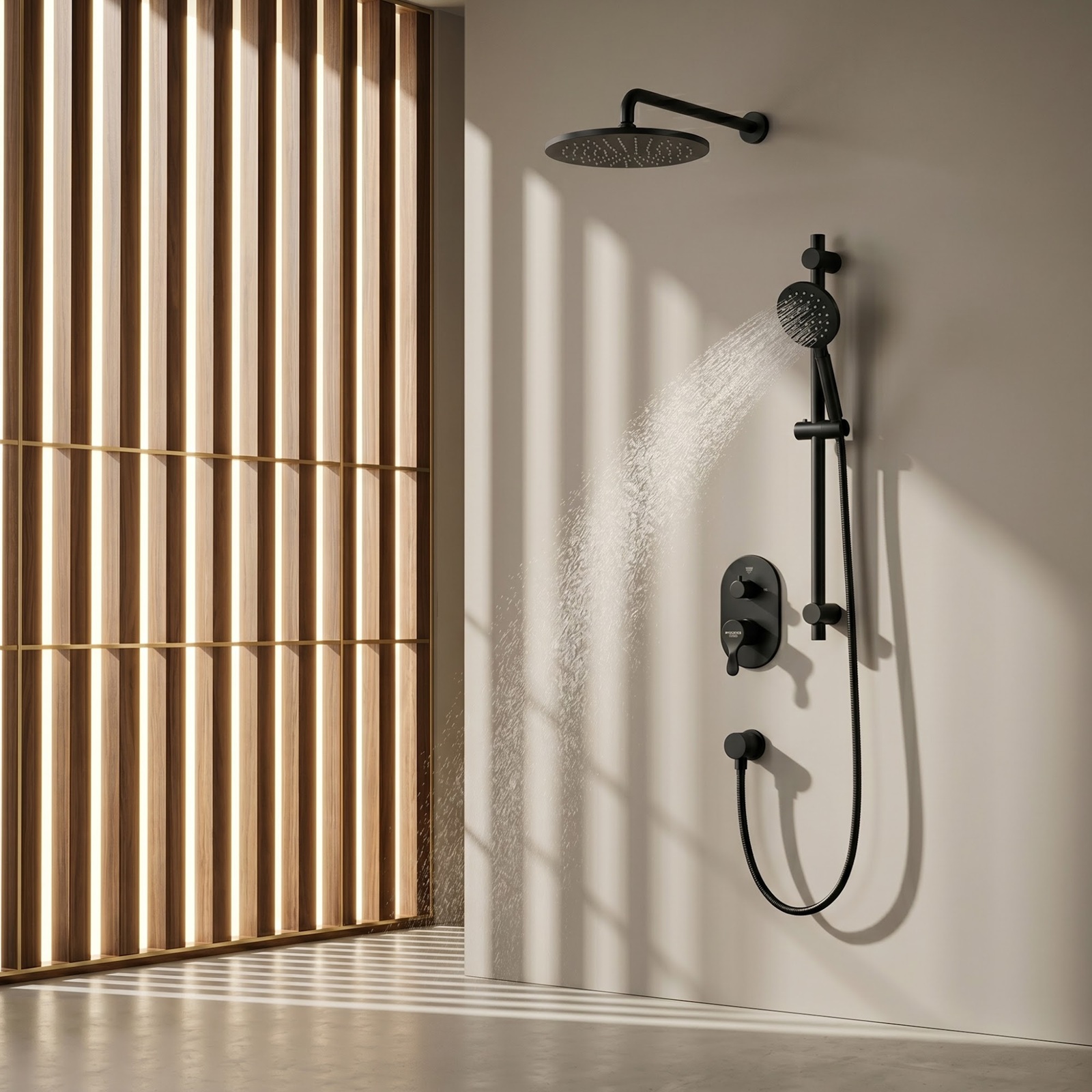
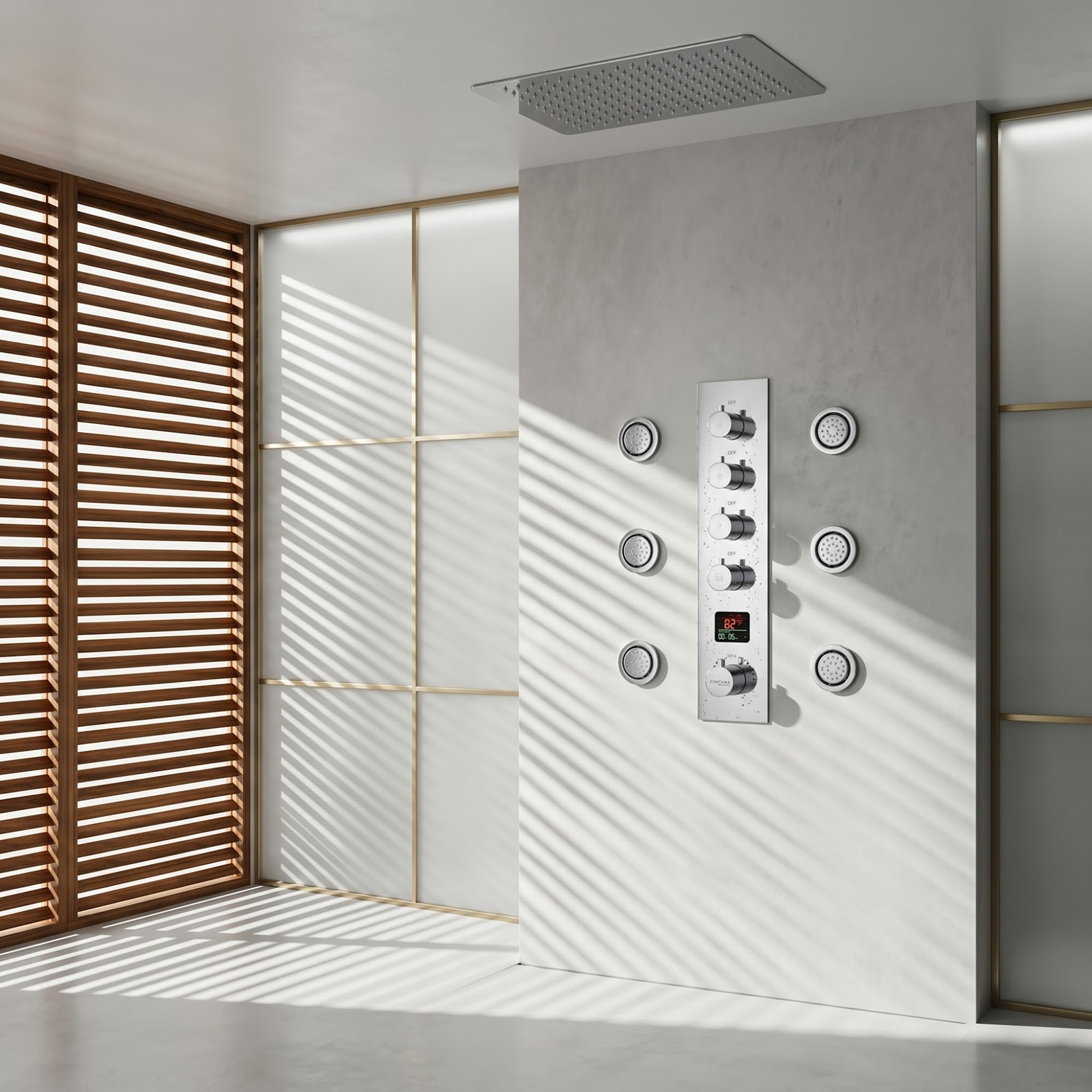
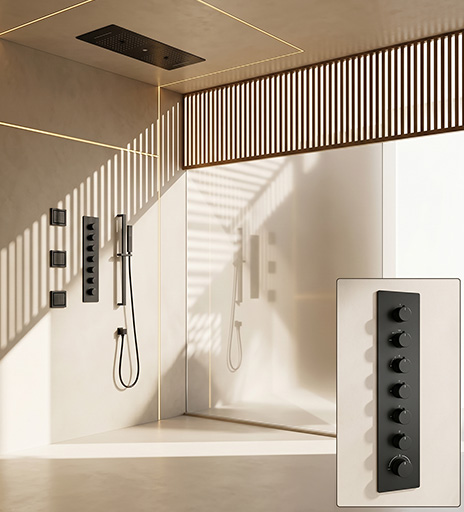
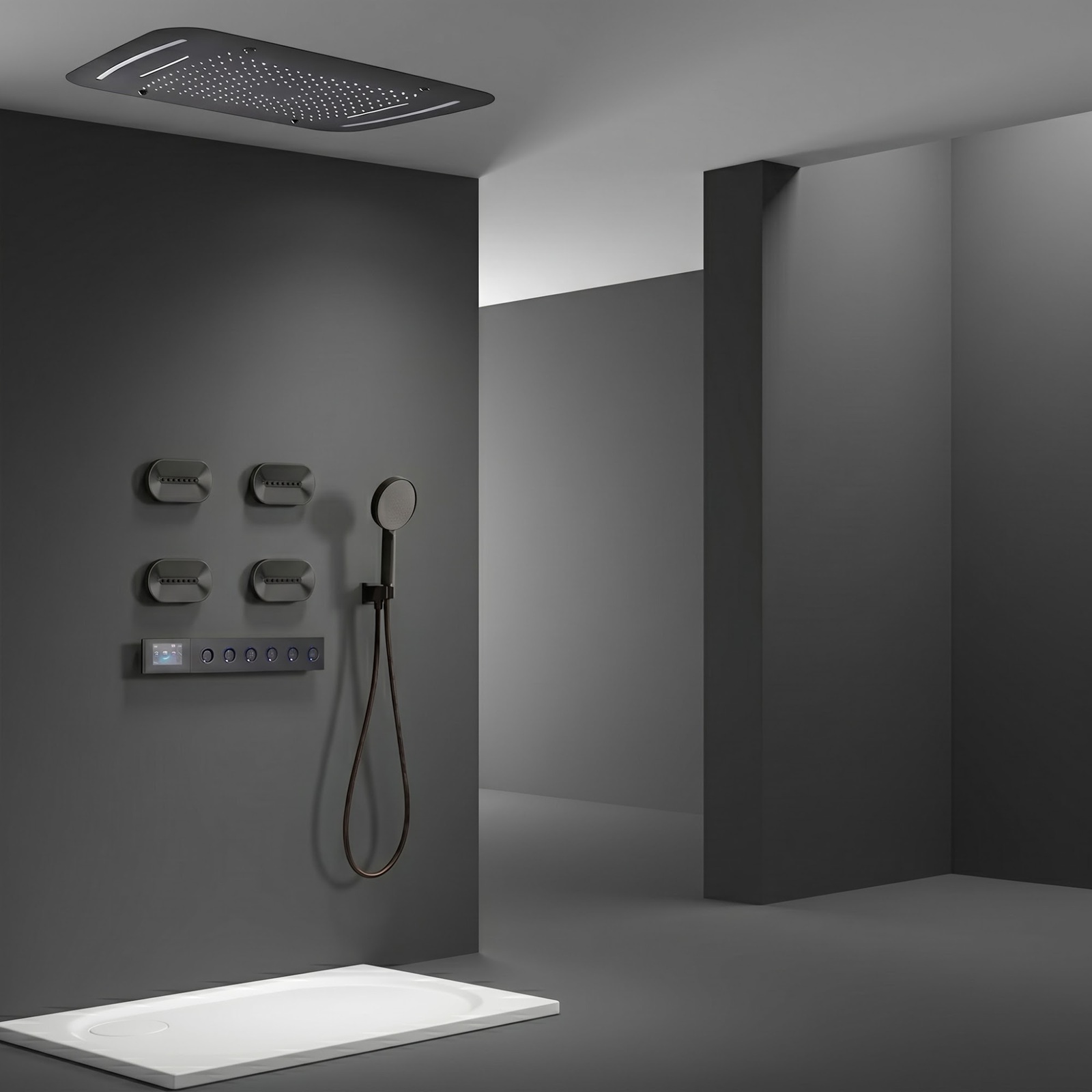
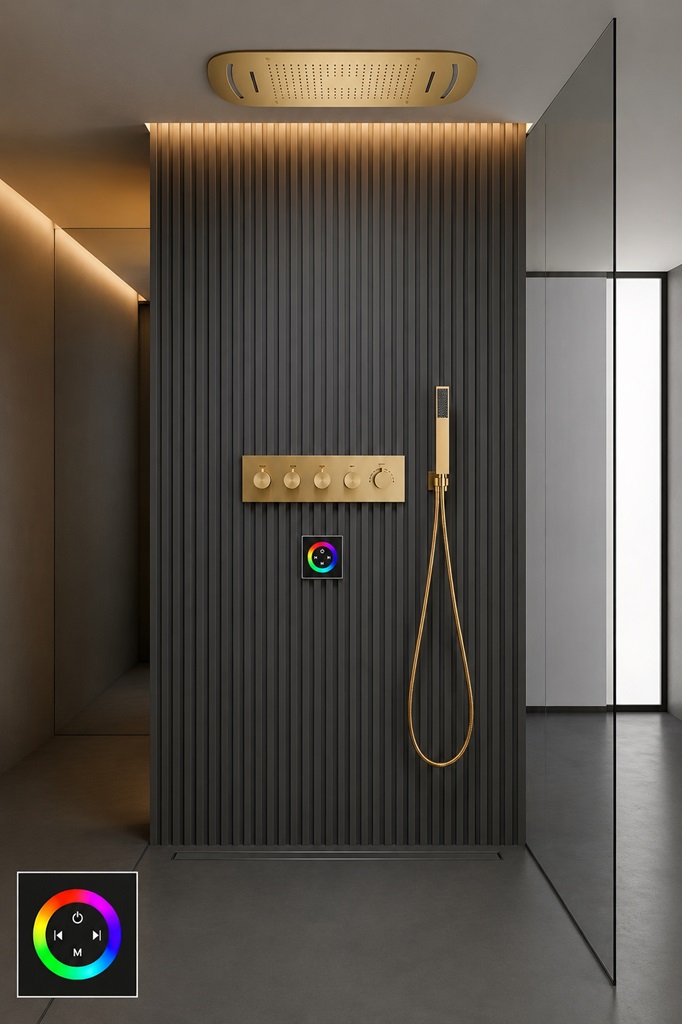
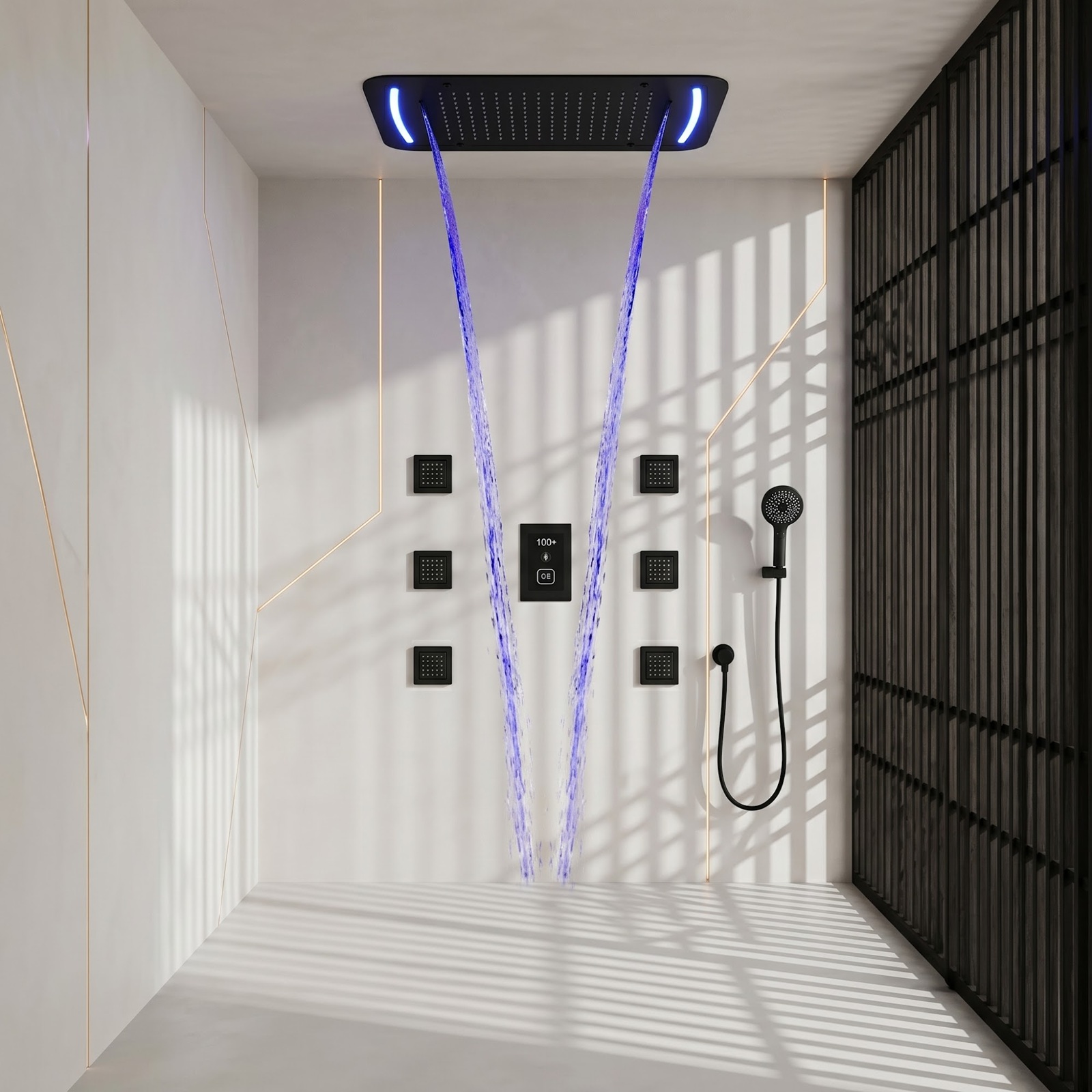
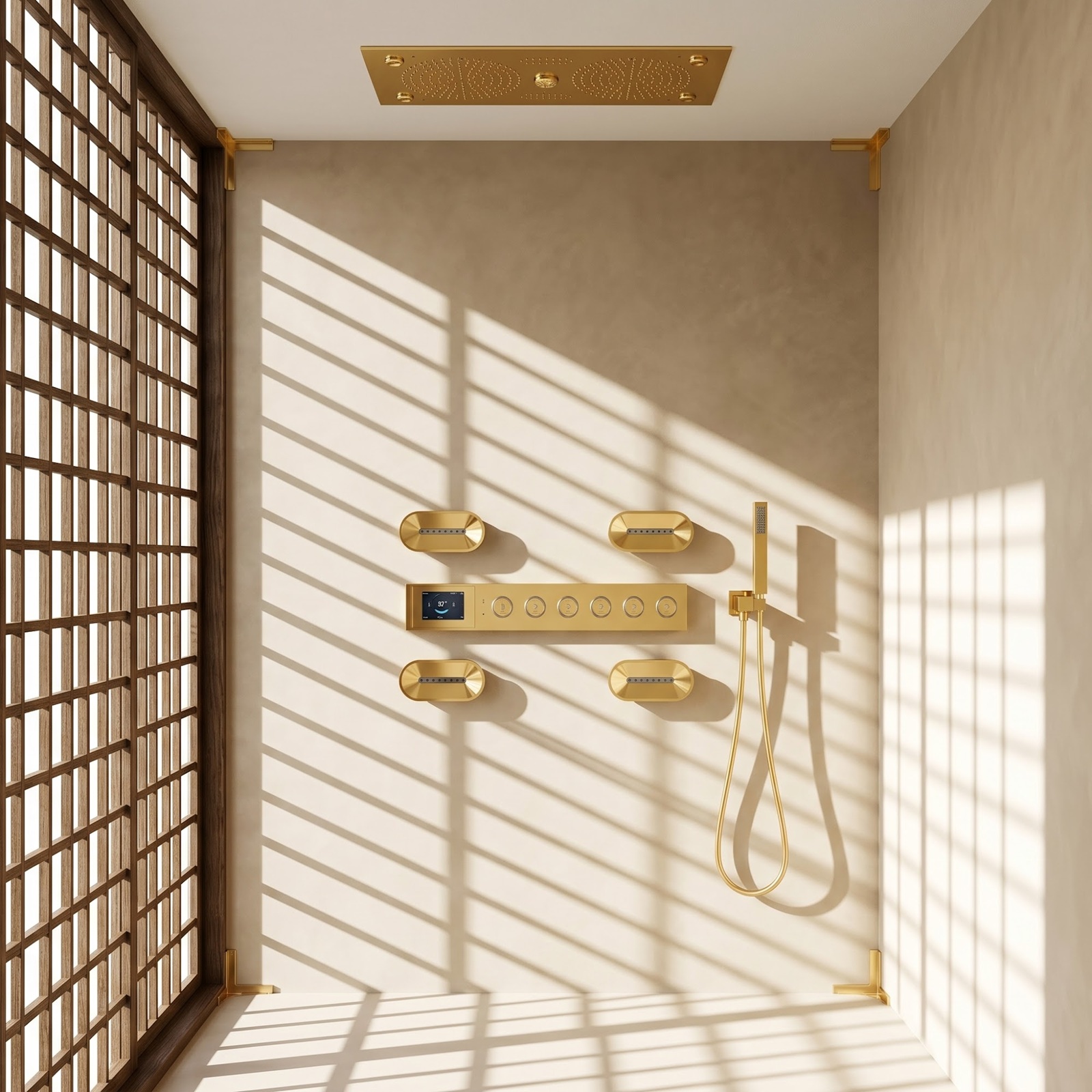
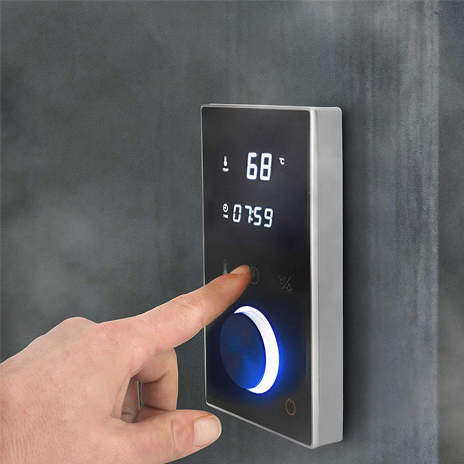
Explore thermostatic, digital, concealed, exposed and
multi-function shower mixers designed to coordinate water
temperature, flow and outlet selection within contemporary
bathroom and shower installations.
BathSelect offers shower mixer valves for new bathrooms,
remodeling projects and upgraded shower installations.
These controls combine hot and cold water while supporting
configurations ranging from a simple overhead shower to
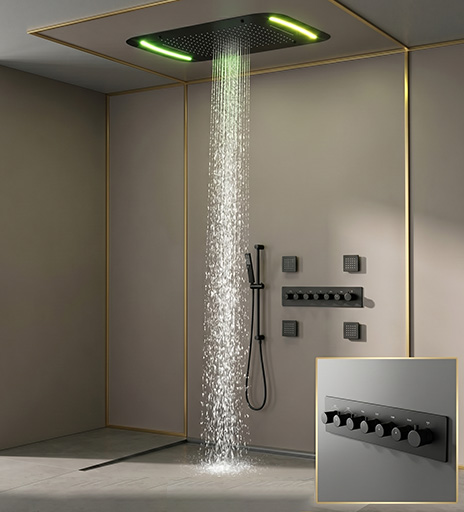
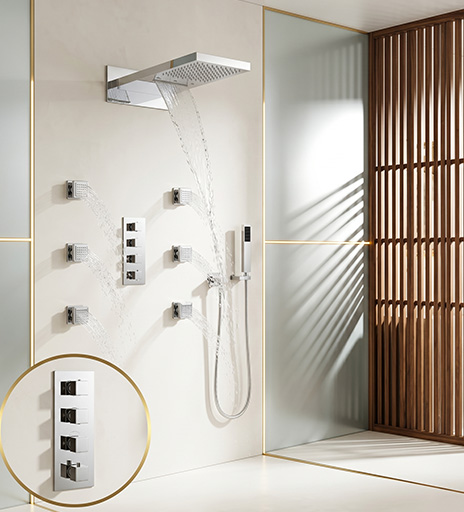
coordinated rainfall, handheld, waterfall and body-jet
systems.
The collection includes manual controls,
thermostatic shower valves
,
pressure-balancing options, digital thermostatic
controllers, exposed valves, recessed mixers and selected
four-hole or five-hole bath mixer arrangements.
Different layouts, control technologies and finish options
allow the mixer to coordinate with the design and operating
requirements of the complete bathroom. Product-specific
dimensions, functions and technical requirements should
always be reviewed before purchase or installation.
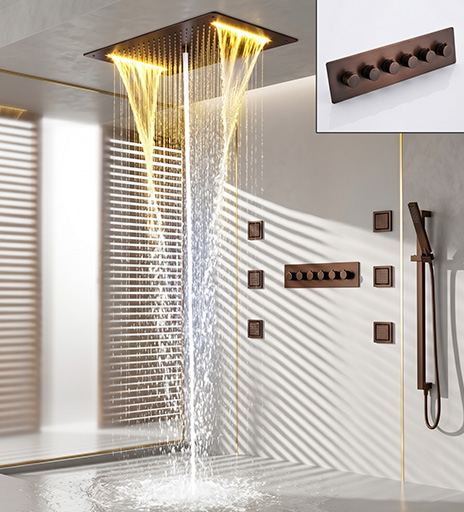
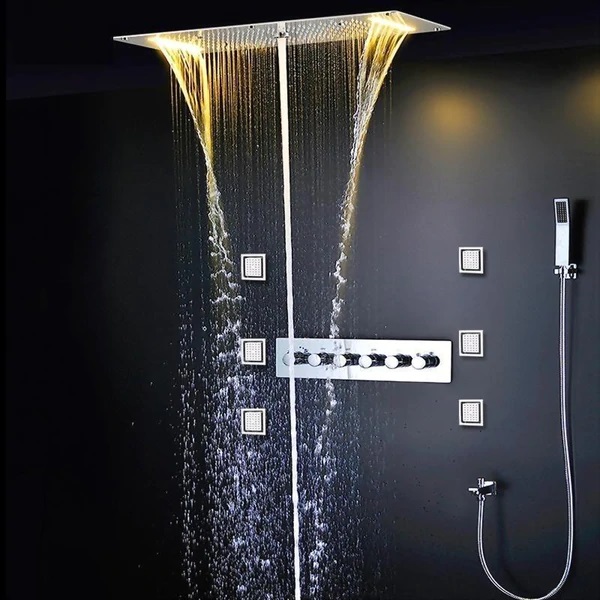
Coordinate several outlets through one organized
mixer and diverter arrangement. The number of
controls should match the intended combination of
rainfall, handheld, waterfall and body-spray
functions.
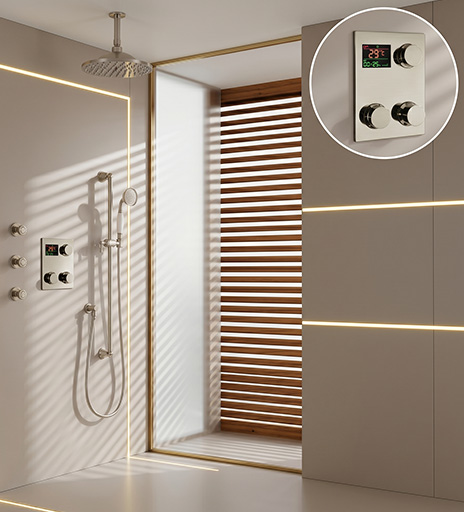
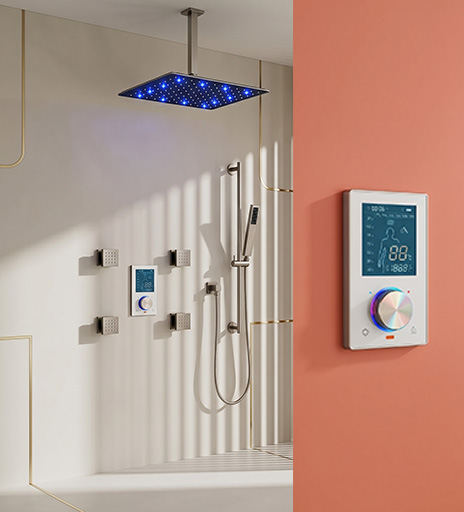
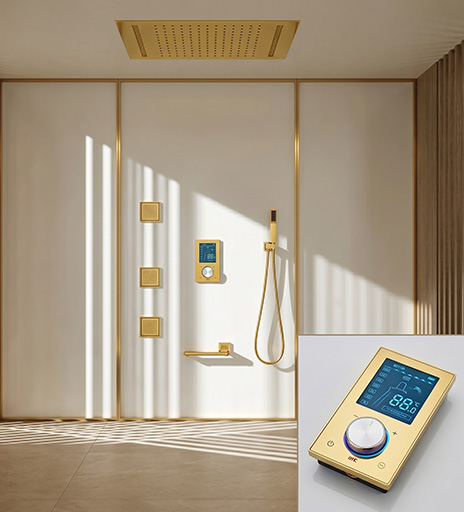
Digital Systems
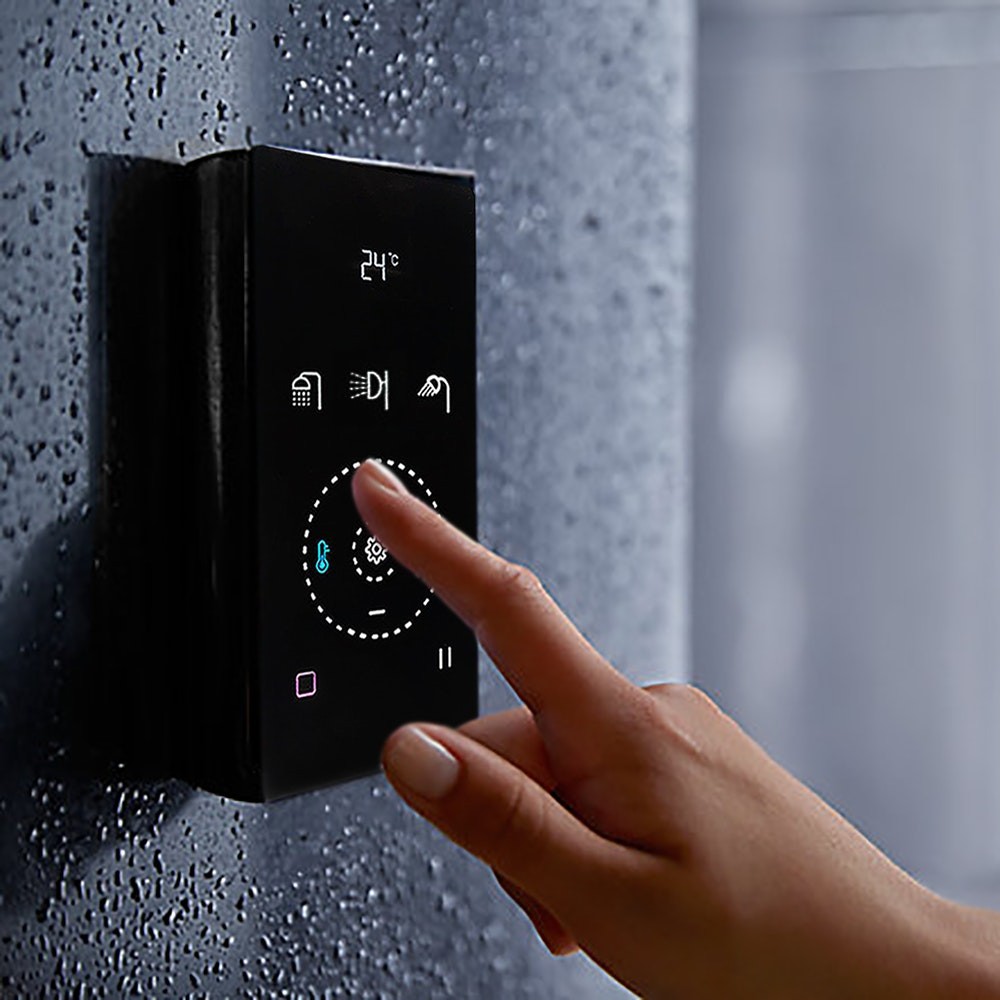
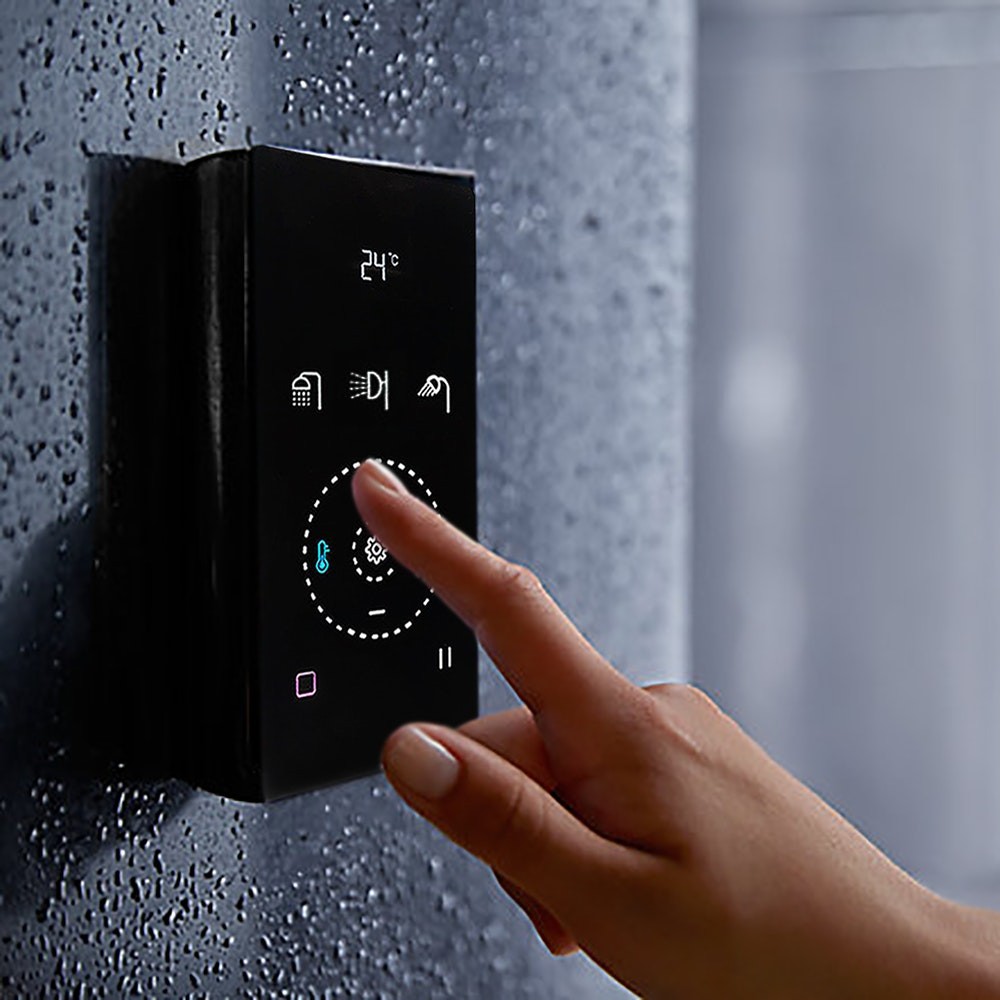
Selected digital mixers display temperature and
provide electronic outlet control. Available
features vary by model and may include presets,
timers, memory settings or touchscreen operation.
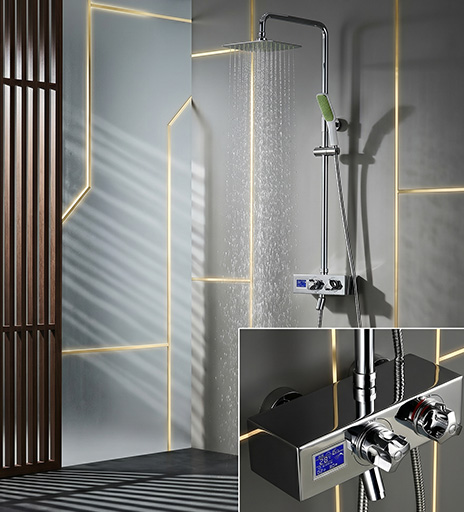
Exposed Systems
Exposed controls keep the principal valve assembly
visible. This format can simplify access for
inspection, repair and selected renovation
applications.
Control Technologies
Shower Mixer Types
Mixer technologies respond differently to temperature,
pressure and user input. Selection should be based on the
complete shower configuration rather than appearance alone.
Manual and Pressure Control
Manual and Pressure-Balancing Mixers
A manual mixer allows the user to blend hot and cold
water through a lever or separate handles.
Pressure-balancing valves are designed to respond when
the pressure of one incoming supply changes.
Familiar mechanical operation
Suitable for straightforward shower arrangements
Available with integrated or separate diverters
Pressure-balancing models react primarily to
pressure variation
Temperature Regulation
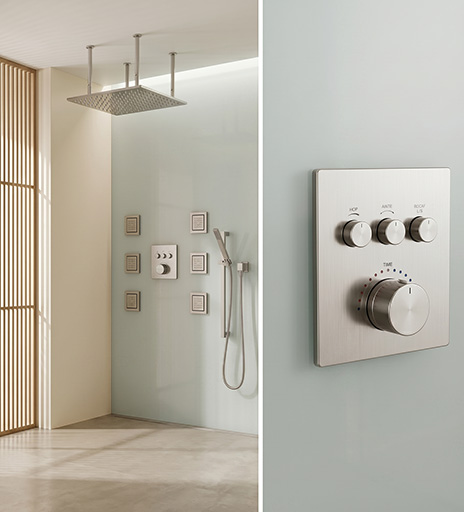
Thermostatic Shower Mixers
Thermostatic mixers regulate mixed-water temperature and
are commonly selected for shower systems that benefit
from a consistent setting. Many configurations separate
the temperature control from the flow or diverter
control.
Independent temperature selection
More consistent mixed-water temperature
Temperature-stop features on selected products
Suitable for rainfall, handheld and body-jet systems
Electronic Controls
Digital Shower Mixers
Digital shower controls provide an electronic interface
for temperature and outlet management. Depending on the
model, the interface may be installed inside the shower
or placed at a convenient entry location.
Temperature handle with integrated pressure response
Showers where supply-pressure fluctuation is a
design consideration
Thermostatic Mixer
Senses and regulates the mixed-water temperature.
Separate temperature and flow or diverter controls
Multi-outlet, comfort-focused and spa-style showers
Digital Mixer
Uses an electronic interface to manage system
operation.
Screen, touchscreen, buttons or remote controller
Smart bathrooms and digitally controlled shower
systems
Product verification:
Valve technology, temperature-limiting features, simultaneous
outlet operation and applicable certifications differ by model.
Confirm these details from the individual BathSelect specification
and installation documentation.
Installation Format
Concealed & Exposed Mixers
Concealed Mixers
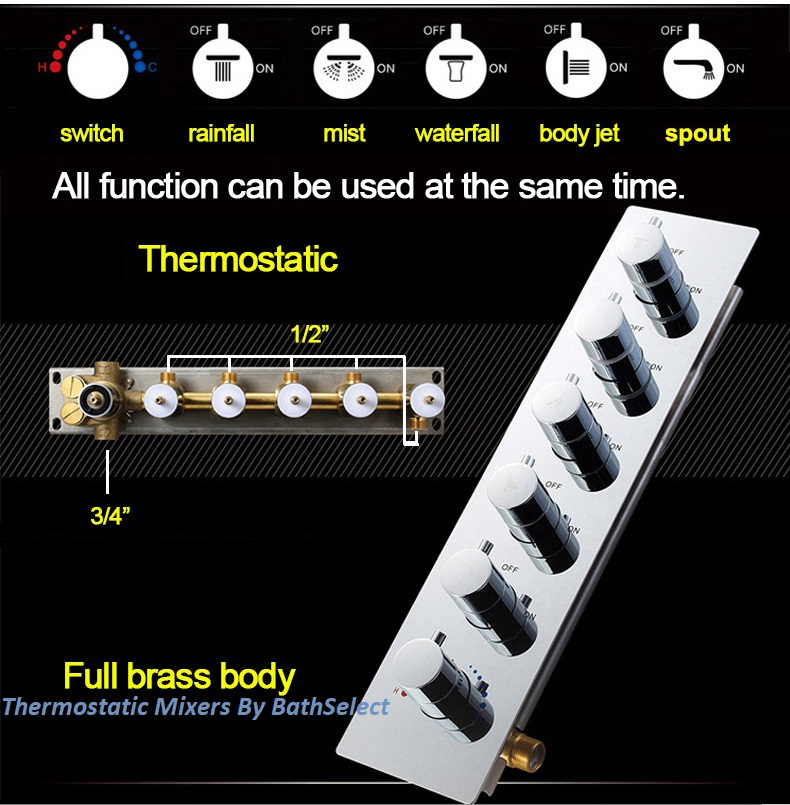
The valve body and plumbing connections are installed
behind the finished wall. Only the trim plate, handles and
user controls remain visible.
Clean architectural appearance
Reduced visual clutter
Flexible outlet placement
Requires rough-in coordination
Service access should be planned
Exposed Mixers
The mixer body, riser and selected plumbing components
remain visible and become part of the shower composition.
Accessible for inspection and maintenance
Useful for selected remodeling applications
Less wall opening may be required
Visible components influence the design
Connection locations remain important
Rough-In Considerations
Before closing the wall, confirm the valve depth, connection
orientation, finished-wall thickness, service access and
alignment of every shower outlet.
A shower function generally refers to one independently
controlled water outlet or shower experience.
One Function
Controls one primary outlet, such as an overhead rainfall
shower.
Two Functions
Commonly coordinates a rainfall shower and a hand shower or
tub spout.
Three Functions
May coordinate an overhead shower, hand shower and body-jet
system.
Four or More
Supports expanded combinations such as rainfall, waterfall,
mist, handheld and body-spray functions.
Term
Meaning
Selection Note
Diverter
Directs water from one shower outlet to another.
Confirm the number of available positions and
compatible outlets.
Volume Control
Regulates the intensity of water flow.
A diverter does not always provide independent
volume control.
On/Off Control
Starts or stops water to an individual outlet.
Useful for systems with independently operated
functions.
Shared Operation
A compatible valve may allow selected outlets to
operate together.
Never assume simultaneous use unless it is stated in
the product documentation.
Horizontal and Vertical Mixer Layouts
Horizontal controllers create a wider control arrangement
that can align visually with linear shower heads, benches
or recessed wall niches. They require sufficient clear wall
width and careful coordination with internal piping.
Vertical controllers occupy less horizontal wall space and
can be effective in narrower shower enclosures. Their
controls may be organized from top to bottom according to
temperature, flow and outlet function.
The choice between horizontal and vertical layouts should
consider user reach, wall framing, piping direction,
waterproofing, tile joints and the positions of the hand
shower and body sprays.
Finish Coordination
Shower System Finishes
Coordinate the shower mixer with the shower head, hand shower,
body sprays, tub filler, drain and surrounding bathroom
hardware.
Finish note:
Screens, buttons, hoses, trim plates and internal components may
display slight material or finish differences. Review the
individual product images and finish description before ordering.
Shower Configuration
Complete Shower Coordination
Rainfall shower and mixer coordination
Body-jet and multi-outlet planning
Exposed mixer access and arrangement
System Performance
Pressure, Flow & Heating
The mixer can regulate and direct the available water, but it
cannot create additional pressure or hot-water capacity.
Available Pressure
Confirm static and dynamic pressure, hot and cold supply
balance, pressure loss through the piping and the operating
requirements of the selected valve.
Combined Flow Demand
Calculate the combined flow of every outlet intended to
operate at the same time, including body jets, hand showers,
rainfall heads and waterfall outlets.
Hot-Water Supply
Verify heater capacity, recovery rate, pipe distance,
recirculation design and the minimum activation flow of
tankless water heaters.
Water-Heater Compatibility
Shower mixers may be incorporated into systems supplied by
storage-tank heaters, tankless heaters, central domestic
hot-water systems, recirculation loops or heat-pump water
heaters. Compatibility depends on the requirements of both
the shower valve and the water-heating equipment.
A multi-function shower can demand substantially more water
than a single shower head. The project team should verify
the available hot-water volume, heater recovery, pipe size,
incoming temperature and anticipated duration of use.
Tankless heaters may require a minimum flow before heating
begins. Very low mixer flow or rapidly changing outlet
combinations can affect heater operation, making system-wide
coordination important.
Buyer and Project Guide
Shower Mixer Selection
Count the Outlets
List every rainfall head, hand shower, body jet, tub spout,
waterfall outlet and additional spray function.
Plan Their Operation
Decide whether each function will operate separately or
whether selected outlets should be capable of operating
together.
Choose the Technology
Compare manual, pressure-balancing, thermostatic and digital
control systems.
Select the Format
Determine whether the valve will be concealed, exposed,
horizontal or vertical.
Measure the Wall
Confirm clear control space, mounting depth, tile thickness,
framing and access requirements.
Verify Plumbing Capacity
Review pressure, pipe sizing, valve flow capacity and
water-heater output.
Coordinate the Finish
Match the mixer with the shower outlets, faucet collection,
drain and surrounding hardware.
Review Documentation
Check dimensions, connection sizes, included components,
installation instructions and product-specific listings.
Comparison Field
Questions to Confirm
Control Type
Is the mixer manual, pressure-balancing,
thermostatic, combination or digital?
Function Count
How many outlets can the mixer control, and can any
operate simultaneously?
Installation
Is the valve concealed or exposed, and what wall
depth is required?
Orientation
Does the controller use a horizontal or vertical
arrangement?
Connections
What inlet, outlet and supply-pipe sizes are
required?
Included Parts
Are the rough-in valve, trim, handles, control box
and required fittings included?
Maintenance
Can the cartridge, filters and control components be
serviced after installation?
Selected BathSelect offers may provide savings of up to 50% on
qualifying shower mixer and shower-system products. Current
pricing, promotion terms and product availability should be
confirmed on the applicable product page.
Installation Planning
Thermostatic Valve Installation
Whether the project involves a new bathroom or an existing
shower remodel, the supply piping and rough-in valve must be
coordinated before the finished wall is completed. The hot
and cold supplies enter the concealed valve, where they are
blended to produce the selected mixed-water temperature.
Installation should be completed by a qualified plumbing
professional in accordance with the product instructions
and applicable plumbing requirements.
Plumbing Recommendations
Provide dedicated and adequately sized hot and
cold water supplies.
Avoid unnecessarily long pipe runs that can
increase friction loss.
Confirm the manufacturer’s recommended supply
pipe size for the selected valve.
Where several valves share one supply, size the
main line for the combined demand.
Flush supply lines before installing the
cartridge or sensitive valve components.
Verify that both supplies can maintain the
required flow during operation.
Pressure-test the system before closing the wall.
Calibrate the temperature control during
commissioning.
Installation and Commissioning Checklist
Before Installation
Verify all supplied components
Review the rough-in drawing
Confirm inlet orientation
Measure the finished-wall depth
Coordinate framing and waterproofing
During Installation
Mount the valve securely
Keep connections accessible where required
Flush piping before final assembly
Protect the valve from construction debris
Pressure-test all connections
During Commissioning
Confirm correct hot and cold orientation
Test every outlet function
Calibrate thermostatic controls
Verify flow and temperature stability
Provide maintenance documentation
AEC and Installation Resources
Technical Review
Architects, plumbing engineers, designers, contractors and
installers should coordinate the available product
documentation before final specification.
Product Data Sheet
Materials, functions, finishes and operating information.
Installation Manual
Required installation and commissioning procedures.
Rough-In Drawing
Valve dimensions, wall depth and connection locations.
Flow Information
Available flow and compatible shower-outlet arrangements.
Parts Diagram
Cartridges, seals, handles and serviceable components.
Maintenance Guide
Cleaning, calibration and component-care instructions.
Warranty Information
Product-specific coverage, terms and exclusions.
BIM or CAD Files
Digital coordination files where available.
Specification Information
Product-specific standards, listings and specification
references where applicable.
Temperature Management
Stability & Safety
Temperature Regulation
A thermostatic cartridge is designed to regulate the mixed
water as inlet conditions change. Correct installation and
calibration are essential to its intended operation.
Temperature Limits
Selected mixers incorporate a temperature stop or limit
setting. The presence and configuration of this feature
should be verified for each product.
Routine Verification
Periodically check outlet temperature, cartridge condition,
inlet filters and the operating response of the controls.
Do not describe every thermostatic product as an anti-scald valve
without reviewing its product-specific documentation. Confirm the
valve type, temperature-limiting features, listings and intended
application before specification.
Hotel guest rooms, resort suites, premium residences,
wellness rooms and coordinated hospitality bathrooms.
Commercial Projects
Product suitability should be evaluated against the
expected duty cycle, maintenance program, plumbing design
and applicable project requirements.
Product Care
Shower Mixer Maintenance
Surface Care
Wipe controls with a soft cloth and use a mild,
non-abrasive cleaner suitable for the specified finish.
Scale Management
Remove mineral accumulation from shower outlets and inspect
inlet filters or screens where provided.
Valve Maintenance
Follow the product instructions when flushing, calibrating
or servicing thermostatic and diverter cartridges.
Replacement Parts
Use compatible replacement cartridges, seals and components
intended for the specific mixer model.
Finish and Component Care
Avoid abrasive pads, strong acids, harsh chemical cleaners
and prolonged exposure to cleaning products. These materials
can damage plated, brushed, painted or specialty finishes.
Digital controls should be maintained according to their
model-specific instructions. Do not open electronic
enclosures, disconnect control cables or expose components
to moisture unless the service procedure expressly permits
it.
If the mixer begins dripping, loses temperature stability or
becomes difficult to operate, inspect the supply pressure,
cartridge, diverter, seals and inlet filters before replacing
the complete valve.
Service Guidance
Troubleshooting Checks
Temperature Fluctuates
Check the hot and cold supply pressures
Inspect the thermostatic cartridge
Verify water-heater capacity
Clean blocked strainers or inlet filters
Check for plumbing cross-connections
Water Is Not Hot Enough
Review the temperature-limit setting
Calibrate the thermostatic control
Check the water-heater setting
Confirm the hot and cold connections
Verify available hot-water volume
Water Flow Is Low
Confirm the available supply pressure
Check service stops and shutoff valves
Clean inlet screens and shower outlets
Review supply-pipe sizing
Reduce simultaneous outlet demand if necessary
The Mixer Is Dripping
Inspect the control cartridge
Check valve seals and seating surfaces
Remove debris from the valve body
Confirm that the control closes completely
Replace worn model-specific components
The Diverter Does Not Switch
Check cartridge alignment
Verify handle installation
Inspect the valve for construction debris
Confirm the correct outlet connections
Service the diverter cartridge if required
Digital Controls Do Not Operate
Check the electrical or battery supply
Inspect controller and valve-module cables
Review the startup procedure
Confirm compatible components are connected
Follow the model-specific reset instructions
Explore the Collection
Advanced Shower Mixers
Browse BathSelect shower mixers, thermostatic controls,
pressure-balancing configurations and coordinated shower
systems in a range of layouts and finishes.
A shower mixer combines hot and cold water and may also
regulate flow or direct water to different shower
outlets.
A mixer blends hot and cold water. A diverter directs
that mixed water to one or more shower outlets.
A thermostatic mixer provides more direct temperature
regulation, while a manual mixer offers simpler
mechanical operation. The best choice depends on the
project.
It typically controls three outlets, such as a rainfall
shower, hand shower and body-jet system. Actual
configurations vary.
Only mixers specifically designed for simultaneous
operation should be used this way. Confirm the valve
capacity and product instructions.
Compatibility depends on the minimum operating pressure
of the valve and the flow requirements of the connected
shower outlets.
Not always, but the heater must provide sufficient
temperature, flow and capacity for the selected shower
functions.
Many cartridges can be serviced through the trim
opening, but access requirements differ. Review the
installation instructions before closing the wall.
It is the internal valve component that responds to
mixed-water temperature and adjusts the hot and cold
blend.
Yes, when the valve has enough compatible functions and
the plumbing system can provide the required combined
flow.
Required pipe size depends on the valve, outlet demand
and project design. Follow the product documentation and
plumbing calculations.
Do not assume they are reversible. Install the hot and
cold supplies in the orientation stated in the
product-specific instructions.
Often yes, provided the valve design, piping layout,
access and installation instructions support the chosen
position.
Calibration normally involves measuring the outlet
temperature and adjusting the handle or cartridge
position according to the installation manual.
Consider available wall width, user reach, piping
direction, tile layout and the positions of the other
shower fixtures.
Use a soft cloth and mild cleaner appropriate for the
finish. Avoid abrasive materials and harsh chemicals.
Availability depends on the mixer model. Record the
product number and use compatible replacement
components.
Review the specification, rough-in drawing, installation
manual, connection sizes, wall-depth limits and included
component list.
BathSelect Updates
Stay Informed
Receive BathSelect shower mixer inspiration, product
releases, finish updates and information about digital
and smart shower systems.
Project Support
Shower Control Planning
A successful shower mixer selection coordinates outlet count,
control technology, available water pressure, valve capacity,
piping design and water-heater performance. Review the
technical requirements of the selected BathSelect mixer before
completing the rough-in or finished wall.
You can buy from a wide range of
stylish bathroom mixers from BathSelect at best prices, and if you shop today, you can save up to 50% on all our shower mixer faucet products. You can go with shower mixer, shower mixer valve, thermostatic and or pressure balance mixer valve, we also provide the digital thermostatic valve, exposed shower valve, thermostatic shower taps, thermostatic shower mixer taps, thermostatic shower dripping, dripping shower mixer, thermostatic shower balance mixer, also they are available from one to 4 hole mixer.
you can save up to 50% on all our shower mixer faucet products
Whether you are remodeling your existing shower bathroom or just building a new one you will need to know the basics before you start to Install supply plumbing and valve replacement (s) as needed. You feed the hot and cold water lines into the Shower Valve (which installed inside the wall), and the valve mixes that water to a pre-set warm Plumbing Recommendations
Do not pipe off the ring main, An independent water supply for both hot and cold is required, Large runs of pipework will cause frictional loss of pressure, The recommended primary water supply piping to valve shall be 3/4" minimum, If more than one valve installed, the recommended main water supply piping to valve shall be 1" minimum, reducing to 3/4" within 24" of each valve. Always ensure an adequate supply of both hot and cold water can maintain.