Frequently Asked Questions Manual Faucets
BathSelect Manual Faucets — Valve & cartridge engineering
Ceramic disc vs compression vs cartridge valves. What should AEC teams specify and why?
Ceramic disc cartridges are the most common modern choice for durability, smooth actuation, and predictable shutoff performance. Compression valves are serviceable but rely on a rubber washer and seat, which can wear faster in high cycling environments. When writing the spec, define the valve technology, the service approach (top service vs full disassembly), and whether the manufacturer provides replaceable cartridges as stocked spares.
What does “quarter turn” mean and how does it relate to durability and user experience?
Quarter turn typically describes a ceramic disc valve that reaches full open from a 90 degree handle rotation. It reduces user effort, shortens cycle time, and can reduce wear compared to multi turn stems. For commercial restrooms and multifamily, consistent quarter turn behavior across rooms helps maintenance teams and reduces complaints about “stiff” valves.
How do single handle mixing cartridges differ from two handle hot cold systems in performance?
Single handle mixing cartridges blend hot and cold within one valve body, which simplifies user operation and can reduce trim penetration points. Two handle systems separate hot and cold control, which can be preferred for classic styling or where separate supply control is desired. For AEC, confirm temperature limiting strategy for single handle valves and confirm handle travel and labeling for two handle systems.
What valve failure modes should be anticipated in high traffic installations?
Common issues include cartridge wear, debris damage to sealing surfaces, and handle loosening from repeated use. In hard water areas, mineral scaling can increase torque and reduce smooth operation. In the spec, require debris protection strategy (strainers where recommended), define acceptable operating pressure range, and require replaceable valve components and published service parts.
How should pressure variation and water hammer be addressed for manual faucets?
Pressure swings can create inconsistent flow, splashing, and user complaints. Water hammer can loosen connections and create noise. Coordinate pressure reducing valves (PRVs) where building pressure is high, specify pressure compensating aerators or flow controls where needed, and include water hammer arrestors where fixture groups and quick closing valves contribute to transient pressure.
BathSelect Manual Faucets — Flow control, aerators & water performance
How do aerators and flow regulators actually control GPM in a manual faucet?
Flow is commonly controlled by an insert that limits flow rate and shapes the stream. Pressure compensating designs maintain more consistent GPM across a range of inlet pressures, which matters in tall buildings or mixed use sites. For AEC specifications, define the required GPM, the pressure range for compliance, and whether laminar flow is required for splash and aerosol reduction.
Laminar vs aerated streams. When is each appropriate?
Aerated streams feel “soft” and can reduce perceived splashing at some sinks, but they can entrain air and create more turbulent flow. Laminar flow produces a clear, non aerated stream that can reduce splashing and is often preferred in healthcare or high hygiene settings. Coordination items include sink geometry, spout reach, and outlet height to keep the stream centered and stable.
How should designers coordinate spout reach and height to reduce splash and improve usability?
Spout outlet should land water near the drain without hitting steep bowl walls. Excess height increases splash risk and can fail user expectations in compact basins. In schedules, document spout reach, spout height, and sink model pairing assumptions. For multi restroom projects, mockups are the fastest way to validate splash performance.
What is the practical impact of supply pressure on manual faucet performance?
High pressure can create noisy flow, excessive splash, and accelerated wear in valve components. Low pressure can create weak stream and poor mixing stability at the user. The best practice is to specify a pressure operating envelope and match aerator selection to that range, instead of assuming one insert will perform well everywhere.
Do manual faucets need thermostatic mixing valves and how should they be specified?
For many commercial and multifamily applications, a TMV is used upstream or at the point of use to control scald risk and provide stable mixed water. If the project requires controlled outlet temperature, specify TMV type, access and service strategy, and commissioning requirements. Coordinate with local code and facility policy for maximum temperature limits.
BathSelect Manual Faucets — Materials, finishes & corrosion engineering
Brass, stainless, and zinc alloy bodies. What should specifiers know about longevity?
Brass is widely used for durability and machinability, especially for valve bodies and wetted parts. Stainless can be strong and corrosion resistant depending on grade and design. Some decorative bodies may use other alloys with plating. For AEC, the key is wetted path material, wall thickness, and whether the manufacturer identifies alloy composition and compatible cleaning methods.
What finish systems matter in real buildings and how should cleaning be coordinated?
Finish durability is heavily influenced by housekeeping chemicals and wipe frequency. Multi layer plating and PVD type coatings can improve resistance to abrasion and corrosion, but only if cleaning guidance is followed. In specs, include approved cleaner requirements and prohibit harsh acids, bleach mixtures, and abrasive pads when the finish system is sensitive.
How do aggressive water conditions affect manual faucets and what mitigations are realistic?
High chloride levels, low pH, and high hardness can accelerate corrosion and scaling. Scaling can bind aerators and cartridges, increasing handle torque and reducing flow. Mitigations include filtration or softening strategy, periodic aerator maintenance, and specifying serviceable cartridges and replaceable outlet inserts.
What should be specified about seals, O rings, and internal lubricants?
Seal material affects chemical resistance and long term leak performance. AEC teams can require replaceable seals as part of service kits and request compatibility statements for typical restroom disinfectants. For high traffic, define expected service intervals and require readily available rebuild kits.
BathSelect Manual Faucets — Installation, rough-in & coordination
Single hole vs widespread vs wall mount. What drives the rough in decision?
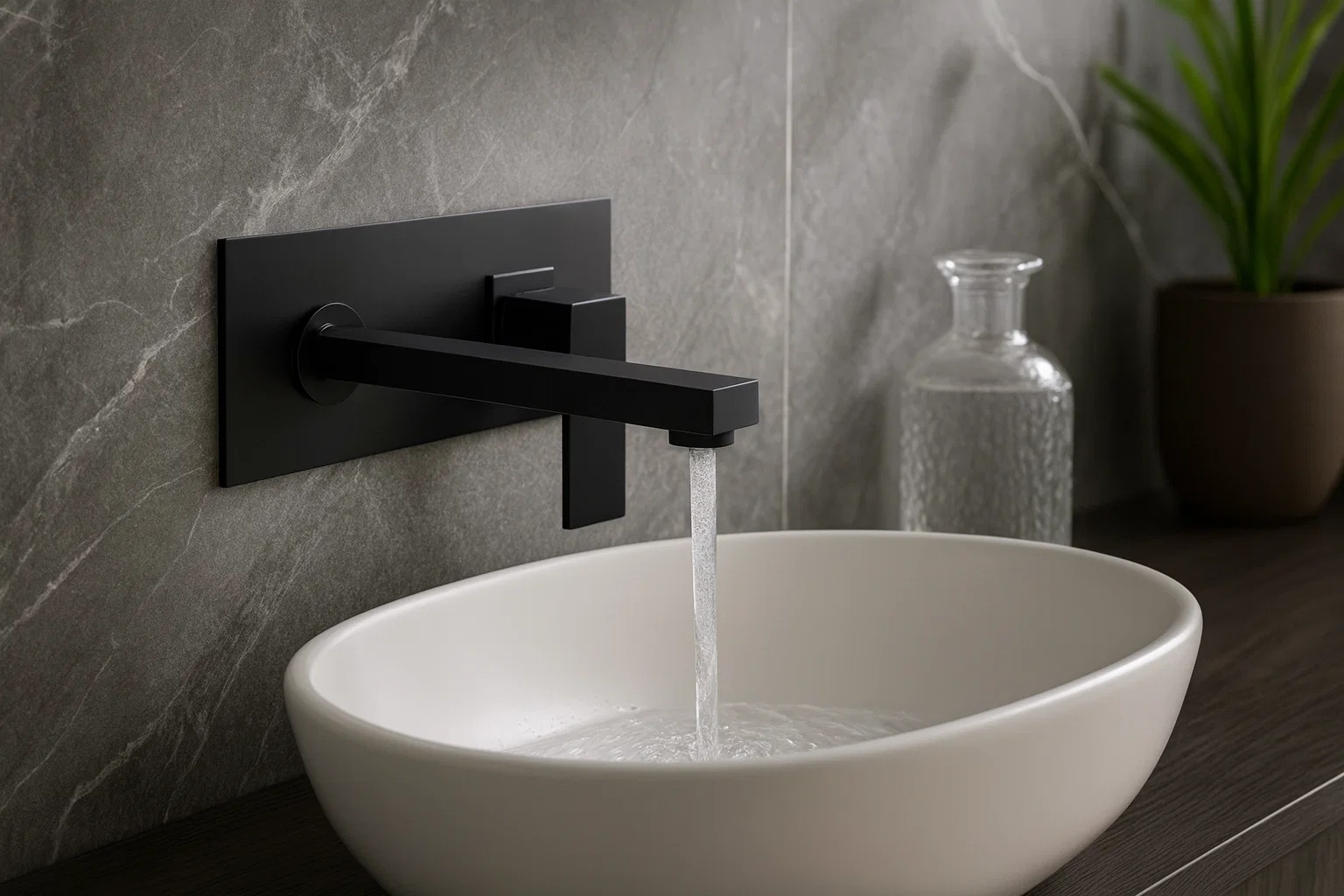
Single hole simplifies deck penetrations and is common for compact basins. Widespread requires multiple penetrations and more under deck connections. Wall mount requires in wall rough in planning, spout projection coordination, and access strategy. For AEC documents, call out mounting type, hole spacing, and any required rough in valve bodies clearly in the plumbing schedule.
What clearances under the sink should be planned for manual faucets?
Clearance is required for supply stops, drain assemblies, and future cartridge service. Tight cabinetry can make routine repairs expensive. In detailing, verify that stops are reachable, hoses are not kinked, and the faucet mounting hardware is serviceable without removing the basin.
How should drain assemblies be coordinated with faucet selection?
Drain type depends on sink overflow condition and local code. Pop up assemblies require linkage clearance and can conflict with shallow drawers or ADA knee clearance conditions. In specs, define whether drains are included, whether overflow compatible drains are required, and whether finish matching is required across faucet and drain trim.
What are typical causes of leaks after installation and how can they be reduced?
Leaks often come from improperly seated supply lines, over tightened fittings, misaligned gaskets, or debris trapped in sealing surfaces. Best practice is flushing lines before final connection, using correct torque, and following manufacturer gasket placement. Include commissioning steps in the closeout checklist for multi unit projects.
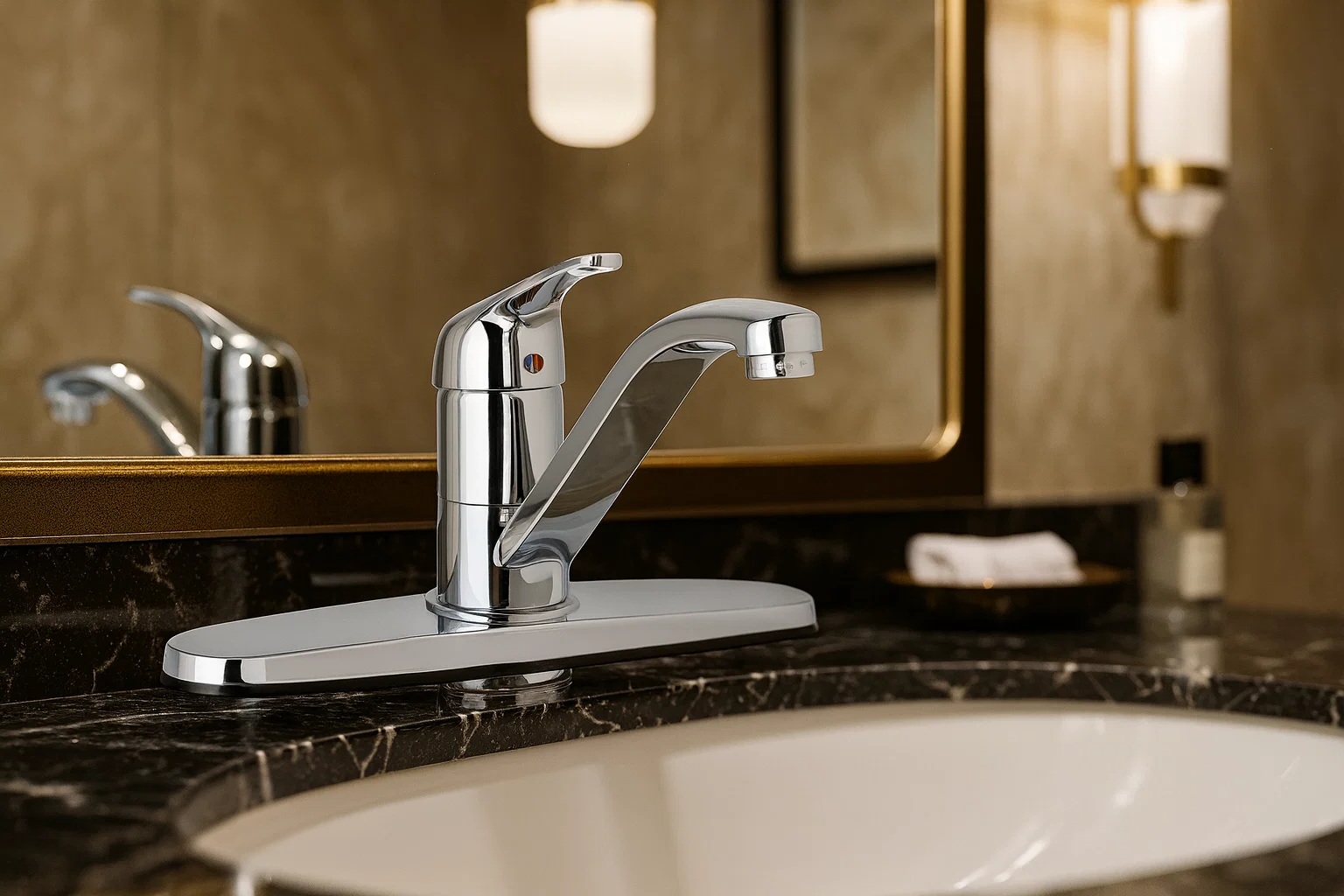
A newly installed manual faucet should be commissioned only after the branch supplies have been flushed and the fixture has been checked for debris, connection integrity, correct hot-and-cold operation, and stable outlet flow. Architects, Engineers, Consultants, plumbing contractors, commissioning teams, and facility personnel should verify supply-line flushing, stop-valve operation, hose and threaded connections, cartridge response, handle direction, hot/cold orientation, visible leakage, aerator or outlet cleanliness, basin drainage, final flow condition, and accessible service clearance before the fixture is accepted. Single-hole mounting, gasket placement, mounting hardware, supply connections, and startup sequencing can be reviewed through the BathSelect Milan Faucet Installation Instructions, compatible deck-mounted configurations can be compared through BathSelect Bathroom Sink Faucets, and elevated-basin installations requiring additional faucet-height and connection coordination can be evaluated through BathSelect Vessel Sink Faucets so supply flushing, connection verification, cartridge operation, outlet condition, leak inspection, and baseline performance are documented before the faucet enters normal service.
BathSelect Manual Faucets — Maintenance, lifecycle & specification language
What should be included in a maintenance friendly manual faucet specification?
Define cartridge type, replaceable parts availability, and required service access. Require that cartridges and aerators are field replaceable with standard tools, and require a published parts list with ordering references. For facilities, standardize a limited number of cartridge families across the project to reduce training and spares inventory.
How should AEC teams address spare parts planning for a multi restroom project?
Identify the basis of design faucet families and require a recommended spare kit quantity per number of fixtures, including cartridges, aerators, seals, and handles where applicable. Specify that the O and M manual must include exploded diagrams and part numbers. This reduces downtime and prevents “whole faucet replacement” when a cartridge is the only failure.
What are the most common causes of low flow complaints and how are they corrected?
Aerator clogging from debris and scale is the top cause, followed by partially closed stops or kinked supply lines. Correction typically involves cleaning or replacing the aerator and flushing the line. In harsh water conditions, include periodic aerator maintenance in the facility plan and specify strainers where recommended.
How do finish failures typically occur and how should closeout documents address cleaning?
Finish damage is frequently caused by incompatible chemicals, abrasive pads, or leaving disinfectants on the surface too long. Closeout should include the approved cleaning list and prohibited chemicals. For commercial buildings, align housekeeping SOPs with the finish system to protect warranty compliance.
BathSelect Manual Faucets — Compliance & documentation for submittals
What documentation should be required for manual faucet submittals?
Require the cut sheet, installation instructions, parts diagram, and any test listings required by jurisdiction. If flow rate compliance is critical, require the exact aerator or flow regulator configuration listed for the submitted model. For coordinated projects, include finish codes and drain compatibility in the submittal package.
How should accessibility considerations be addressed for manual faucet controls?
Accessibility is driven by installation height, reach, operability, and handle type. Levers are typically easier than knobs for operability. In drawings, coordinate clearances and confirm that controls can be operated without tight grasping or twisting as required by applicable guidelines for the project.
How should low lead and material safety requirements be handled in specifications?
Requirements vary by jurisdiction and application. If the project requires low lead compliance for potable water components, make it an explicit acceptance criterion and require documentation for the exact model and configuration. Avoid generic language that is not tied to the submitted SKU.
Explore BathSelect Manual Faucets
|
|
|