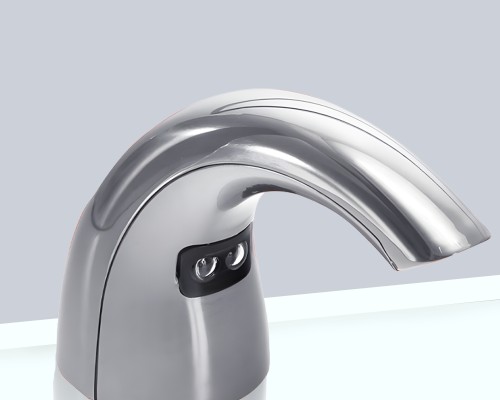
Everything You Need to Know About
Automatic Soap Dispensers
in 2026
From touch-free sensor activation to selected connected monitoring
and multi-dispenser configurations, automatic soap dispensers are
available for commercial, healthcare, hospitality, institutional,
and residential handwashing environments.
Automatic soap dispensers have developed beyond basic
sensor-operated units. Depending on the model, available
options may include adjustable dispensing, different power
configurations, centralized reservoirs, foam dispensing,
and connected monitoring capabilities.
Used across commercial and residential environments,
touch-free dispensers reduce the need to operate a manual
pump and can support a cleaner, more streamlined handwashing
workflow. Performance and available features vary by model.
What is an Automatic Soap Dispenser?
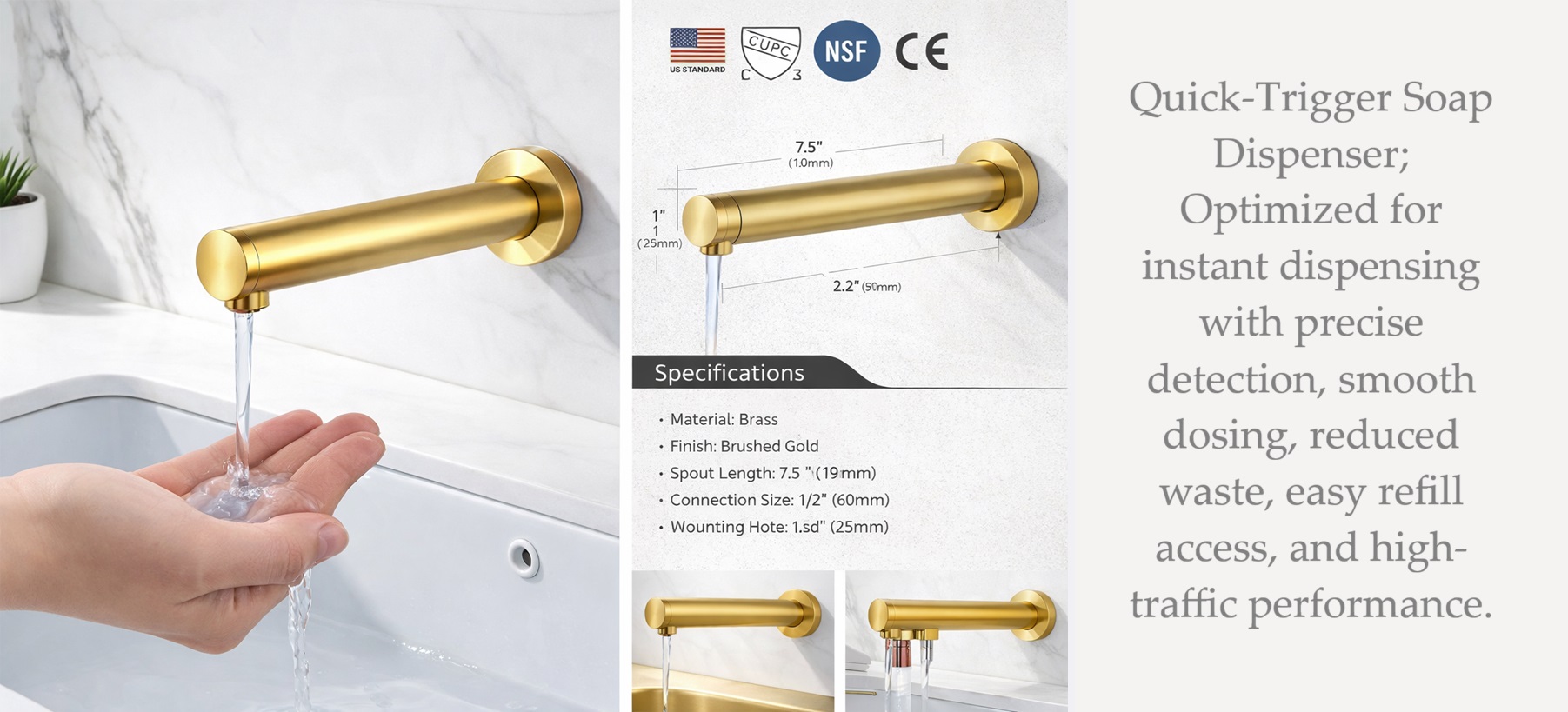
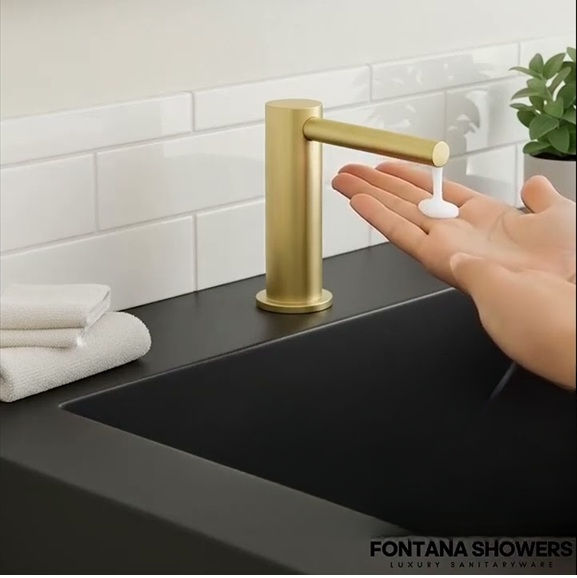
An automatic soap dispenser is a sensor-operated device that
dispenses soap without requiring the user to press a manual pump.
Depending on the selected model, sensing technology may include
infrared or other proximity-detection methods. Soap format,
dispensing volume, sensing range, power requirements, capacity,
and mounting configuration vary by product.
Types of Automatic Soap Dispensers
Infrared Sensor
Infrared sensor systems detect hand presence within a
defined sensing area and trigger dispensing without requiring
manual contact. Detection range and adjustment options vary
by model.
Time-of-Flight Sensor
Selected dispensers may use Time-of-Flight sensing to measure
distance using reflected light. Availability, detection range,
and operating characteristics depend on the individual product.
Multi-Dispenser Systems
Some commercial installations can connect multiple dispensing
points to a centralized soap supply. Reservoir size, tubing,
pump configuration, and service requirements should be verified
for the selected system.
Features Available on Selected Models
Touch-Free Operation
Sensor activation reduces the need to touch a manual
soap pump during handwashing.
Adjustable Dispensing
Selected models may allow dispensing volume or operating
settings to be adjusted. Review the individual specifications
for available controls.
Smart Monitoring
Connected systems may provide usage, refill, battery,
or maintenance information where supported by the
selected model and control platform.
Power Options
Available configurations may include battery,
AC, rechargeable, or combined power arrangements,
depending on the product.
Soap Compatibility
Automatic dispensers may be designed for liquid,
foam, or other manufacturer-approved formulations.
Confirm soap type and viscosity requirements before use.
Accessibility
Touch-free activation can support accessible restroom
planning, but ADA requirements and other applicable
accessibility provisions should be confirmed for each
product and installation.
Benefits of Automatic Soap Dispensers
Reduced Contact
Automatic activation eliminates the need to press
a manual dispenser pump, reducing one frequently
handled touchpoint during handwashing.
Controlled Dispensing
Metered dispensing can help manage soap consumption
by providing a controlled amount during each activation.
Dose volume and adjustment capabilities vary by model.
Maintenance Planning
Reservoir capacity, refill access, power configuration,
and serviceability can be selected according to the
expected usage and maintenance requirements of a project.
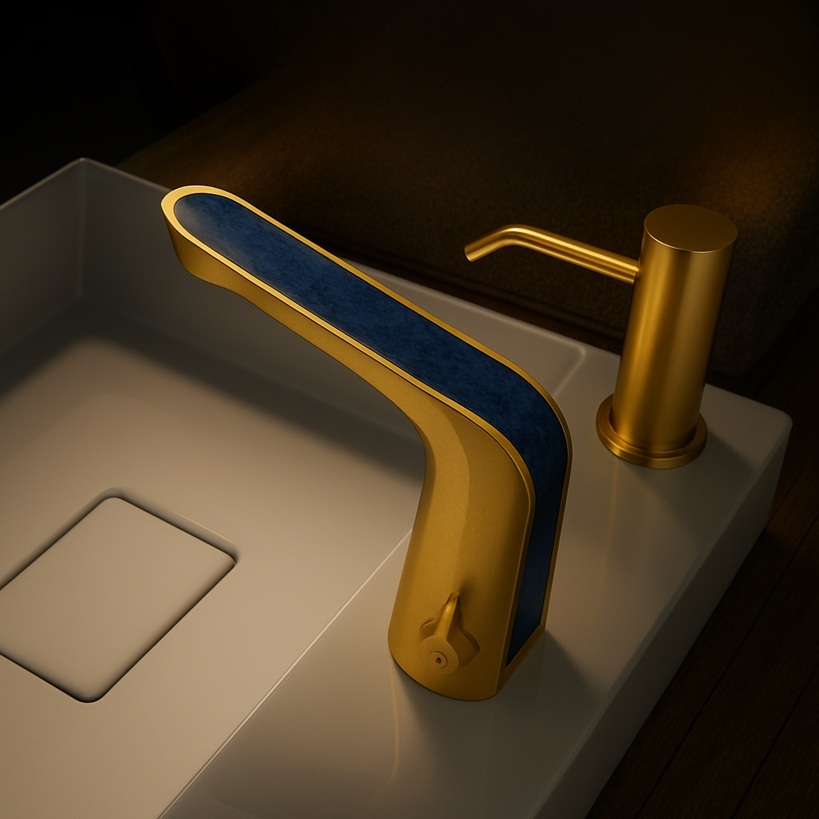
Design Integration
Available mounting styles, finishes, and profiles allow
automatic dispensers to be coordinated with faucets,
basins, and broader restroom fixture specifications.
Where Automatic Soap Dispensers Are Used
Healthcare facilities
Airports & transport hubs
Hotels & hospitality
Retail & public facilities
Educational institutions
Residential bathrooms
Maintenance & Reliability
Service Life
Service life varies according to product construction,
usage frequency, soap formulation, installation conditions,
power configuration, and maintenance. Follow the maintenance
and replacement guidance for the selected model.
Maintenance Tips
Keep sensor windows and dispensing outlets clean,
use compatible soap, inspect refill components,
maintain battery or electrical power as required,
and follow model-specific cleaning and service instructions.
Frequently Asked Questions
Do automatic soap dispensers cost more to operate?
Operating cost depends on the selected dispenser,
soap formulation, dispensing volume, refill capacity,
power source, maintenance requirements, and usage level.
Compare these factors rather than considering initial
purchase price alone.
Can I install an automatic soap dispenser myself?
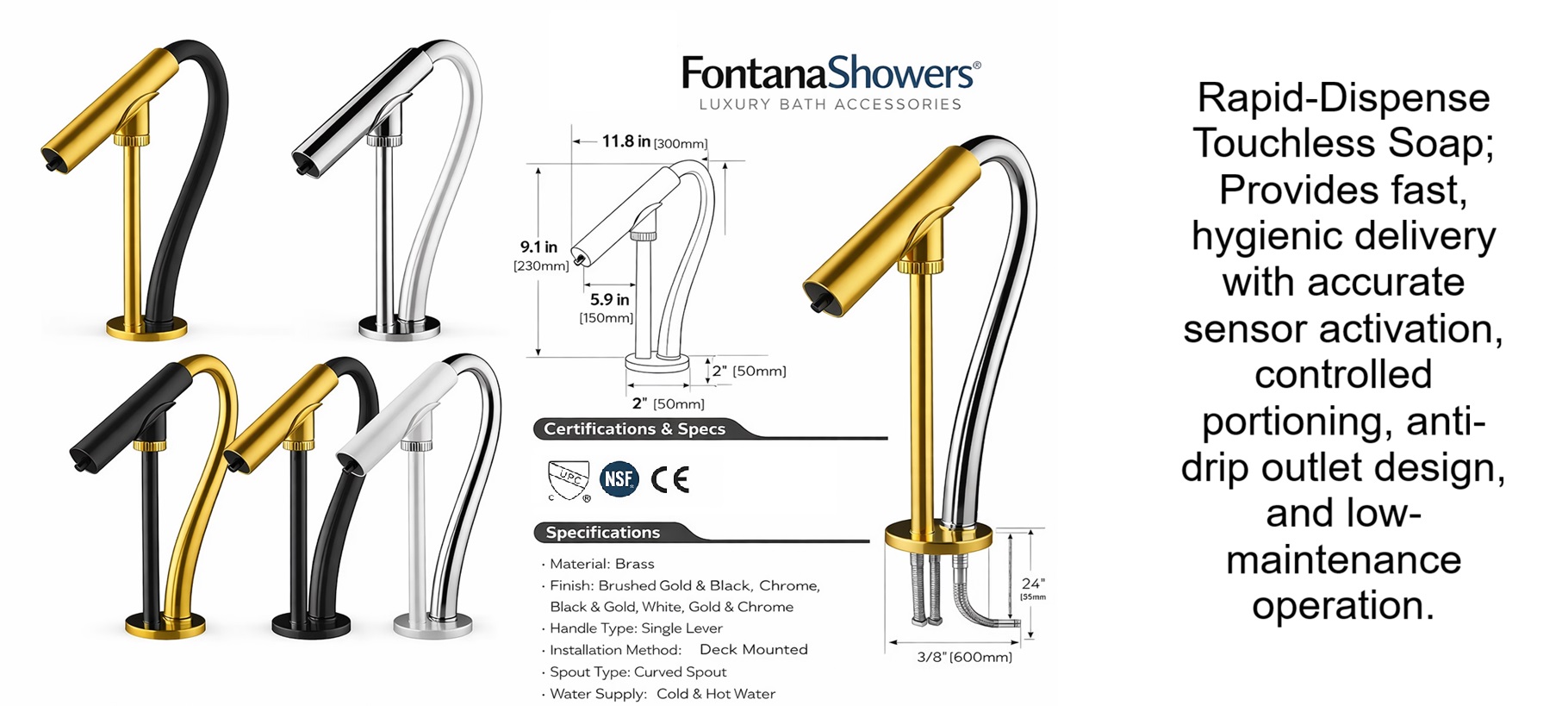
Installation requirements vary. Some standalone units
require minimal setup, while deck-mounted, wall-mounted,
hardwired, or centralized commercial systems may require
specific mounting, electrical, plumbing, or service provisions.
Follow the manufacturer's instructions for the selected model.
What soap should I use?
Use the soap type and viscosity specified for the
selected dispenser. Using an incompatible formulation
can affect dispensing performance or contribute to clogging.
Should I choose wall mount or deck mount?
Choose according to the sink layout, available mounting
surface, refill access, reservoir location, power supply,
and maintenance requirements. Review product dimensions
and installation specifications before selection.
Selecting the Right Automatic Soap Dispenser
Automatic soap dispensers provide a practical touch-free
option for modern handwashing areas. The appropriate system
depends on application, mounting style, soap compatibility,
capacity, power requirements, sensing technology, refill access,
finish, and maintenance needs. Review individual product
specifications before making a final selection.
Explore automatic soap dispenser options
for commercial restroom applications,
including different finishes, mounting
configurations, and project requirements.
Supporting Resources for Automatic Soap Dispenser Planning
These external resources provide broader guidance on
hand hygiene,
facility management,
accessibility,
sustainable building practices,
and
commercial restroom planning.
They should be used alongside the specifications and
installation requirements of the individual automatic
soap dispenser being considered.
Architectural resources useful for project
planning, specification workflows, and
design-professional reference.
Focus: Architecture · Specification
How to Use These References
These organizations provide broader public-health,
facility-management, building, and design guidance.
They do not establish that every automatic soap
dispenser meets a specific performance standard,
certification, accessibility requirement, or
sustainability program.
For product selection, confirm the specifications
of the individual dispenser, including mounting
requirements, soap compatibility, reservoir capacity,
power source, sensor configuration, dimensions,
refill access, maintenance requirements, and any
project-specific code or certification requirements.
Automatic Soap Dispenser Project Guidance
Hygiene Planning
Consider how users approach the sink,
where the dispenser will be positioned,
how touch-free activation fits into the
handwashing sequence, and how the fixture
will be cleaned and serviced.
Installation Planning
Confirm deck-mount or wall-mount requirements,
available power, reservoir placement,
under-counter clearance, refill access,
and manufacturer installation instructions.
Facility Maintenance
Evaluate soap compatibility, refill frequency,
battery or electrical access, cleaning procedures,
replacement components, and expected service
requirements for the selected model.
Related BathSelect Collections
Automatic Soap Dispensers
Browse the broader BathSelect automatic soap
dispenser collection by product configuration
and available design.
Automatic soap dispensers differ significantly
in mounting style, sensing technology, soap format,
reservoir arrangement, power configuration,
finish, capacity, and maintenance requirements.
Use educational references for broader planning,
but rely on the selected product's specifications
and installation documentation when making a
final project decision.