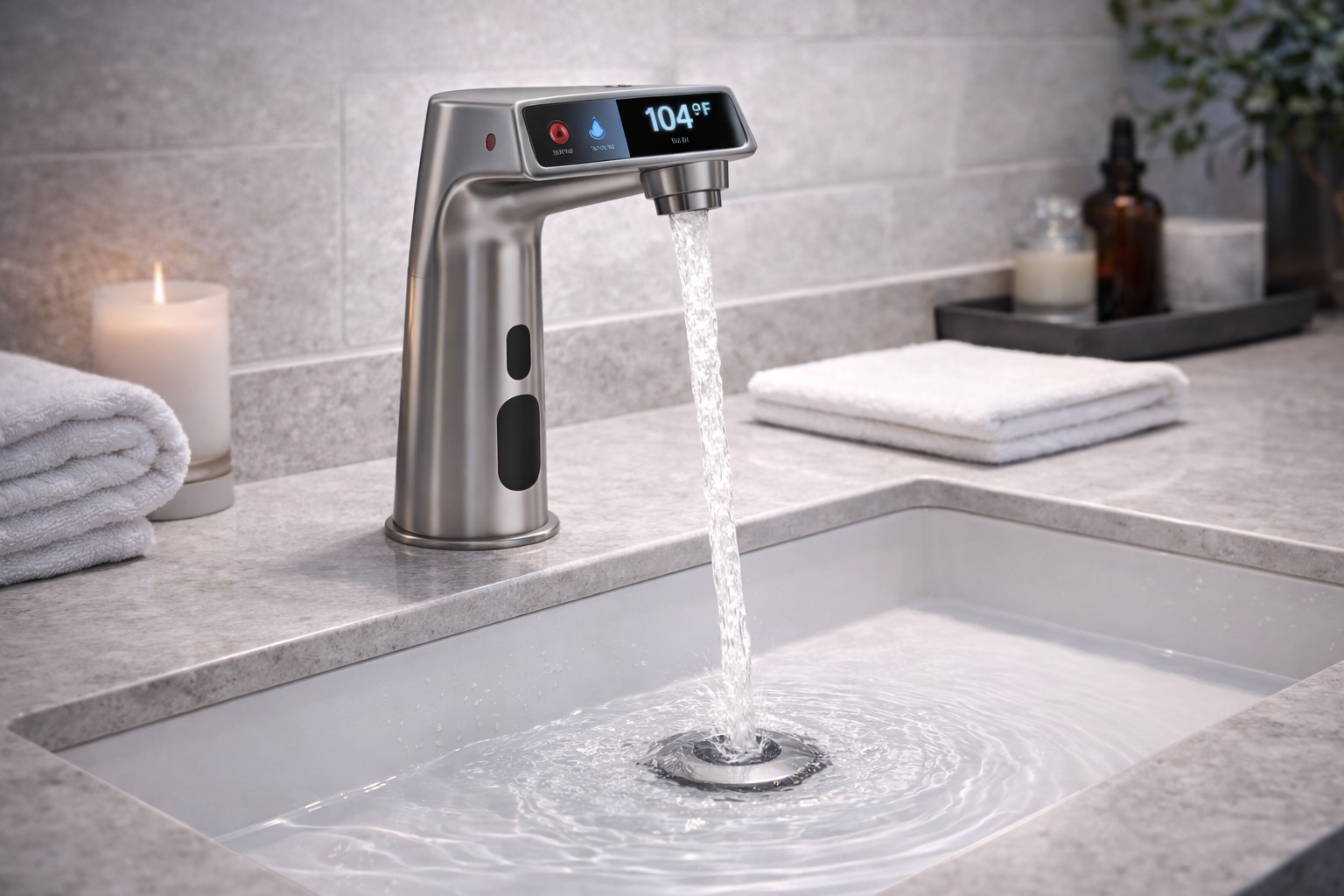
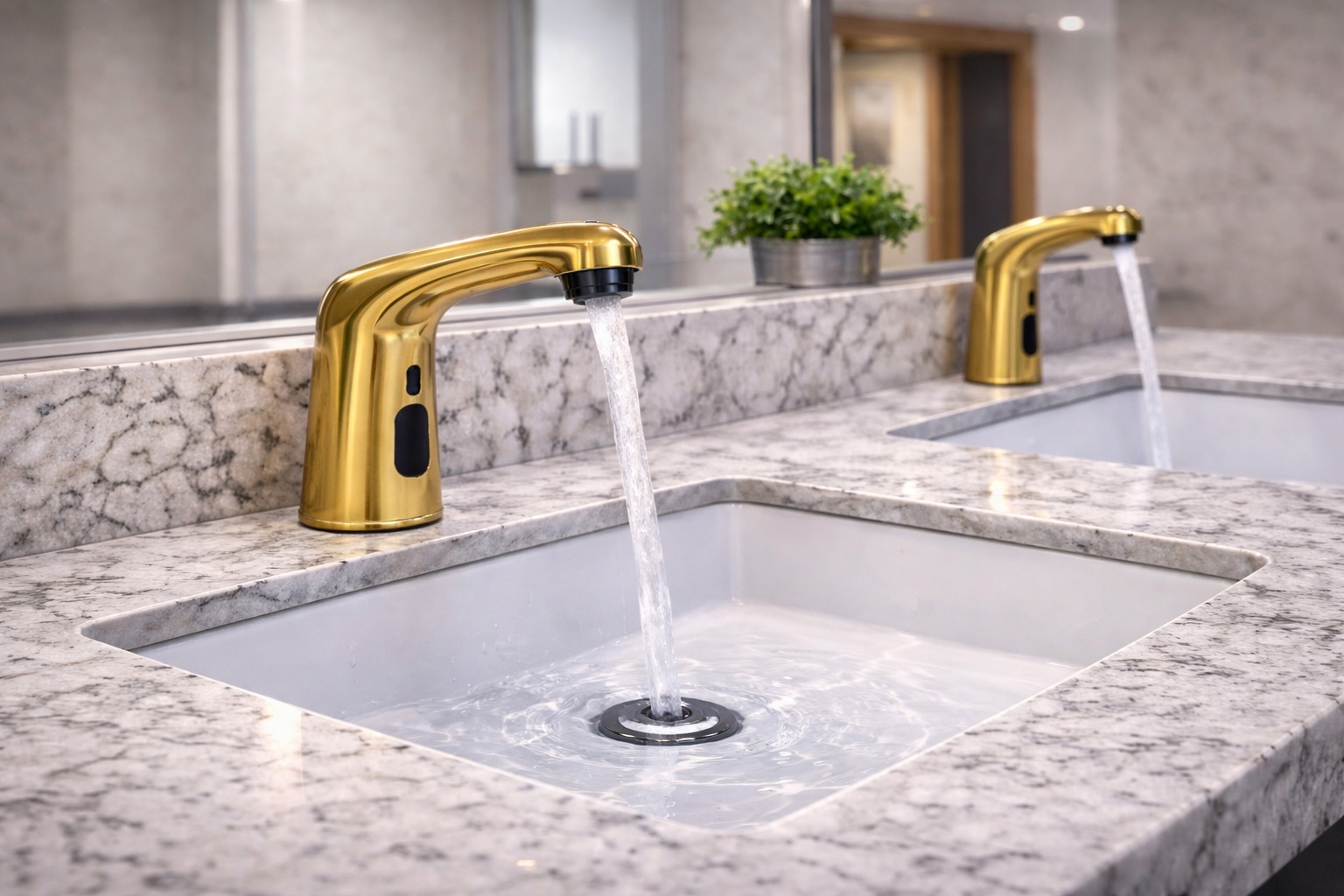
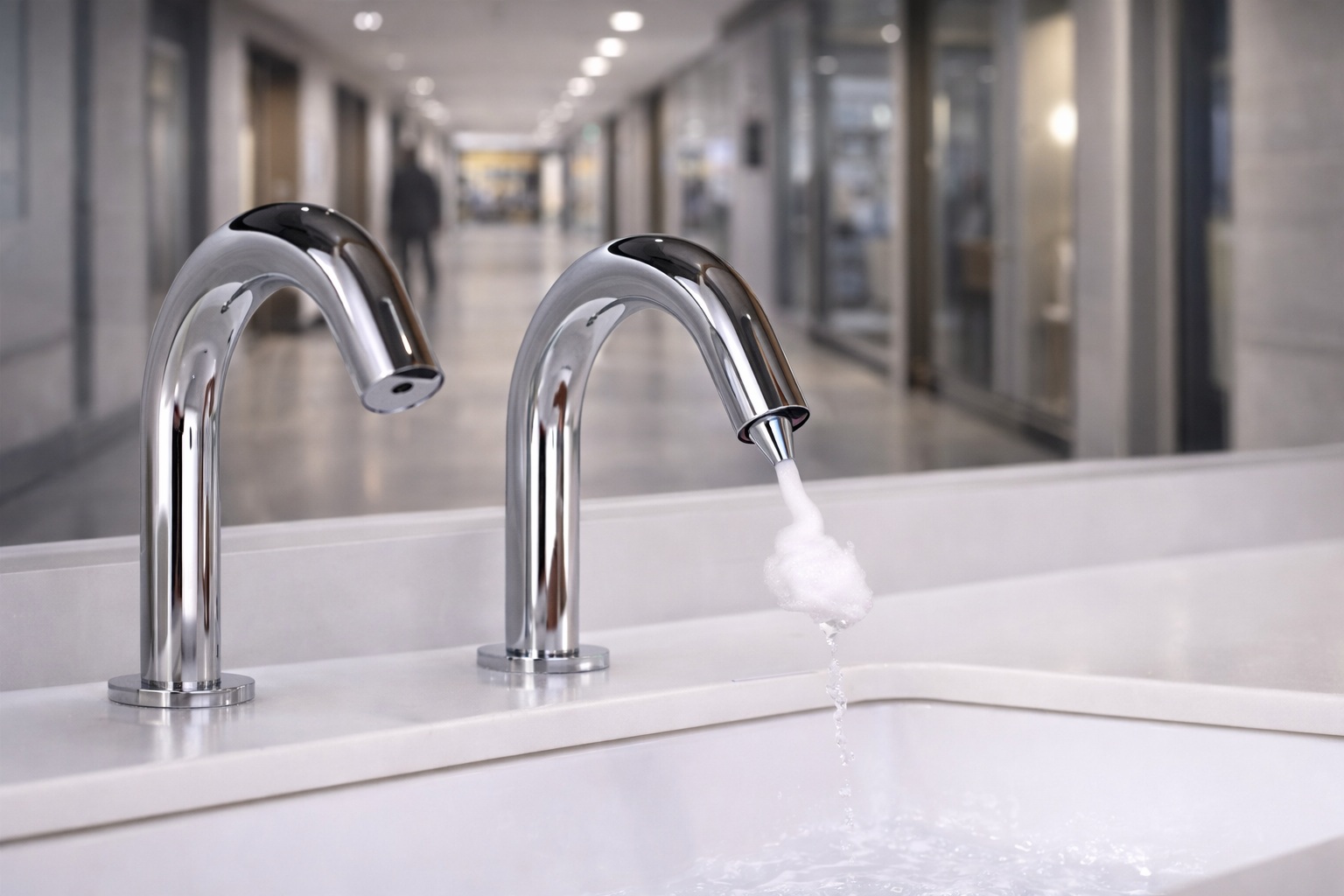
Smart Restrooms in Dubai Hotels: BathSelect’s Sensor Technology in Gulf Hospitality
Dubai hotel restrooms are high-traffic, finish-sensitive, and guest-experience driven. This page helps architects and contractors
select BathSelect sensor faucets and soap dispensers that behave predictably in real bays, with clear commissioning steps,
power planning notes, and product anchors you can drop into drawings and submittals.
Gulf hospitality reality:
Most sensor issues are geometry and finishes, not a defective faucet.
Treat it as a zone problem first: spout reach, basin depth, mirror or glossy backsplash, and whether the sensor can see movement outside the bay.
What This Page Helps You Deliver on a Dubai Hotel Project
Guest Experience That Feels Instant
Zone tuning and spout geometry that makes activation feel intentional, not jumpy. Reduces splash, drip, and confusion at luxury basins.
For Gulf hospitality, the spec is easier to enforce when you include commissioning language and a simple acceptance test.
That keeps the conversation about final finishes, mounting height, and the real user zone.
Luxury finishes: glossy stone, polished metal, mirrored walls. Plan the sensor view early.
High turnover: suites plus public areas mean continuous usage. Power planning affects call-backs.
Owner handoff: housekeeping and engineering teams need a short troubleshooting table and spare plan.
Dubai Hotel Restroom Context (What Changes the Spec)
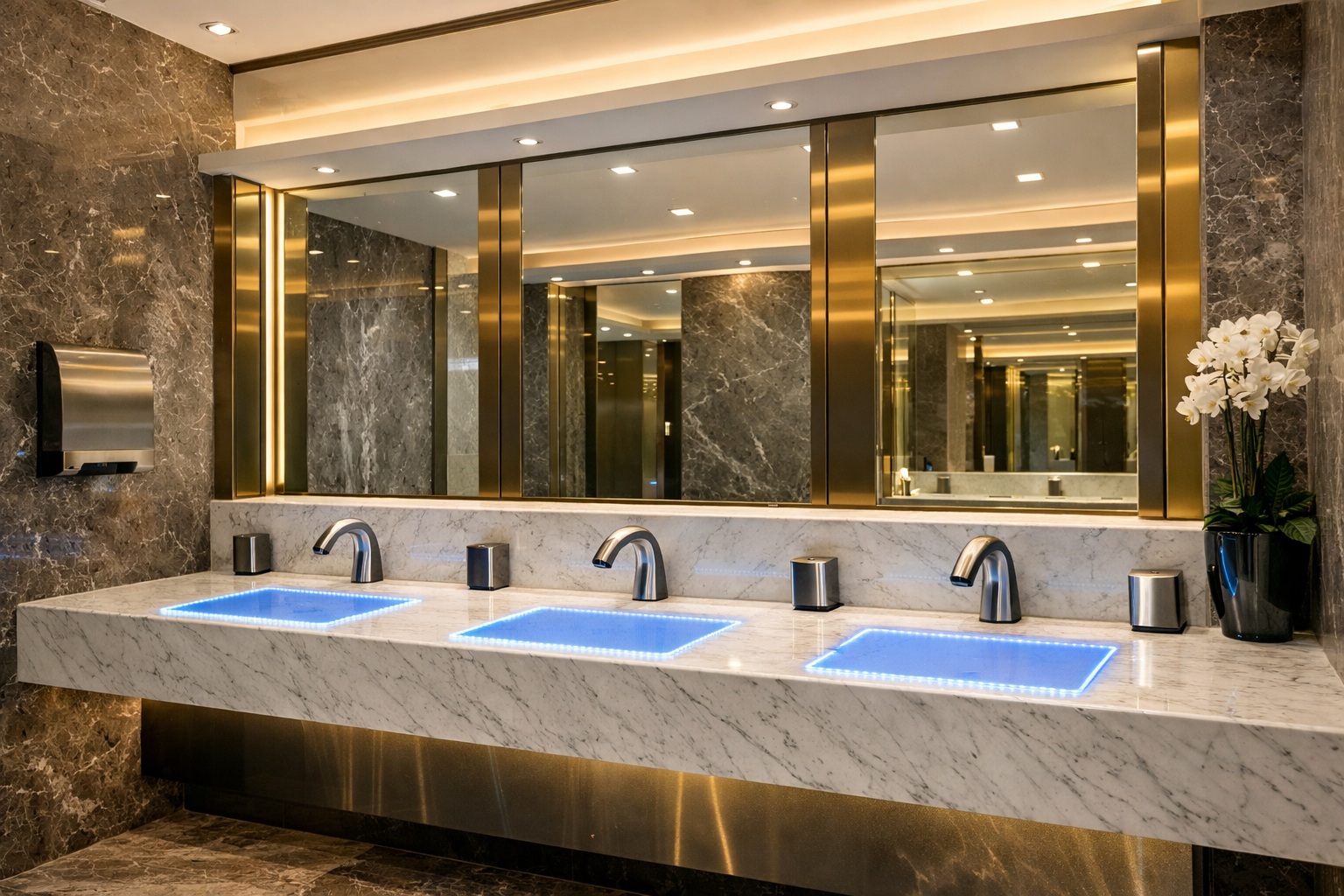
Dubai hospitality restrooms often combine glossy stone, mirror walls, premium metal trims, and open vanity lines.
These surfaces can change how sensors see hands and motion. The safest approach is to design around predictable zones:
pick a reach that places hands in a controlled wash area, then commission after final finishes are complete.
Design coordination note:
If you change basin depth or deck finish late, you change the real activation geometry.
Treat sensor commissioning as part of final closeout, not a rough-in step.
Reflective surfaces matter
Open vanity lines need planning
Closeout commissioning required
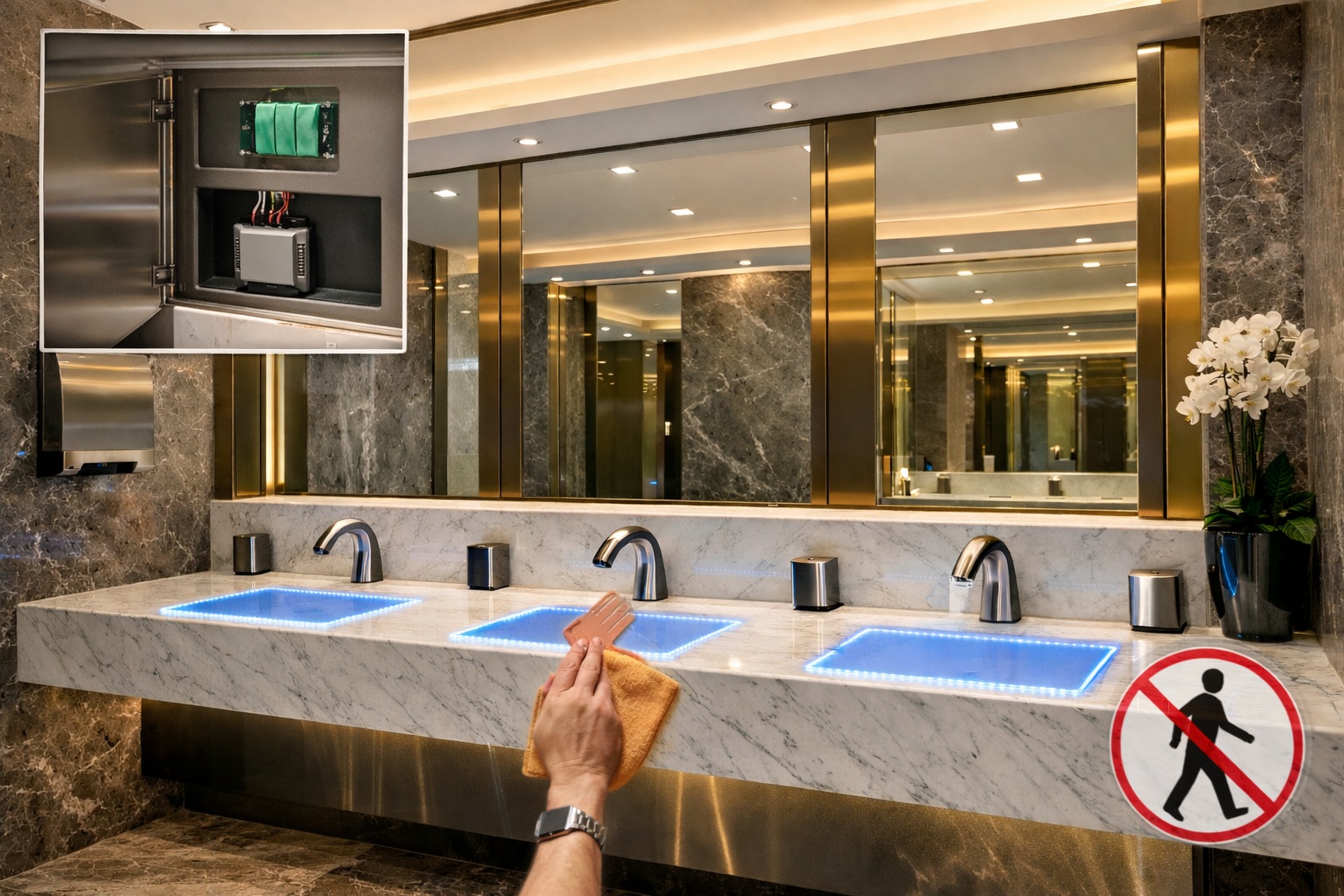
Gulf hospitality also means service speed matters. Facility teams want clear access to batteries or transformers,
fast lens cleaning guidance, and a consistent approach across floors. Your spec should include a short acceptance test:
activates only in the wash zone and does not trigger from normal walk-by movement.
Standardize mounting height: consistent across room types reduces tuning variability.
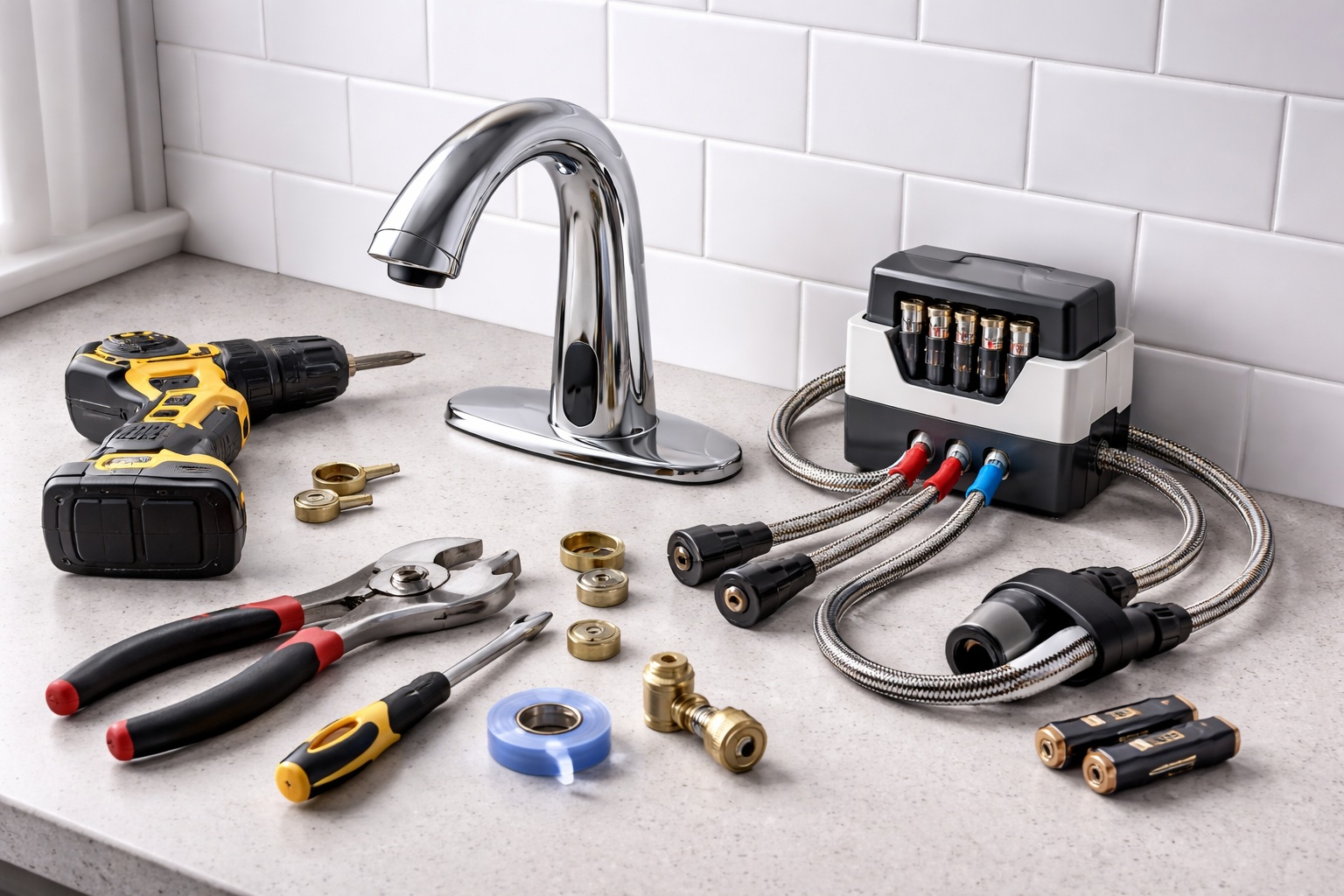
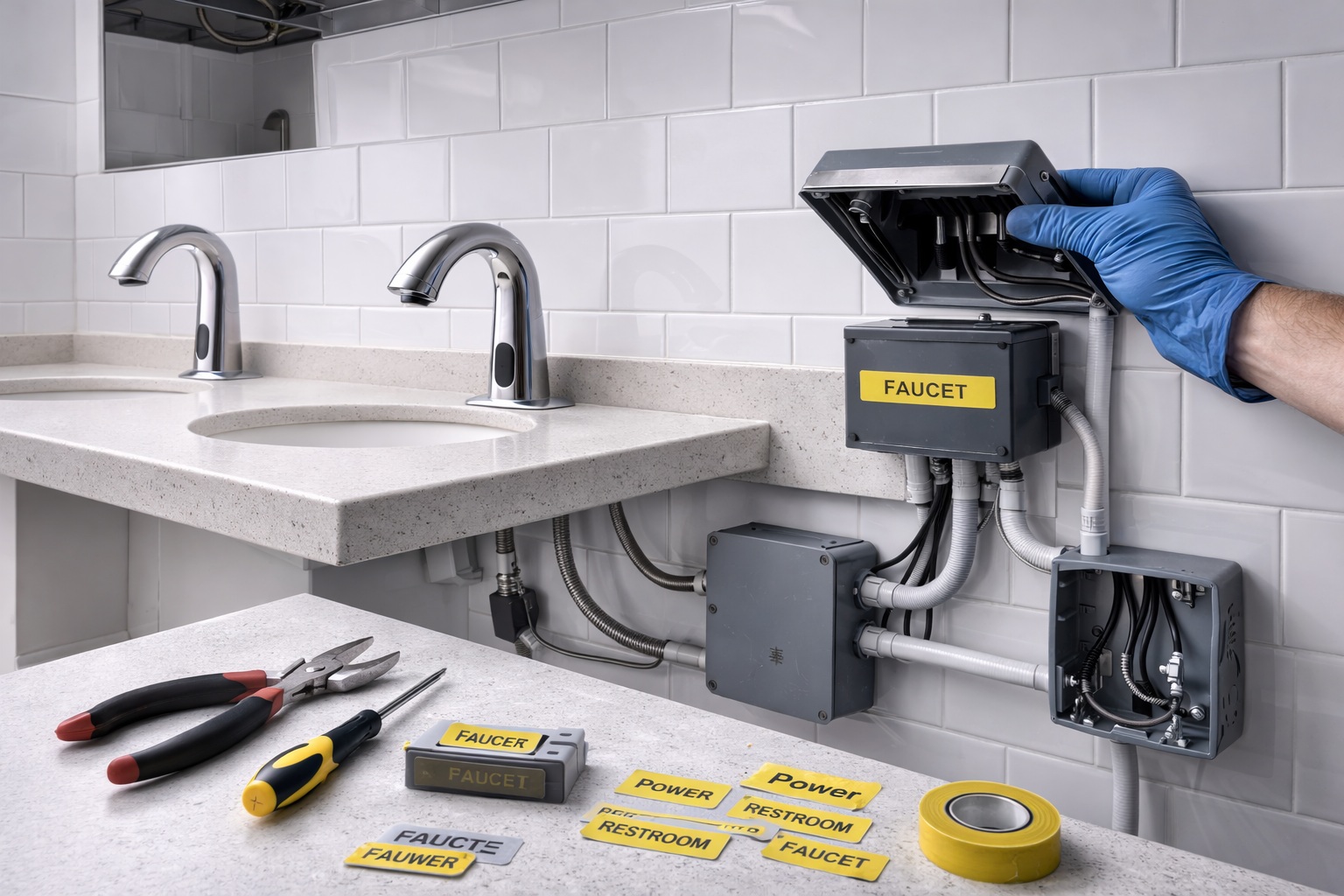
Plan access: battery packs, solenoids, and mixing valves need service space.
Document settings: saves time on future calls and staff changes.
Project & Performance Data (What to Track on Luxury Properties)
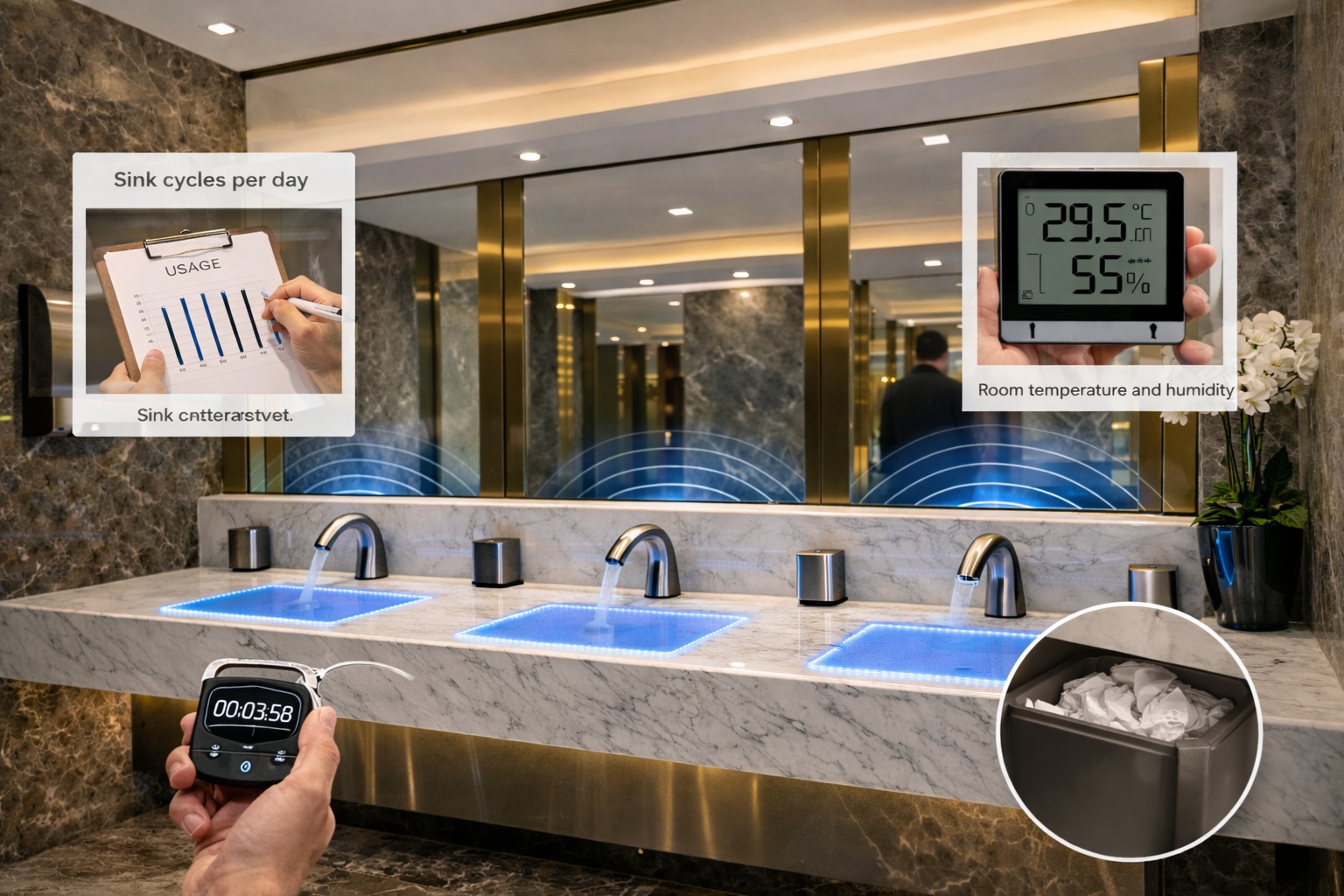
Instead of guessing whether a restroom is working well, track a few practical metrics during soft opening and the first 60 days.
These are measurements contractors and operators can capture without special tools.
Nuisance activation rate
Why it matters: Prevents water waste and guest complaints
How to measure: Observe 15 minutes at peak use
Spec / closeout note: Verify after mirrors and final finishes
First-use activation feel
Why it matters: Guests expect instant, intentional response
How to measure: Test with multiple users and hand heights
Spec / closeout note: Zone must match basin depth and reach
Maintenance time per restroom
Why it matters: Housekeeping and engineering throughput
How to measure: Time a battery swap, lens clean, aerator clean
Spec / closeout note: Provide access and spare strategy
Flow stability + splash
Why it matters: Wet decks read as poor cleanliness
Important: This section is a tracking framework, not a claim about any specific property.
Use it to document performance and support a clean handoff between contractor and operations.
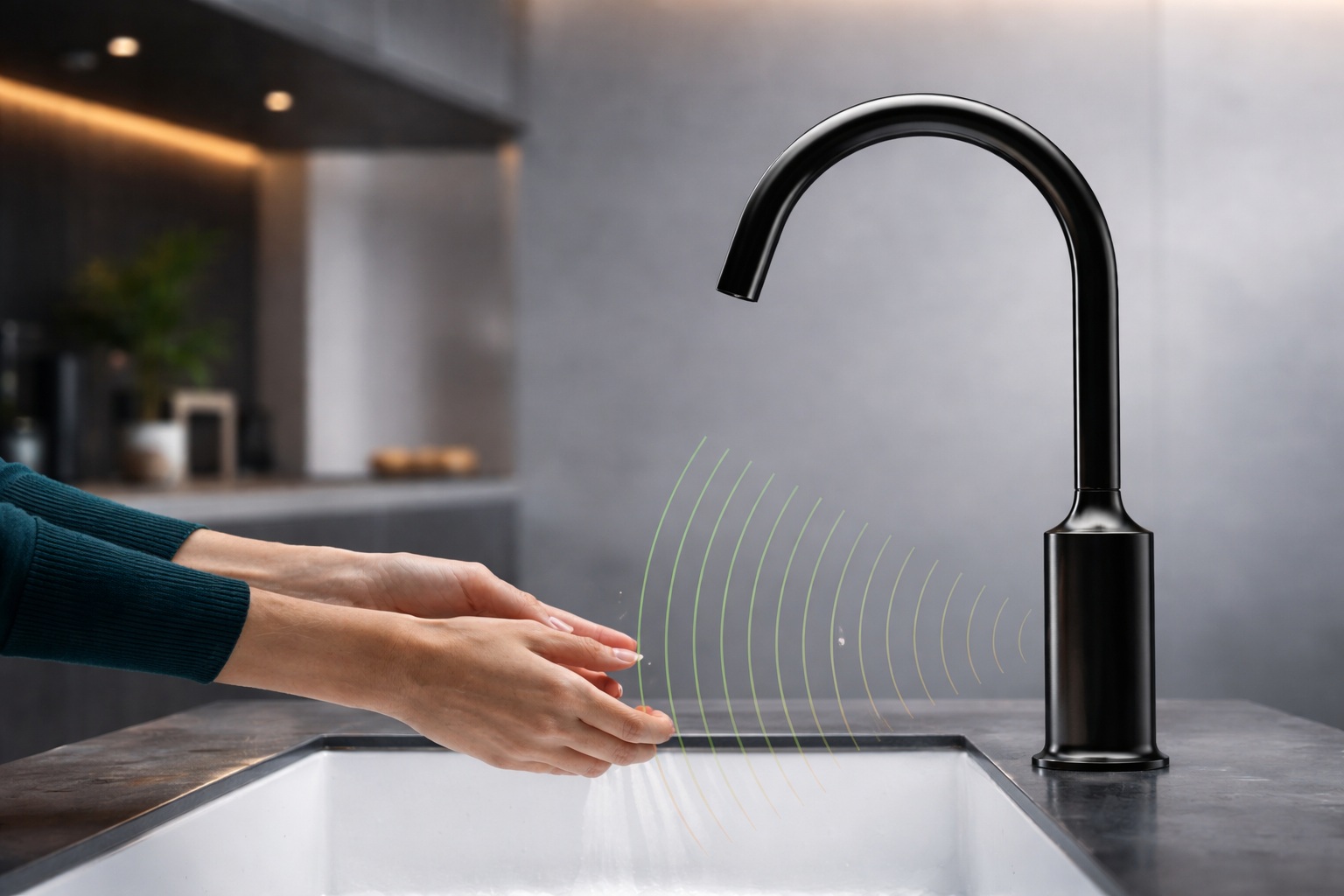
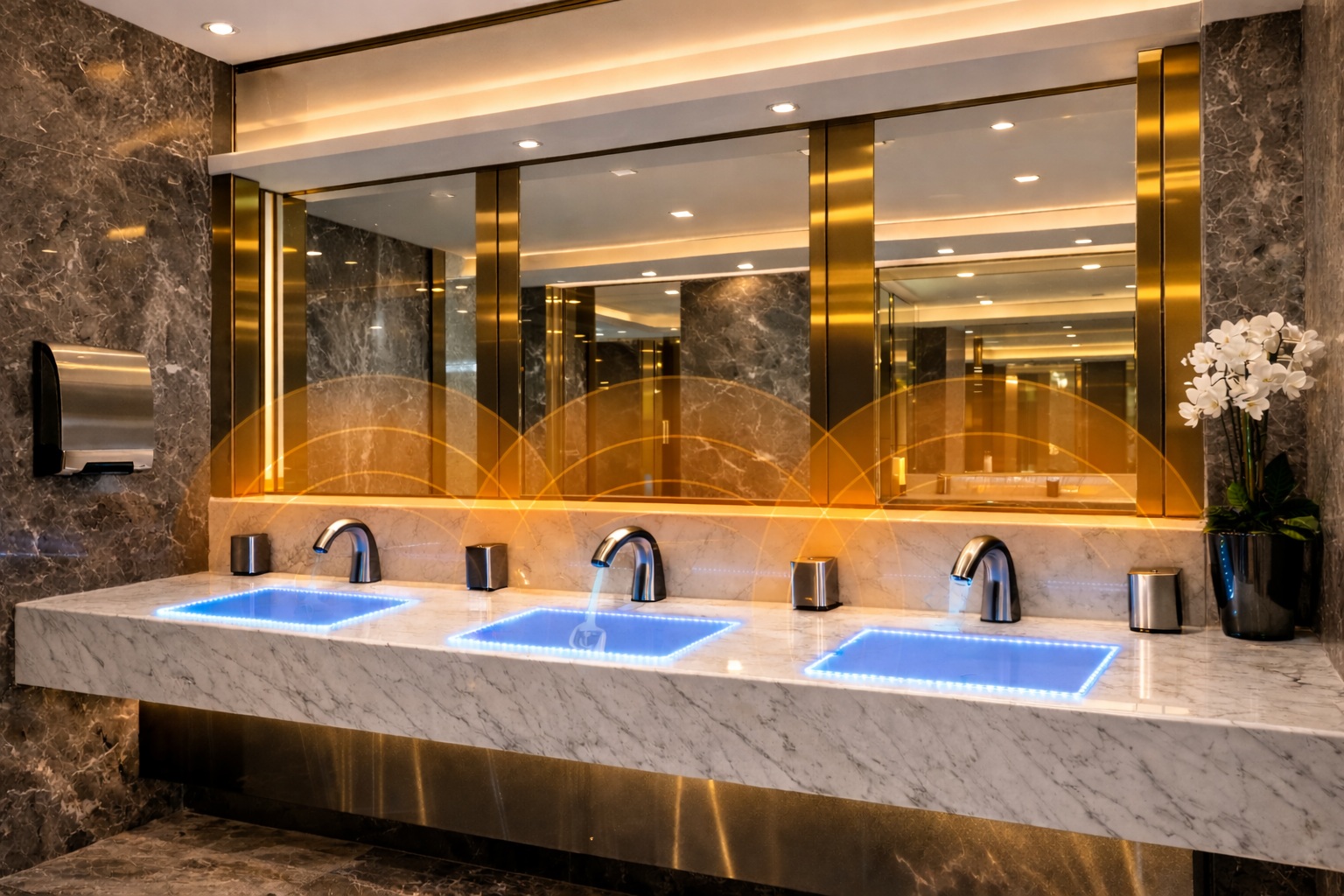
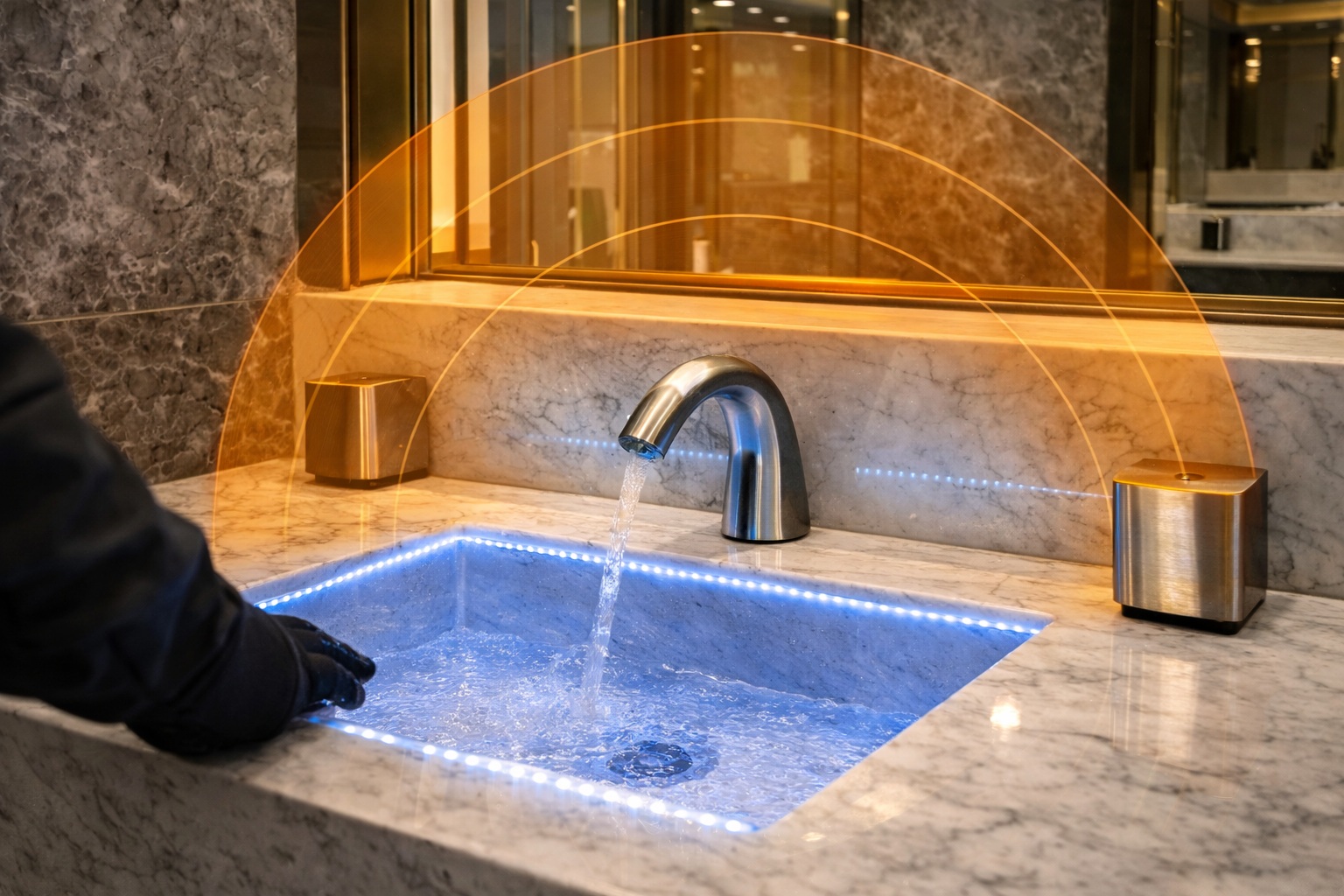
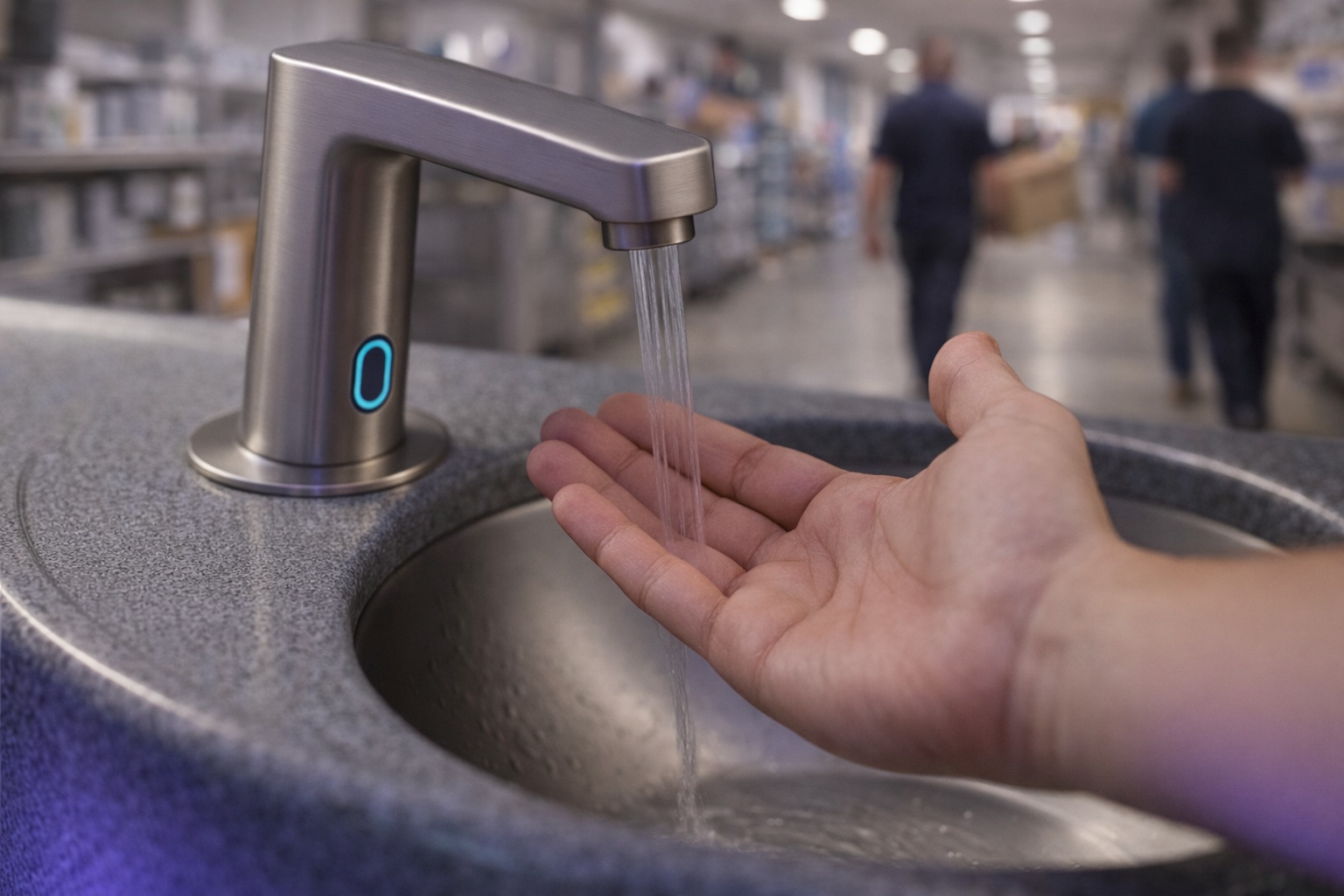
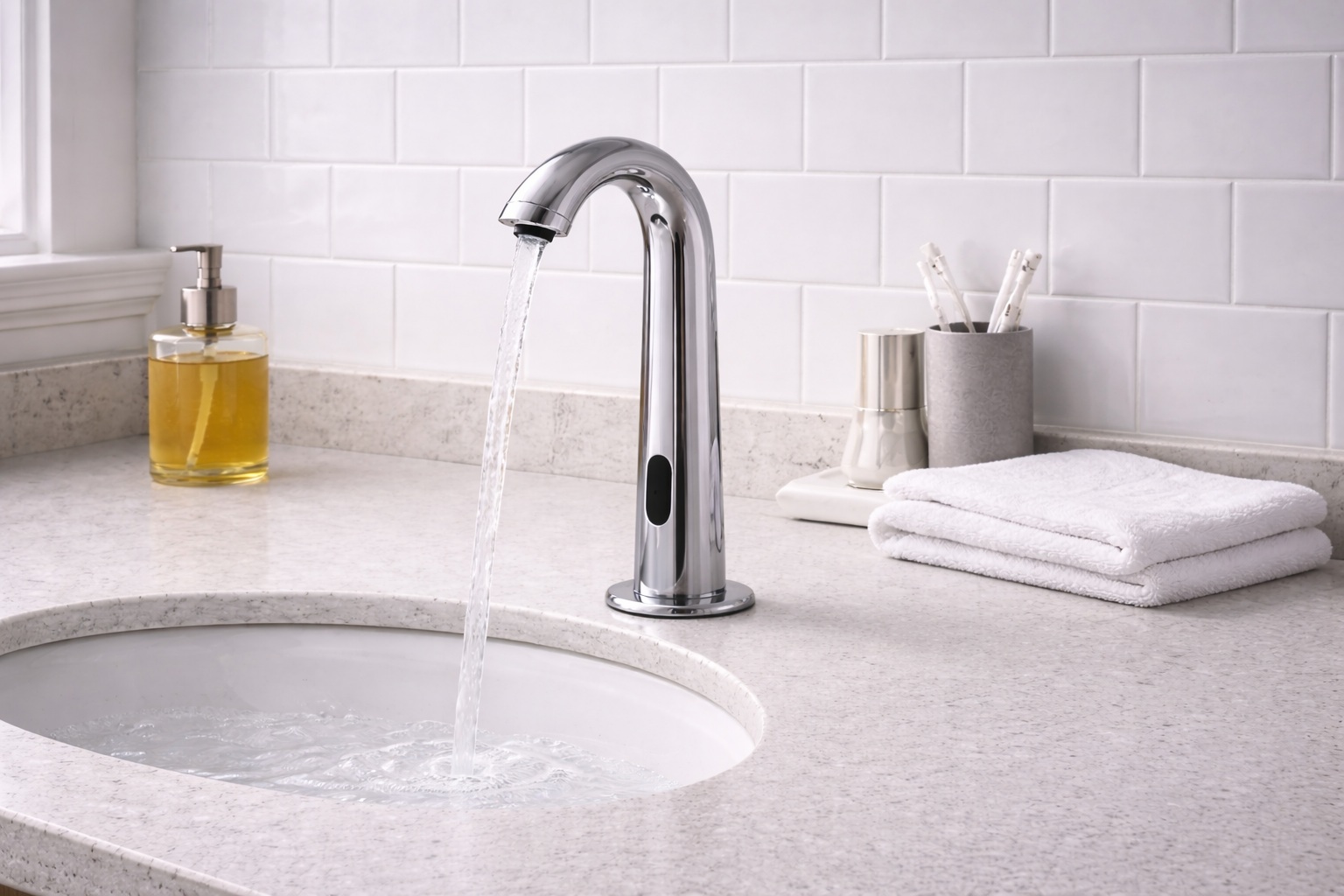
Infrared sensing is typically the most controllable option when you can define a clear wash zone.
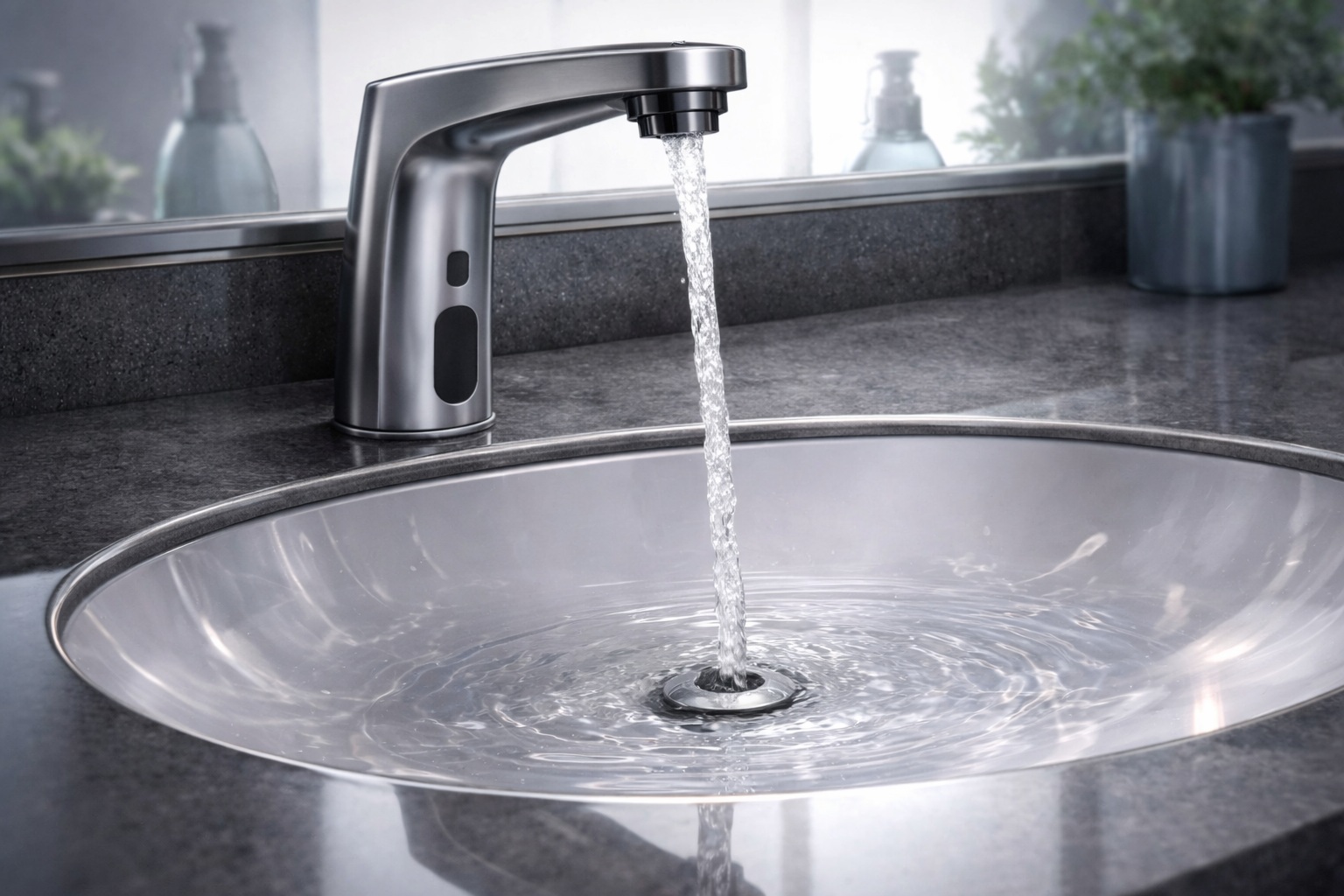
In Dubai hotels, the biggest variable is reflectivity: polished stone, mirror backsplashes, and glossy decks can widen the effective zone.
What IR sees in a hotel vanity:
a cone. Any strong reflection inside that cone can look like a hand. Define reach and mounting height early and commission only after finishes are final.
Best use: suites and controlled bays where the wash zone is clear.
Main risk: mirror walls and glossy stone bouncing IR back to the sensor.
Fast fix: zone tuning (if supported), reach adjustment, or angle to keep reflections out.
Controlled zone edges
Strong user intent
Finish-sensitive
Contractor takeaway: if a random activation shows up, assume geometry first.
Check basin depth, spout reach, and whether a glossy backsplash sits inside the cone. Commission with real users and realistic approach angles.
Mounting height: keep consistent across room types where possible.
Mirror walls: treat as a target unless geometry shields the sensor view.
Reach: select reach so hands land in the intended zone, not forced forward by the basin.
Radar Detection Behavior in Open Hotel Vanity Lines
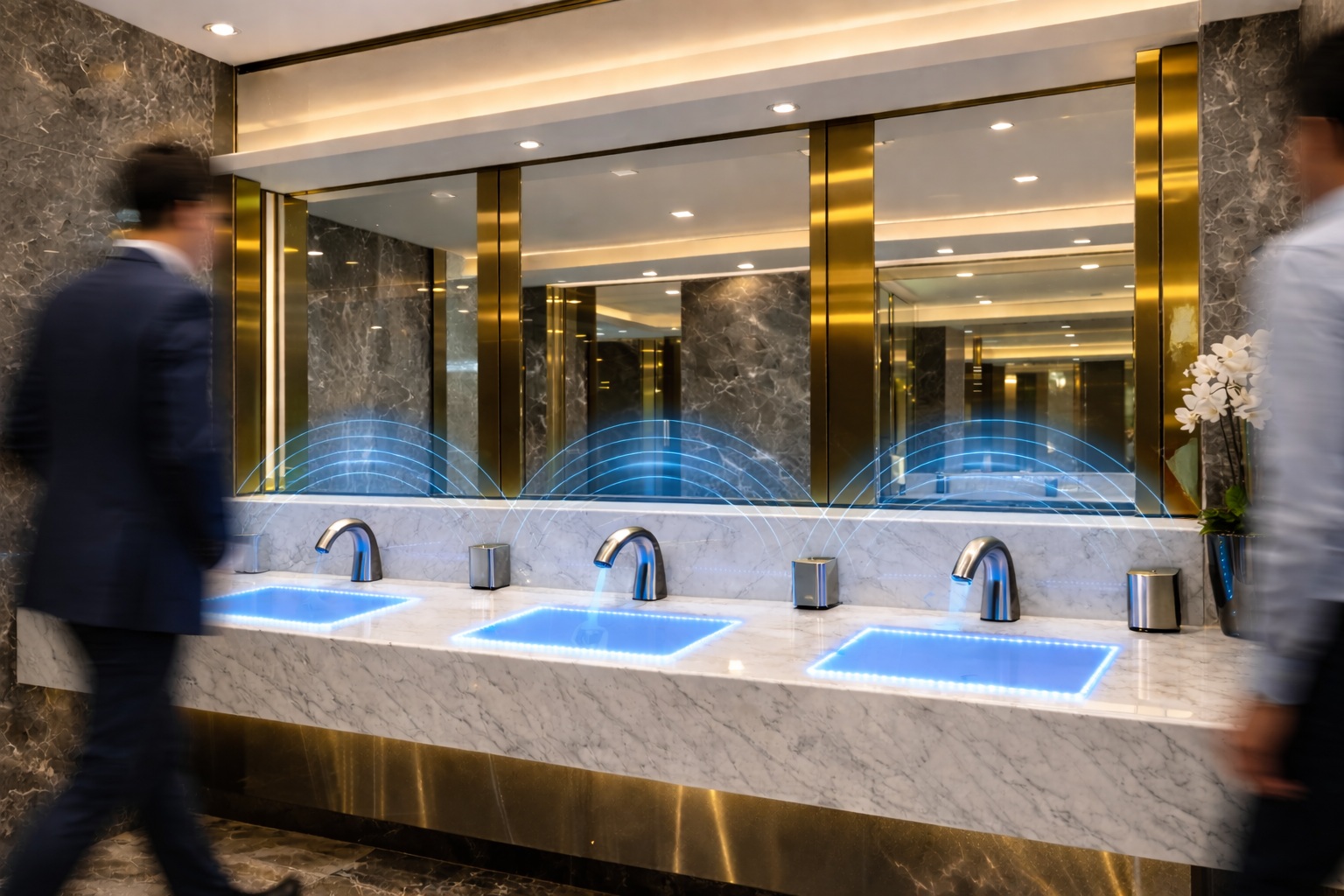
Radar can behave more consistently when reflectivity makes IR difficult. In open vanity lines, radar’s main risk is walk-by motion.
If guests can pass close to the sensor line, plan separation and orientation so the wash zone is the only interesting area.
What radar sees:
motion and presence signatures. That can help with tricky finishes, but it also means you plan for adjacent movement.
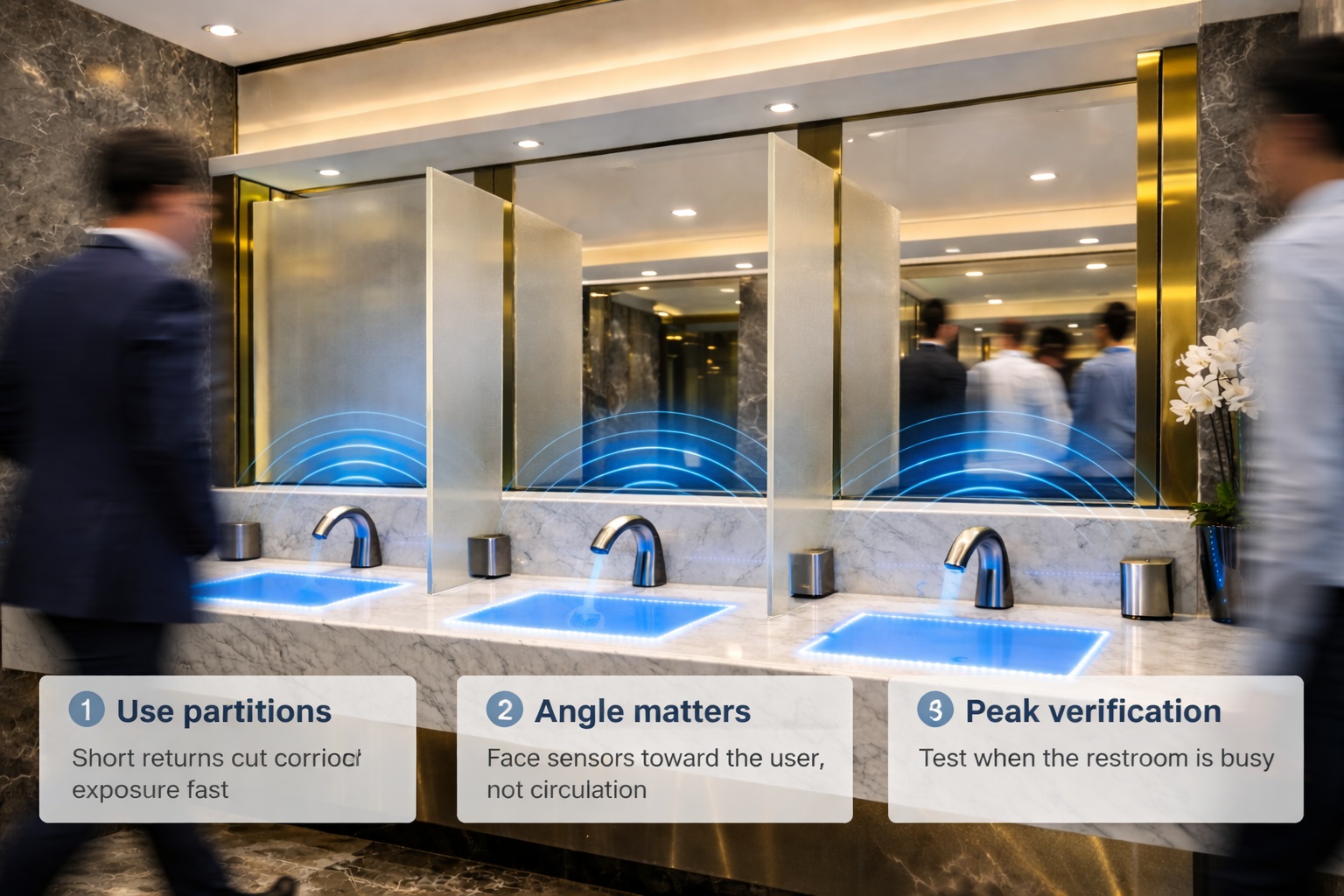
A small partition can outperform endless tuning.
Best use: challenging finishes or lighting where IR is hard to keep stable.
Main risk: adjacent walk paths, open bays, and high circulation restrooms.
Fast fix: partitions, orientation, and peak verification.
Less reflection sensitivity
Traffic-aware planning
Verify at peak
Practical planning rule: if people can walk within the front arc of the sensor line, treat it as a risk.
Shift the sensor’s view to the user zone using partitions, angled placement, and commissioning verification with real flow.
Use partitions: short returns cut corridor exposure fast.
Angle matters: face sensors toward the user, not circulation.
Peak verification: test when the restroom is busy.
Commissioning: verify zones after mirrors, partitions, final finishes are installed.
Access: provide service access for solenoid, battery/transformer, mixing valve (if used).
Ready for CAD notes
Suite + public areas
Cuts repeat visits
Closeout language (simple and enforceable):
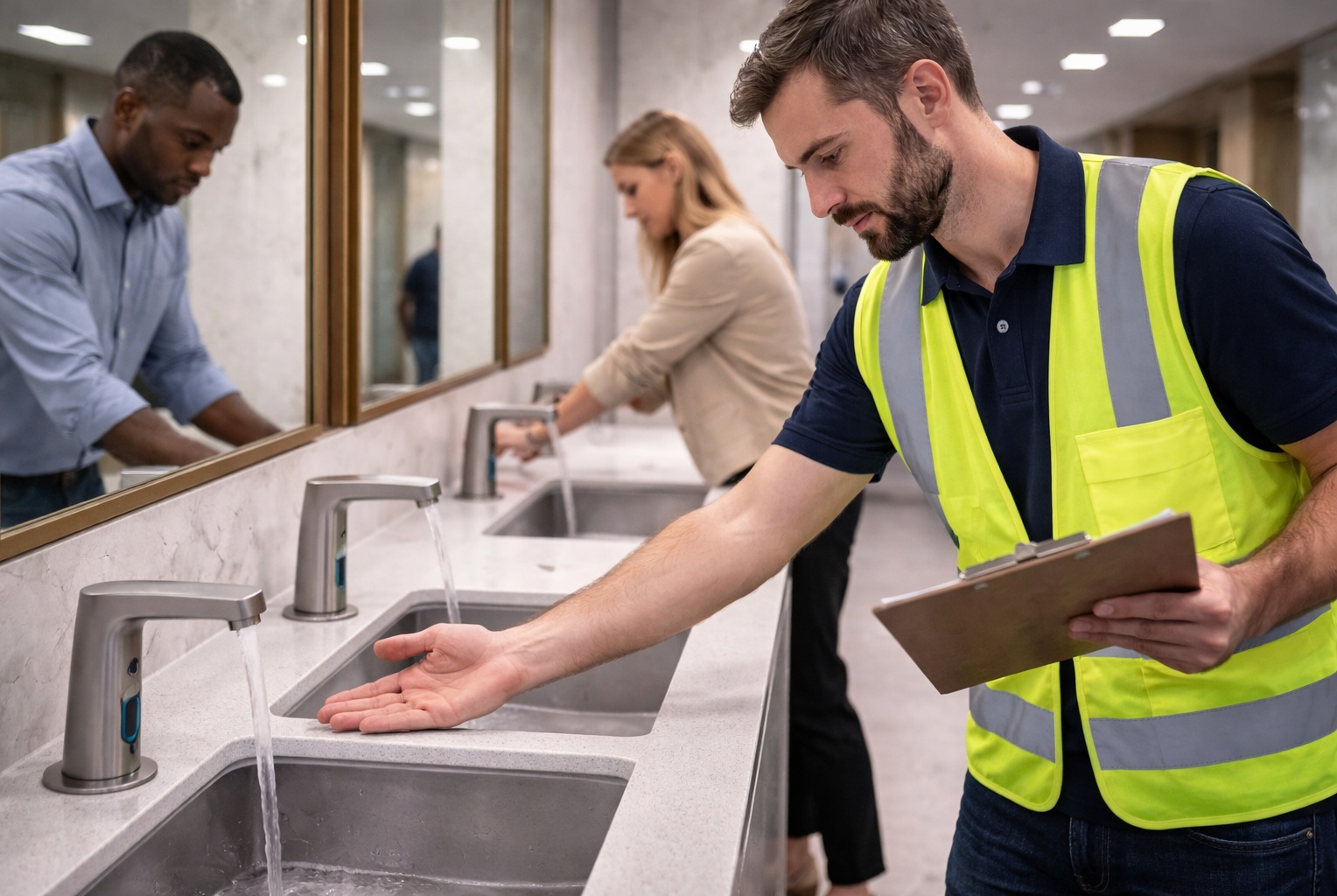
Sensor faucet commissioning:
Contractor shall set and verify detection behavior after final installation, mirrors, partitions, and surrounding finishes are complete.
Verification shall include multiple users and normal adjacent movement conditions.
O&M handoff items for hotel engineering:
Battery replacement interval (if battery powered) and spare battery type.
Cleaning method for sensor lens and aerator maintenance interval.
Transformer labeling and shutoff locations (if hardwired).
Spec Notes for Gulf Hospitality (What to Put in Drawings and Submittals)
1) Geometry assumptions. State mounting height and reach assumptions. If the vanity finish is glossy, treat sensor behavior as finish-dependent and require commissioning.
2) Restroom type mapping. Suites usually favor controlled IR zones. Public lobby and banquet levels may need stronger traffic planning or radar strategy.
3) Acceptance test. Add a sentence: activates in wash zone only and does not trigger from normal walk-by traffic.
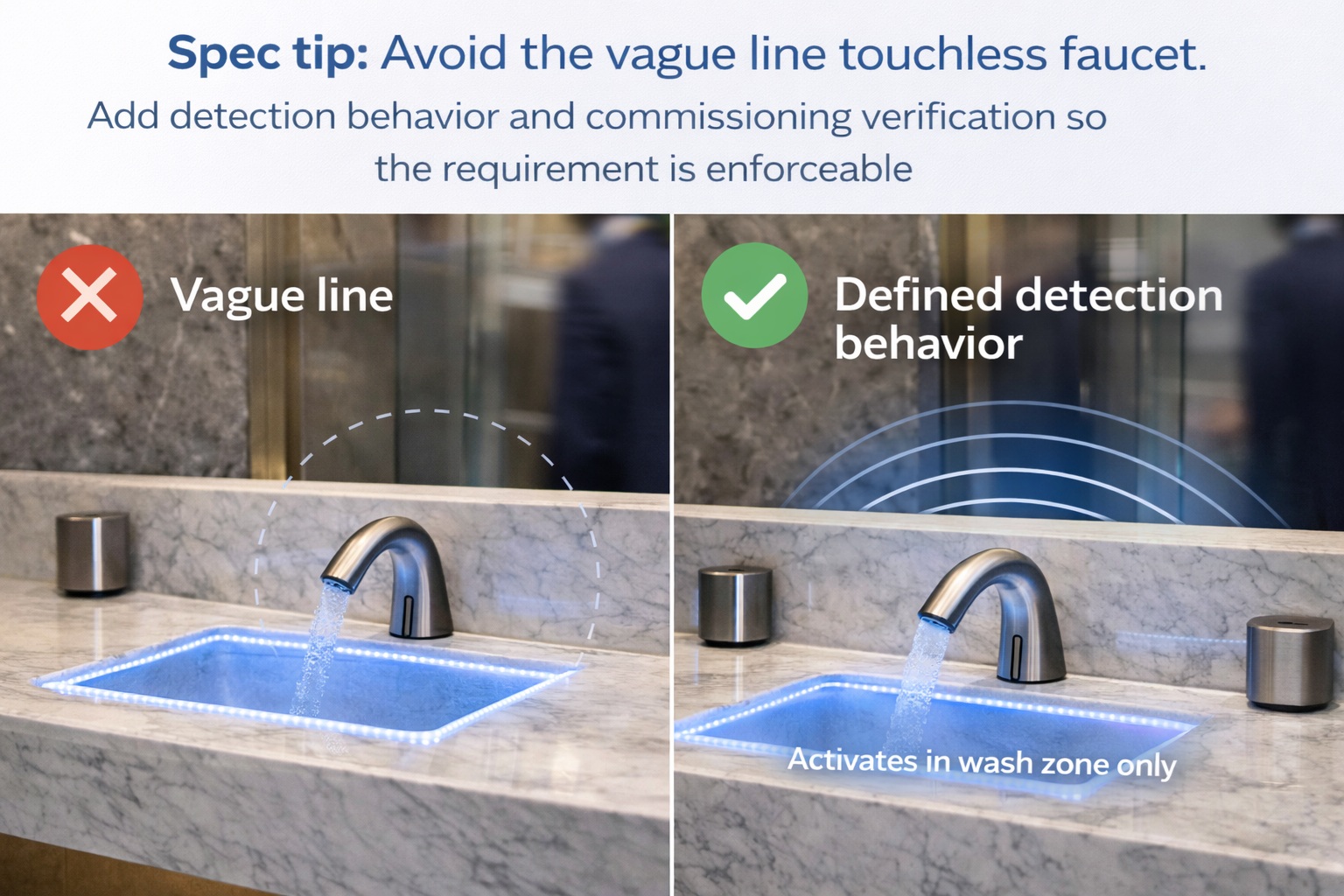
Spec tip:
Avoid the vague line touchless faucet. Add detection behavior and commissioning verification so the requirement is enforceable.
4) Temperature control. If you need controlled temperature, plan thermostatic mixing and access so service does not require fixture removal.
5) Service realities. Many complaints map to power, reflections, or debris at the aerator. Include basic cleaning intervals and spare plan in O&M.
1) Confirm geometry: final spout, basin depth, backsplash, mirror condition.
2) Confirm power: fresh batteries or stable transformer output before testing.
3) Calibrate: allow stabilization after power-up.
4) Test with real users: multiple heights and approach angles.
5) Test walk-by: verify corridor and adjacent bay movement does not trigger.
6) Record settings: document any tuning or switch positions.
Repeatable across floors
Catches walk-by triggers
Settings documented
Acceptance test language:
Faucet shall activate consistently when hands are placed in the intended wash zone and shall not activate from normal corridor traffic
or adjacent bay movement.
Common misses on hotel turnovers:
Commissioning before mirrors and final glossy finishes are installed.
Use this section to speed up real hotel workflows: submittals, closeout language, and consistent installs across floors.
Everything here is built to be copied into drawings, scopes, and O&M.
Spec pack request (fast turnaround)
Ask for a project-ready set: cut sheets, finish schedule support, and commissioning notes aligned to your room types.
Downloads + BathSelect Links (Use in Submittal Packs)
Use the PDF below for submittal packets and contractor handoff. It includes technical notes such as power options,
detection zone, and commissioning guidance for the BST509NT reference model.
How to use this in a Dubai hotel submittal set:
attach the PDF as the technical reference, then add your project-specific mounting height, basin model, and any mixing valve notes.
Product anchor tip for hotels:
Use one durable workhorse set for most suites, then add one premium finish set for lobby and signature public restrooms.
BathSelect Product Anchors for Dubai Hotels (Models + Links)
Below are six BathSelect product anchors with clean PDP links (URLs include -p-).
When you send me 6 PDP links you want, I will replace the images with the exact PDP product photos.
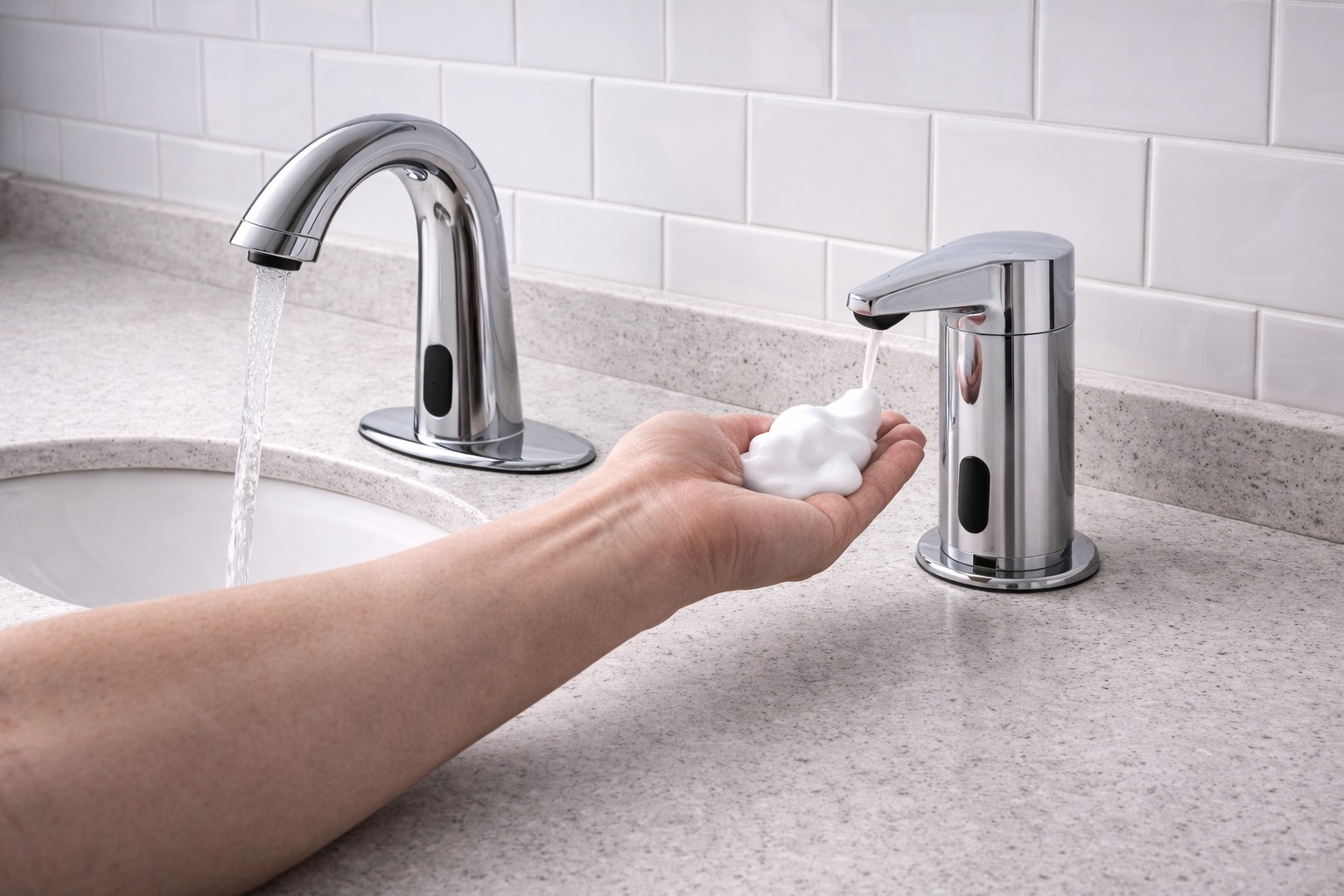
Wella Touchless Faucet + Soap Set (BS9080)
Strong anchor for public restrooms and lobby washrooms that need a coordinated soap + water station.
Spec use: signature public restroom set.
BST509NT Commissioning Reference
Useful for suite rollouts and consistent handoff across hotel floors.
Touchless Faucet + Soap Dispenser Set
Ideal for lobby and public restrooms where coordinated fixtures improve guest experience.
Use these during closeout: align owner expectations with real controls, service access, and commissioning verification.
BathSelect® smart restroom technology supports the evolving expectations of luxury hospitality environments in global destinations such as Dubai, where guest experience, operational efficiency, and advanced building technologies increasingly influence hotel development strategies. Hospitality operators and design teams associated with organizations including Marriott International, Hilton Worldwide, JLL, and Hines continue to evaluate sensor-driven restroom solutions that enhance hygiene, reduce water consumption, and improve facility performance. BathSelect® smart restroom systems incorporate touchless faucets, automatic soap dispensers, sensor-operated fixtures, intelligent water management technologies, and contemporary hospitality bathroom designs suitable for luxury hotels, mixed-use developments, branded residences, and destination resorts. These solutions help hospitality developers, procurement professionals, facility managers, architects, and ownership groups support sustainability objectives, streamline maintenance operations, and deliver elevated guest experiences aligned with the expectations of modern smart-building environments.
FAQ (Dubai Hotel Focus, Contractor-Friendly)
What causes nuisance activations in luxury hotel vanities?
Usually reflective geometry (mirror walls, glossy stone) or open circulation near the sensor view. Commission after final finishes and verify walk-by behavior.
IR or radar for Dubai hotels?
IR is best for controlled suite bays. Radar can help on tricky finishes or lighting, but needs traffic planning and peak verification.
How do I prevent wet decks and splash?
Match reach to basin depth, keep the wash zone centered, and confirm pressure and aerator assumptions during commissioning.
Battery or hardwired for hotels?
Battery supports fast phased work and suites. Hardwired is often better for lobby and continuous-use restrooms where predictability matters.
What is the fastest first check on service calls?
Clean sensor face and aerator, confirm power stability, then test for walk-by triggers. Do not skip geometry validation.
What should go into O&M for hotel engineering?
Battery/transformer strategy, cleaning method, spare plan, and any commissioning settings recorded at turnover.


.jpg)