Category
Exploring Valve and
Flow Dynamics
A practical engineering look at fluid mechanics, pressure variation performance, and anti-scald temperature control in BathSelect touchless fixtures for commercial restrooms.
Spec Notes for Contractors & Architects
Valve + Flow + Safety
Design intent, predictable performance, and anti-scald planning for high-traffic restrooms
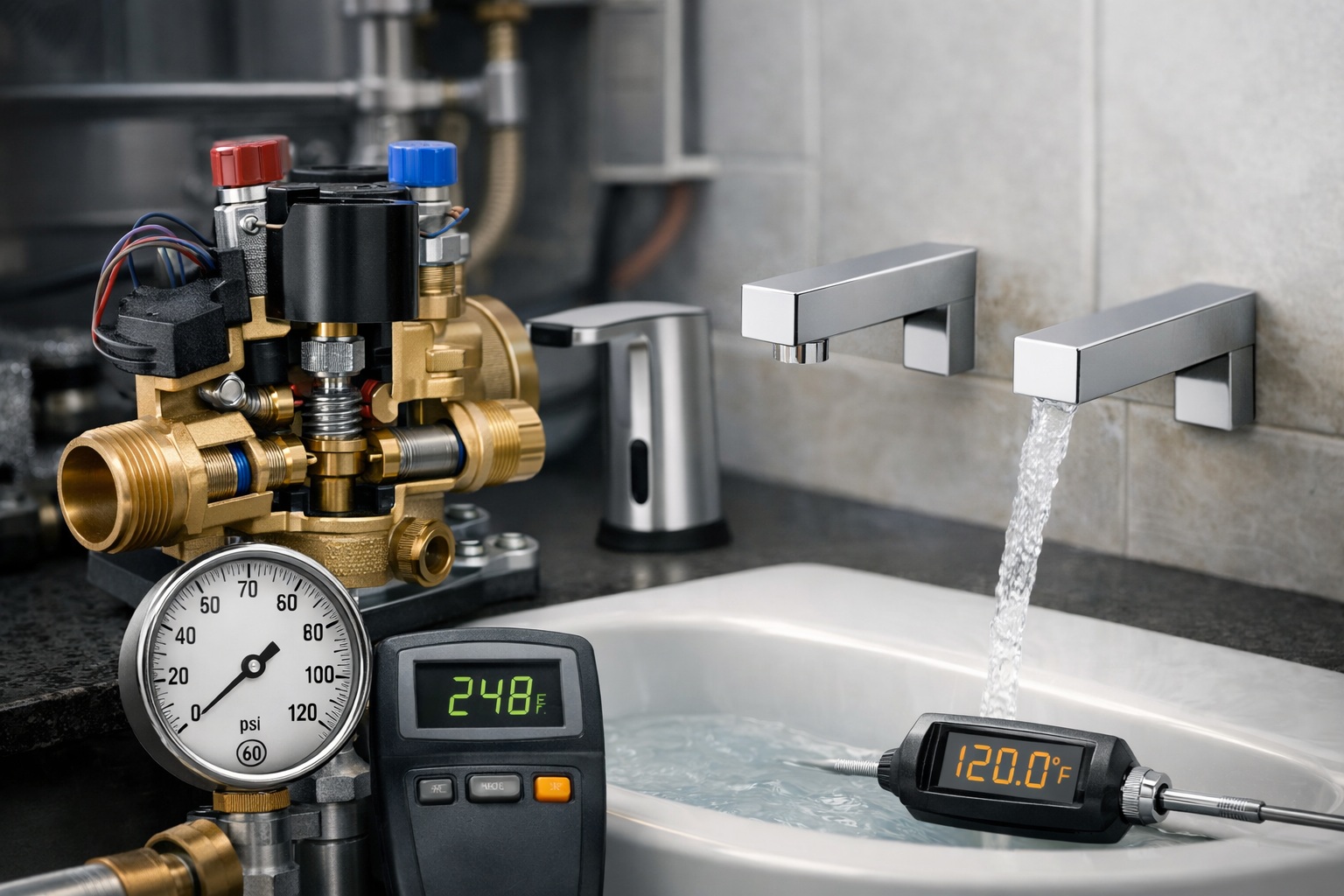
This page connects fixture selection to what happens inside the valve body: pressure variation, solenoid response,
outlet conditioning, and temperature limiting. Built for architects, engineers, and contractors who need clean specs and fewer call-backs.
Focus fluid mechanics
Focus pressure swings
Focus anti-scald
Section 3.2 maintenance
Engineering Focus
What “valve and flow dynamics” means in a touchless faucet
A touchless faucet is a small control system. The sensor decides when to run water, the solenoid valve opens and closes,
and the pressure-driven flow path has to stay stable across real building conditions.
For contractors and spec teams, the big questions are simple:
- Will it deliver predictable flow when pressure swings during peak usage?
- Does it control mixed-water temperature safely when hot and cold fluctuate?
- Can the valve and inlet screen survive debris, hard water, and maintenance cycles?
Flow regime laminar vs turbulent
ΔP inlet pressure variation
Kv/Cv valve flow coefficient
Anti-scald temperature limiting
Quick spec takeaway
For schools, airports, stadiums, and healthcare, prioritize models that support a clear temperature strategy
(tempered loop, point-of-use mixing, or thermostatic control) and that include serviceable inlet filtration
with accessible electronics.
Field note: most “bad faucet” complaints start as a building conditions problem (debris, unstable pressure, or tempering drift).
A simple commissioning check prevents a lot of call-backs.
Fluid mechanics basics for touchless fixtures
Flow stability
Building pressure is not constant. It shifts with demand, pump cycling, PRVs, and long piping runs.
Outlet flow depends on how the valve handles ΔP and how the aerator or restrictor conditions the stream.
Valve behavior
Solenoid valves behave differently at low pressure than at high pressure. When debris accumulates on the valve seat,
closure can become inconsistent. Serviceable inlet screens reduce failures and nuisance maintenance.
User experience
A good user experience is a stable stream, low splash, and consistent shutoff timing.
That comes from sensor tuning, valve response, and outlet shaping working together.
Practical fluid checks during submittal review
- Flow rate intent: match the building’s water conservation plan and user expectations.
- Outlet control: confirm aerator and restrictor approach for splash-sensitive basins.
- Response time: ensure sensor distance and run time align with traffic patterns.
- Filtration: include inlet screen cleaning in O&M documentation.
Relevant BathSelect links for spec teams
Use these to keep selections consistent across the restroom package.
Pressure variation performance
In busy facilities, the same lavatory can see large pressure swings in short windows.
A practical pressure-performance review looks like:
- Low-pressure start: does the valve reliably open at the building’s minimum?
- High-pressure control: does flow stay controlled without harsh spray?
- Repeatability: do timing and shutoff stay consistent after weeks of use?
If the project uses a central mixing valve or a point-of-use strategy, confirm it early.
It changes rough-in details, responsibility, and commissioning steps.
Commissioning checklist for pressure swings
- Measure real min and max inlet pressure at peak and off-peak times.
- Flush lines and confirm inlet screen condition after initial turnover.
- Confirm power method: battery, AC, or AC/DC. Standardize per facility.
- Verify outlet behavior at each basin depth to reduce splash and complaints.
Spec intent table: what to confirm before ordering
| What you are controlling |
Why it matters |
What to document |
|
What you are controlling
Pressure variation
|
Why it matters
Prevents weak flow at low pressure and harsh spray at high pressure
|
What to document
Expected pressure range and commissioning readings
|
|
What you are controlling
Outlet conditioning
|
Why it matters
Reduces splash, improves user comfort, and supports water conservation
|
What to document
Aerator or restrictor approach and target flow feel
|
|
What you are controlling
Run time
|
Why it matters
Controls water use and avoids nuisance shutoff in high-traffic restrooms
|
What to document
Default timeout and any adjustable settings policy
|
|
What you are controlling
Filtration and debris
|
Why it matters
Debris is a top cause of solenoid and shutoff issues
|
What to document
Inlet screen access plan and cleaning interval
|
Anti-scald features and temperature control
Anti-scald protection in touchless fixtures is usually achieved through one of these approaches:
- Central mixing: a tempered water loop supplies multiple fixtures.
- Point-of-use mixing: a mixing valve at or near the faucet controls outlet temperature.
- Thermostatic control: compensates as supply temperatures fluctuate to keep outlet stable.
When hot water can spike or supply lines are unstable, thermostatic strategies reduce sudden outlet temperature changes
and help protect users.
Where this matters most
Schools, healthcare, senior living, and any restroom where users may not react quickly to temperature changes.
Anti-scald planning also matters in buildings with long hot-water runs or recirculation conditions that can drift.
Design tip: document the chosen tempering strategy on the plumbing drawings so contractors and commissioning teams
know exactly where temperature is controlled.
Product videos (two-up, full-width)
BathSelect touchless fixture models to specify
Contractor-friendly spec spotlights with model identifiers, BathSelect links, and clean visuals.
Adjust finish and power method per your project standard.
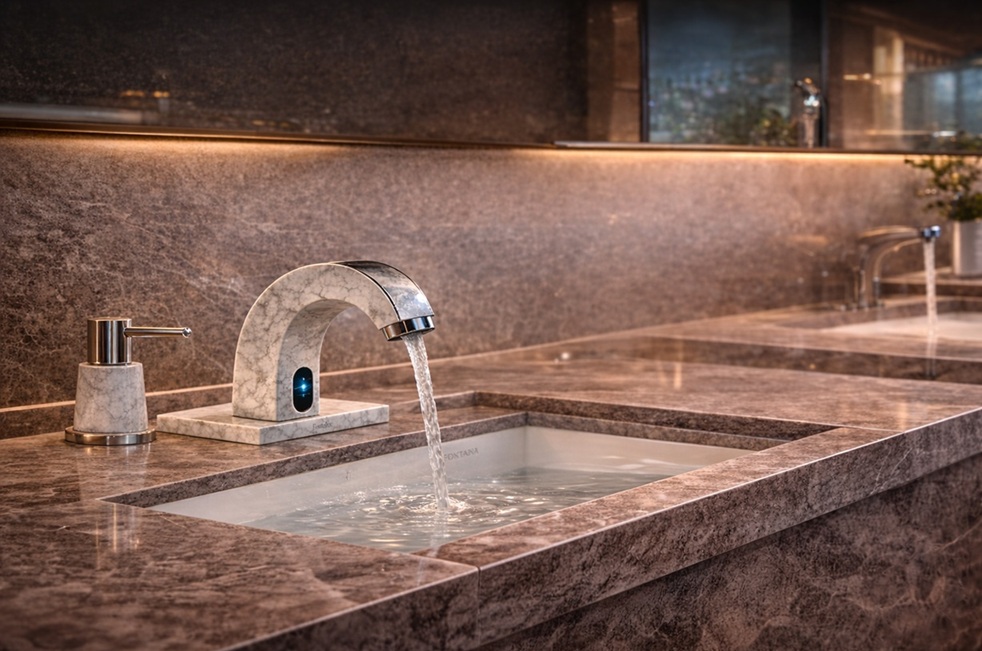
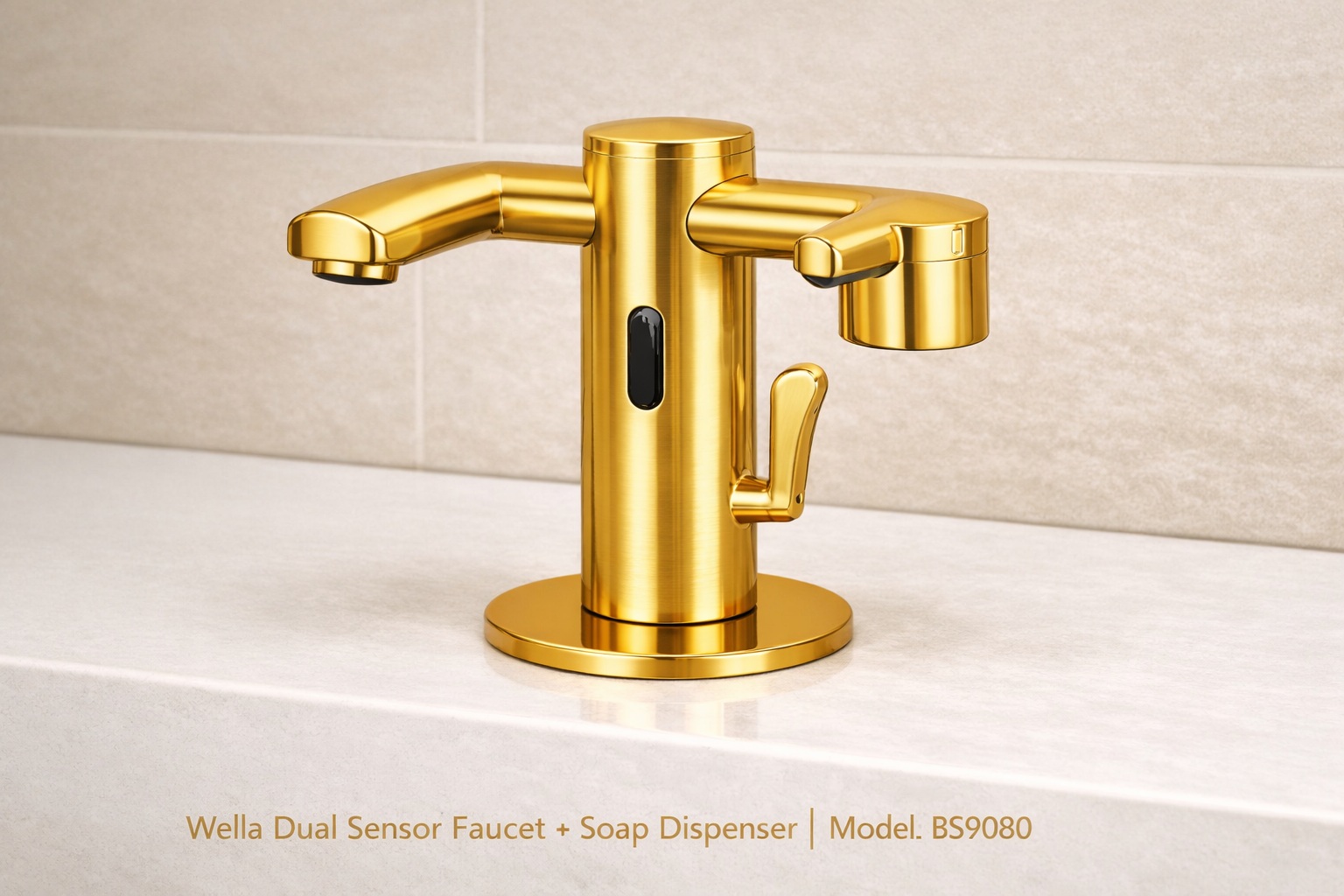
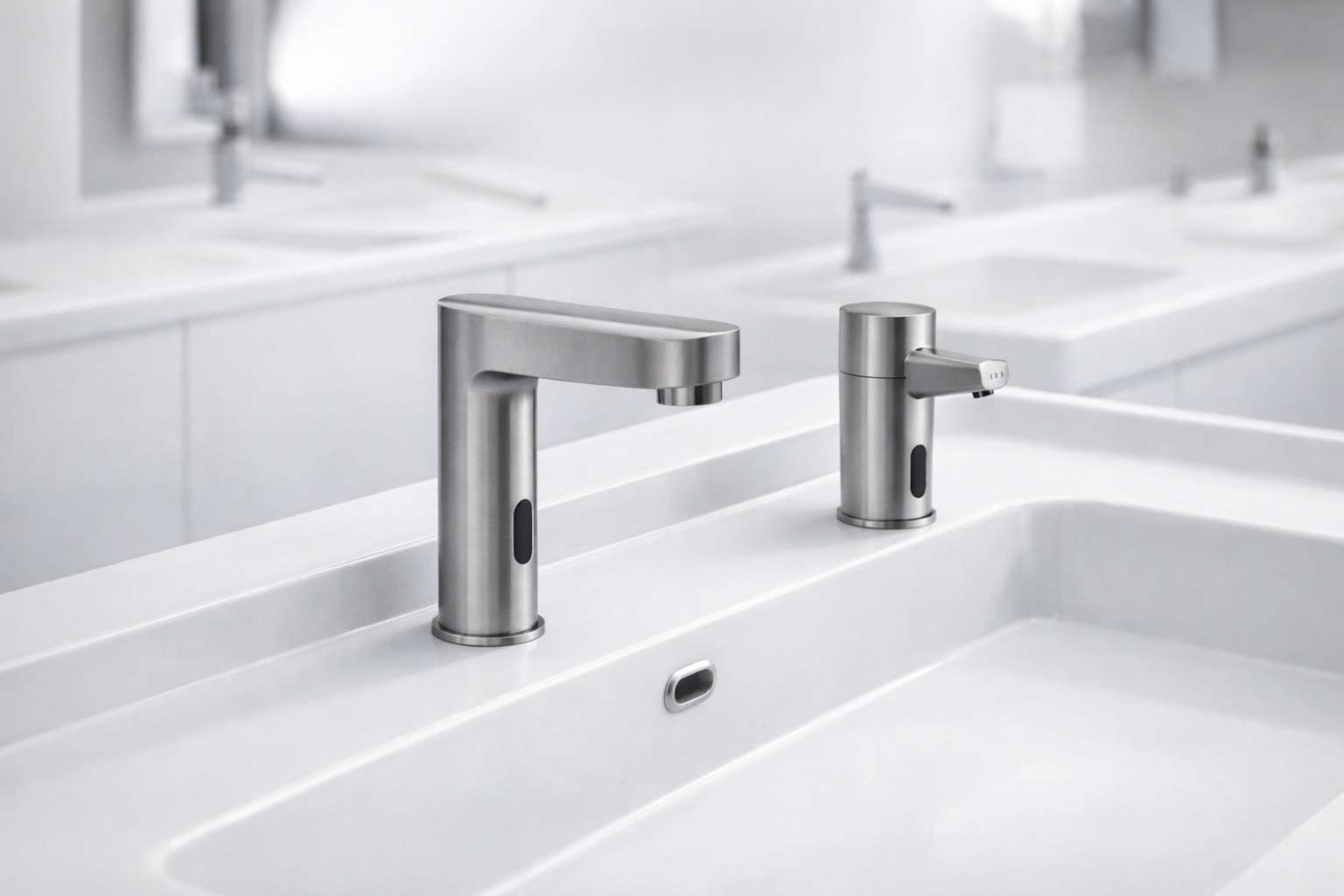
Wella Dual Sensor Faucet + Soap Dispenser
Model: BS9080
A paired solution that supports standardized user flow and reduces touchpoints. Strong choice for multi-station restroom consistency.
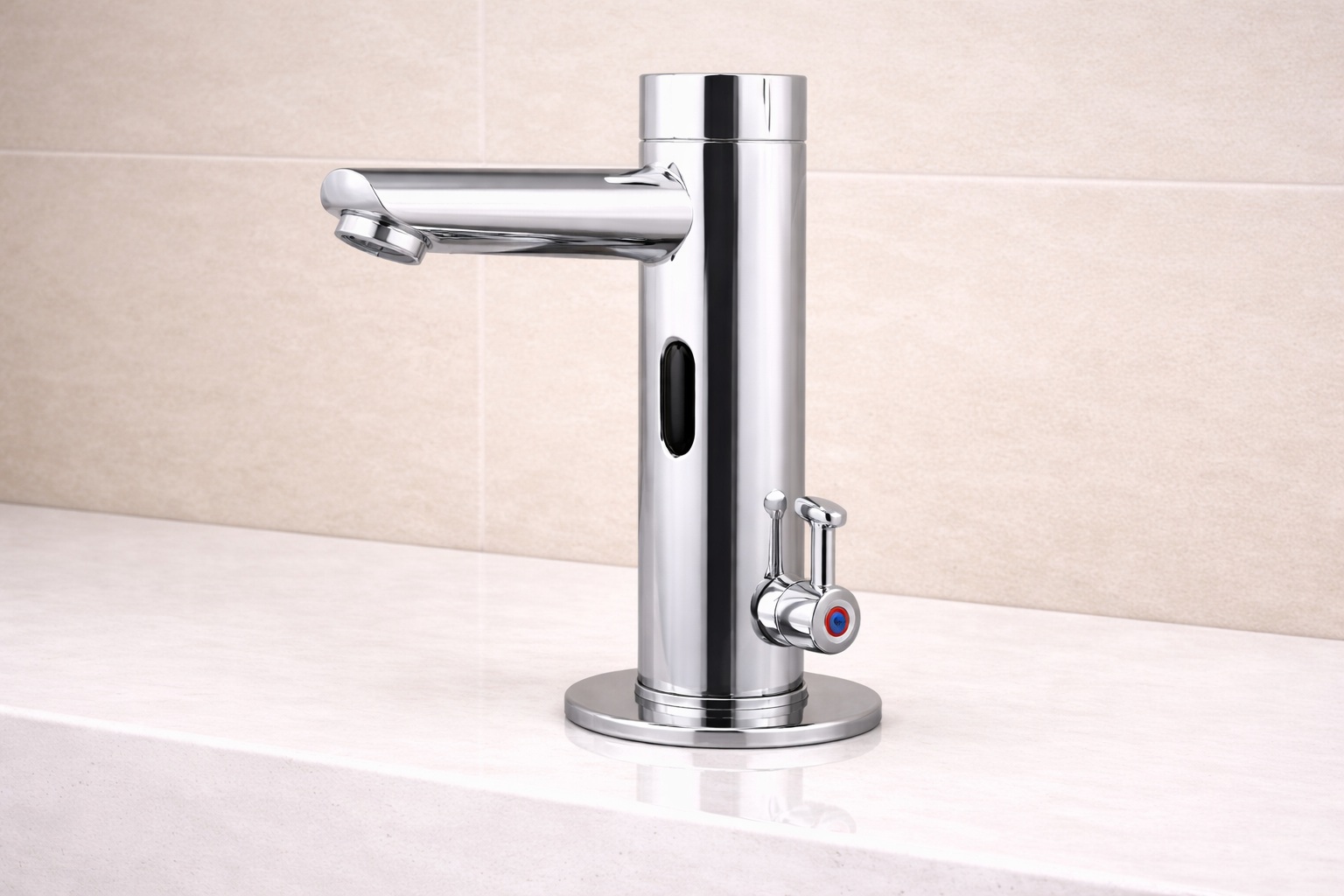
Temperature Control Sensor Faucet (Built-In Mixing)
Model: B5125DC-B
A focused pick when outlet temperature stability and anti-scald planning are priorities. Useful for facilities with supply fluctuation.
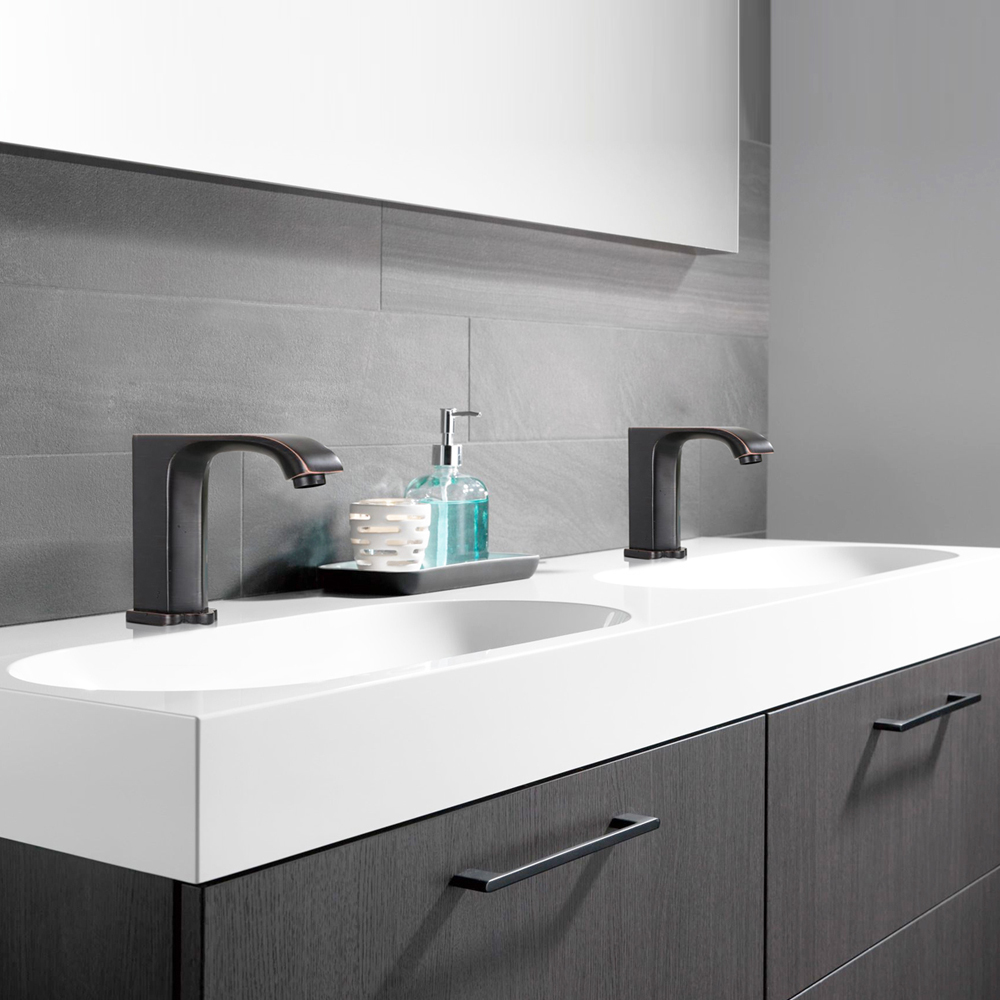
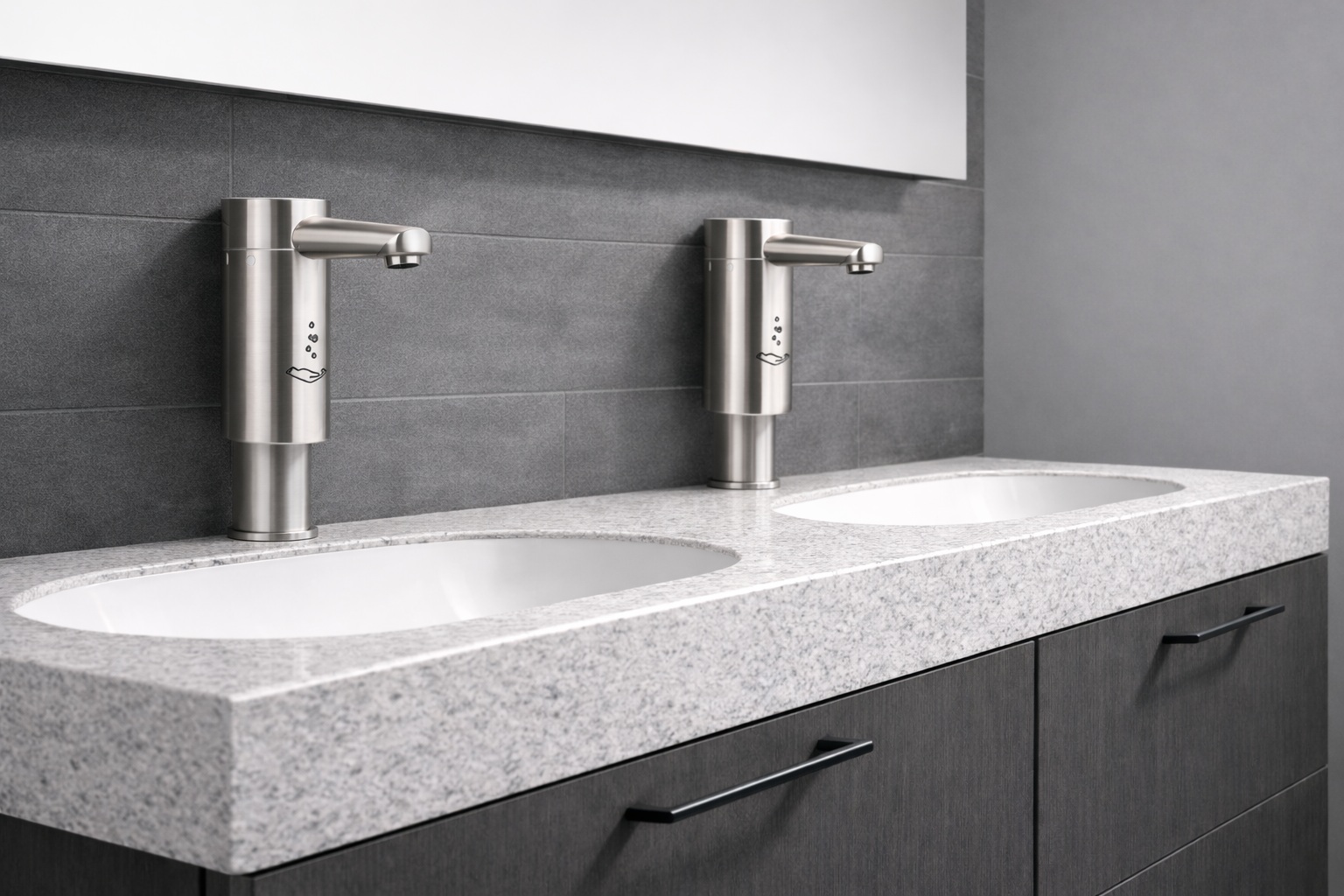
Dax Touchless Pair (Faucet + Dispenser)
Model: BS18199
Ideal for designers who want a clean paired aesthetic and contractors who want consistent service patterns across multiple restrooms.
Commercial Automatic Soap Dispenser
Model: BST9923
A practical selection path when you need consistent dispensing and durable housings that can tolerate daily cleaning protocols.
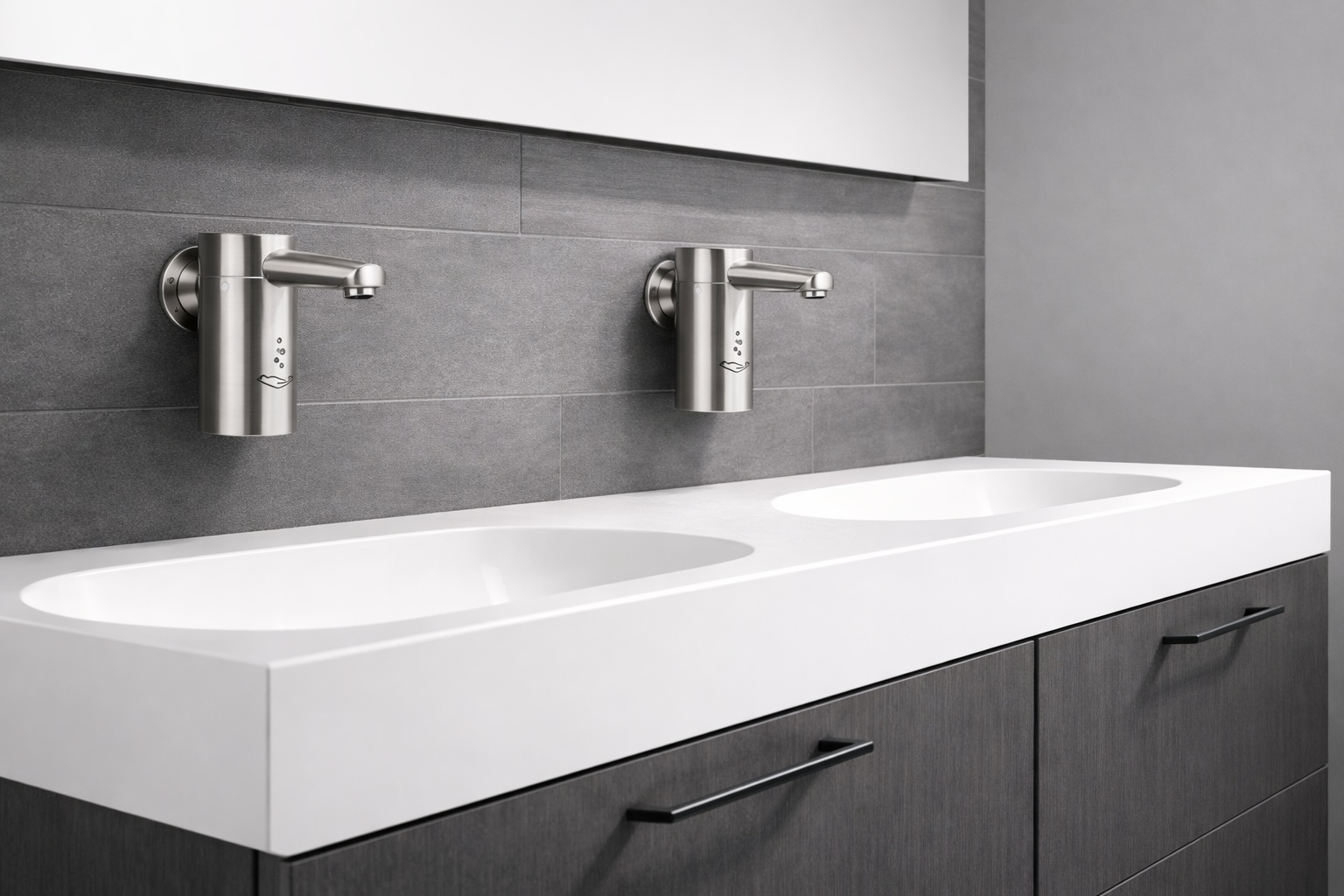
Wall Mount Soap Dispenser Range
Use case: tight decks, easier wipe-down
Wall mounting keeps decks clear and can speed up daily wipe-down. Helpful when the project wants fewer clutter points at the sink.
Best Touchless Faucets (Spec Shortlist)
Category: curated list
Use this shortlist to narrow options fast, then choose finishes and temperature strategy based on the building’s usage pattern and safety plan.
3.2 Maintenance & Durability Insights
What fails first in real buildings
Most early failures are not electronics problems. They are flow-path and service issues: debris, scale,
and inconsistent upstream pressure. A basic maintenance plan protects the solenoid, stabilizes shutoff,
and reduces nuisance complaints tied to poor flow.
- Inlet screen: inspect and rinse on a schedule. Water quality sets the interval.
- Solenoid closure: slow shutoff often points to scale or debris at the valve seat.
- Sensor window: residue from cleaners can reduce detection reliability.
- Power strategy: standardize battery type or power supply method across the facility.
Durability practices that help contractors
Consistency is durability. Standardize models, keep spare aerators and service parts,
and log calls by model number. The faster you identify patterns, the fewer repeat visits you will have.
- Pick finishes that tolerate the disinfectants used on site.
- Use a consistent faucet + dispenser pairing to standardize custodial routines.
- Confirm service access under the deck and clearance around control boxes.
- Document shutoffs and isolation valves for quick repairs.
Field-friendly service routine (simple and repeatable)
| Task |
When |
Goal |
|
Task
Flush lines + rinse inlet screen
|
When
After install and during first-month check
|
Goal
Remove debris that causes valve seat and solenoid issues
|
|
Task
Verify sensor range
|
When
At turnover and after deep-clean cycles
|
Goal
Prevent false triggers or missed activations
|
|
Task
Inspect aerator or restrictor
|
When
Quarterly or per water quality
|
Goal
Maintain stable stream and reduce splash
|
|
Task
Confirm tempered water setpoint
|
When
Seasonal or when hot supply changes
|
Goal
Support anti-scald planning and stable user experience
|
Close-out package for architects
For smoother turnover, include model list, finish schedule, power method, and a recommended cleaning and maintenance interval.
If the project uses anti-scald tempering, document whether control is central or point-of-use and who owns calibration.
Submittals model + finish
Power battery or AC
Tempering central or local
Service screen + aerator
FAQ for spec reviewers
How do we reduce splash complaints?
Match outlet conditioning to basin depth and pressure. Confirm aerator intent and test at real building pressure.
What should we standardize across the facility?
Model families, power method, and dispenser pairing. Standardization reduces spare inventory and training needs.
What supports anti-scald performance?
A documented tempering strategy, verified setpoint, and a commissioning plan. Temperature control is a system choice, not only a fixture choice.
What is the fastest maintenance win?
A simple inlet-screen cleaning interval tied to water quality. This prevents many solenoid and shutoff problems.
If you want a tighter, fully verified product list, send me 6 to 12 BathSelect product URLs (the -p- pages) you prefer,
and I will swap the grid to match your standard set exactly.
|
|
|
Spec focused guidance for contractors and architects selecting touchless faucets and automatic soap dispensers. Covers real building pressure swings, valve and solenoid behavior, temperature control and anti scald planning, and practical maintenance routines such as inlet screen cleaning, sensor window care, and service access checks.
|
|
|