Elkay vs BathSelect — Touchless Faucet Systems
Architects · MEP Engineers · Healthcare · Education · Government
Elkay vs BathSelect
Touchless Faucet Systems
A consultant-grade technical reference for evaluating touchless faucet platforms
in commercial, institutional, and high-traffic restroom environments.
This page provides a specification-focused comparison of
Elkay and BathSelect touchless faucet systems,
with emphasis on
sensor behavior consistency, electronic reliability,
ADA usability, power architecture resilience, lifecycle risk exposure,
and long-term asset performance
—not marketing-driven product selection.
System Integration
Sensor Technology
Power & EMI Resilience
Water Efficiency
Lifecycle Risk
Executive Summary — Specification Perspective
-
Core Question:
Which system architecture minimizes operational risk—standardized predictability or adaptive control?
-
Critical Distinction:
Elkay’s strength lies in mitigating portfolio-wide risk, while BathSelect excels at mitigating site-specific risk driven by variable conditions.
-
Failure Analysis:
Most failures originate from misalignment between platform logic (static vs. adaptive) and real-world operating environments.
-
Specification Imperative:
Specify for fault tolerance based on electrical noise, user density, and available maintenance resources.
-
Consultant Mandate:
The objective is not to select the “best” faucet, but the most resilient system for the defined operational context.
MEP Engineering: EMI Resilience & Power Architecture
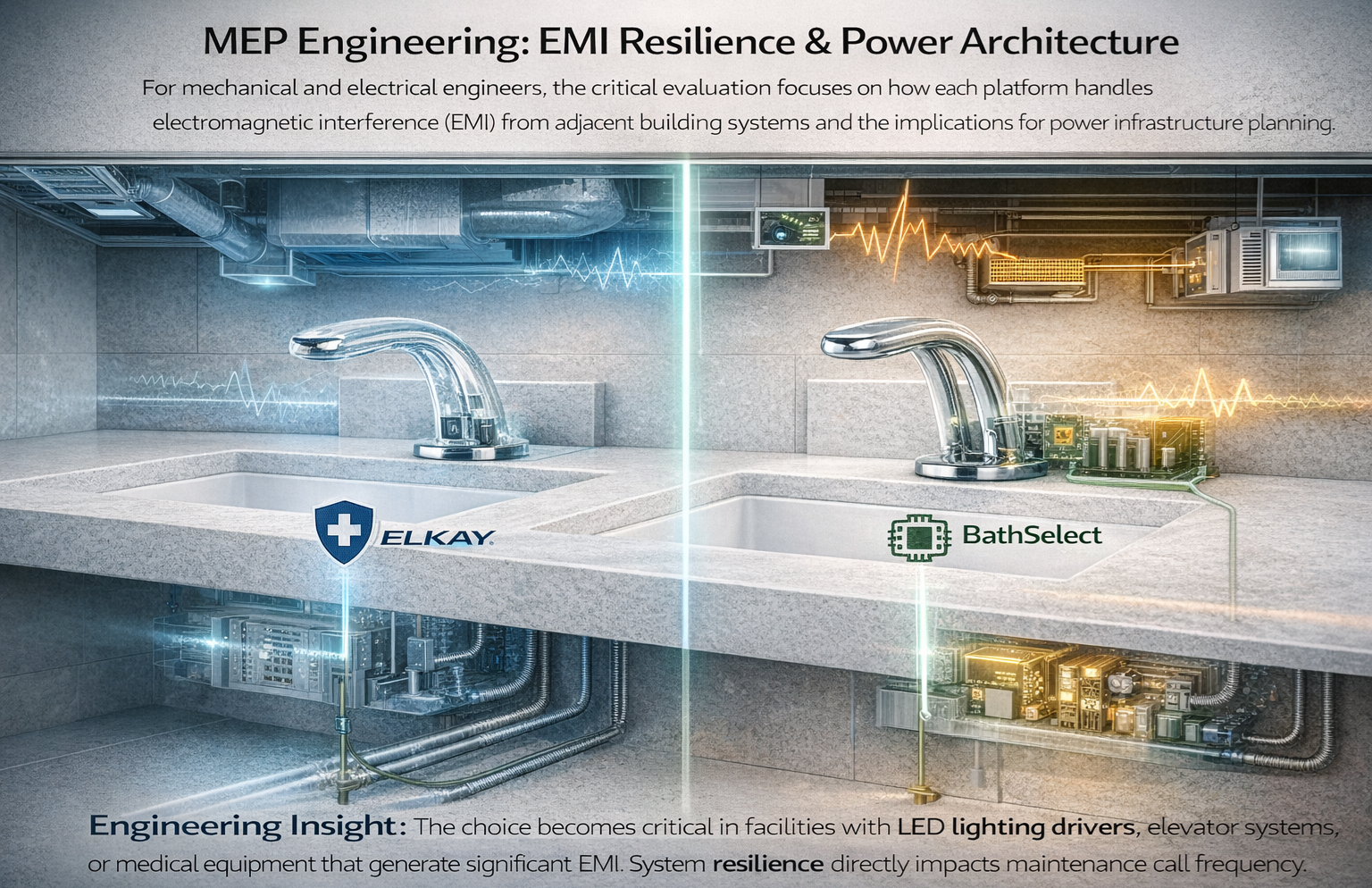
For mechanical and electrical engineers, the critical evaluation focuses on how each platform handles electromagnetic interference (EMI) from adjacent building systems and
the implications for power infrastructure planning
.
Elkay's Approach: Assumes compliant installation within controlled institutional power environments with proper grounding. Best suited for new construction where electrical infrastructure can be designed to specification.
BathSelect's Approach: Incorporates component-level buffering and filtering, designed to maintain stability in electrically noisy environments common in mixed-use facilities or near HVAC equipment.
Engineering Insight: The choice becomes critical in facilities with LED lighting drivers, elevator systems, or medical equipment that generate significant EMI. System resilience directly impacts maintenance call frequency.
Research: EMI Effects on Electronic Faucet Systems →
Facility Management: Total Cost of Ownership Analysis
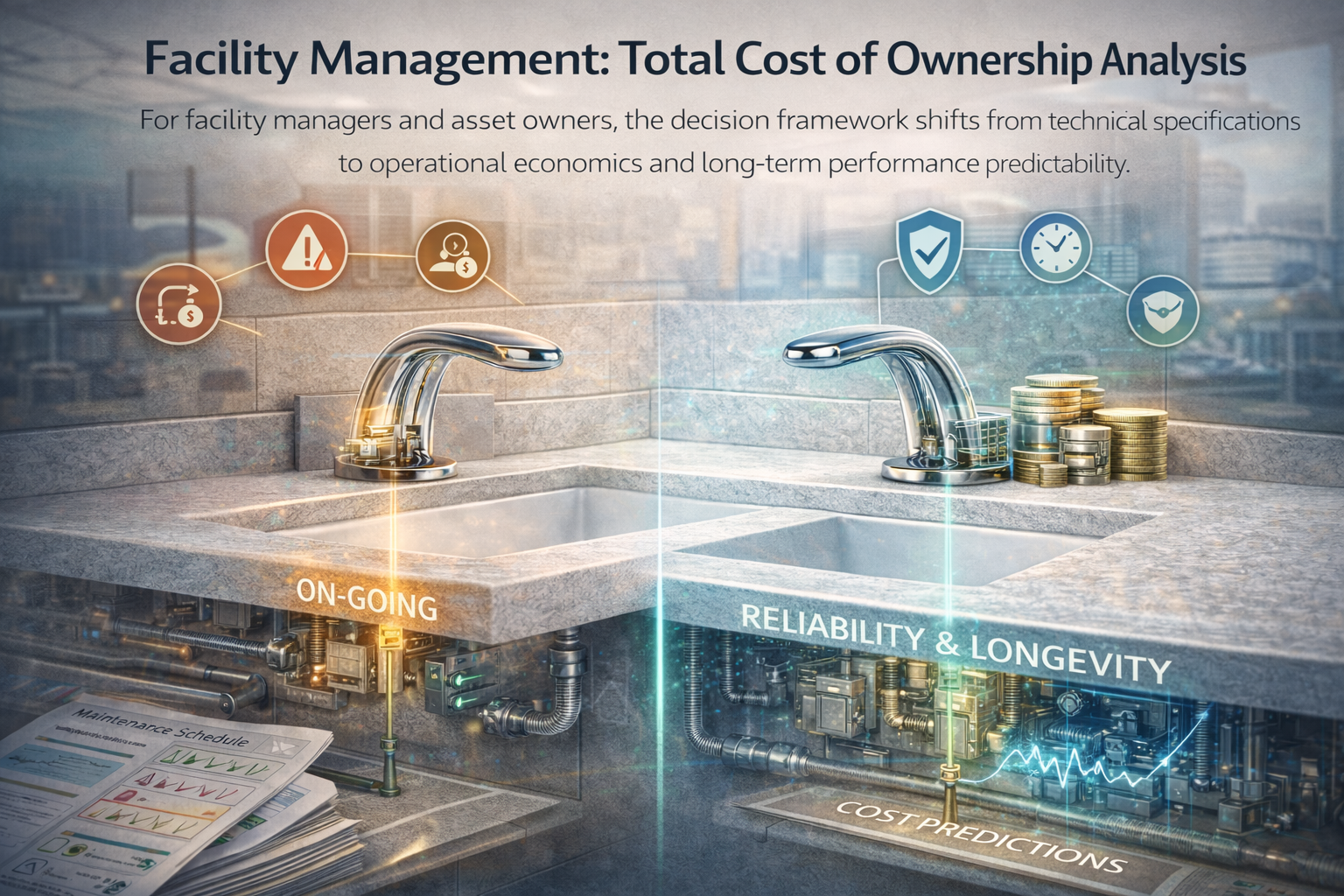
For facility managers and asset owners, the decision framework shifts from technical specifications to
operational economics and long-term performance predictability
.
Key TCO Drivers:
- Downtime Cost: Mean Time To Repair (MTTR) impact on user satisfaction
- Water Efficiency: Sensor logic impact on consumption vs. aerator flow rate
- Parts Inventory: Standardization benefits vs. specialized components
- Training & Diagnostics: Staff expertise required for troubleshooting
Elkay Advantage: Enables scheduled, predictable maintenance cycles and bulk purchasing across portfolio facilities.
BathSelect Advantage: Reduces emergency service calls through adaptable performance in variable conditions.
WBDG: Operations & Maintenance Cost Analysis Framework →
Architectural Integration & Aesthetic Flexibility
For architects and designers, the specification decision balances aesthetic requirements with technical performance, particularly in
design-forward or retrofit environments
.
Design-Forward Applications
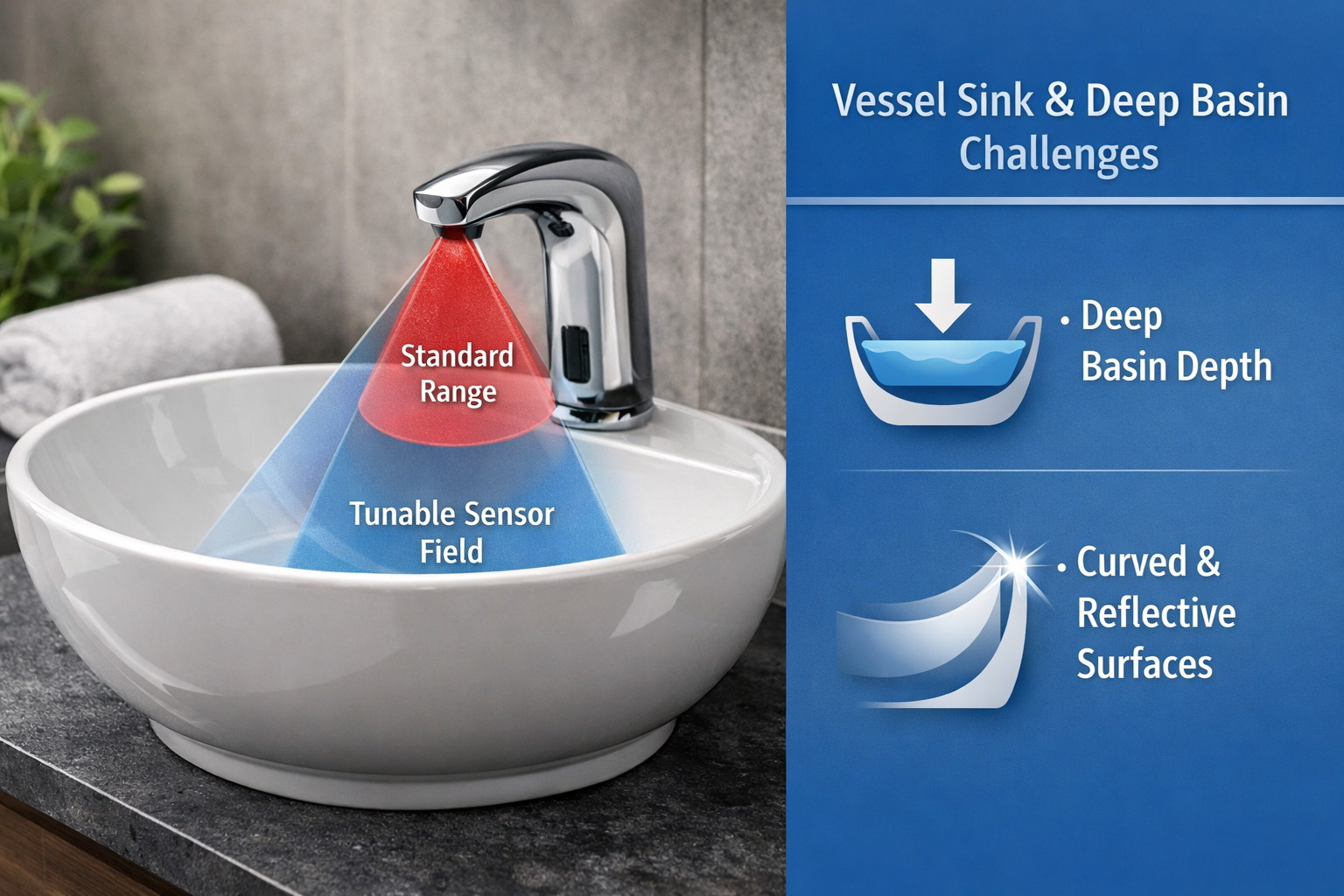
Deep bowls, vessel sinks, and non-standard geometries challenge traditional sensor calibration. BathSelect's tunable detection fields accommodate these designs without compromising reliability.
Architectural Integration Case Studies →
Institutional Standardization
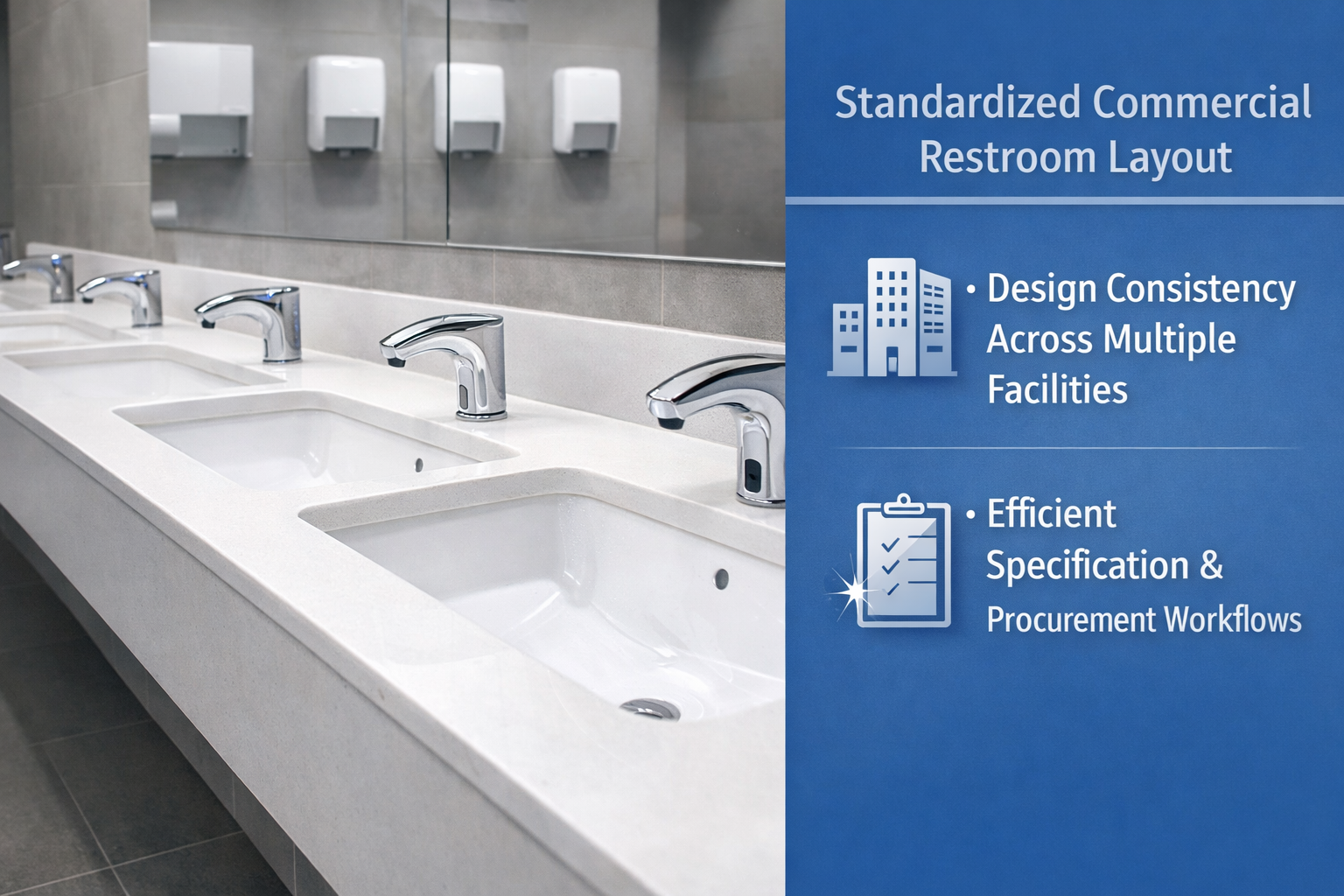
Elkay excels in repetitive layouts where design consistency across multiple facilities supports efficient specification, procurement, and maintenance workflows.
AIA: Standardized Specifications Guide →
Infrared Fault Tolerance & ADA Compliance
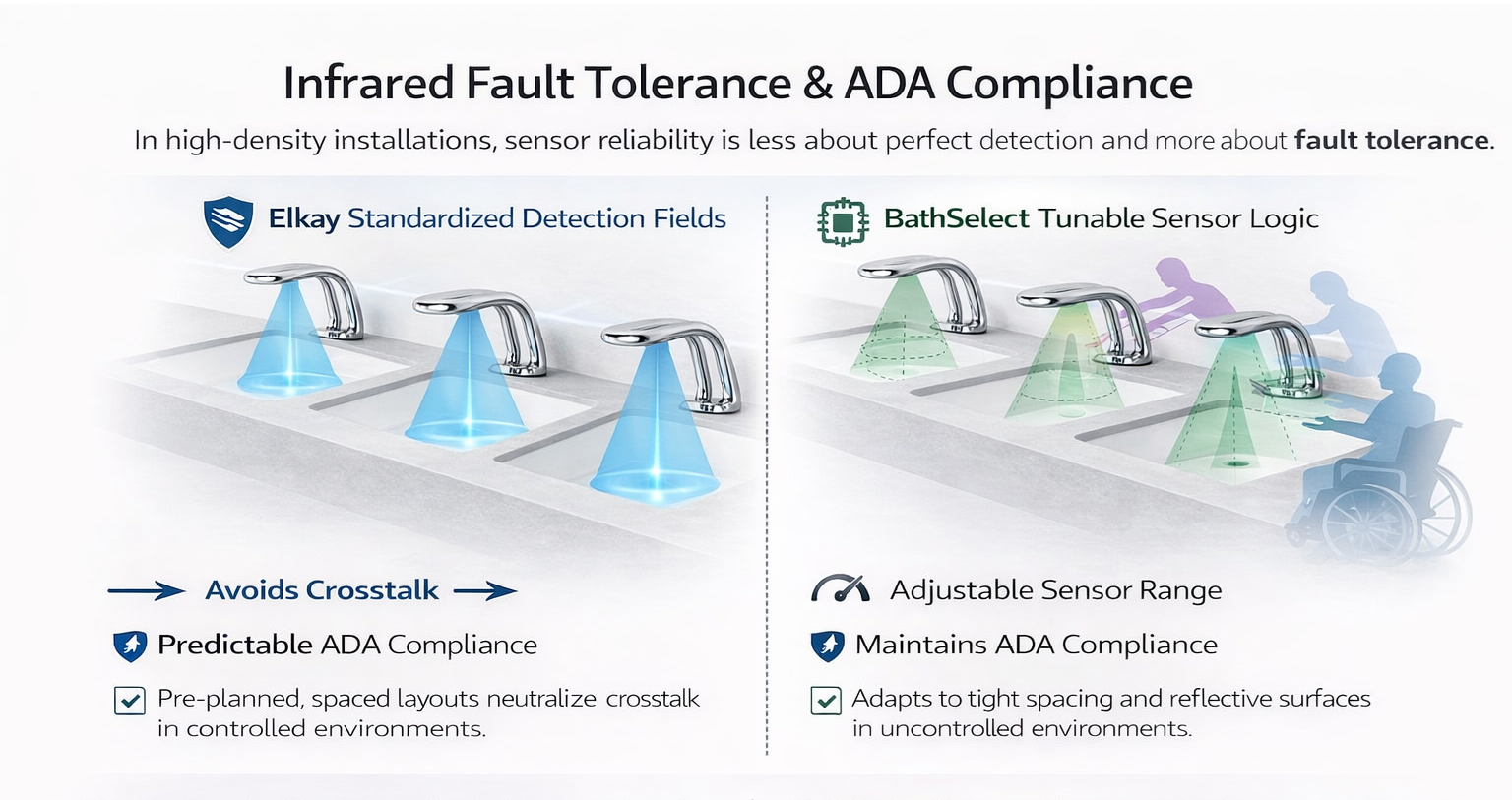
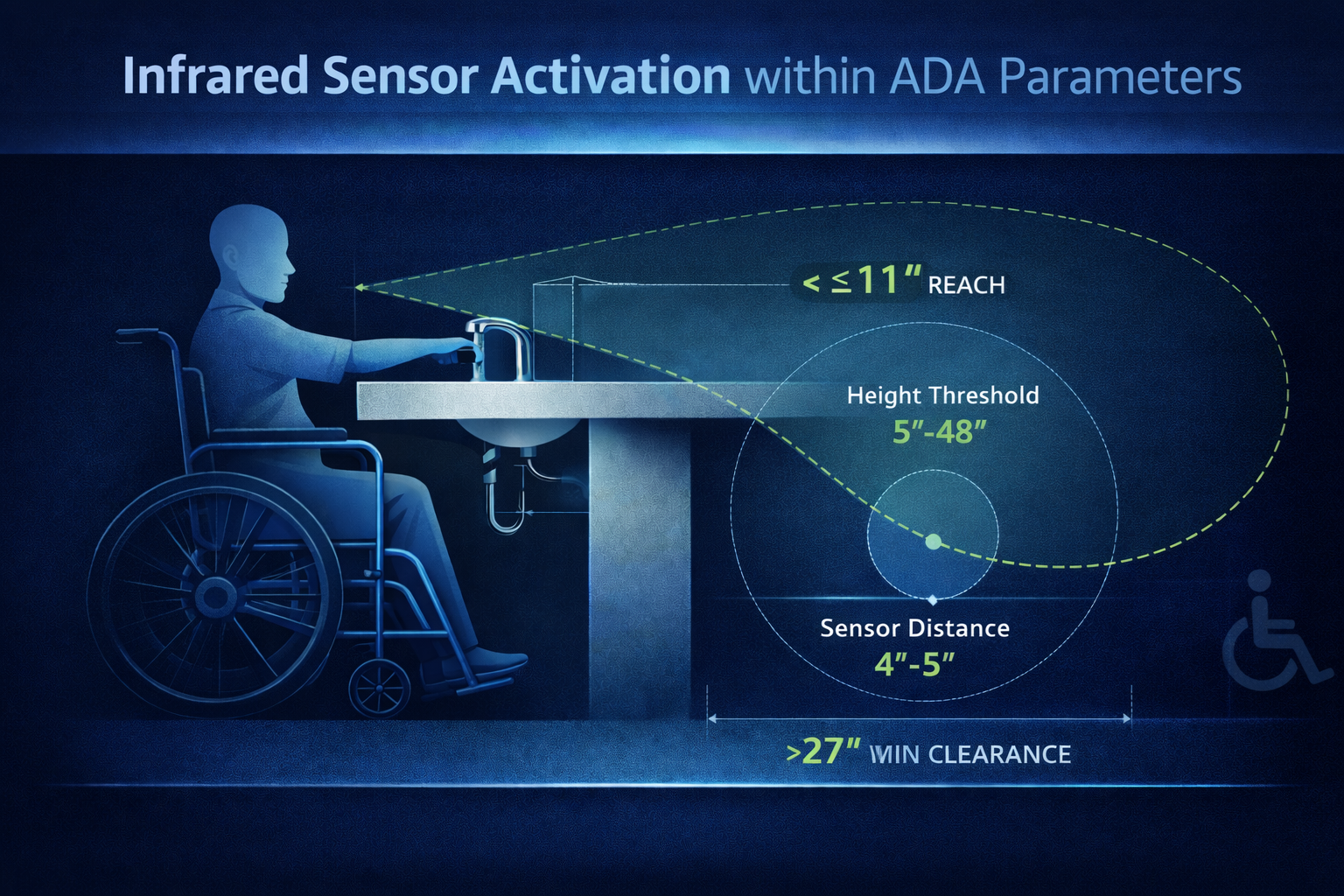
In high-density installations, sensor reliability is less about perfect detection and more about fault tolerance.
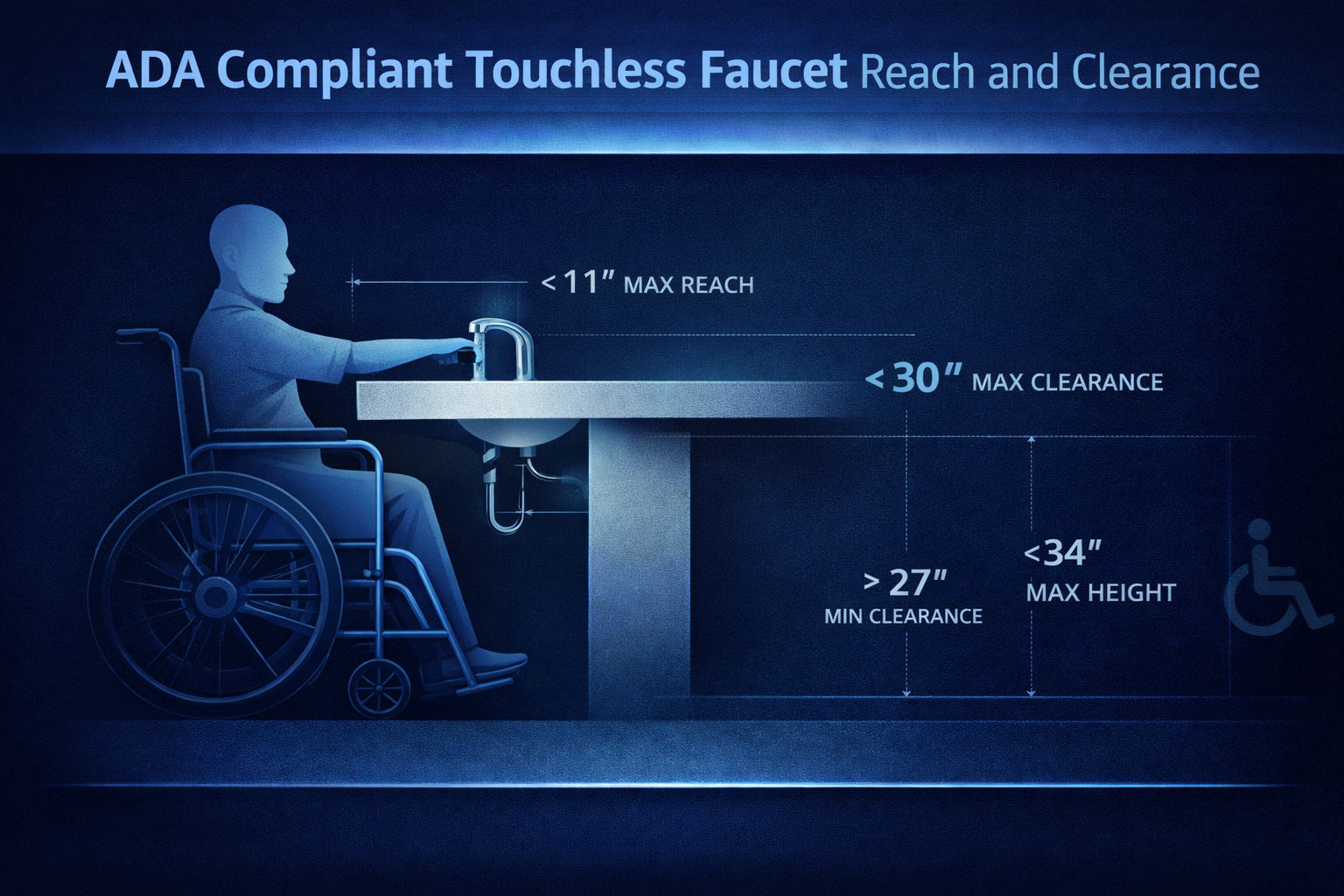
The primary risks are infrared crosstalk from adjacent fixtures and failure modes that violate
ADA usability principles
.
Elkay's standardized detection fields are designed to avoid crosstalk in pre-planned, spaced layouts,
offering predictable ADA compliance in controlled environments.
BathSelect's tunable sensor logic is a risk-mitigation tool for uncontrolled environments,
allowing compensation for tight spacing, reflective surfaces, and erratic user positioning
to maintain consistent, compliant activation.
ADA Sensor Behavior & Compliance Considerations →
Managing infrared crosstalk and ensuring graceful failure modes are critical for maintaining ADA compliance and user trust in institutional settings.
Project Management: Schedule Risk & Commissioning Workflow
For senior project managers, the critical evaluation prioritizes installation predictability
and commissioning complexity, with close attention to
the implications for project timelines and budget contingencies
.
Decision-making emphasizes reducing schedule volatility, limiting rework during commissioning,
and aligning system behavior with construction sequencing and available field expertise.
Schedule Certainty
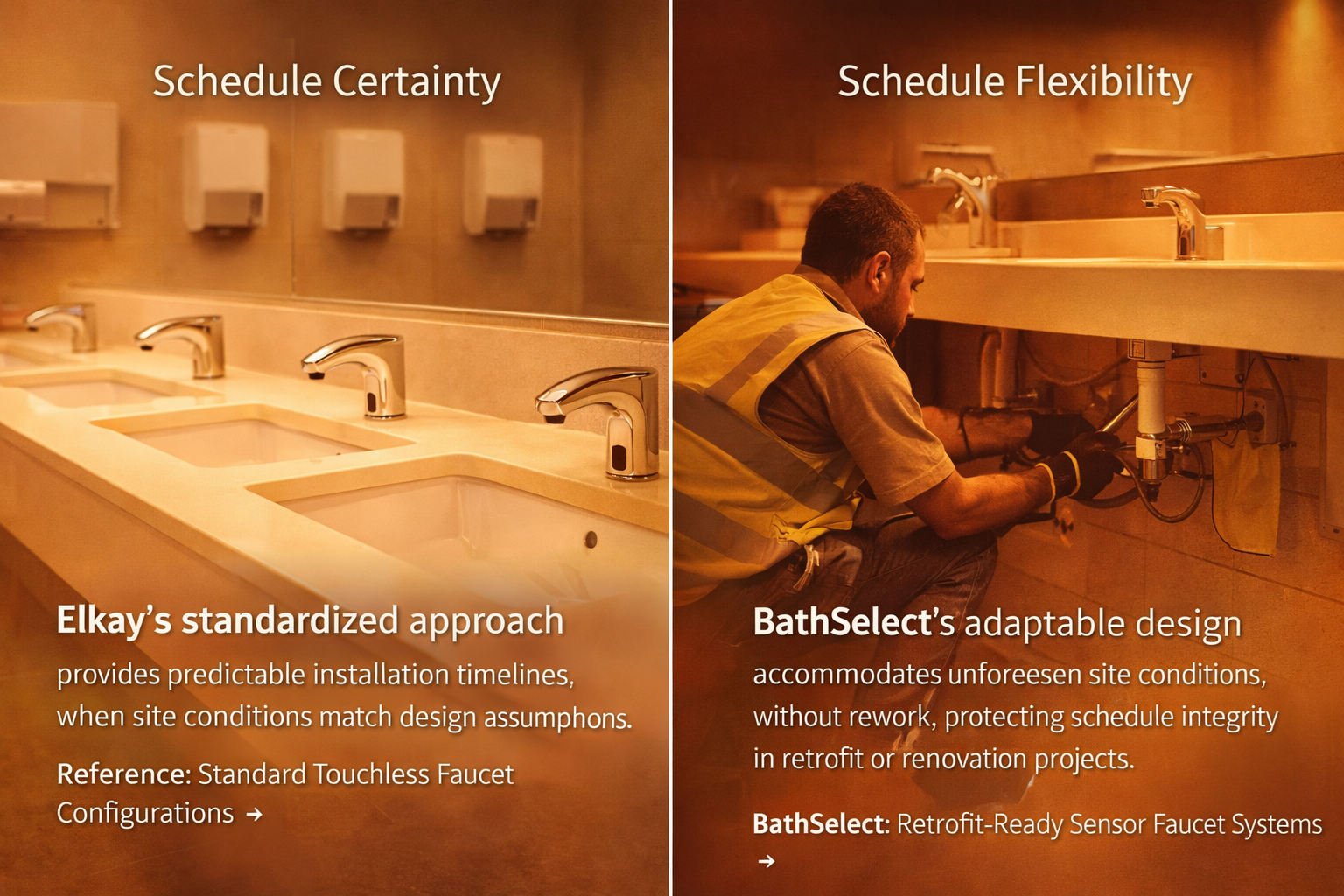
Elkay's standardized approach provides predictable installation timelines
when site conditions match design assumptions. This reduces commissioning variability
but requires precise pre-installation coordination.
Reference: Standard Touchless Faucet Configurations →
Critical Path Consideration:
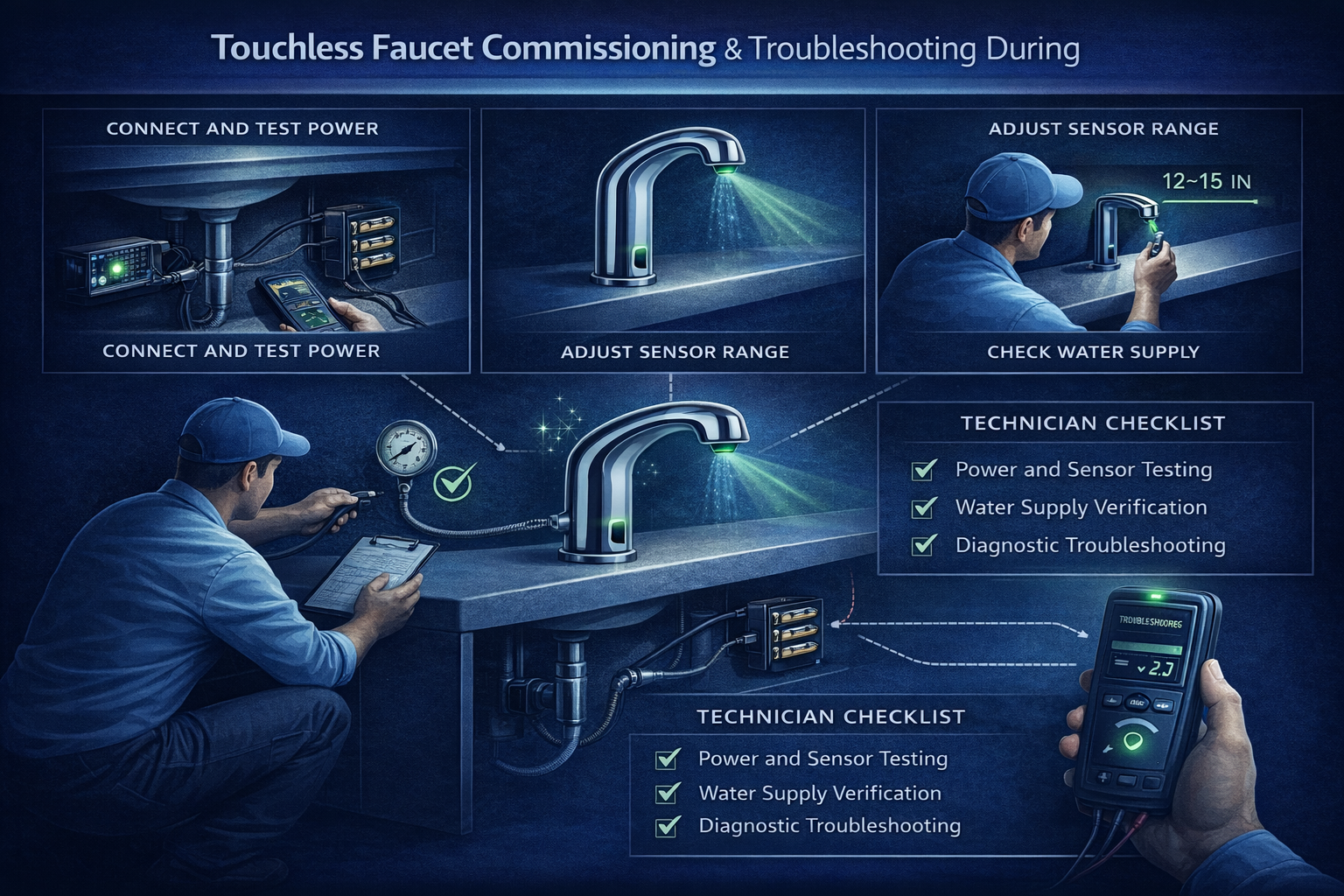
The most common schedule risk is unanticipated sensor calibration time during commissioning.
Elkay reduces this risk through design standardization, while BathSelect manages it through
adjustable parameters—requiring deliberate allocation of skilled technician time.
FontanaShowers: Touchless Faucet Installation & Commissioning Guide →
Commissioning Complexity & Risk Allocation
The choice between systems is often a choice of
when and where to absorb complexity and risk—during the planning and installation
phase or throughout the operational lifecycle—shaped by
organizational support structure and accountability
.
Elkay front-loads complexity into rigorous initial planning and layout, aiming to
minimize post-installation variables and long-term operational risk for the
facility owner.
BathSelect shifts complexity to the commissioning and validation phase, providing
the tools to diagnose and adapt to unforeseen site conditions—supported by
practical field diagnostics and troubleshooting procedures—thereby transferring
risk management capability to the installing contractor or facility technician.
Commissioning Diagnostics & Sensor Faucet Troubleshooting Guide →
LEED Water Efficiency & Sensor-Controlled Conservation
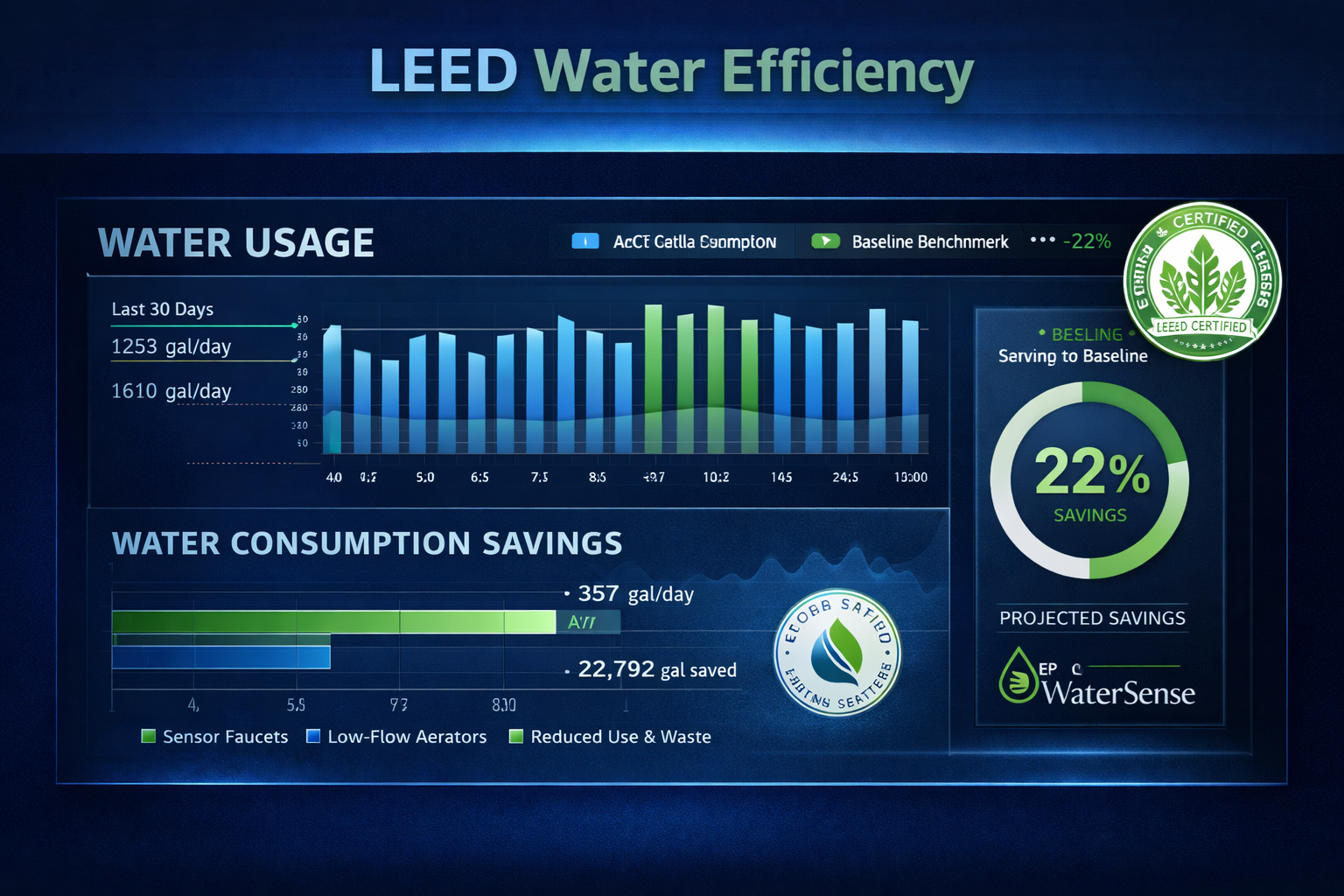
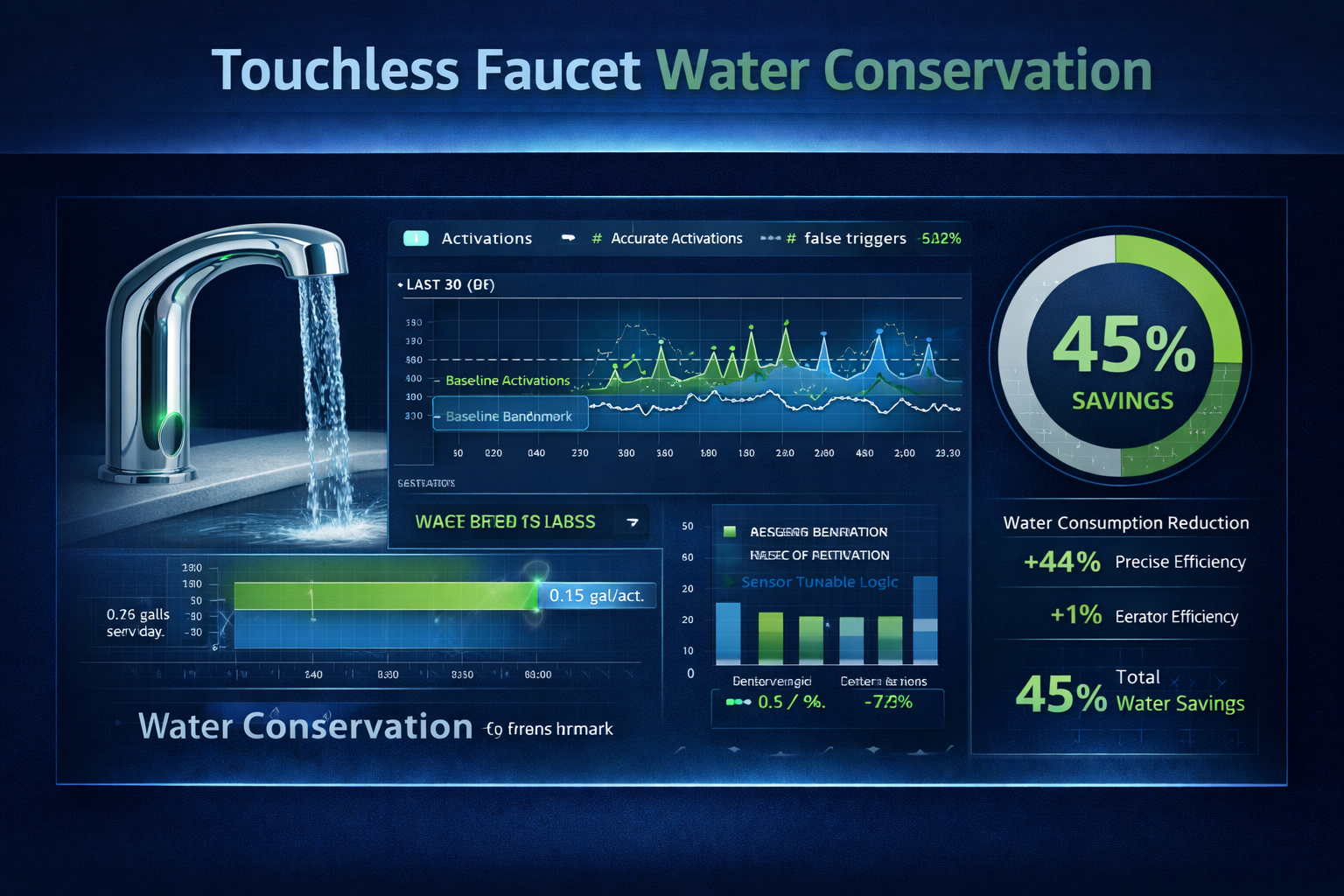
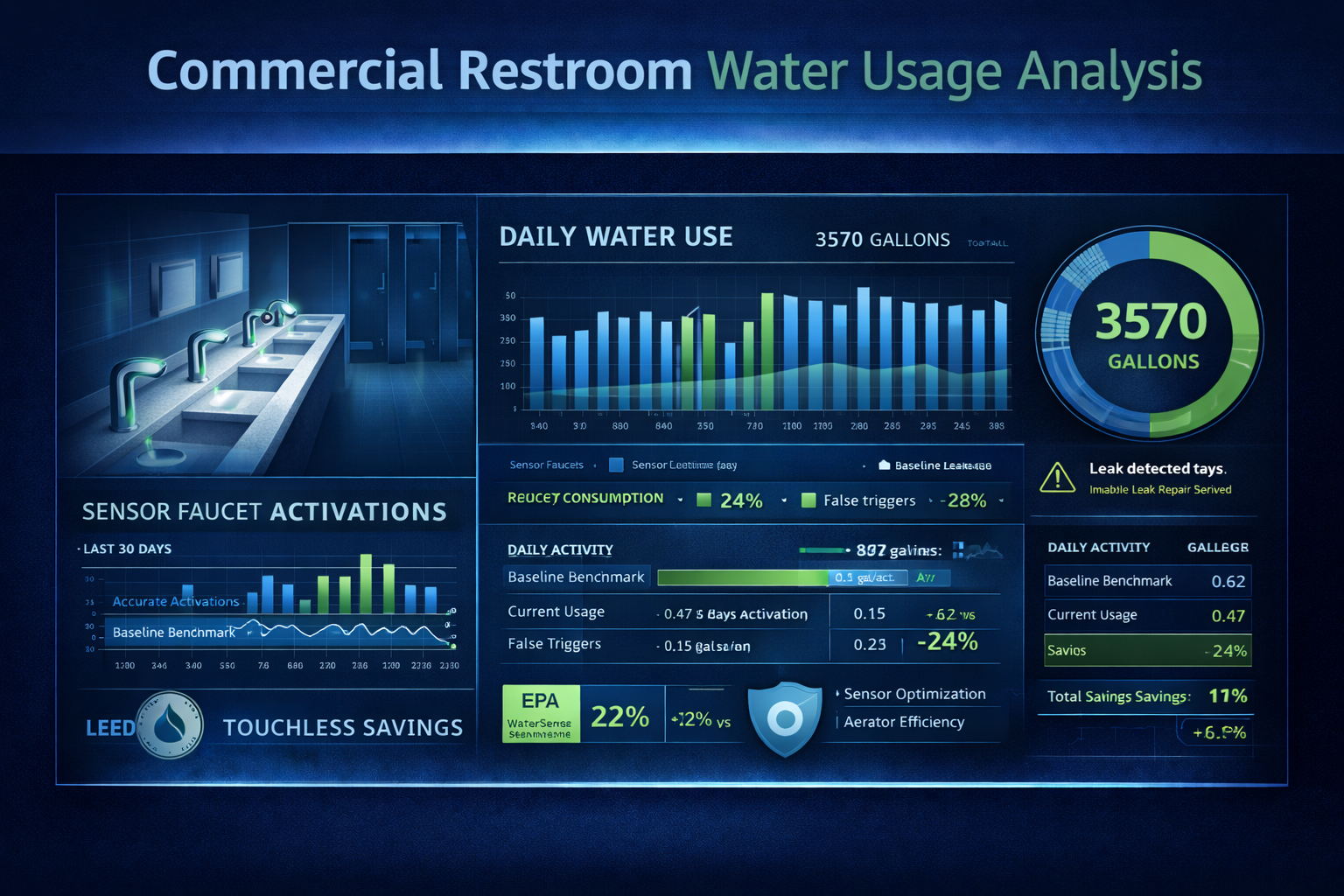
Flow rate alone does not define water performance. In high-traffic facilities,
true conservation is governed by sensor intelligence—activation precision,
shutoff discipline, and resistance to false triggering—consistent with
LEED water efficiency certification frameworks
.
BathSelect’s tunable logic introduces a second layer of savings that static
aerators cannot achieve on their own.
ADA Compliance Under Real-World Conditions
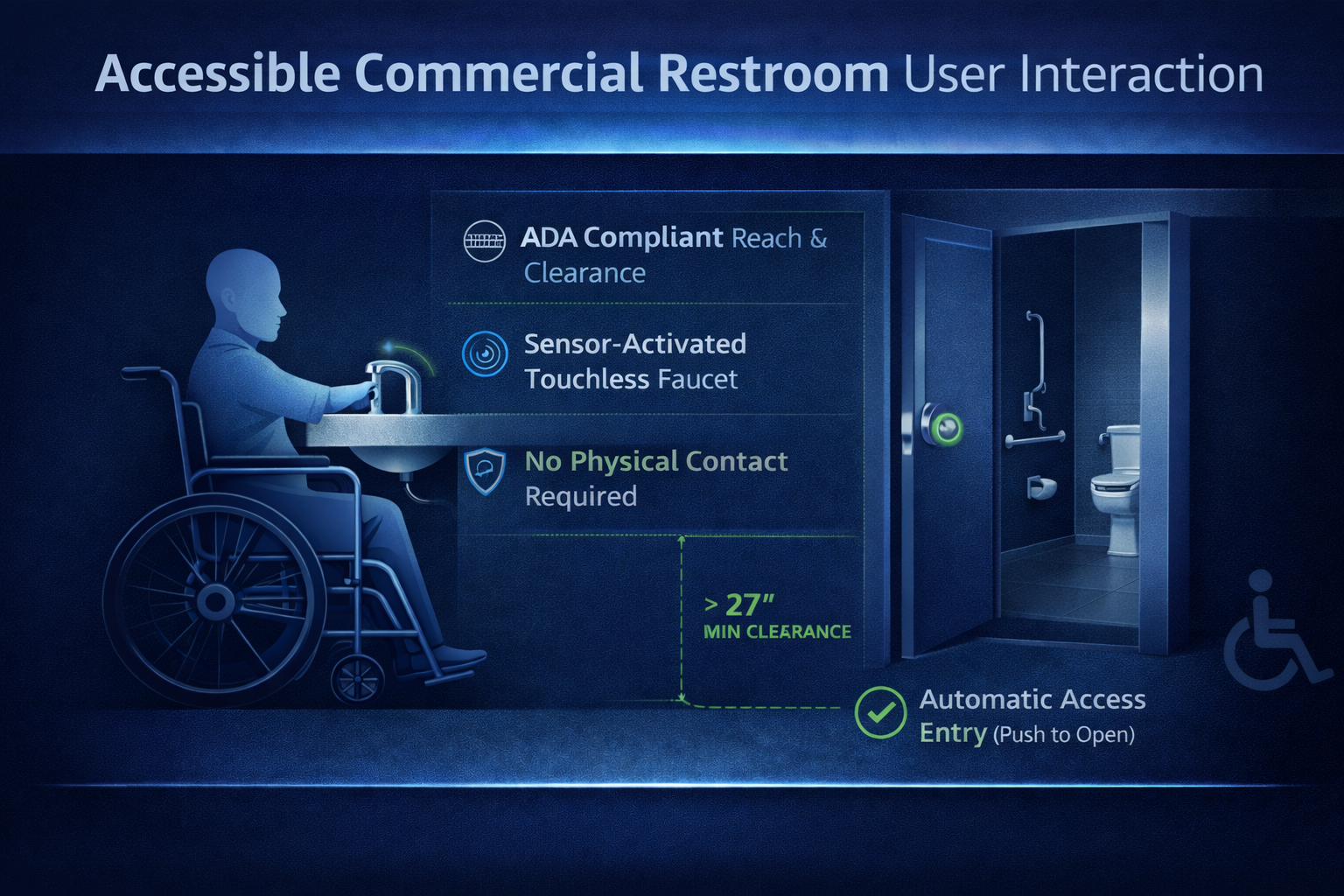
ADA compliance fails not at the drawing stage—but at the point of use.
Activation consistency, response timing, and fault tolerance under crowding
conditions determine whether a system remains compliant over time, supported by
quality and durability under continuous use
.
Elkay relies on predictable geometry; BathSelect maintains compliance through
post-installation verification and adjustment.
Material Integrity & Environmental Lifecycle Impact
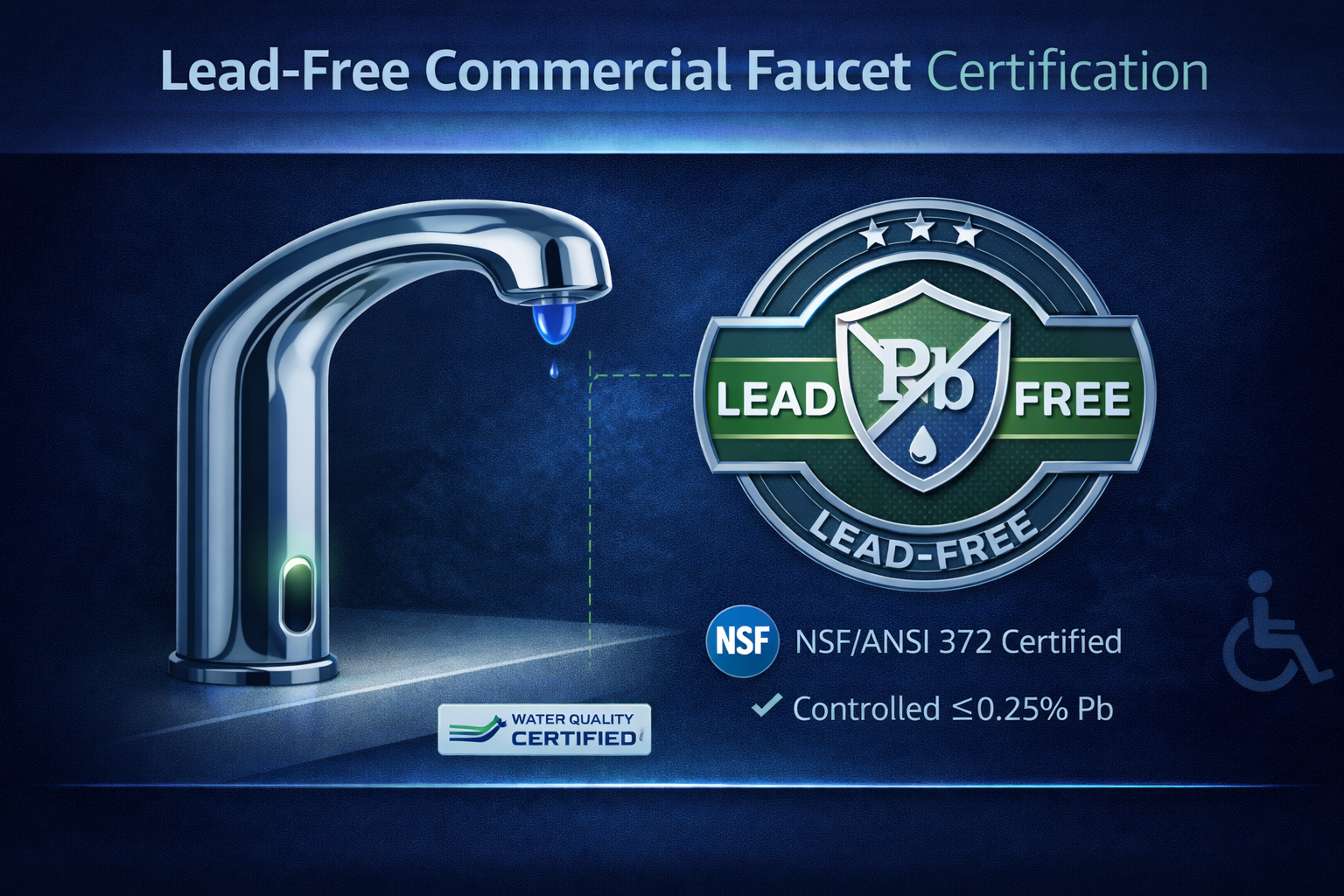
Sustainability extends beyond lead-free declarations.
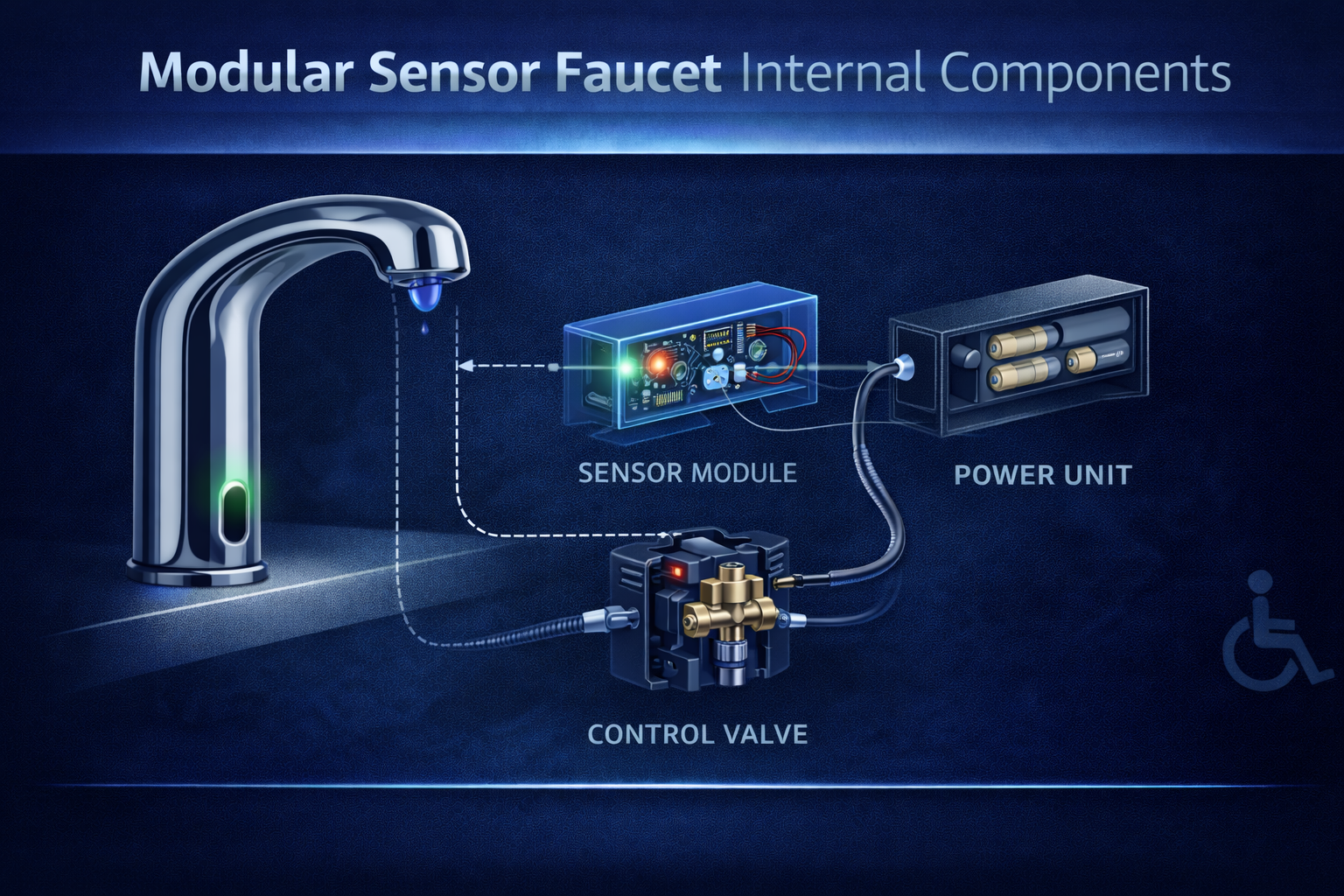
Electronic component lifespan, modular serviceability, and end-of-life disposal
increasingly factor into institutional ESG reporting and long-term risk models.
Systems designed for selective replacement outperform sealed assemblies over time,
as reinforced by
commissioning and lifecycle validation criteria
.
Final Consultant Recommendation
The Elkay vs. BathSelect decision is not a product comparison—it is a
risk-allocation strategy. Elkay represents the optimal choice
for organizations capable of enforcing strict standardization, controlling
installation variables, and prioritizing long-term operational predictability
across large, homogeneous facility portfolios.
BathSelect emerges as the superior strategic option in environments where
conditions are variable, constraints are unavoidable, or where on-site
diagnostic and post-installation adjustment capability is intentionally
leveraged as operational insurance against downtime, user dissatisfaction,
and hidden lifecycle cost exposure—an approach reflected across adaptable
commercial systems available through
FontanaShowers
.
Strategic Decision Framework
Specify not for ideal conditions, but for the operational reality of your facility.
The most resilient system is the one aligned with your organization’s tolerance
for variability, commissioning expertise, maintenance bandwidth, and appetite
for adaptive control versus enforced uniformity—an approach reflected in
BathSelect’s system philosophy
.
This reference is intended to support informed, risk-aware specification decisions.
Final selections should be validated against project-specific constraints, authority
approvals, commissioning capability, and long-term asset management objectives, with
additional context available through
industry-focused technical resources
.
Decision Matrix — Specification Selection Guide
| Operational Risk & System Response |
Elkay |
BathSelect |
| Infrared Crosstalk Mitigation |
Preventative risk avoidance through standardized fixture spacing and fixed detection geometries defined at the design stage. |
Active risk management using adjustable sensitivity and field tuning to isolate sensors in dense or constrained layouts. |
| Electrical Noise & EMI Exposure |
Assumes compliant electrical infrastructure with controlled grounding and minimal EMI interference. |
Incorporates design-level buffering and filtering to maintain operational stability in mixed-use or high-noise environments. |
| Response to Unforeseen Site Conditions |
Limited tolerance—deviations often require physical rework, layout correction, or fixture relocation. |
High tolerance—system logic and sensor parameters can be adjusted post-installation to accommodate constraints. |
| Dominant Lifecycle Cost Driver |
Predictability—supports bulk procurement, standardized training, and scheduled maintenance cycles across portfolios. |
Resilience—reduces emergency service calls, downtime, and performance degradation caused by site variability. |
Infrared Crosstalk Mitigation
Elkay
Preventative risk avoidance through standardized fixture spacing and fixed detection geometries defined at the design stage.
BathSelect
Active risk management using adjustable sensitivity and field tuning to isolate sensors in dense or constrained layouts.
Electrical Noise & EMI Exposure
Elkay
Assumes compliant electrical infrastructure with controlled grounding and minimal EMI interference.
BathSelect
Incorporates design-level buffering and filtering to maintain operational stability in mixed-use or high-noise environments.
Response to Unforeseen Site Conditions
Elkay
Limited tolerance—deviations often require physical rework, layout correction, or fixture relocation.
BathSelect
High tolerance—system logic and sensor parameters can be adjusted post-installation to accommodate constraints.
Dominant Lifecycle Cost Driver
Elkay
Predictability—supports bulk procurement, standardized training, and scheduled maintenance cycles across portfolios.
BathSelect
Resilience—reduces emergency service calls, downtime, and performance degradation caused by site variability.
This matrix functions as a **specification decision tool**, not a product scorecard.
Final system selection must align with real-world site conditions, commissioning
capability, maintenance expertise, and long-term lifecycle risk strategy.
Hybrid Specification Strategy
In large campuses, healthcare networks, and multi-facility developments,
a
hybrid specification strategy delivers superior outcomes
by balancing
portfolio-level predictability with
site-specific adaptability.
This approach acknowledges that operational risk is not uniform across all spaces.
-
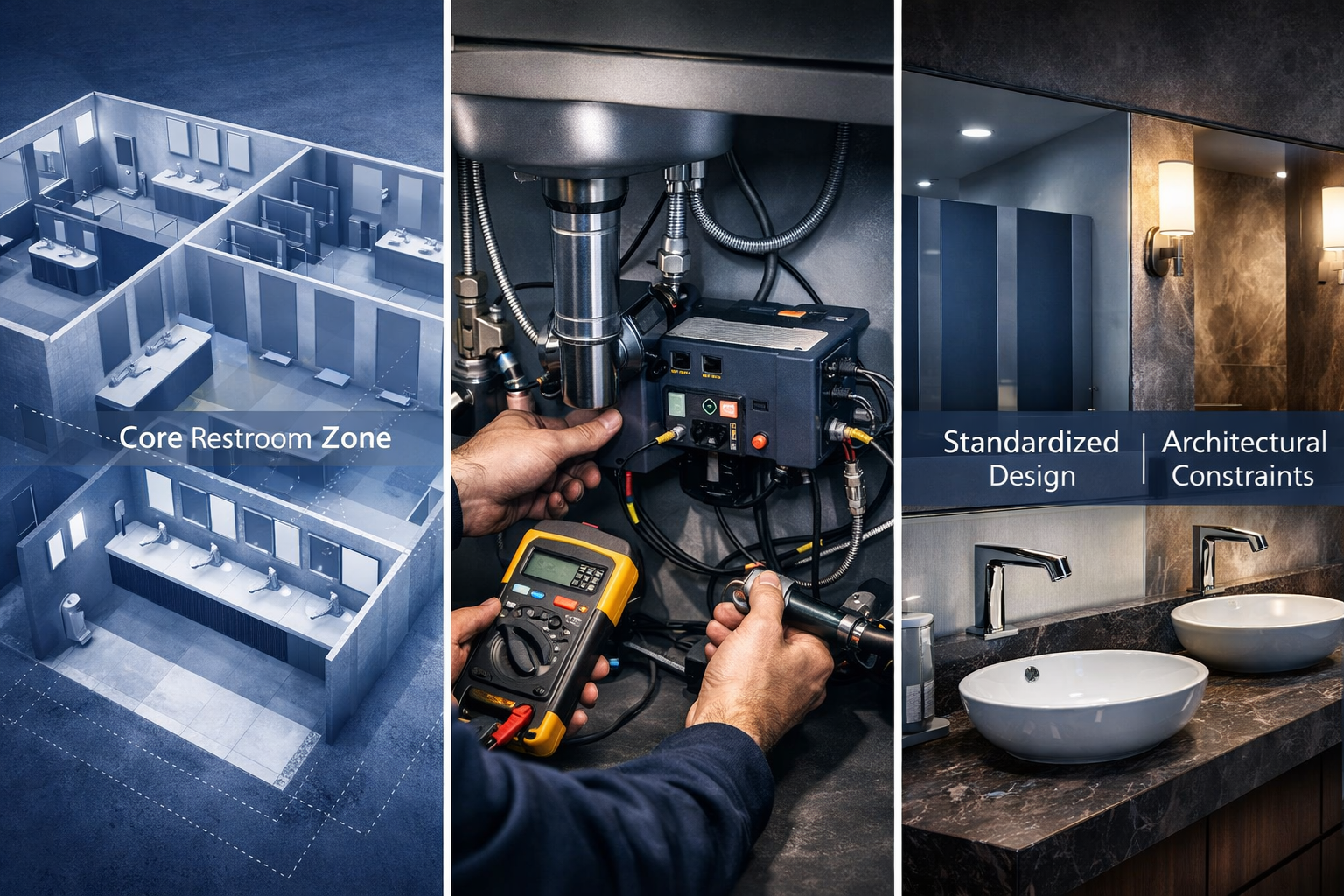
Elkay specified in
core public restrooms where standardization, ADA familiarity,
and predictable maintenance workflows are mission-critical.
-
BathSelect deployed in
executive areas, retrofit-heavy zones, or architecturally constrained
environments where sensor tuning and field adaptability reduce failure risk.
-
Lifecycle Risk Alignment:
System complexity is matched to facility capability—minimizing downtime,
rework, and long-term operational friction across the asset portfolio.
Implementation Consideration
A successful hybrid strategy depends on precise documentation defining
system allocation by zone, combined with standardized training that equips
maintenance teams to manage both fixed and adaptive platforms with confidence.
Operations, Maintenance & Hybrid Deployment Reference →
Hybrid specification aligns standardized systems with adaptive deployments
to reduce lifecycle risk across diverse facility conditions.
Advanced Technical Review — Elkay vs BathSelect
Touchless Faucet Systems (Expert-Level)
What is the root cause of false activations in dense restrooms, and how does each platform address it?
+
The primary cause is infrared crosstalk—when sensors from adjacent fixtures interfere. Elkay's engineering philosophy addresses this through strict, pre-defined installation layouts that physically separate detection fields. BathSelect's approach is to provide field-adjustable sensitivity and timing controls, allowing technicians to electronically isolate each fixture's operating zone post-installation, which is crucial in retrofit or tight spaces.
More technical details →
In a facility with variable power quality, which system architecture is more likely to maintain stable operation?
+
BathSelect's architecture typically demonstrates greater inherent resilience. While Elkay assumes a "clean" institutional power environment, BathSelect designs often include additional buffering, filtering, and surge protection at the component level. This is a critical differentiator in older buildings, mixed-use facilities, or near high-load equipment like HVAC motors and industrial lighting where power anomalies are common.
More technical details →
Beyond part failure rates, what systemic factors most impact Total Cost of Ownership (TCO)?
+
The largest TCO drivers are (1) Downtime/Repair Time (MTTR), (2) Diagnostic Complexity, and (3) Water/Energy Waste from sub-optimal operation. Elkay optimizes for TCO through standardization, reducing variables. BathSelect optimizes for TCO through adaptability, aiming to prevent failures and waste caused by site conditions that deviate from the ideal "standard" installation.
More technical details →
For water conservation, is smart sensor logic more impactful than a low-flow aerator?
+
In high-traffic environments, absolutely. A low-flow aerator (e.g., 0.5 GPM) sets the maximum flow, but poor sensor logic causes waste through delayed shut-off, false starts, or overrun. Advanced logic that ensures instant, precise cessation of flow can save more water than a marginal reduction from 0.5 to 0.35 GPM. BathSelect's tunable logic allows optimization for this; Elkay's fixed profiles offer consistency but less optimization potential.
More technical details →
How do "deep bowl" or "vessel" sinks fundamentally challenge touchless sensor reliability?
+
They disrupt the expected infrared reflection pattern and increase the sensor-to-hand distance. A standard sensor calibrated for a shallow basin may fail to detect a hand in a deep bowl or may trigger on the bowl's edge. Elkay systems perform most reliably when paired with their own compatible basin designs. BathSelect's advantage is the ability to increase sensitivity and adjust the detection zone to accommodate these challenging geometries without changing hardware.
More technical details →
What single post-installation check prevents the majority of early-performance complaints?
+
A comprehensive "sensor cross-talk and interference test" with all adjacent fixtures (faucets, soap dispensers, dryers) operating simultaneously. This uncovers interference issues that aren't apparent when testing fixtures in isolation. For Elkay, this validates the installation against its planned layout. For BathSelect, this test provides the necessary data to make final sensitivity adjustments that ensure all fixtures operate independently.
More technical details →
|
|
Independent Technical Reference — Floor Design, Light Reflection & Sensor Stability
In high-traffic commercial restrooms, floor design is not a passive aesthetic element—it is an active technical variable.
Polished tiles, high-gloss finishes, and light-colored flooring can amplify infrared reflection, alter sensor activation geometry,
and increase the probability of false triggers or delayed shutoff. These conditions directly influence water consumption,
ADA usability, and long-term system reliability.
Field observations consistently show that sensor performance cannot be evaluated independently of the surrounding surface
reflectivity, ambient lighting, and floor-to-fixture relationship. For engineers, architects, and contractors, understanding
how flooring materials interact with infrared detection is essential to reducing commissioning issues and post-installation complaints.
Review independent field-based analysis on how real-world restroom surfaces—including flooring—impact touchless faucet sensor behavior →

Floor reflectivity, material finish, and light bounce directly affect infrared sensor stability in dense restroom environments.
Specification decisions fail when systems are evaluated in isolation. Flooring materials, surface reflectivity, and lighting
conditions form a hidden control layer that directly governs touchless faucet behavior. Incorporating independent, field-driven
research into the specification process ensures that system selection aligns with real operating conditions—not idealized assumptions.
This comparison is intended as a specification support reference—not a product endorsement. Effective touchless faucet selection
depends on aligning system logic with real-world operating conditions, including user density, electrical environment, surface
reflectivity, and available maintenance capability. Long-term performance is achieved by specifying for operational reality,
not idealized assumptions.
|
|
|