Stadium & Arena
Restroom Fixtures.
High-capacity faucet, soap dispensing and restroom fixture systems designed for intense peak demand, rapid user turnover and long-term facility operation.
PeakEvent-Driven
Demand
FastRestroom
Throughput
TouchlessFaucet & Soap
Operation
DurableCommercial
Construction
ProjectSpecification
Support
Restrooms Designed for the Event Cycle
Why Stadium and Arena Restrooms Require a Different Fixture Strategy
Stadium and arena restrooms do not experience traffic evenly. Demand concentrates before an event, during short intermissions and immediately afterward. A system that performs well under ordinary commercial use can still create queues, sanitation problems or maintenance calls when hundreds of users arrive within minutes.
The design response must extend beyond fixture count. Architects, plumbing engineers and facility teams must coordinate user flow, accessible routes, lavatory placement, faucet activation, soap availability, flushing performance, water demand, power strategy and service access as one operating system.
Core Fixture Systems
Specify the Restroom as a Connected Operational System
Engineering Priorities
Four Decisions That Shape Venue Restroom Performance.
Product appearance matters, but successful venue restrooms are determined by capacity, reliable activation, maintainability and coordination with the building systems.
01Peak Capacity
Calculate fixture demand for compressed intermission periods, not only average daily attendance.
02Activation
Match the sensor, detection zone and shutoff logic to basin geometry and expected user behavior.
03Water & Power
Coordinate flow rate, pressure, mixing strategy, electrical supply and backup requirements.
04Service Access
Provide practical access to solenoids, filters, batteries, transformers and soap reservoirs.
Touchless Handwashing
Faucet and Soap Dispensing Performance Under Peak Traffic
Touchless activation can simplify use and reduce contact with fixture controls, but the sensor must be coordinated with the actual basin. Detection that is too broad can cause unintended flow; detection that is too narrow can make activation feel inconsistent. The specification should address sensing range, response behavior, maximum runtime, shutoff delay and the effect of reflective surfaces.
Faucet flow should reach the handwashing area without striking the drain or basin wall in a way that creates splash. The U.S. Environmental Protection Agency recommends evaluating pressure, flow control, sensor adjustment and maintenance when selecting faucets for commercial and institutional facilities. Its guidance also identifies 0.5 gpm as a common target for public-use lavatory fixtures while emphasizing application-specific performance.
Soap dispensing deserves equal attention. Small individual reservoirs can become a maintenance bottleneck in large venues. Where operating conditions justify it, coordinated automatic dispensers and higher-capacity or centralized soap supply strategies can reduce refill frequency. Dose volume, soap viscosity, tubing distance, service access and failure isolation should be established before product selection.
Accessibility and Inclusive Use
ADA Planning Must Consider the Complete Lavatory Assembly
A faucet does not make a restroom accessible by itself. Compliance depends on the installed relationship among the lavatory, clear floor space, knee and toe clearance, reach range, faucet controls, mirrors, dispensers and circulation route. Touchless faucets can remove the need to grasp or twist a control, while manual models should be selected and installed for low-effort operation where applicable.
The project team should verify the current adopted codes and local amendments. The
U.S. Access Board’s ADA guidance for plumbing elements and facilities provides the federal technical framework, while the authority having jurisdiction determines the enforceable requirements for a specific project.
Durability and Facility Operations
Design for Repeated Use, Cleaning and Rapid Maintenance
Venue fixtures are exposed to frequent operation, aggressive cleaning schedules and a higher risk of misuse than fixtures in controlled private spaces. Product evaluation should therefore include body material, finish durability, concealed fastening, protected electronics, tamper-resistant aerators and the availability of replaceable service components.
Maintenance teams should be able to isolate and repair a fixture without shutting down an entire restroom bank. Standardizing faucet, soap dispenser and flush-control platforms across the venue can reduce spare-part complexity and technician training. Project documentation should identify replaceable cartridges, solenoids, filters, power components and recommended maintenance intervals.
Operational planning also includes employee access to sanitary facilities. The
Occupational Safety and Health Administration’s sanitation guidance is a useful professional reference for workplace restroom access and sanitation responsibilities.
Water and Resource Management
Efficiency Must Be Verified at the Basin
Lower flow alone does not guarantee a better system. An efficient faucet must still wet and rinse hands effectively without excessive splash or extended activation. Before final approval, the project team should review static and dynamic pressure, outlet type, basin geometry, hot-water delivery and expected use duration.
The EPA’s
WaterSense at Work guidance for faucets addresses public-use flow rates, automatic sensors, aerators, pressure, inspection and maintenance. Its commercial toilet guidance can also support water-planning decisions for complete stadium and arena restroom programs.
Stadium & Arena Specification Checklist
Information to Establish Before Fixture Selection
Use each category to structure the fixture schedule, submittal review and facility handoff.
Demand
Faucets
Soap
Accessibility
Utilities
Maintenance
BathSelect Premium Bathroom Faucet Collection
Find Your Bathroom Faucet
Explore by category, style, installation, finish, technology or application.
Category
Style
Installation
Finish
Technology
Application
BathSelect’s Role in Stadium & Arena Restroom Projects
BathSelect helps project teams coordinate touchless faucets, automatic soap dispensers, accessible fixture options, finishes, technical documentation and procurement across large restroom programs.
Discuss Your Project →
System Selection
Match fixture operation, installation and finish to the venue program.
Specification Support
Coordinate product data and model-specific project requirements.
Finish Coordination
Create a consistent visual language across faucets, dispensers and accessories.
Procurement Planning
Support quantities, phased delivery and replacement-part planning.
Professional References
Codes, Guidance and Facility Planning Resources
Project requirements vary by jurisdiction. Confirm applicable building, plumbing, accessibility, electrical, health and energy provisions with the design professional and authority having jurisdiction. Verify all certifications and performance values against the selected product’s current technical documentation.
|
|
|




.png) Touchless
Touchless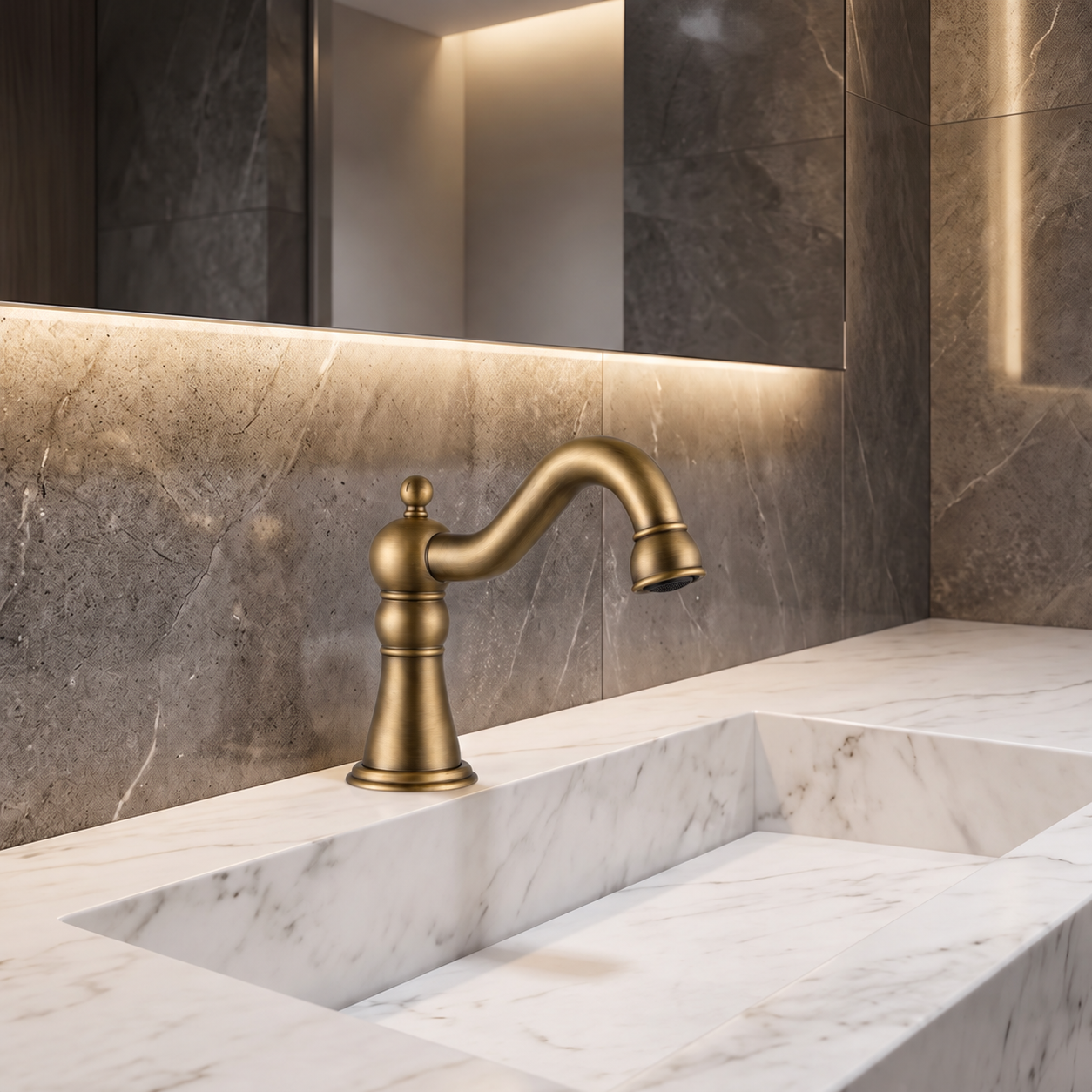 Deck-Mount
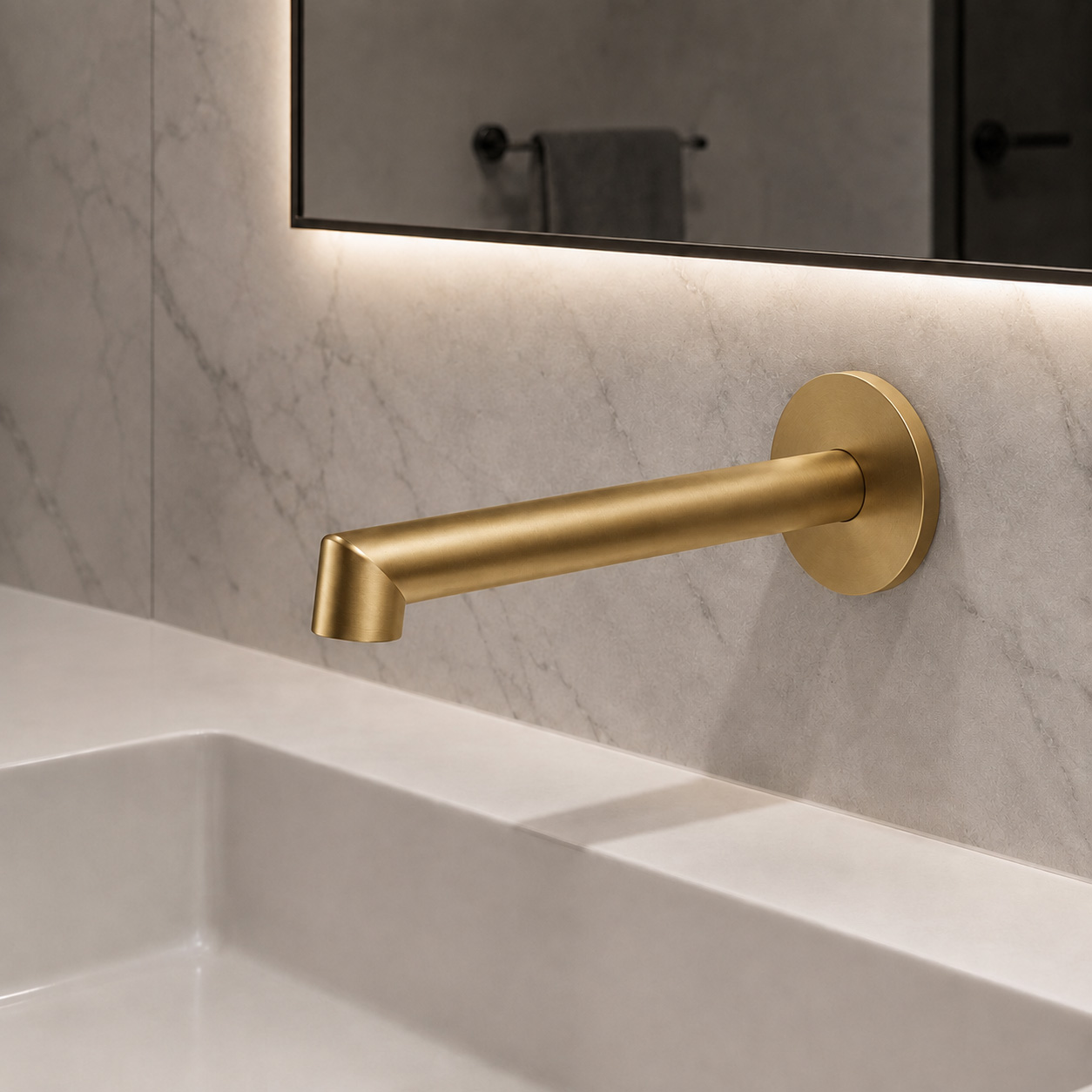 Wall-Mount
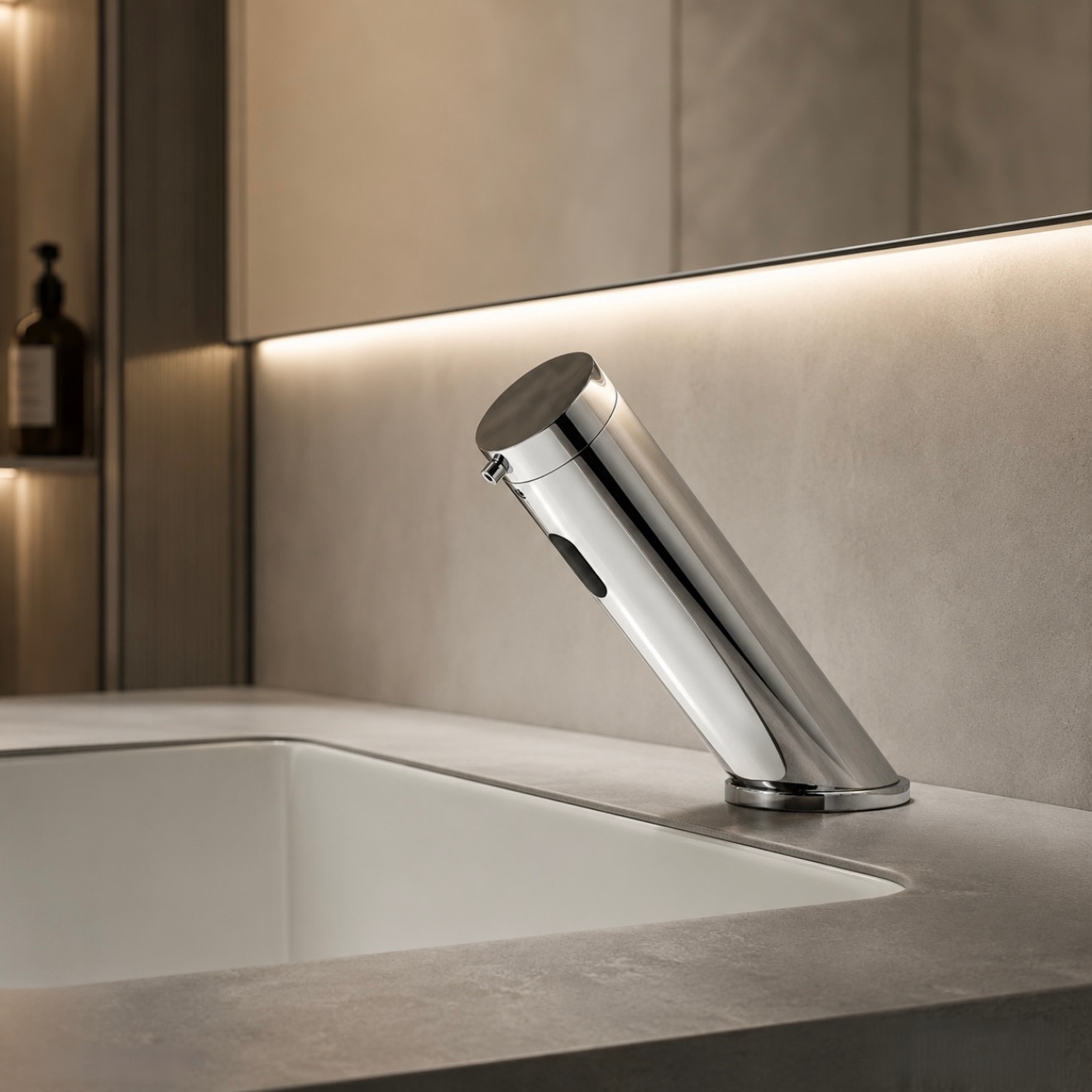 Automatic Soap
.jpg) Restroom
Restroom