Luxury Shower Panel Systems vs Full Shower Systems: Cost Breakdown
Luxury Shower Panel Systems vs Full Shower Systems: Cost Breakdown
For architects, interior designers, builders, and owners planning high-end bathrooms, the choice between a luxury shower panel system and a full shower system has a direct impact on construction cost, rough-in complexity, specification time, and long-term maintenance. Both options can deliver a premium user experience, but they are not equal in scope.
construction cost · rough-in complexity · specification time · long-term maintenance
Luxury Shower Panel Systems vs Full Shower Systems: Cost Breakdown
Luxury Shower Panel Systems vs Full Shower Systems: Cost Breakdown
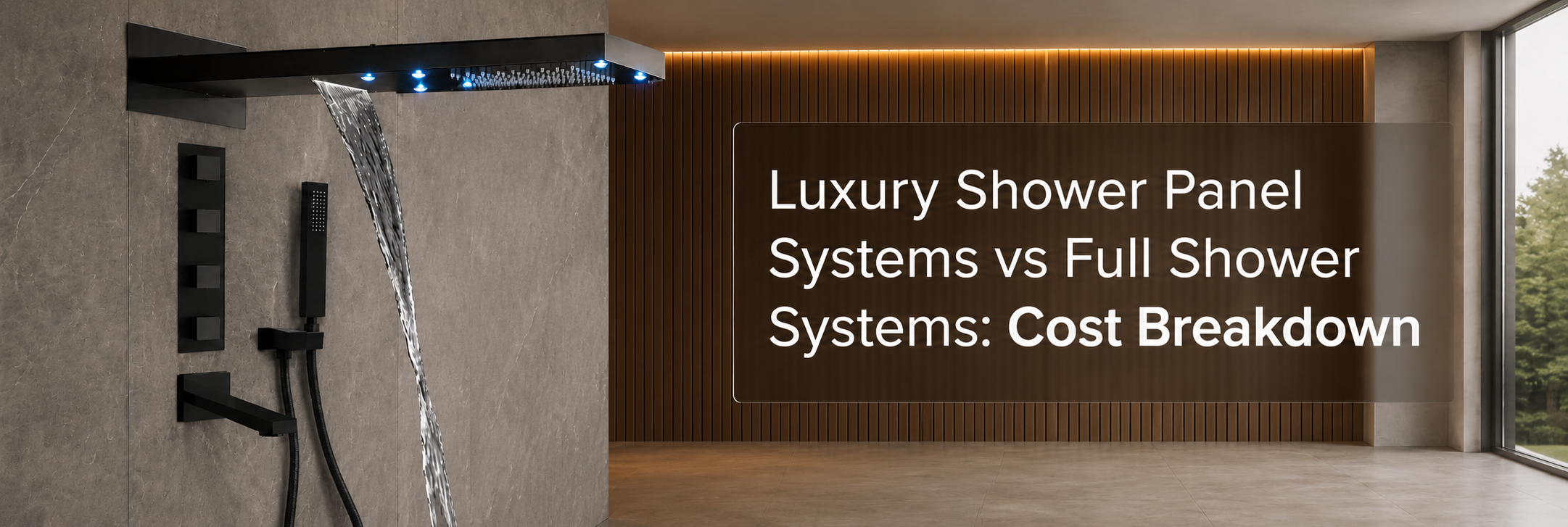
A shower panel is typically a wall-mounted, integrated fixture that combines rainfall, handheld spray, body jets, and controls into one finished unit. A full shower system is a broader assembly that may include concealed valves, thermostatic controls, ceiling or wall-mounted showerheads, body sprays, hand showers, digital controls, LED features, music functions, and custom finish coordination.
For project teams comparing luxury shower panel systems for modern bathrooms with premium full shower systems for residential and commercial projects, the best decision depends on budget, wall conditions, water-delivery goals, and the level of customization required.
water-delivery goalslevel of customization required
Quick Cost Difference
Quick Cost Difference
In general, shower panels are the more cost-efficient route because the major components are consolidated into one fixture. They are commonly selected for remodels, hotel refreshes, multifamily upgrades, and residential bathrooms where the design goal is to improve performance without opening multiple wall cavities.
Full shower systems cost more because they involve multiple components, more coordination between trades, and more detailed plumbing layout. However, they also provide greater design flexibility, a more integrated architectural look, and a stronger luxury presentation for primary suites, spa bathrooms, hospitality projects, and premium wellness environments.
National shower installation costs can vary widely depending on scope, labor, materials, demolition, permits, waterproofing, and project location. Higher-end designs rise in cost as materials, tile work, plumbing, and customization increase. This makes specification control critical for AEC teams. A fixture that appears expensive at purchase may reduce field labor, while a lower-cost product can become more expensive if it requires extensive wall modification or coordination.
When a Shower Panel System Costs Less
A shower panel system can reduce project cost because it compresses several functions into one mounted assembly. Instead of specifying and installing separate body sprays, a showerhead, a handheld outlet, individual trims, and multiple escutcheons, the designer can select one coordinated panel. This is useful for renovation projects where the schedule is tight and existing walls should remain largely intact.
For hospitality and multifamily work, the value is repeatability. A project team can standardize a panel across many rooms, simplify procurement, and reduce installation variation from unit to unit. For homeowners, a panel creates a spa-like upgrade without the full cost of a custom wet-wall rebuild.
The tradeoff is that the panel location and spray geometry are more fixed. If the project requires precise body spray placement for different user heights, a full system may perform better.
When a Full Shower System Is Worth the Higher Budget
A full shower system is better suited for projects where the shower is a design feature, not just a fixture upgrade. BathSelect’s selection of digital and smart shower systems, thermostatic shower sets, LED rain shower systems, exposed shower systems, and body-jet configurations gives AEC teams more control over layout, finish, water delivery, and user experience.
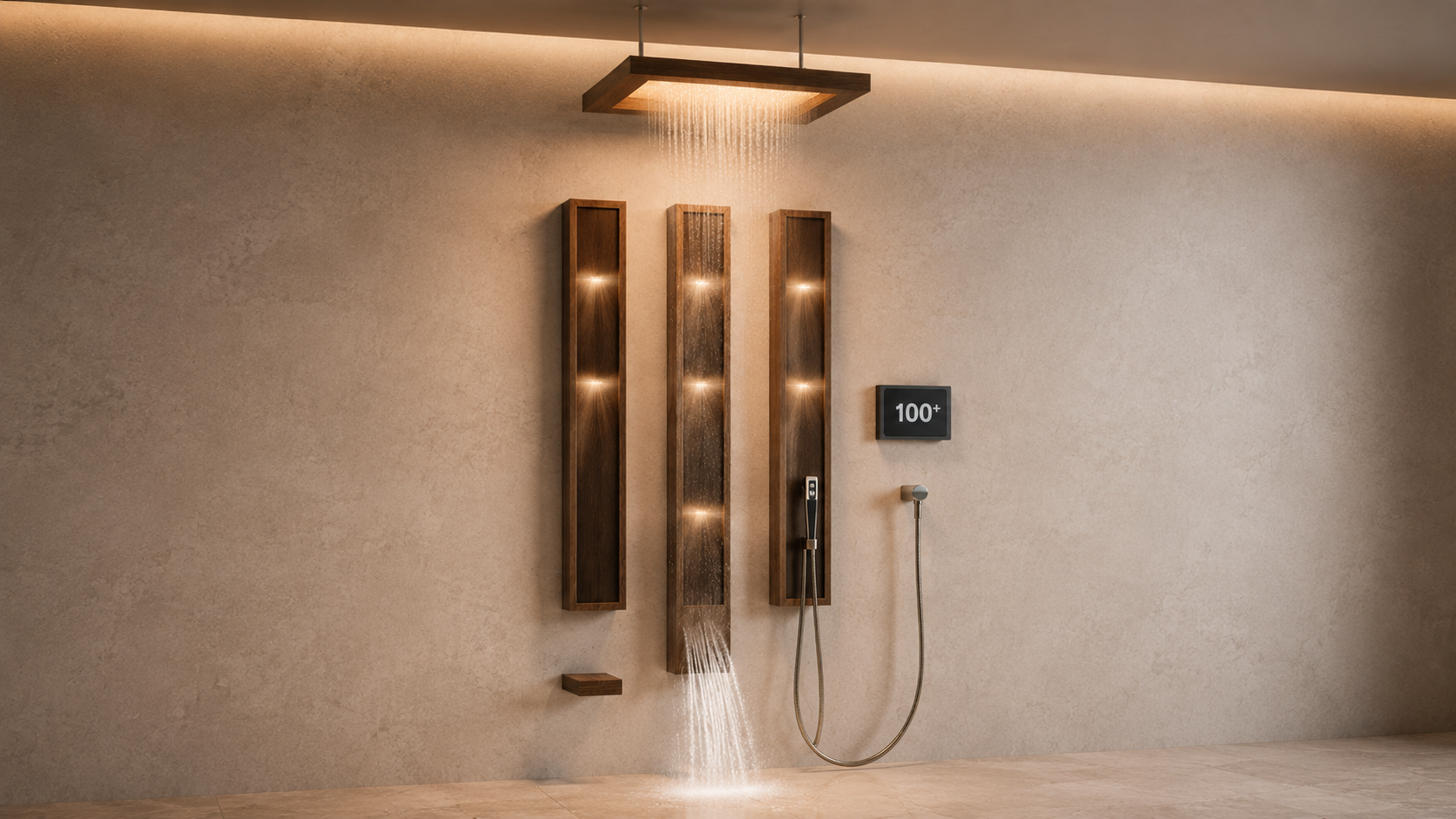
Full systems also support more advanced zoning. A ceiling rain head can be centered over a bench or standing area. Body sprays can be placed at shoulder, back, and lower-body levels. A hand shower can be located near a bench for accessibility and cleaning. Thermostatic mixing can improve temperature control, while digital controls can support a more modern wellness environment.
These features increase cost, but they also increase perceived value and design intent.
Cost Breakdown by Category
Cost Item
Luxury Shower Panel System
Full Shower System
Action
Fixture package
Usually one integrated panel with sprays and controls
Multiple components, including valve, trim, heads, hand shower, jets, and controls
Luxury Shower Panel System: Usually one integrated panel with sprays and controls
Full Shower System: Multiple components, including valve, trim, heads, hand shower, jets, and controls
Rough plumbing
Luxury Shower Panel System: Lower complexity if existing supply locations work
Full Shower System: Higher complexity due to multiple outlets and concealed routing
Wall modification
Luxury Shower Panel System: Often limited to mounting and connection points
Full Shower System: May require wall opening, waterproofing, blocking, and tile repair
Labor coordination
Luxury Shower Panel System: Plumber plus finish installer in many remodels
Full Shower System: Plumber, tile installer, general contractor, waterproofing installer, and sometimes electrician
Design flexibility
Luxury Shower Panel System: Moderate; limited to panel size, finish, and feature set
Full Shower System: High; components can be placed for custom ergonomics
Best application
Luxury Shower Panel System: Remodels, hotels, rental upgrades, and compact luxury bathrooms
Full Shower System: Custom homes, spas, resorts, wellness suites, and high-end commercial work
Planning, Plumbing, and Specification Notes
Plumbing and Code Considerations
Water flow must be reviewed early. EPA WaterSense-labeled showerheads use no more than 2.0 gallons per minute, while conventional showerhead references have historically used 2.5 gallons per minute. ICC guidance also emphasizes that lower-flow showerheads must be compatible with shower control valves so temperature stability is maintained.
This matters most in full shower systems with multiple outlets, body sprays, diverters, and thermostatic valves.
For AEC specifications, the fixture schedule should identify the number of outlets, flow assumptions, valve type, diverter function, finish, mounting condition, and maintenance access. If the project includes commercial or hospitality bathrooms, teams may also evaluate commercial automatic sensor shower systems where hygiene, water savings, and controlled operation are priorities.
Construction Cost Drivers
The biggest hidden cost in a full shower system is not always the fixture. It is often the wall assembly. Concealed valves, ceiling-mounted heads, waterproofed niches, stone slabs, imported tile, blocking, and access planning can add significant labor. Electricians may also be needed for LED, music, digital, or sensor-controlled systems.
By comparison, a panel system usually keeps the work more predictable, especially when supply lines are already located in the right area.
That said, full systems can reduce long-term replacement compromises because individual components may be serviced or updated separately. For luxury residential, hospitality, private wellness suites, and spa-style bathrooms, this level of control can justify the additional investment.
Specification Recommendation
Choose a shower panel system when the priority is a faster luxury upgrade, controlled installed cost, and simplified procurement. Choose a full shower system when the priority is custom architecture, premium user experience, exact spray placement, and higher design value.
For renovation-heavy work, exposed shower systems with easier maintenance access may also be worth comparing because they can reduce concealed-wall complexity while still delivering a coordinated design.
For AEC teams working in BIM and specification workflows, BathSelect also provides Revit family resources for fixture coordination, which can support better planning during design development and construction documentation.
Final Verdict
A luxury shower panel system is the better cost-control option for remodels, repeatable room packages, and projects where the wall cavity should remain simple. A full shower system is the better specification for custom spaces where the shower experience is central to the design.
The right choice is not only about fixture price. It is about installed cost, coordination risk, water performance, maintenance access, and the level of architectural finish expected by the owner.
For a balanced design approach, compare panel systems first for budget-sensitive upgrades, then evaluate full systems where the room program calls for a signature shower experience. BathSelect offers both paths, allowing designers, contractors, and owners to align fixture selection with construction scope, budget, and long-term performance goals.
A luxury shower panel system is the better cost-control option for remodels, repeatable room packages, and projects where the wall cavity should remain simple. A full shower system is the better specification for custom spaces where the shower experience is central to the design.
The right choice is not only about fixture price. It is about installed cost, coordination risk, water performance, maintenance access, and the level of architectural finish expected by the owner.
For a balanced design approach, compare panel systems first for budget-sensitive upgrades, then evaluate full systems where the room program calls for a signature shower experience. BathSelect offers both paths, allowing designers, contractors, and owners to align fixture selection with construction scope, budget, and long-term performance goals.