Do kitchen faucets comply with ASME A112.18.1 performance standards?
ASME A112.18.1 establishes dimensional, hydraulic, and mechanical durability criteria for plumbing fittings. Compliance ensures leak resistance, pressure tolerance, and operational reliability. During specification review, confirm certification labeling and verify compatibility with supply pressure ranges and fixture mounting requirements to prevent field failures or inspection rejection.
How does NSF/ANSI 61 certification impact potable water safety?
NSF/ANSI 61 validates that wetted materials do not leach harmful contaminants into drinking water. This certification evaluates internal surfaces, coatings, and alloy composition. For compliance-sensitive projects, ensure all water-contact components meet NSF limits to avoid long-term exposure risks and regulatory noncompliance.
What flow rate considerations affect hydraulic performance?
Flow rate selection influences user usability, splash behavior, and water efficiency. Engineering review should confirm aerator type, pressure compensation performance, and consistent discharge across supply pressure variations. Incorrect flow specification can result in poor performance or excessive consumption.
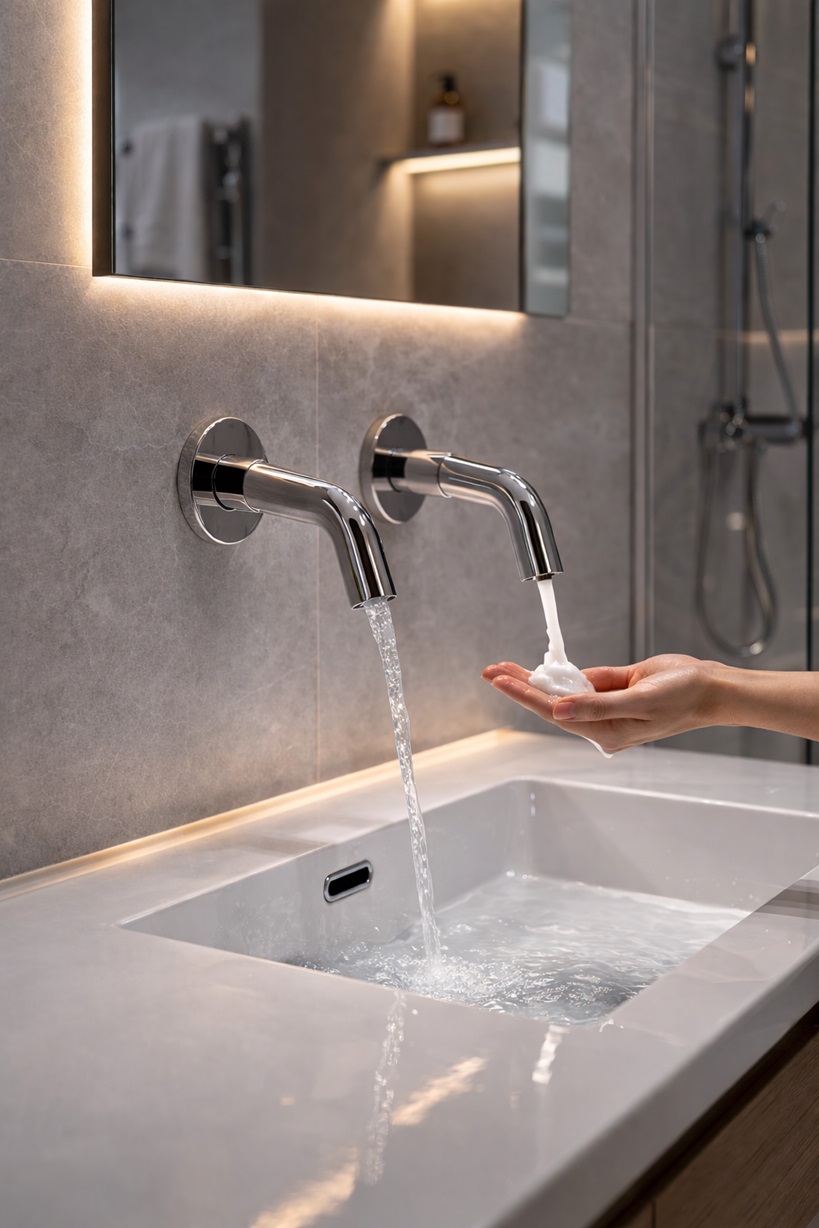
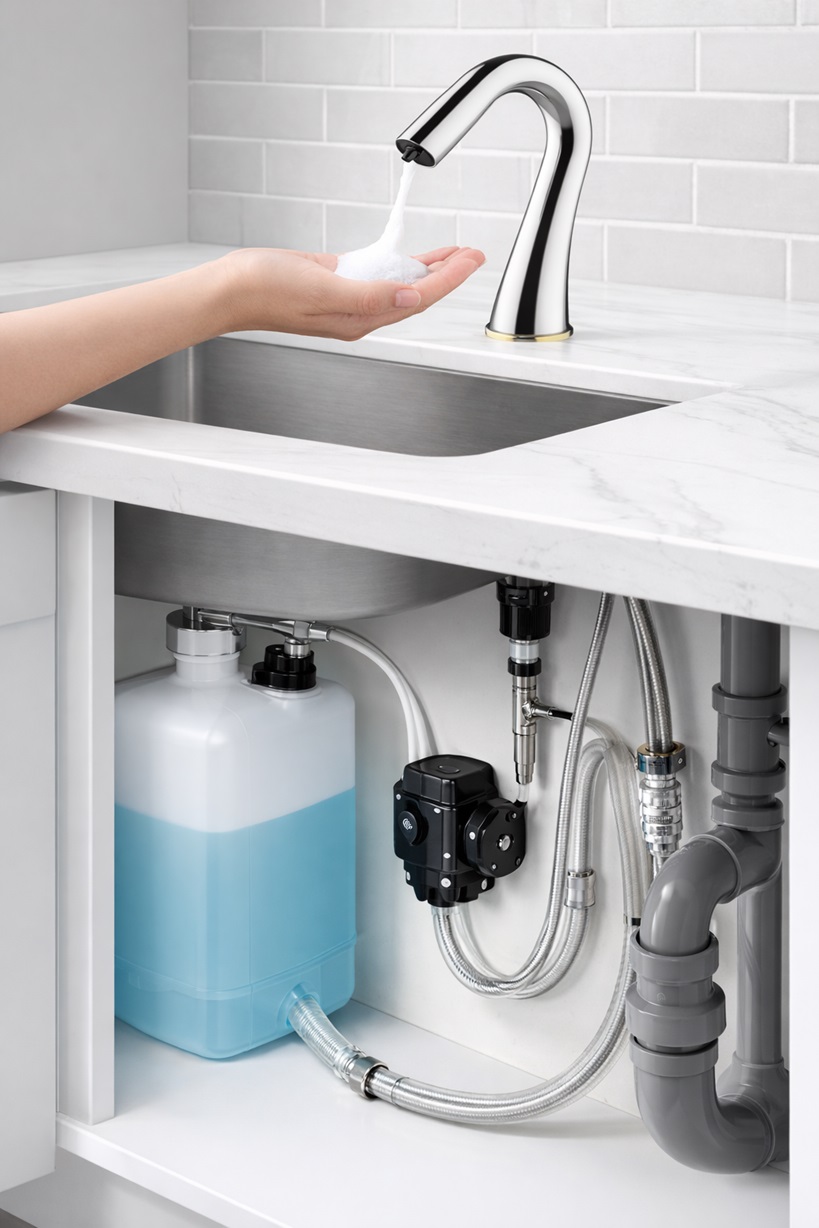
How do soap dispensing integrations affect plumbing fixture specification?
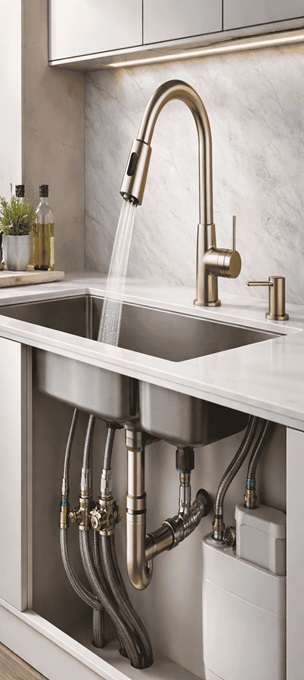
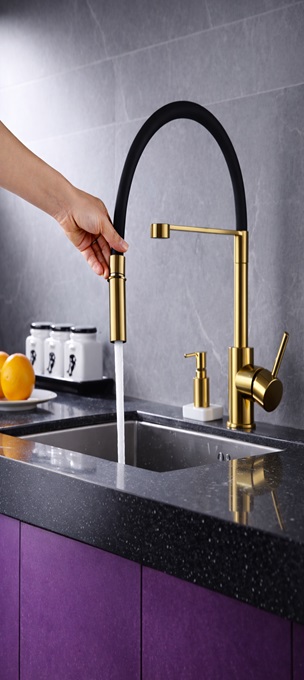
Integrated dispensers require coordination with countertop drilling, reservoir clearance, and installation accessibility. Engineering documentation should confirm dimensional compatibility, refill access, and serviceability to ensure proper installation without compromising fixture integrity or maintenance access.
How do low-lead requirements affect material selection?
Low-lead compliance limits lead content in wetted materials. This ensures safe potable water delivery and regulatory compliance. Specification teams should verify certified alloy composition and material declarations to ensure installations meet federal and local plumbing safety requirements.
What internal components determine long-term reliability?
Cartridge assemblies, sealing elements, and internal waterways directly affect durability and leak resistance. Engineering-grade fixtures use precision-manufactured components to maintain performance stability over extended operational cycles.
How does installation affect compliance and performance?
Installation alignment, sealing, and supply connection integrity directly affect hydraulic performance. Specification documents must coordinate fixture dimensions, mounting surfaces, and supply compatibility to ensure compliant installation and prevent operational deficiencies.
What maintenance planning is required for long-term operation?
Engineering specifications should allow access to serviceable components such as cartridges and aerators. Planned maintenance access reduces lifecycle cost and prevents complete fixture replacement during routine servicing.
Do these fixtures comply with IPC and UPC plumbing codes?
IPC and UPC codes regulate fixture performance, material safety, and installation practices. Compliance ensures plumbing systems meet regulatory standards and pass inspection without modification.