Frequently Asked Questions Urinals & Auto Toilet Flush
BathSelect — Urinals in Commercial Specs
Urinal types in AEC specs: what are the practical differences between washdown, siphonic, and waterless?
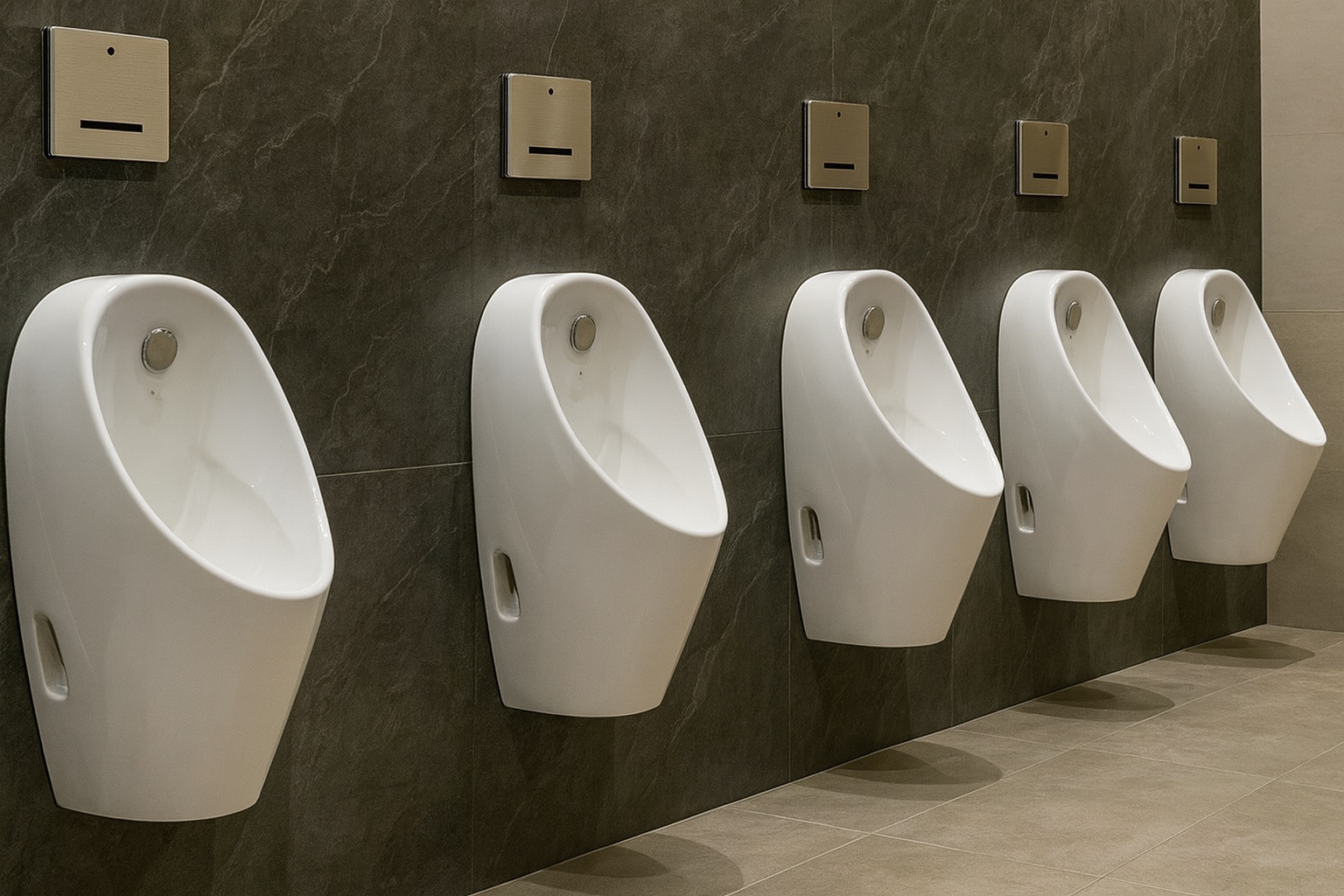
Washdown urinals rely on bowl geometry and rinse distribution to move waste to the trapway. Siphonic designs use a stronger siphon action but often demand tighter rough in coordination and supply stability. Waterless urinals eliminate flush water but introduce cartridge or seal-liquid maintenance, odor control procedures, and strict drain line slope and periodic line service requirements. For most commercial restrooms using flushometers, washdown and high-efficiency washdown dominate because they are straightforward to commission and maintain.
What should be documented for urinal rough in and carrier coordination?
Confirm fixture outlet height, carrier type, wall thickness build up, and finished wall tolerances. In drawings, coordinate the waste centerline, supply stub-out, and sensor viewing angle (if an auto flush retrofit is used). Field issues usually come from carrier misalignment, flushometer/sensor interference with partitions, and insufficient service clearance around the valve body.
How do “high-efficiency” urinal flow rates affect line carry and drain design?
Lower flush volumes reduce water in the drain, which can increase the risk of poor line carry in long or flat runs. Mitigation is a plumbing design task: confirm slope, avoid unnecessary offsets, and follow code and engineering guidance for low-flow systems in the building. In high traffic facilities, consistent flush performance and correct flush volume matching to the fixture are more important than chasing the absolute minimum flow.
What does “spray rinse coverage” mean, and why does it matter for housekeeping?
Rinse coverage is how well the flush water wets the bowl surface. Poor coverage increases odor, staining, and manual cleaning time. In submittals, review the urinal’s distribution pattern and pair it with a compatible flushometer volume and timing so the rinse is effective without splash.
BathSelect — Urinal Auto-Flush Valves (Sensor Flushometers)
Auto-flush for urinals: what is the control sequence and what triggers the flush?
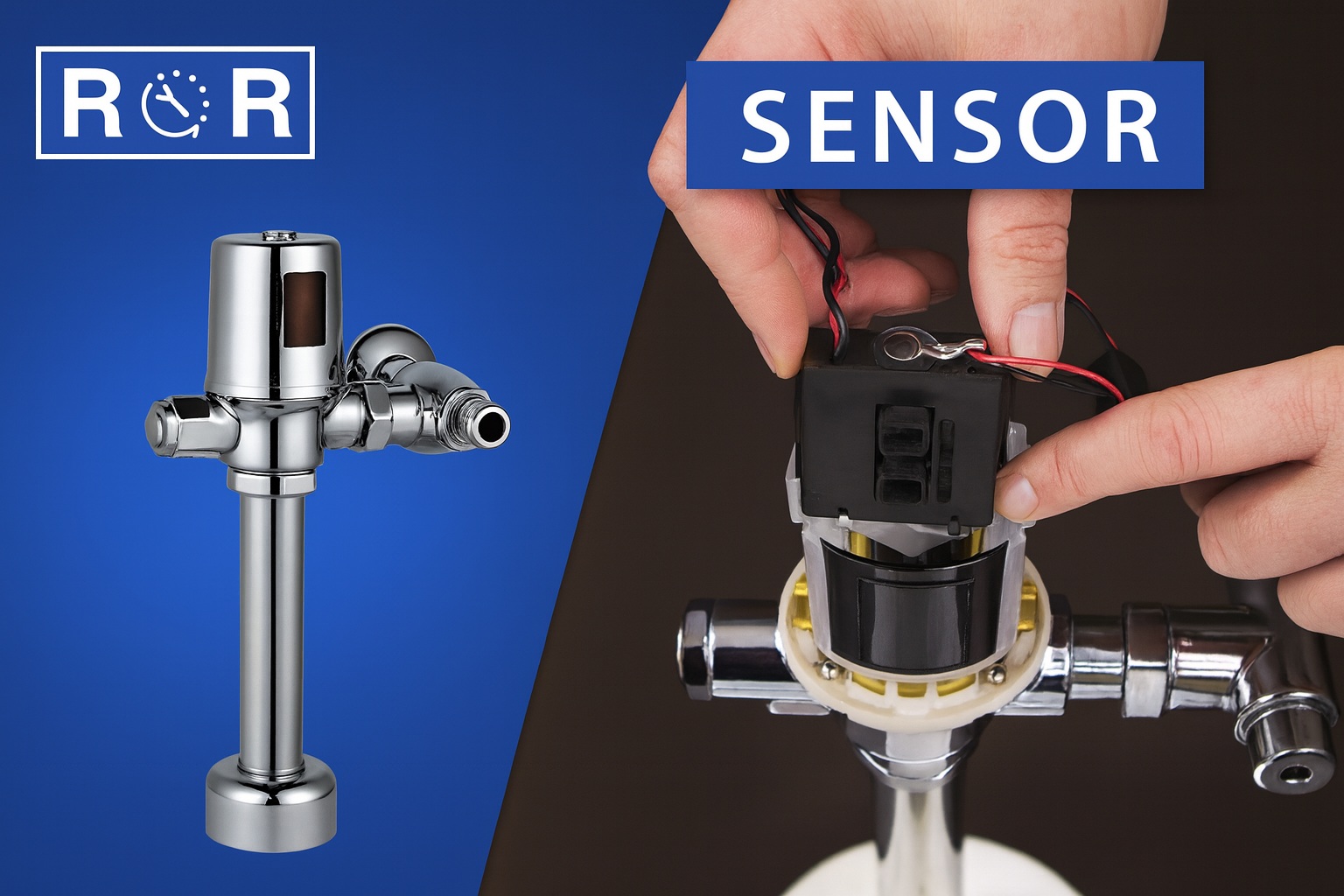
Most sensor flush systems use an occupancy detect and release sequence: the sensor confirms presence, then initiates a flush after the user steps away and a short delay expires. This prevents nuisance flushing during use and supports hygiene by removing the need for manual actuation.
How do sensor ranges and “false flush” protections get specified?
The key controls are detection range, time delay, and lockout logic. In busy restrooms, sensors must ignore pass-by traffic, reflections from polished surfaces, and stall door motion. For AEC teams, request adjustability details (range and delay), recommended mounting height, and any commissioning procedure that locks settings after setup.
What is the difference between diaphragm and piston flushometer internals for auto-flush applications?
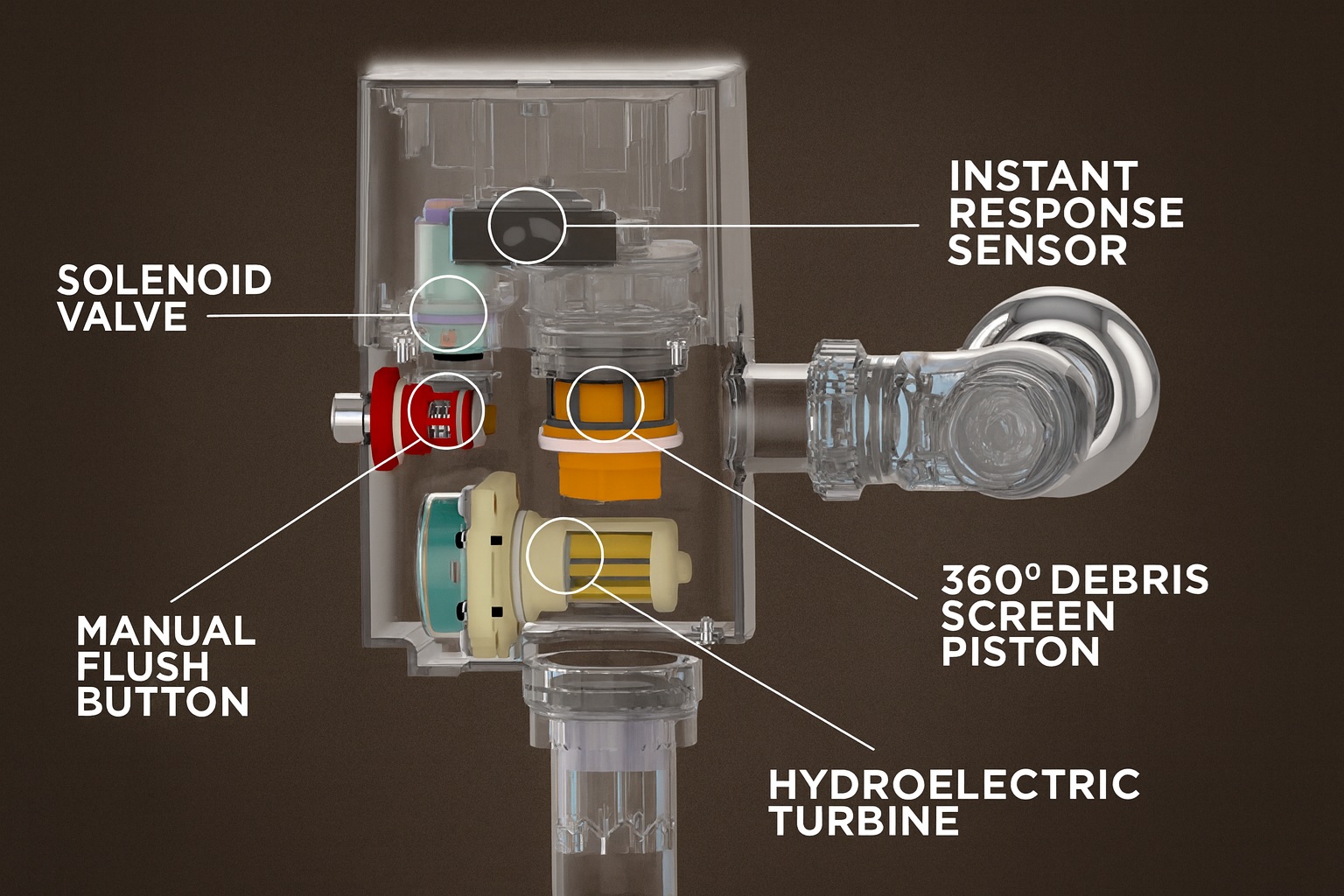
Both deliver a metered flush, but they behave differently with debris sensitivity and service styles. Diaphragms are common and typically serviced with rebuild kits; pistons can be robust in certain water quality conditions. The best spec language is performance-based: require stable metering at your site pressure range, serviceable internals, and readily available repair parts.
What is “courtesy flush” and when should it be enabled or disabled?
Courtesy flush is an optional mid-cycle flush during extended occupancy to reduce odor. It can be useful in high-traffic facilities but can also increase water use and create unwanted flushing if detection is unstable. If you allow it, define the timeout and ensure it cannot repeatedly trigger during one visit.
BathSelect — Auto-Flush Toilet Valves (Toilets & Water Closets)
Auto-flush toilets: what should AEC teams verify first before selecting a sensor flush valve?
Confirm the toilet type (flushometer vs tank), the required flush volume for that specific bowl, and the site’s static and dynamic pressure. A sensor valve cannot “fix” a mismatch between bowl design and flush volume. In submittals, require bowl compatibility and the correct gpf pairing.
What does “manual override” mean on an auto-flush valve and why is it important?
Manual override allows a user or maintenance staff to trigger a flush when sensor behavior is restricted (power issues, service mode, or special cleaning). In commercial restrooms, it supports resilience and reduces downtime. Specify that manual flush must be accessible but protected from vandalism.
How do you reduce double-flush and no-flush complaints in high traffic restrooms?
Specify adjustable delay and lockout timing, confirm sensor placement to avoid cross-traffic, and require commissioning steps after partitions and finishes are installed. Many “sensor problems” are actually layout problems: reflective partitions, mirrored walls, and tight stall geometry can push sensors outside their stable detection envelope.
What should be included in O&M documentation for auto-flush toilet valves?
Include sensor adjustment ranges, battery/service intervals (if battery), rebuild kit identifiers for valve internals, troubleshooting steps for false trigger vs no activation, and a field reset procedure. Facilities teams need a repeatable method, not guesswork.
BathSelect — Power, Wiring & Reliability for Sensor Flush
Battery vs hardwired vs hybrid power: what should be specified for commercial installations?
Battery power simplifies retrofit work but requires a planned replacement program. Hardwired power reduces ongoing battery labor but needs routing, protection, and accessible transformers. Hybrid designs can keep the device operational during short outages. In AEC specs, define the power strategy per project type and require accessible service locations for power modules.
What protections help electronics survive wet cleaning practices?
Require moisture-resistant housings, sealed sensor windows, and cable routing that avoids drip loops into electronics. Also specify cleaning compatibility and discourage direct high-pressure spray at sensors and seams. Reliability is strongly influenced by housekeeping habits and installation detailing.
What are the most common failure points and how can they be designed out?
Common issues are clogged filters/diaphragms from debris, unstable sensing due to geometry, and power/service access problems. Design out failures by specifying strainers where recommended, ensuring service clearances, and coordinating sensor sightlines with partitions, mirrors, and traffic paths.
BathSelect — Compliance, Water Use & Commissioning
How should water efficiency be addressed without over-promising certification claims?
Treat flow and flush volumes as verifiable submittal attributes, not marketing claims. Require the exact flush volume options, compatibility statements for the bowl/urinal, and jurisdiction-required listings per the installed model. This keeps the spec defensible and avoids rework during inspection.
What should be included in a commissioning checklist for sensor flush valves?
Confirm final sensor alignment after partitions and mirrors are installed, set range and delay to avoid cross-traffic, test repeated-use cycles, validate manual override operation, and document settings per room. For multi-restroom projects, standardize settings by restroom “type” to simplify maintenance.
How do you write a clean basis-of-design note for auto-flush systems?
State: compatible with flushometer fixtures, adjustable sensing and delay, serviceable valve internals, defined power approach, and documented field settings and O&M. Avoid stating specific sensor technologies unless the exact model documentation confirms it.
Explore BathSelect Urinal & Auto-Flush Solutions
|
|
|