Frequently Asked Questions Shower Systems & Shower Heads
BathSelect Showers — Shower Systems
Complete BathSelect shower system—what does a typical set include for specification?
A “complete” system typically combines the trim (visible controls), a rough in valve body (in wall mixing and flow control), one or more outlets (rain head, hand shower, body sprays, tub spout), and the distribution hardware (diverter or transfer valve). For AEC submittals, break the package into line items: rough in valve model, trim kit model, diverter model (2 way, 3 way, or shared), shower head model and size, arm or ceiling drop, hand shower set (hose length, elbow supply, wall bar), and any body spray count with rough in tees. Confirm port sizes, connection type, and whether the valve is universal or model specific to the trim.
System layout—how do you engineer multi function showers to avoid pressure drop and weak outlets?
Performance depends on total flow demand versus available dynamic pressure. A multi outlet design should be planned with (1) expected simultaneous operation rules (one outlet at a time vs multiple), (2) pressure loss through the valve and diverter, (3) pipe sizing from riser to valve and from valve to outlets, and (4) head loss across spray devices. If simultaneous outlets are desired, specify a valve and diverter architecture that supports combined flow, and verify the building’s pressure regulation strategy (PRV zones, booster set, or static pressure limits). Use balanced branch lengths for body sprays to reduce uneven distribution and specify check valves where needed to prevent cross flow.
Thermostatic shower system—what are the key technical checks for AEC documents?
A thermostatic valve maintains a set outlet temperature by modulating hot and cold in response to inlet pressure and temperature changes. For code and safety, confirm the valve type and the applicable performance standard required by the jurisdiction and project type (commonly ASSE 1016 for shower valves, and sometimes ASSE 1069 for temperature limiting devices). Also confirm the maximum temperature limit strategy (integral limit stop or separate limiting device), commissioning method, service access for the cartridge, and required inlet conditions for stable regulation at low flow rates.
Pressure balanced valve—how is it different from thermostatic and when is it appropriate?
Pressure balance valves reduce sudden temperature swings by keeping the hot cold pressure ratio stable, but they do not actively control to a specific temperature setpoint like thermostatic valves. In multi family and hospitality, pressure balance is often used where simple operation and code compliance are priorities, but thermostatic control is preferred when users expect repeatable temperature and better stability during larger inlet temperature variation. Specify pressure balance valves with clear max temperature limit requirements and verify building hot water delivery temperature strategy to reduce scald risk.
Multi function configuration—how do diverters and transfer valves affect piping and user experience?
A diverter typically shares a mixed water feed and routes it to one outlet at a time, while a transfer valve may allow combinations depending on internal porting. For design coordination, define whether the project needs discrete outlet selection, shared operation, or sequencing. This impacts rough in placement, outlet mapping on drawings, and pressure loss. For multi outlet showers, also define the intended “default” outlet on startup and how the valve behaves if the user changes outlets under flow.
Digital or advanced controls—what is realistic to specify without overpromising features?
If the basis of design is not a fully digital platform, keep the language grounded: specify “thermostatic control” or “pressure balance” unless the selected SKU explicitly provides electronic control, touch interface, or programmable presets. If advanced controls are required, treat them as performance criteria: stable outlet temperature control, defined max temperature cap, defined run time limits, and documented commissioning procedure. Require model specific documentation for any claimed feature such as presets, remote start, or analytics.
BathSelect Showers — Shower Heads & Panels
Shower head selection—what parameters matter most for performance and compliance?
Specify flow rate (GPM at 80 psi rating condition), spray face size, nozzle type (silicone easy clean vs fixed), material (solid brass, stainless, or engineered polymer), and connection standard (commonly 1/2 inch NPT in US installations). Confirm whether the head is pressure compensating and how it performs at the building’s expected dynamic pressure. For regulated markets, align flow to current requirements (often 2.5 GPM max federally in the US, with many jurisdictions at 1.8 GPM) and document the rated flow on the cut sheet.
Rainfall shower heads—how do you prevent “weak rain” complaints in hotels and multifamily?
Large rain heads increase perceived coverage but can feel underpowered if the available dynamic pressure and flow are not matched to the spray geometry. The technical solution is to coordinate (1) head size with allowed GPM, (2) pressure compensation, and (3) supply pipe sizing to reduce head loss. For ceiling mounted rain heads, verify drop ear support and pipe rigidity to prevent movement. If the design includes a very large head under a low flow limit, consider specifying a spray face engineered for higher velocity at lower flow, rather than assuming size alone creates a luxury feel.
Waterfall outlets—what hydraulic considerations affect the sheet of water?
Waterfall outlets rely on internal weirs and outlet geometry to form a consistent sheet. They are sensitive to debris and pressure variation. Specify upstream filtration or strainers where recommended, confirm the allowable pressure range, and ensure the outlet is installed level so the sheet does not skew. For multi outlet systems, define whether the waterfall can run simultaneously with other outlets without collapsing the sheet due to flow sharing.
Materials and finishes—what should AEC teams document for durability and cleaning?
Document the base material (brass or stainless for wetted durability), the finish technology (plated, powder coated, or PVD style where explicitly stated), and the approved cleaning agents. For hospitality, define a cleaning compatibility note so the finish is not damaged by aggressive disinfectants. If chlorine exposure or coastal environments are expected, specify corrosion resistant materials and request finish testing documentation if available for the selected SKU.
Adjustable spray patterns—what is the engineering tradeoff versus single pattern heads?
Multi pattern heads add internal switching components that can reduce open area and increase pressure loss. They can be valuable for user choice, but in low flow installations they may reduce perceived performance. If adjustable patterns are required, specify minimum performance at the regulated flow rate and confirm the selector is robust under hard water conditions. For maintenance planning, prefer easy clean nozzles and accessible service parts where available.
Shower panels—what should be coordinated to avoid field conflicts?
Panels consolidate multiple features, but they require precise rough in alignment, mounting support, and service strategy. Confirm the mounting method (brackets, anchors, or structural backing), in wall supply connection location, and clearance behind the panel for hoses and fittings. If the panel includes body jets, verify the internal distribution does not require separate rough in for each jet. For AEC drawings, call out mounting height range, supply centerline, and access for any integrated mixing cartridge or diverter.
BathSelect Showers — Rainfall & Waterfall Systems
Ceiling mounted rainfall—what framing and waterproofing details are most important?
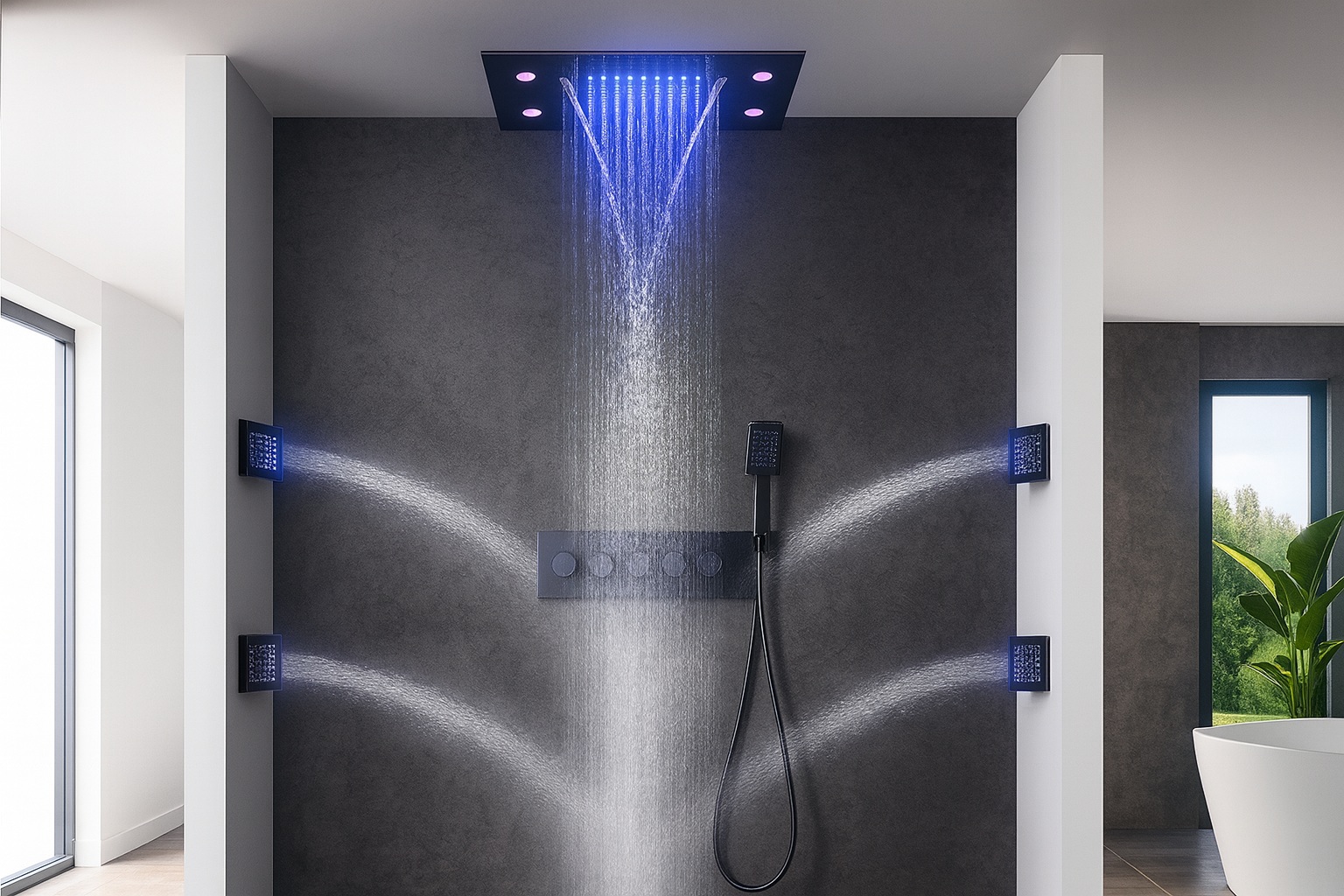
Ceiling mounted heads require solid backing or a properly supported drop ear elbow to prevent movement and leaks. Coordinate ceiling cavity depth, vapor barrier continuity, and waterproofing at penetrations. Where the design uses a large flush ceiling panel, detail the trim ring interface and ensure the ceiling substrate can support the panel weight without deflection. Always specify a service approach for the connection point above the finished ceiling where feasible.
Dual rainfall and waterfall panels—what should be verified before specifying simultaneous operation?
If the panel is designed for one mode at a time, the valve and diverter can be simpler. If the intent is dual mode operation, verify the panel’s internal porting and total flow demand so the mixing valve and diverter are not undersized. Define the expected combined flow and confirm the building hot water capacity and recirculation strategy can support peak demand without temperature drop.
LED integration—what electrical and risk management items should be documented?
If an outlet includes LEDs, specify the power type (low voltage DC versus mains via driver), driver location, and access for service. Confirm moisture protection approach for any power connections in wet zones and define that electrical work must comply with local code. Avoid assuming IP ratings unless stated for the exact SKU. For hospitality, define replacement strategy for drivers and LED modules to reduce downtime.
Recessed rainfall systems—how do you reduce leak risk and condensation issues?
Recessed assemblies increase penetrations and interfaces at the ceiling plane. Detail waterproofing transitions, provide positive drainage paths where needed, and avoid trapping condensation around metal housings. Specify compatible sealants and gaskets and require pressure testing before closing the ceiling. Consider access panels in adjacent dry areas for inspection and service when the architecture allows.
BathSelect Showers — Mixers & Diverters
Shower mixer valves—what should be shown on drawings and schedules?
Identify valve type (pressure balance or thermostatic), trim style, and the required rough in body. Include inlet and outlet connection sizes, service access requirements, and the outlet mapping (which port feeds which device). For multi outlet designs, add a diverter or transfer valve schedule showing positions and whether combined flows are allowed. Coordination improves when each outlet is labeled consistently across plans, elevations, and the control trim.
Thermostatic mixer behavior—what commissioning steps should be planned?
Thermostatic valves often require temperature limit setting during commissioning. Define the maximum allowable outlet temperature by occupancy type and confirm the method to set the limit stop. For facilities, require that the final setting and procedure are recorded in closeout documentation. Also confirm hot water delivery temperature and recirculation setpoints so the valve can operate within its intended inlet range.
2 way, 3 way, and multi way diverters—how do you choose the right architecture?
Choose based on outlet count and desired combinations. If only one outlet runs at a time, a simpler diverter may suffice. If multiple outlets must run together, the valve body and diverter must support the combined flow without excessive pressure drop. Confirm the manufacturer’s allowable outlet combinations, not just the number of ports. In AEC specs, define required functionality clearly: “independent outlet selection” versus “shared outlet operation.”
Concealed mixer installation—what are the most common failure points in the field?
Common issues include incorrect rough in depth leading to misfit trim, misaligned valve orientation, inadequate blocking, and lack of service access for cartridges. Prevent this by calling out rough in depth range, finished wall thickness allowances, and test fit requirements before tile is complete. Detail that strainers and flushing must occur before final trim installation to protect cartridges and diverters from debris.
BathSelect Showers — Body Sprays & Spa Jets
Body spray design—how do you keep multiple jets balanced and consistent?
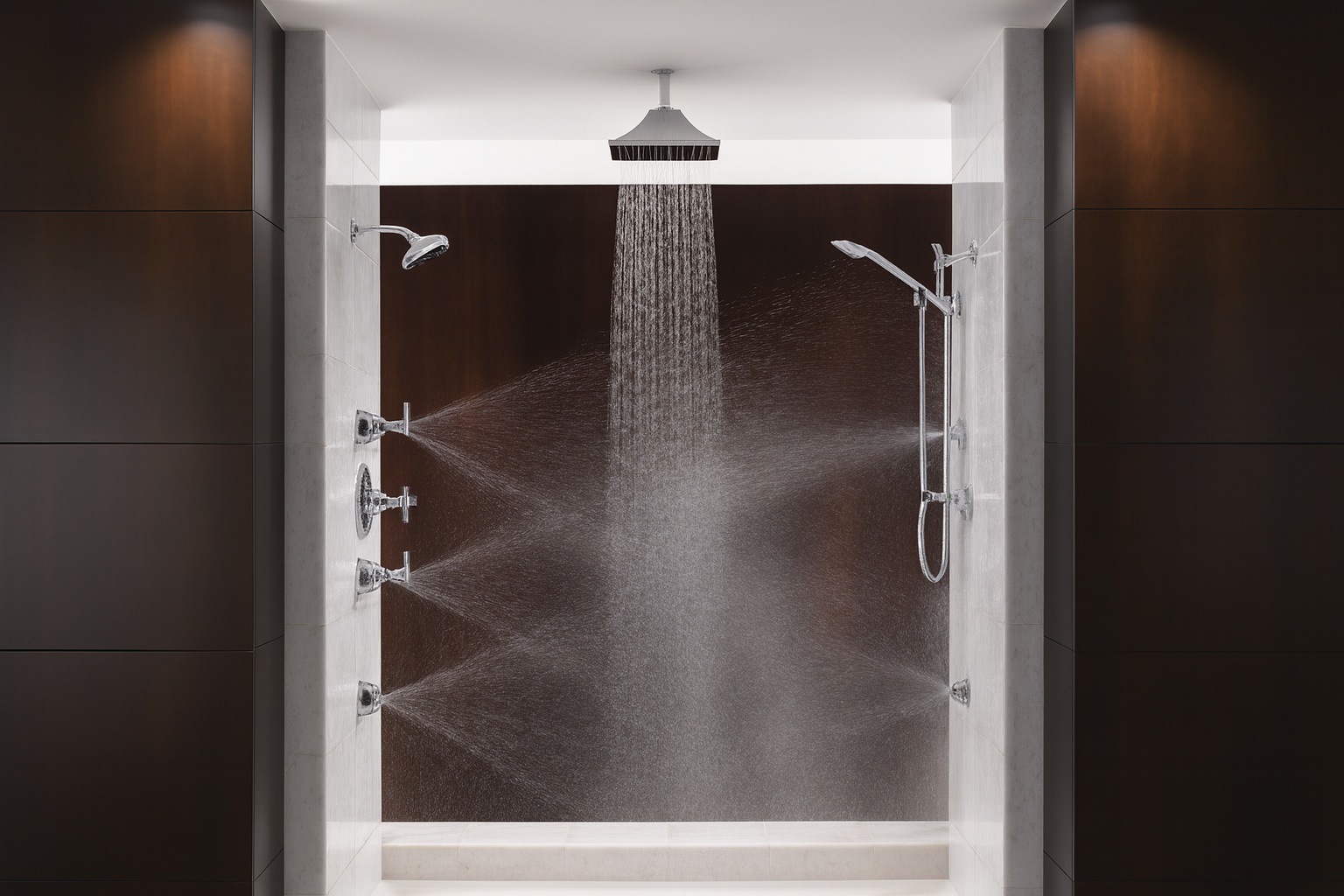
Balance comes from symmetrical piping, equal branch lengths, and consistent fittings to each jet. Use adequately sized headers, minimize sharp turns, and consider pressure balancing across branches. If jets are adjustable, ensure the wall rough in allows the correct orientation and that escutcheons seal properly to the waterproofing system. For multi jet arrays, specify the intended jet count and vertical spacing on elevations so the plumbing rough in matches the design intent.
Flow budgeting—how do you avoid exceeding code limits with multiple sprays?
Define total allowed flow for the shower compartment per local code and project policy, then allocate flow across outlets. If the valve allows simultaneous outlets, the design can exceed targets quickly. Specify diverter logic (one outlet at a time) if the project must stay within a strict flow cap. For jurisdictions with specific rules for body sprays, document compliance using model specific flow data rather than assumptions.
Maintenance—what keeps jets from clogging and losing pattern definition?
Specify strainers where recommended, flush the lines before installing spray faces, and use easy clean nozzle materials when available. In hard water regions, include a descaling maintenance plan in the O and M package. For serviceability, prefer jets with replaceable spray inserts or accessible internals so a clogged unit does not require opening the wall.
BathSelect Showers — Hand Showers & Slide Bars
Hand shower assemblies—what should be specified beyond “hand shower included”?
Define hose length, hose material, wall supply elbow type, check valve or vacuum breaker requirement per code, and bracket or slide bar mounting. For hotels and accessible baths, specify a slide bar with a reachable height range and a secure holder that tolerates repeated use. Confirm the hand shower flow rate and spray modes at the regulated flow limit to avoid user complaints.
Slide bars—what coordination issues matter for blocking and waterproofing?
Slide bars require solid backing and precise anchor placement. Coordinate structural blocking early and detail waterproofing at fasteners. Specify stainless fasteners where appropriate and include a sealing method compatible with the wall system. For ADA related layouts, coordinate mounting heights and reach ranges with the design team and local requirements.
BathSelect Showers — Installation & Compatibility
Rough in valves—what information should be verified before wall close up?
Confirm valve depth range, finished wall thickness allowance, port orientation, and whether the trim requires a specific rotational alignment. Verify the diverter mapping matches the outlet plan and confirm test caps are used during pressure testing. Require flushing procedures before installing cartridges and spray devices. For quality control, include a rough in inspection checkpoint in the construction schedule.
Water pressure and performance—what ranges should be documented and how do you mitigate low pressure?
Document expected static and dynamic pressure at the fixture based on the building distribution and PRV zoning. If pressure is low, prioritize pressure compensating outlets and reduce unnecessary pressure loss by upsizing critical runs and minimizing restrictive fittings. If a multi outlet system is planned, define whether outlets are sequential rather than simultaneous to keep performance acceptable under typical dynamic conditions.
Compatibility with common US plumbing standards—what should specifiers look for?
Confirm connection standards (commonly 1/2 inch NPT for shower arms and elbows, and standard valve ports), and verify that any required listings are shown on model specific documentation. Avoid listing certifications globally unless documented for the exact SKU. In the spec, require submittals that include cut sheets, installation instructions, and any jurisdictional listings needed for approval.
BathSelect Showers — Safety, Certification & Performance
Anti scald safety—what should be specified for valves and temperature limits?
Specify a maximum outlet temperature requirement and require that the valve includes a temperature limit setting method. In higher risk occupancies, consider thermostatic control with a defined limiting strategy and documented commissioning. Also coordinate domestic hot water storage and distribution temperatures with the mixing strategy so the shower valve operates predictably.
Flow rate compliance—how do you keep heads, hand showers, and body sprays aligned with local rules?
Use model specific rated flow data for each outlet and document the design intent: maximum flow per outlet and maximum combined flow when applicable. If the diverter allows simultaneous operation, confirm combined flow does not exceed the project’s target. Where a strict limit is required, specify diverter logic that prevents combined outlets or specify a flow limiting approach that is documented for the selected assembly.
Certification language—how should it be written to avoid submittal risk?
Write certification requirements as acceptance criteria tied to documentation: “Provide model specific listing documentation as required by jurisdiction.” Do not claim cUPC, ASME, CSA, NSF, or WaterSense unless the selected BathSelect SKU explicitly shows it. This keeps specs enforceable and reduces change orders during permitting.
BathSelect Showers — Commercial & Hospitality Use
Commercial durability—what construction details matter most for high turnover rooms?
Prioritize solid metal trim, robust cartridges, and finishes that tolerate frequent cleaning. Define serviceability: cartridge replacement access, standardized parts across room types, and clear troubleshooting steps. For hotels, also coordinate acoustic performance by avoiding water hammer conditions and ensuring stable pressure regulation.
Maintenance planning—what should be included in closeout documents for shower systems?
Include valve and diverter exploded parts lists, recommended spares, cleaning guidance for nozzles and finishes, and a descaling plan for hard water regions. Require as built outlet mapping so maintenance teams know which control position feeds which outlet. Add a commissioning record for temperature limit settings and any flow limit devices installed.
Explore BathSelect Shower Collections
|
|
|