In commercial restroom engineering, selecting between deck mount and wall mount sensor faucets is a systems-level specification decision. This choice influences hydraulic stability, infection control strategy, ADA compliance, construction sequencing, and long-term lifecycle cost modeling.
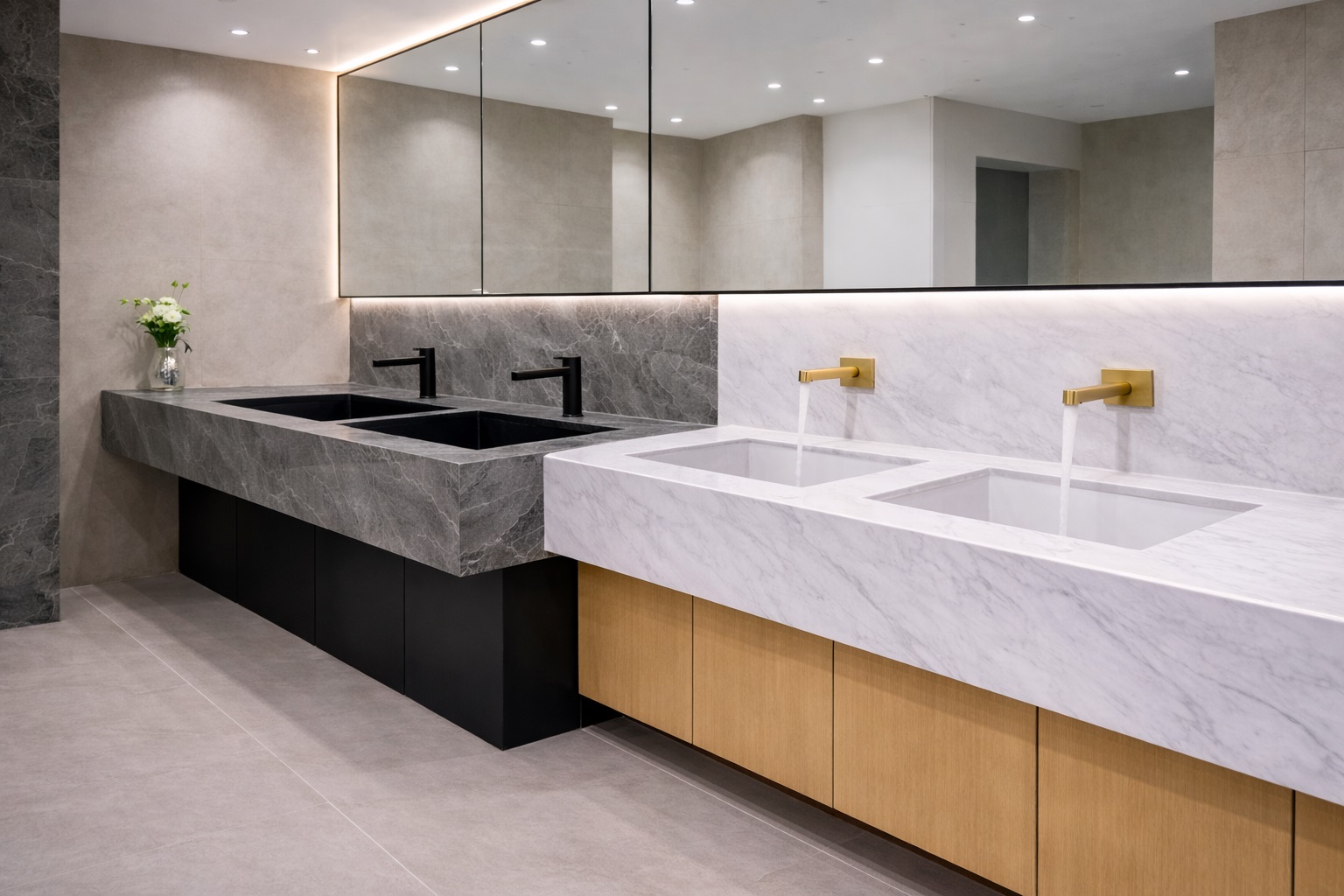
Deck-mounted sensor faucets penetrate the horizontal countertop or sink deck, with solenoid valves and power components located beneath the basin. Wall-mounted sensor faucets are installed within the vertical wall plane using concealed rough-in assemblies, eliminating deck penetrations and creating a floating architectural profile.
Retrofit vs Ground-Up StrategyHydraulic & Thermal ControlInfection Control PriorityLifecycle Cost Evaluation
Product Specifications — Deck Mount vs Wall Mount Sensor Faucets
Mounting Configuration
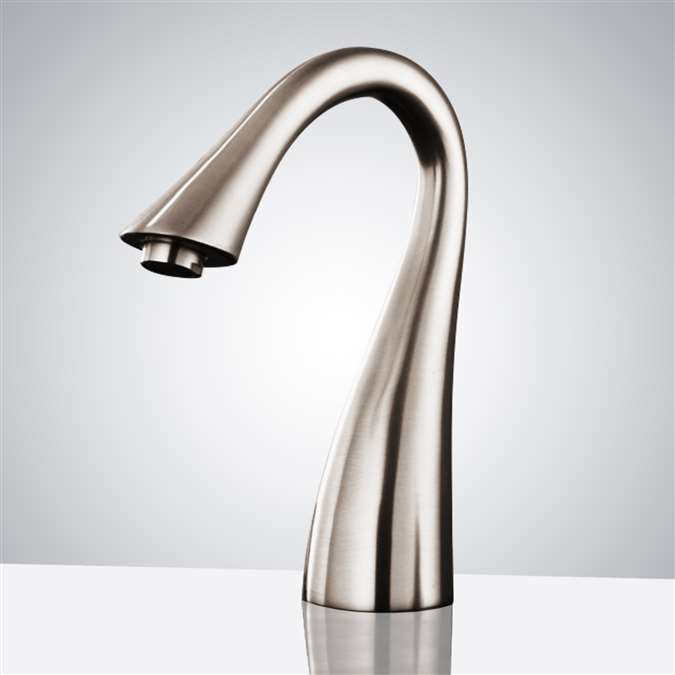
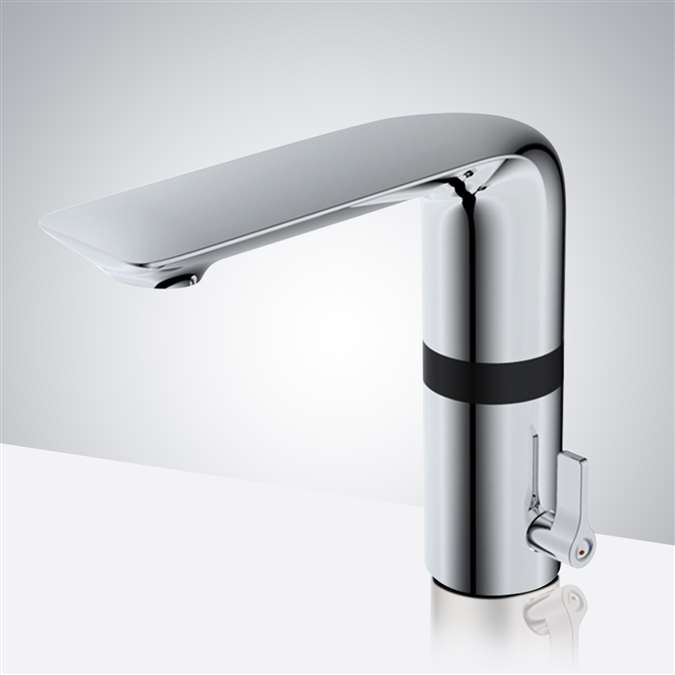
Deck Mount: Through-counter or sink deck installation with below-deck control box.
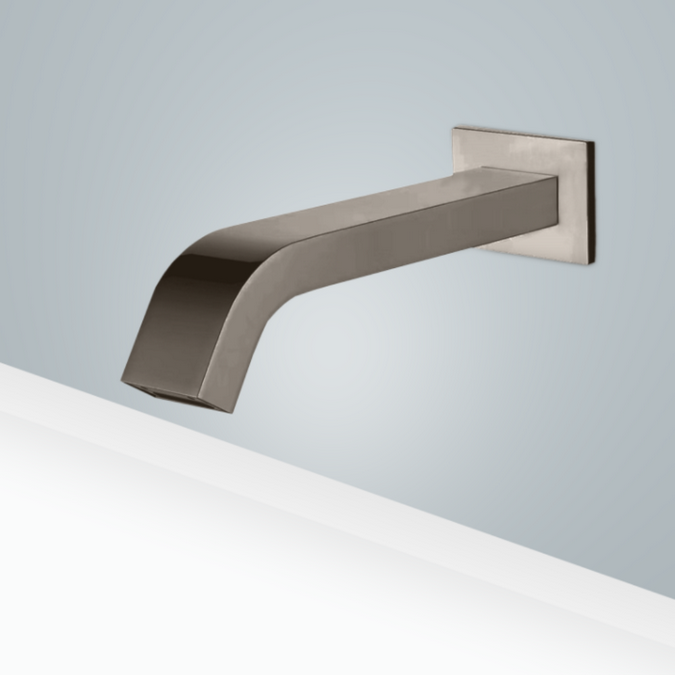
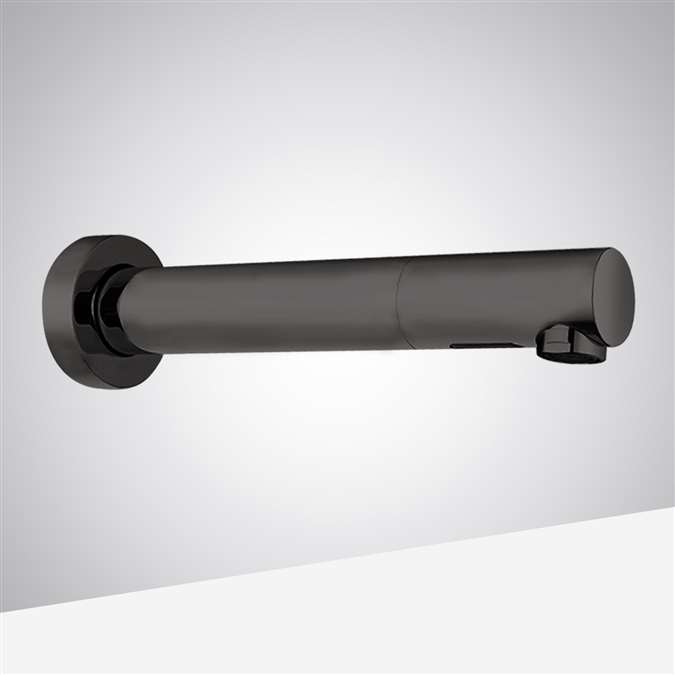
Wall Mount: Concealed in-wall rough-in assembly with exposed spout body.
Construction Materials
Solid brass or stainless steel body; vandal-resistant components; PVD or electroplated finishes.
Sensor Technology
Infrared (IR) or Time-of-Flight (ToF) proximity activation; auto shutoff 20–60 seconds (factory set, adjustable on select models).
AC 110–240V transformer with driver or DC 6V battery pack; optional hybrid power configurations available.
ADA Compliance
Hands-free activation compliant when installed within reach range and height guidelines.
Rough-In Requirements
Deck Mount: Standard ½″ supply connections; drilled deck hole(s) required.
Wall Mount: Precise rough-in depth alignment; wall blocking and bracket support required.
Maintenance Access
Deck Mount: Serviceable from under-sink cabinet.
Wall Mount: Access through removable faceplate or service panel.
Warranty
Typical 3–5 year commercial warranty (model dependent).
Final specification should account for project type (retrofit vs new construction), infection control level, hydraulic design constraints, and lifecycle cost objectives.
Installation & Construction Strategy
Deck Mount Coordination: Requires drilled deck penetrations and under-sink access for solenoid valves, battery packs, and mixing components. Ideal for renovation and fast-track commercial construction.
Wall Mount Rough-In: Requires early framing coordination, precise rough-in depth control, concealed mounting brackets, and alignment with finished wall materials.
Trade Sequencing Impact: Deck-mounted systems reduce inter-trade conflicts. Wall-mounted systems require BIM-level dimensional verification during pre-construction.
Moisture & Surface Strategy: Wall-mounted faucets eliminate deck-level pooling and reduce countertop seam exposure. Deck-mounted units require proper gasket sealing and periodic inspection.
Commissioning: Verify sensor calibration, flow rate (0.35–1.5 GPM typical), and temperature control performance using mixing valves or thermostatic control systems.
ADA Compliance: Both deck and wall-mounted sensor faucets can meet ADA standards when installed at proper mounting heights with compliant reach ranges and knee clearance.
Ergonomic Placement: Wall-mounted systems allow adjustable vertical positioning, offering enhanced adaptability for custom lavatory designs.
Hydraulic Stability: Deck-mounted units benefit from shorter supply paths and simplified mixing configuration, reducing temperature fluctuation risk.
Thermal Safety Integration: Wall-mounted faucets are frequently paired with thermostatic mixing valves (ASSE 1070 / 1017) for enhanced temperature control.
Water Efficiency: Both configurations support 0.35–1.5 GPM flow rates and can contribute to LEED and WELL certification goals when specified with pressure-compensating aerators.
Construction Coordination: Wall-mounted installations require precise rough-in alignment, while deck-mounted systems reduce wall framing dependency.
Infection Control Strategy
Infection prevention plays a central role in faucet configuration decisions. Wall-mounted sensor faucets eliminate deck penetrations and reduce horizontal surfaces where moisture and contaminants accumulate, improving wipe-down sanitation efficiency.
Deck-mounted faucets require sealed base gaskets and routine inspection to prevent water pooling at the deck interface. In high-risk healthcare or laboratory environments, wall-mounted systems often align more closely with infection control protocols.
Deck-mounted systems provide easier under-sink access for battery replacement, solenoid servicing, and mixing valve adjustments, resulting in lower initial installation labor and simplified maintenance procedures.
Wall-mounted systems require higher initial labor investment and precise rough-in coordination, but may reduce long-term surface maintenance costs and daily sanitation labor in high-traffic facilities over a 10–15 year lifecycle horizon.


 BS1068-BG

.jpg)
.jpg)