BathSelect Luxury Hospitality Design
Luxury hospitality bathroom design has moved beyond surface aesthetics. For architects, interior designers, MEP engineers, developers, and hotel operators, the modern guest bathroom is a coordinated building system where water delivery, temperature control, accessibility, finish selection, maintenance access, digital technology, and long-term operating cost must work together.
Read MoreShow Less
For this reason, BathSelect Luxury Hospitality Design is best approached as an integrated specification strategy rather than a collection of decorative fixtures. BathSelect’s current luxury hospitality shower systems encompass thermostatic, rainfall, waterfall, mist, body-spray, hand-shower, LED, touch-panel, and remote-controlled configurations intended for hotels, resorts, spas, branded residences, and other premium developments.

Hospitality Bathrooms as Engineered Guest Environments
A successful luxury hotel bathroom has to satisfy two audiences simultaneously. Guests evaluate comfort, visual quality, intuitive control, spray performance, and perceived luxury. Facility teams evaluate reliability, serviceability, replacement-part access, water consumption, cleaning requirements, and room downtime.
Read MoreShow Less
That distinction has important implications during design development.
An oversized ceiling shower may create a strong architectural statement, but the MEP engineer still needs to verify available dynamic pressure, pipe sizing, simultaneous outlet demand, hot-water generation capacity, mixing-valve performance, drainage, and diversity across occupied guestrooms. Likewise, a concealed control system may produce a cleaner wall plane, but it should not create inaccessible valves that turn routine cartridge replacement into destructive maintenance.
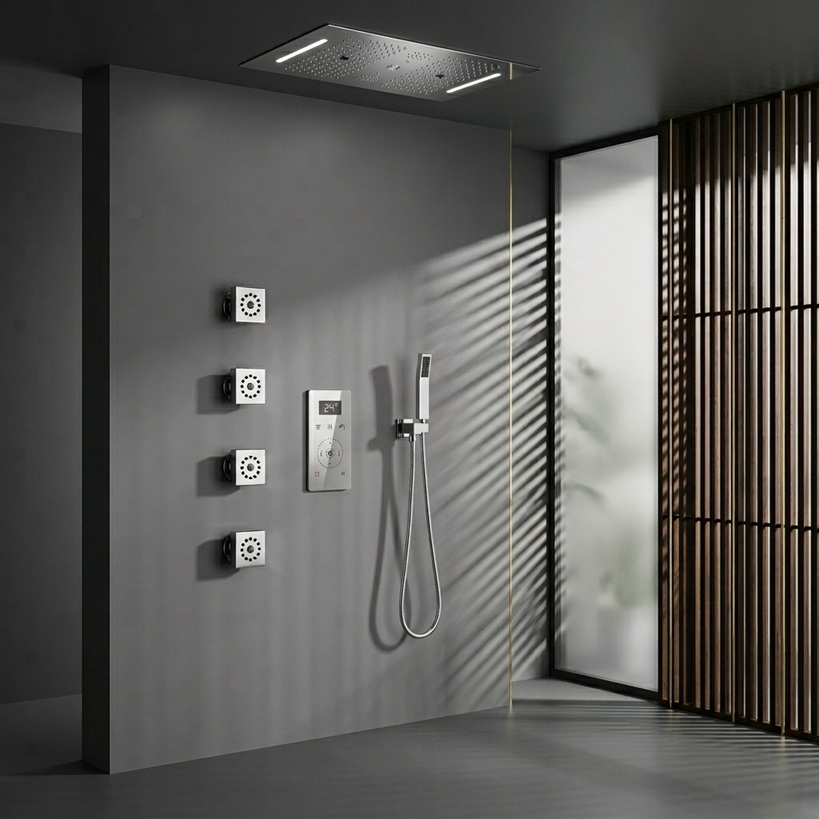
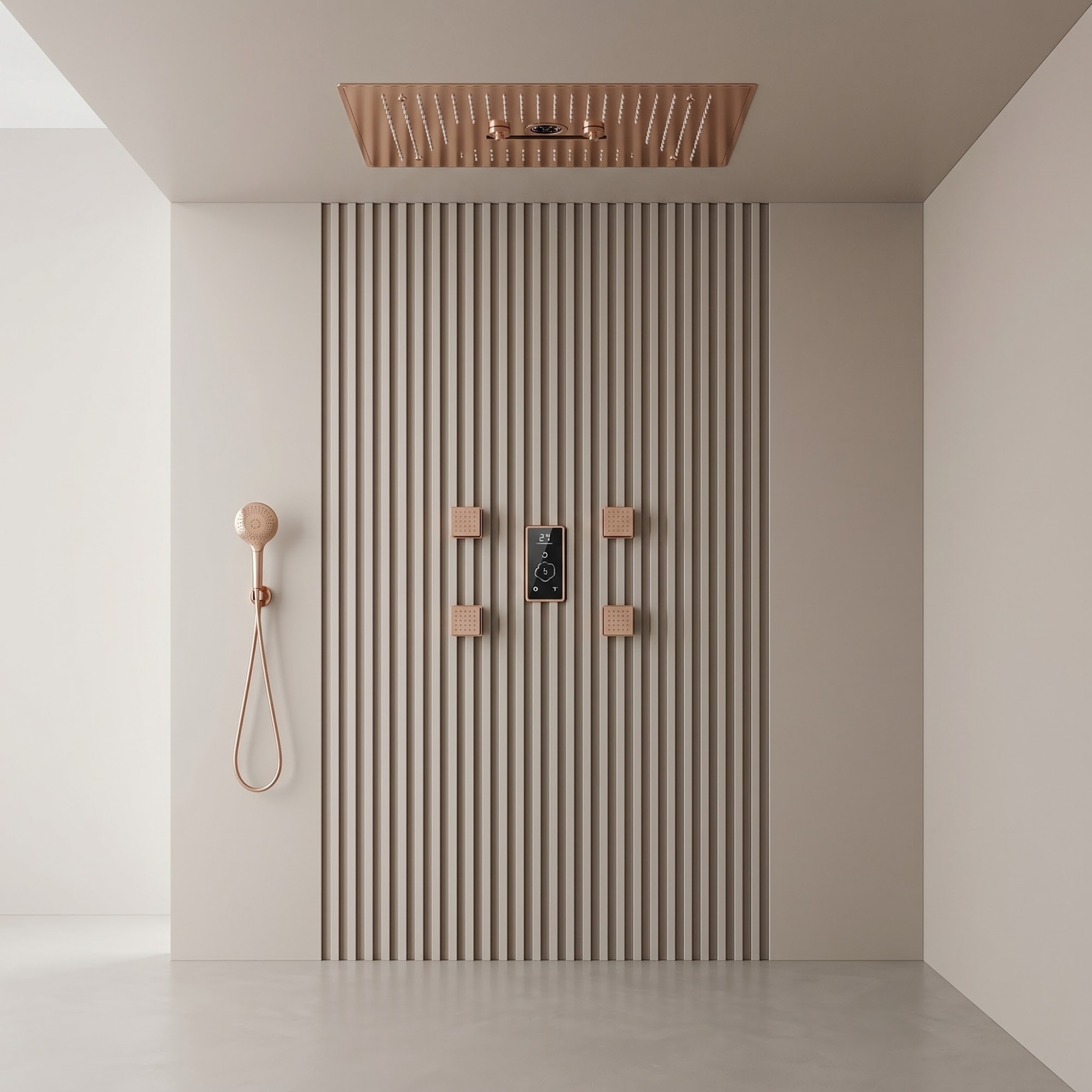
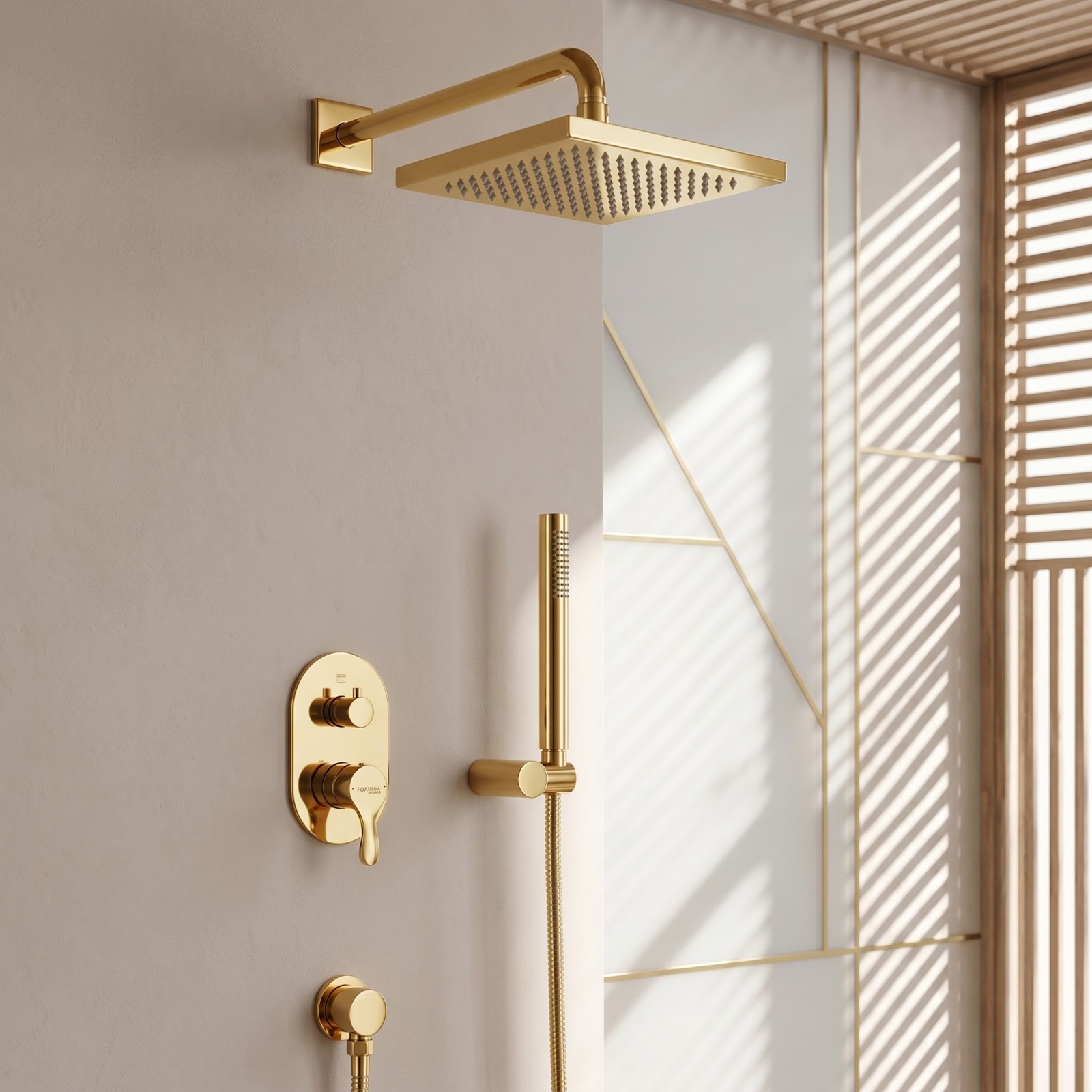
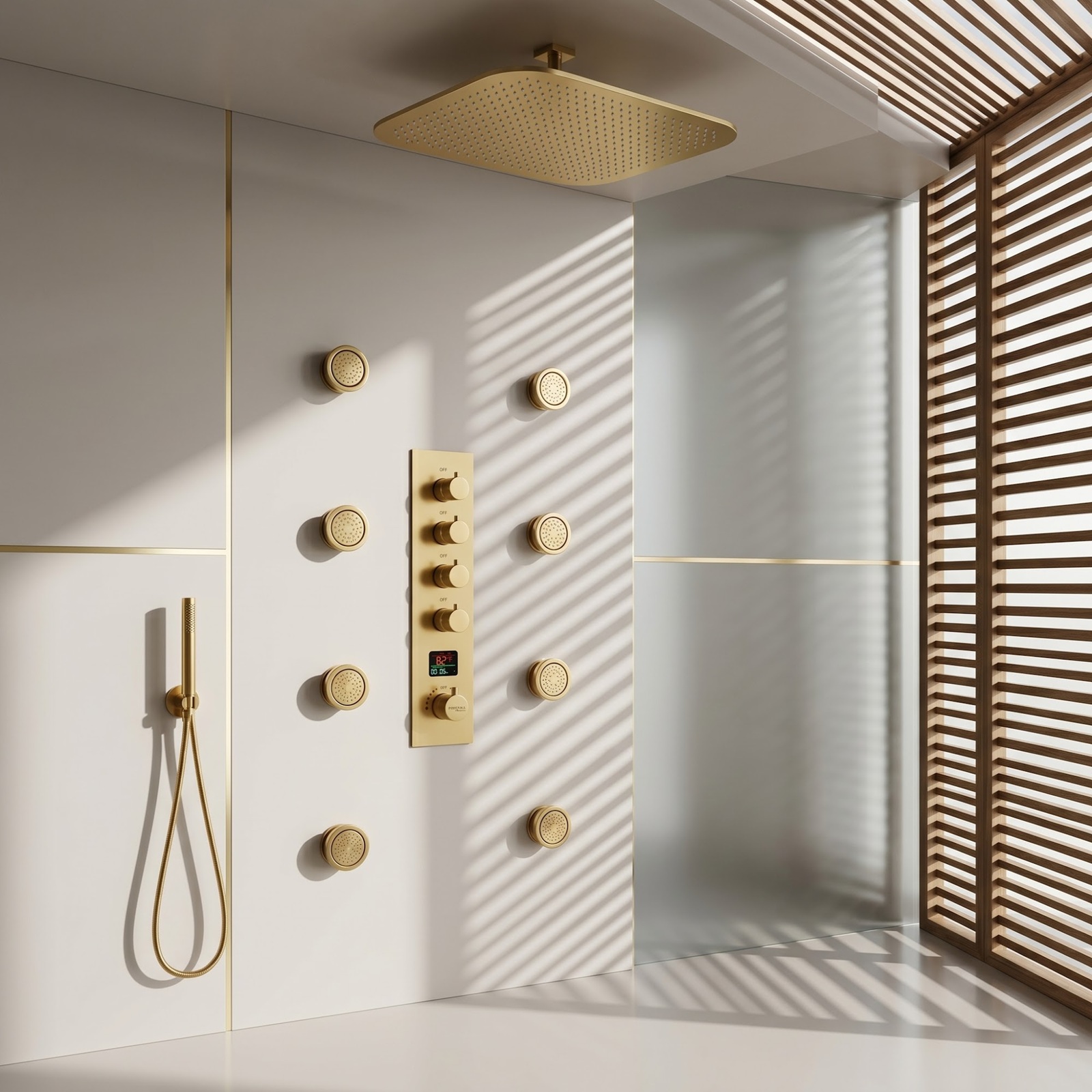
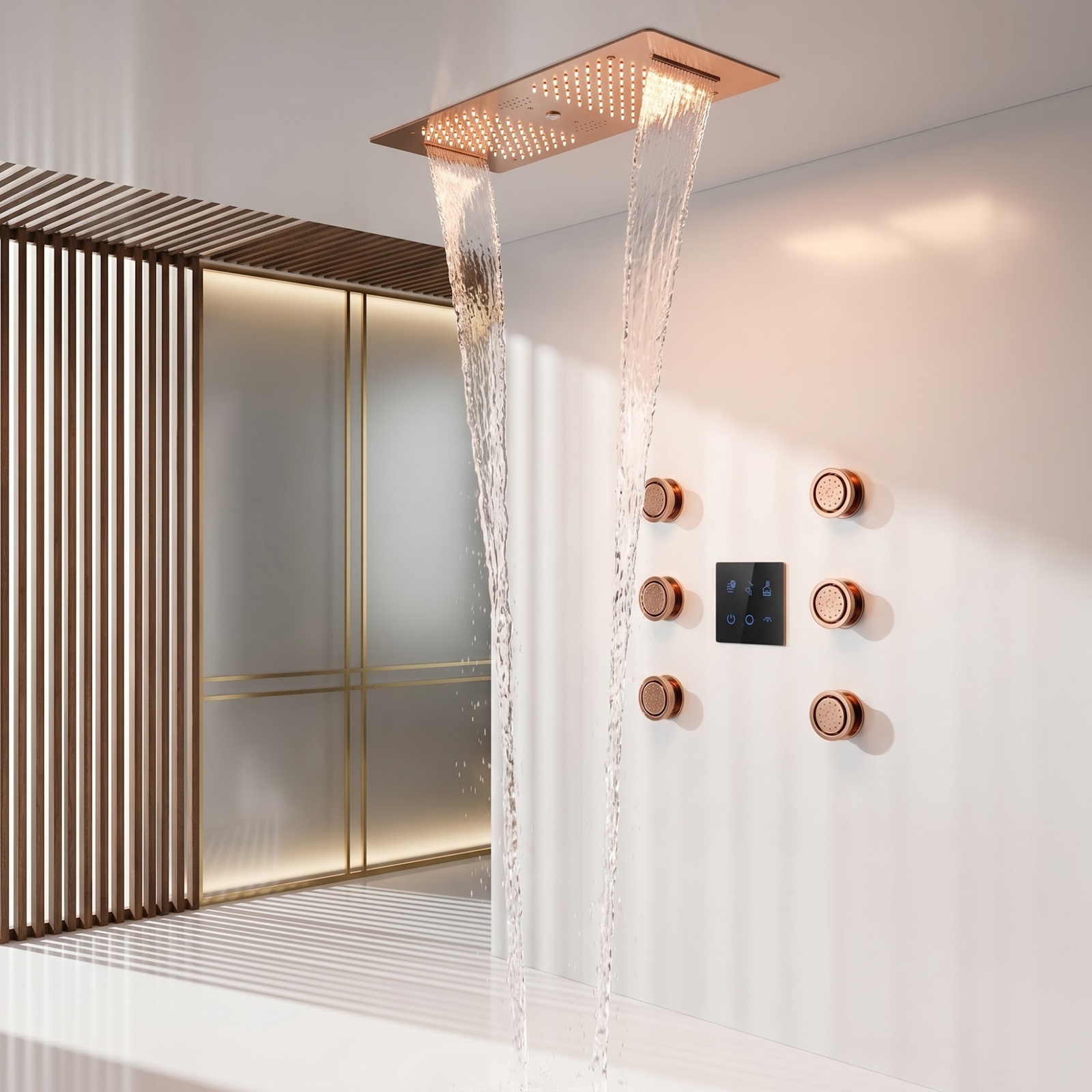
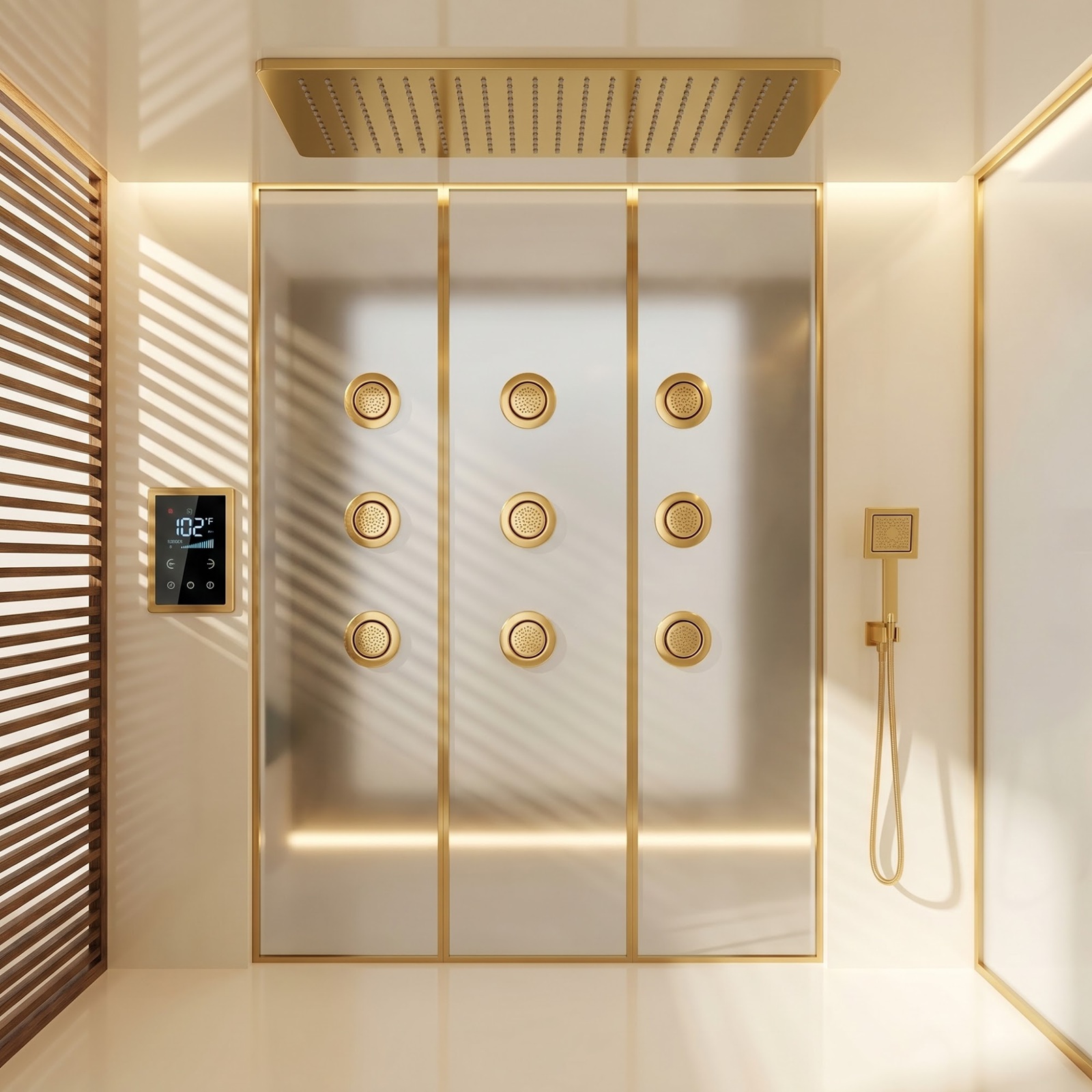
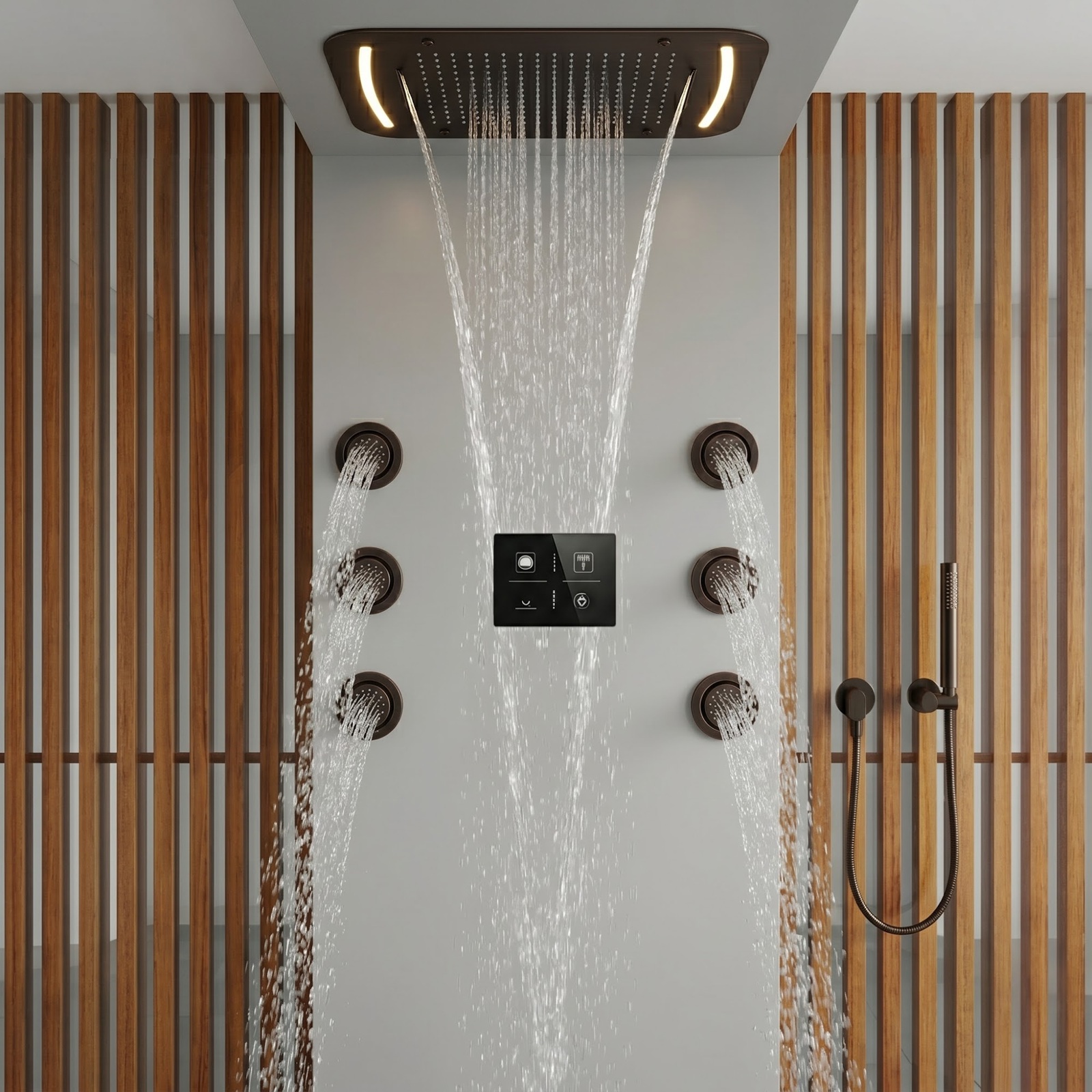
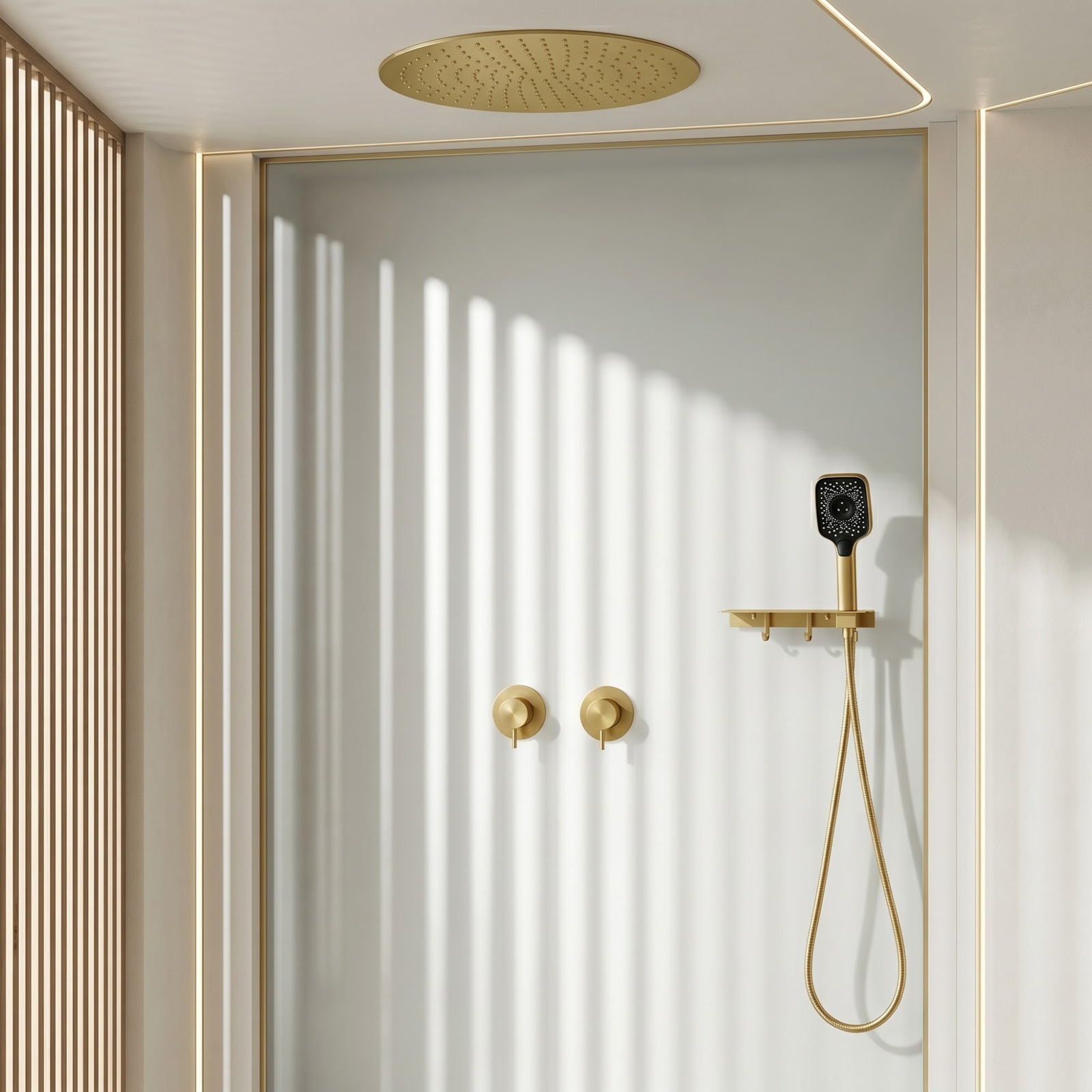
BathSelect’s complete luxury shower systems for commercial and hospitality projects provide configurations combining thermostatic valves, rainfall heads, handheld showers, body sprays, waterfall outlets, and multifunction controls. For AEC teams, however, individual system selection should follow hydraulic and installation review rather than finish selection alone.


Thermostatic Control Should Be a Core Design Decision
Temperature stability is particularly important in hospitality buildings because several fixtures may operate simultaneously across multiple rooms.
Read MoreShow Less
Automatic compensating shower valves can be pressure-balancing, thermostatic, or combined pressure-balancing/thermostatic types. ASSE guidance also emphasizes appropriate minimum flow, pressure conditions, and adjustment of temperature limit stops during installation.
This makes BathSelect’s hospitality thermostatic shower system series particularly relevant to hotel specification. The collection includes systems coordinating thermostatic mixing with rainfall, waterfall, hand showers, body sprays, and selected digital functions.
For specification purposes, architects and engineers should coordinate:
| Hospitality Design VariableAEC Coordination PriorityProject Impact | ||
|---|---|---|
| Thermostatic mixing | Inlet pressure, hot-water temperature, valve capacity | Guest comfort and thermal protection |
| Rainfall shower | Flow rate, pressure and head size | Spray coverage and water demand |
| Multiple outlets | Simultaneous-use calculation and diverter configuration | Pipe sizing and system performance |
| Concealed controls | Access panels and replaceable cartridges | Maintenance downtime |
| Digital controls | Electrical requirements and wet-location coordination | Installation and commissioning |
| Architectural finish | Cleaning chemistry and replacement consistency | Lifecycle appearance |
| Hand shower | Mounting height, reach and hose arrangement | Accessibility and usability |
| Body sprays | User geometry and hydraulic balancing | Comfort and water demand |
Water Efficiency Without Sacrificing the Experience
Read MoreShow Less
Luxury does not necessarily require uncontrolled water consumption.
EPA’s WaterSense specification establishes a maximum rated flow of 2.0 gpm, or 7.6 L/min, for WaterSense-labeled showerheads and also evaluates performance characteristics including spray force, coverage, and operation across different supply pressures.
This distinction matters in hospitality design. Simply reducing flow is not enough; engineers must protect perceived shower quality.
A project can therefore combine high-efficiency outlets with carefully selected spray geometry, pressure compensation, thermostatic control, and appropriate pipe sizing. Where multiple shower functions are incorporated, the design team should establish whether outlets are intended for individual or simultaneous operation and calculate peak flow accordingly.
Specified products should always be checked against the current model-specific technical documentation rather than assuming every product within a collection carries identical certifications or flow characteristics.
Digital Luxury Requires MEP Coordination
Digital controls increasingly contribute to the premium hospitality experience.
Read MoreShow Less
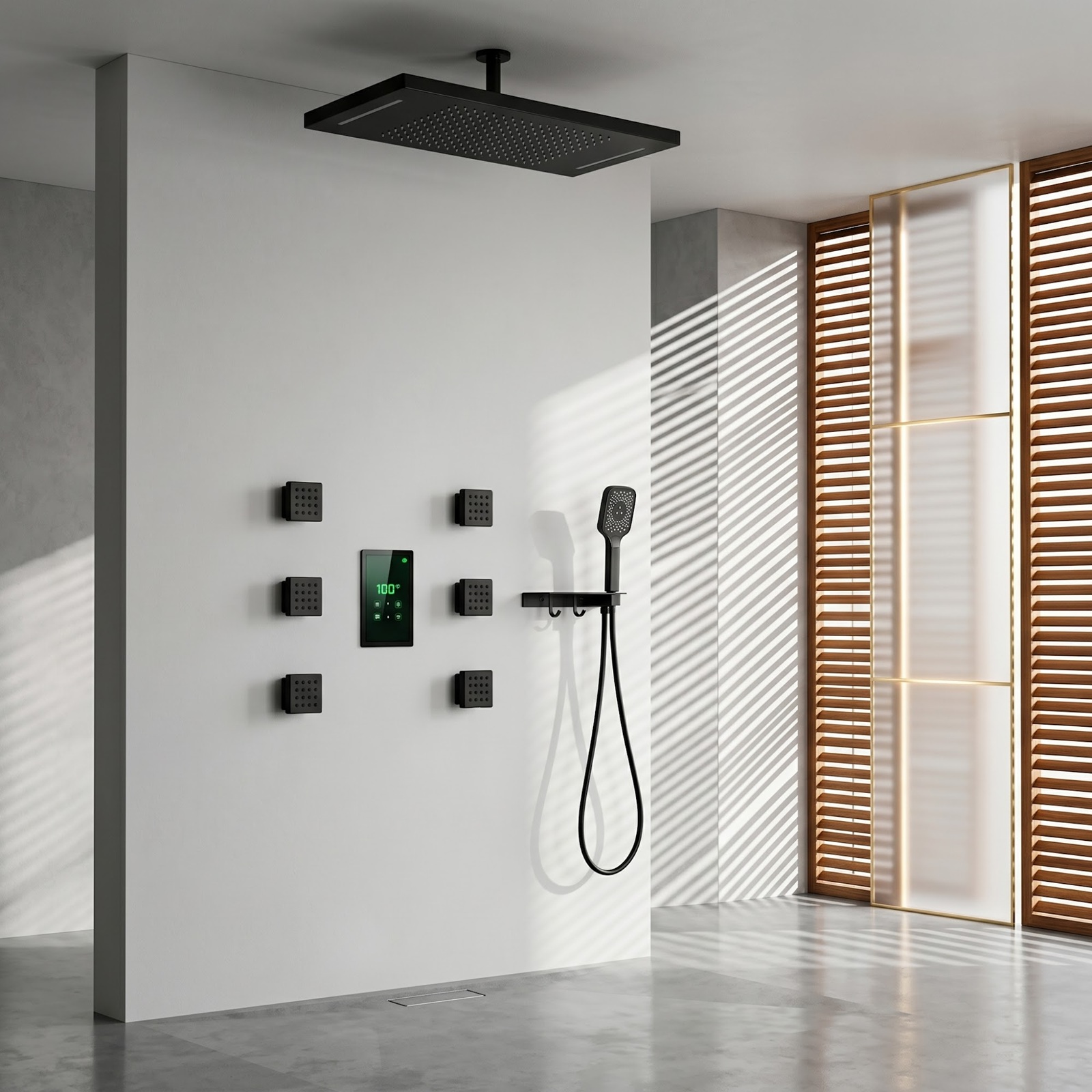
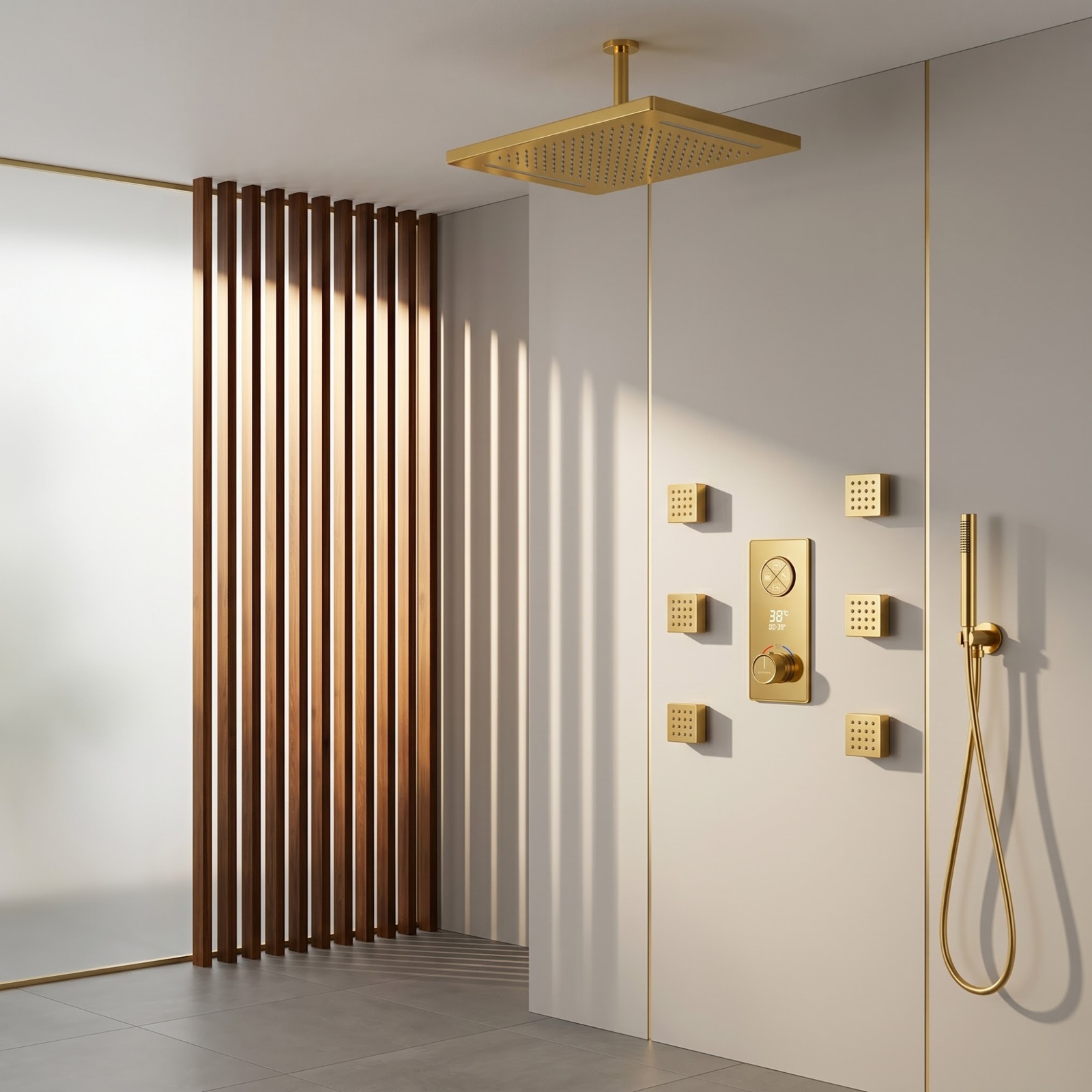
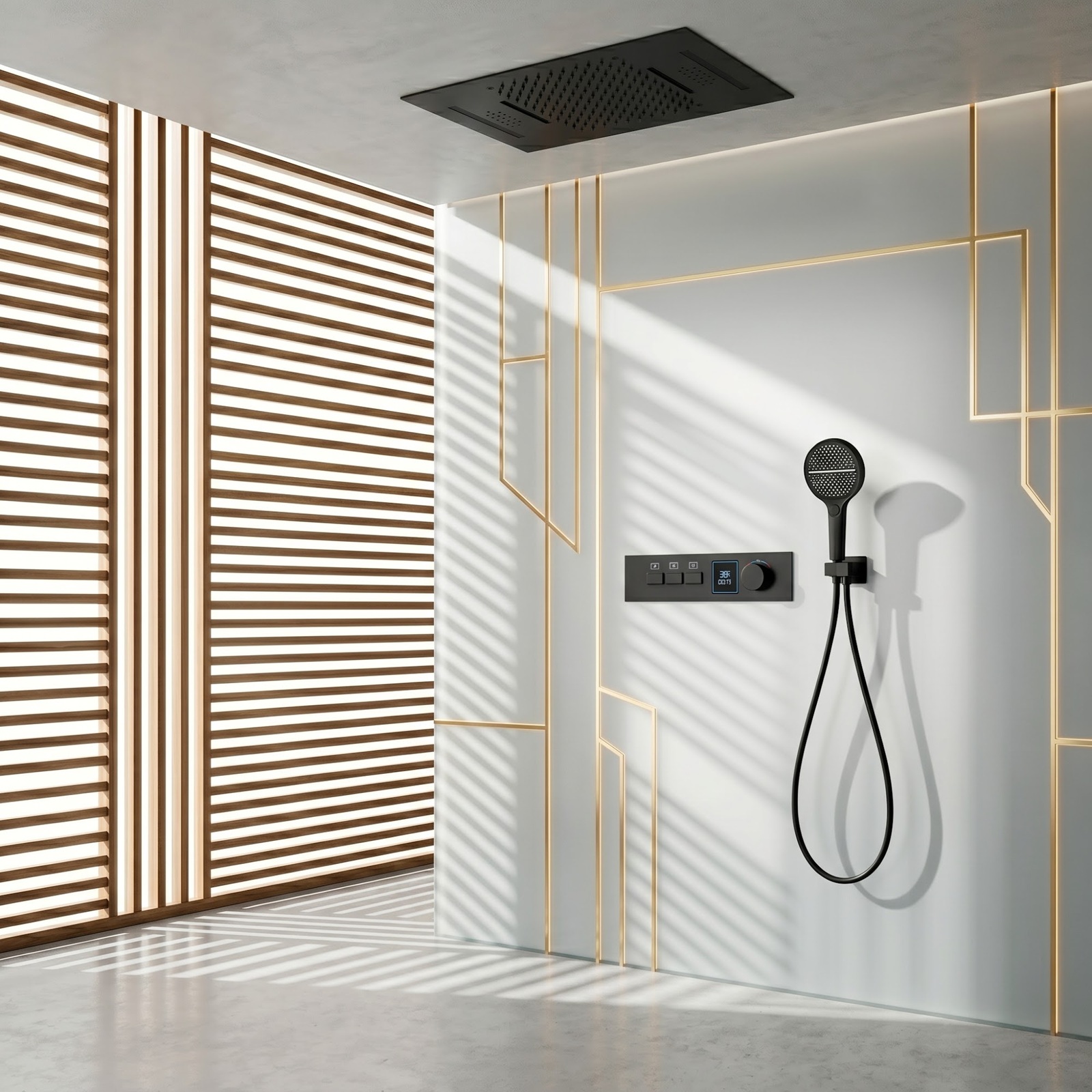
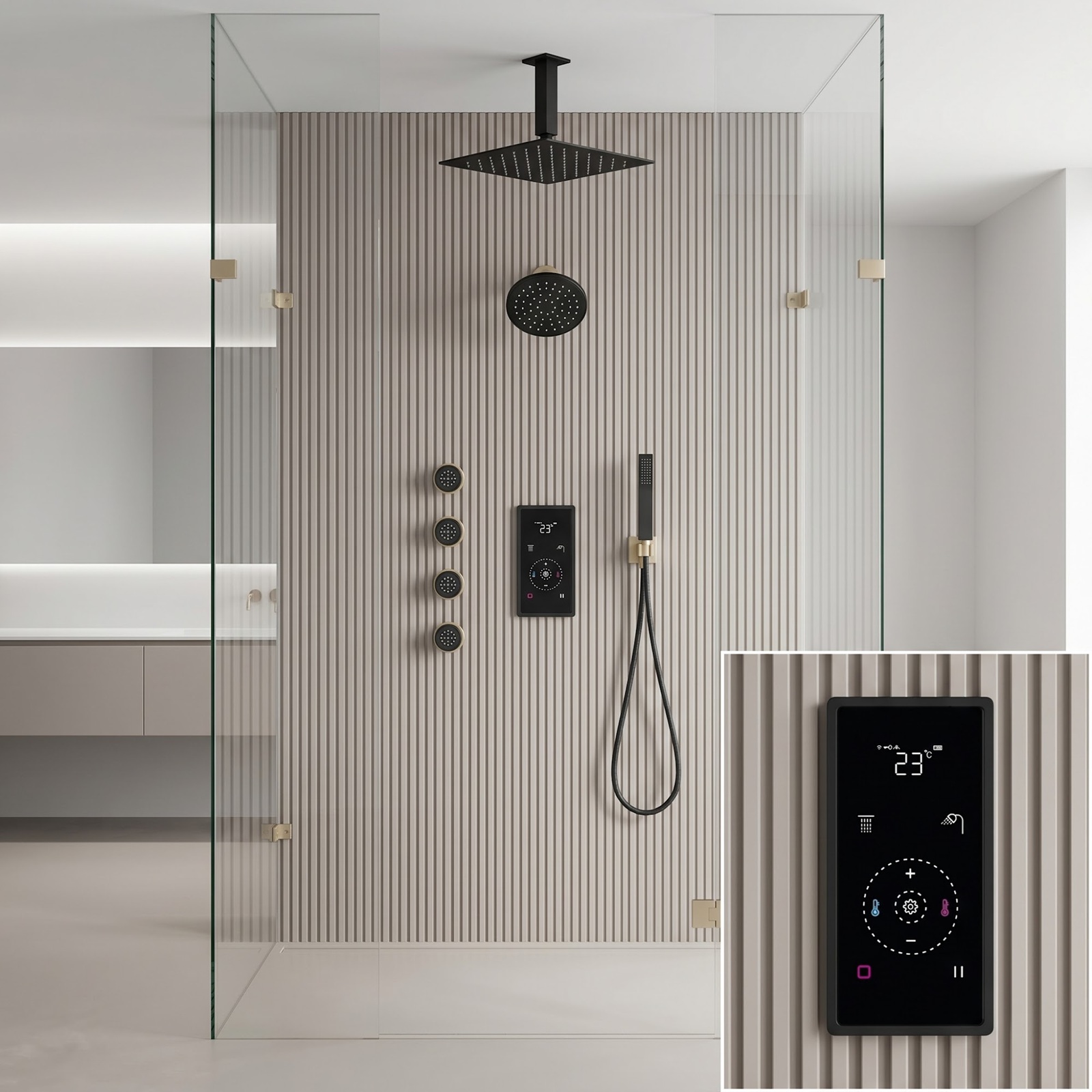
BathSelect offers digital thermostatic shower controls with temperature and flow adjustment capabilities. Published specifications for that model indicate an adjustable water-temperature range of 29–48°C, water-flow capability of approximately 4–18 L/min, and a three-way valve arrangement.
Such technology should be coordinated early with architectural and engineering drawings. Power supplies, transformers, controllers, waterproofing interfaces, rough-in depths, valve access, low-voltage routing, ceiling access, and commissioning procedures can all affect the finished room.
That is why BIM families, specification sheets, installation drawings, and maintenance information should be incorporated during design development—not requested only after fixtures arrive on site.

Accessibility Is Part of Luxury Hospitality
Accessible design should be integrated into the visual language of the hotel rather than treated as a secondary room type.
Read MoreShow Less
Under the ADA Standards, accessible lavatories require appropriate clear floor space, knee and toe clearance, fixture height, protected piping, and compliant controls. Faucet controls must satisfy operable-part requirements, while motion-activated faucets can provide an accessible touch-free method of operation.
In lobby restrooms, restaurants, conference areas, spas, and other shared hospitality spaces, designers can therefore evaluate coordinated commercial touchless faucet and soap dispenser systems alongside basin geometry, reach ranges, countertop heights, sensor detection zones, power strategy, and service access. BathSelect’s Solo collection is specifically organized around coordinated automatic faucets and dispensers for commercial and hospitality wash stations.


Illustrative Hospitality Design Case
Consider a hypothetical 180-room urban luxury hotel undergoing a guest-bathroom renovation.
Read MoreShow Less
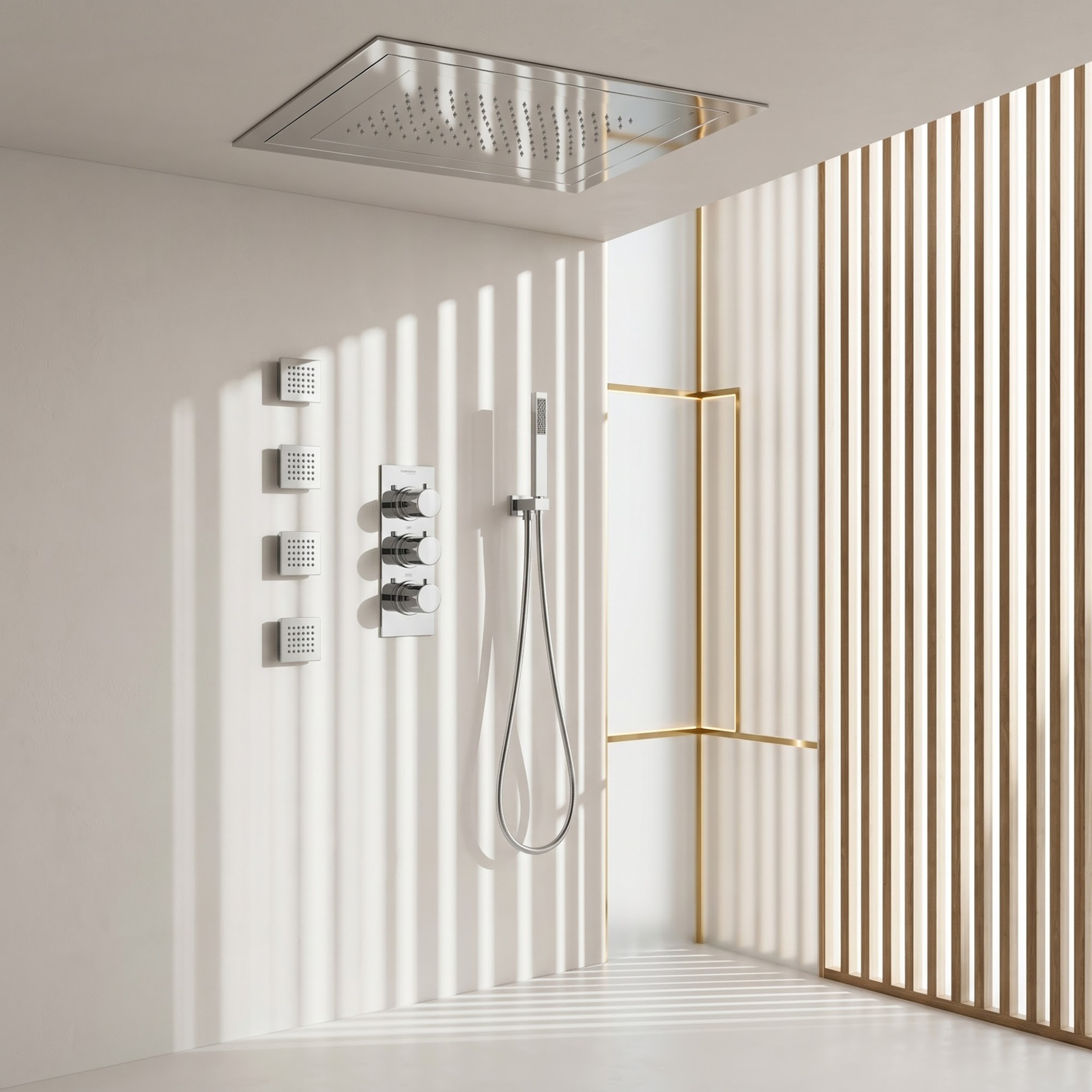
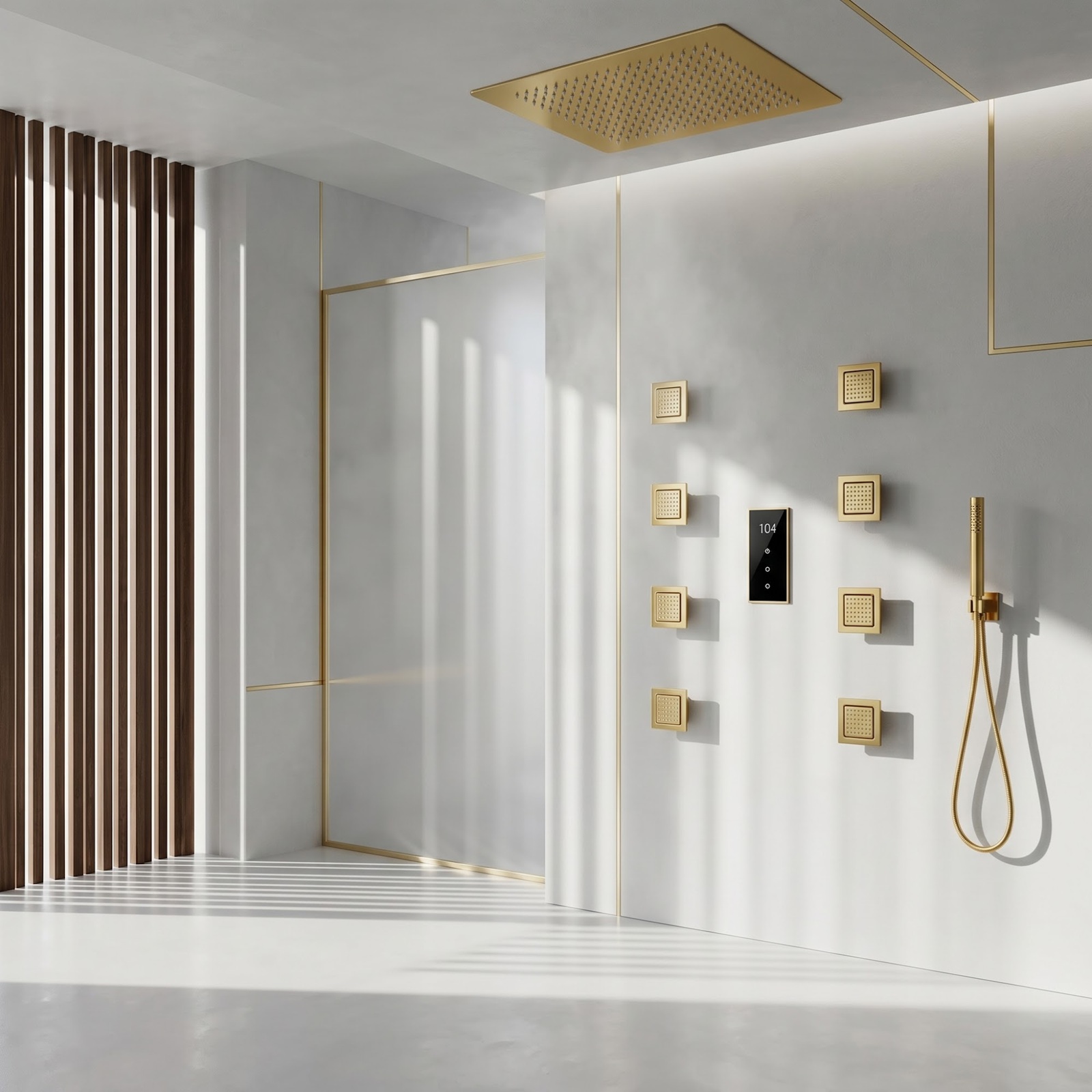
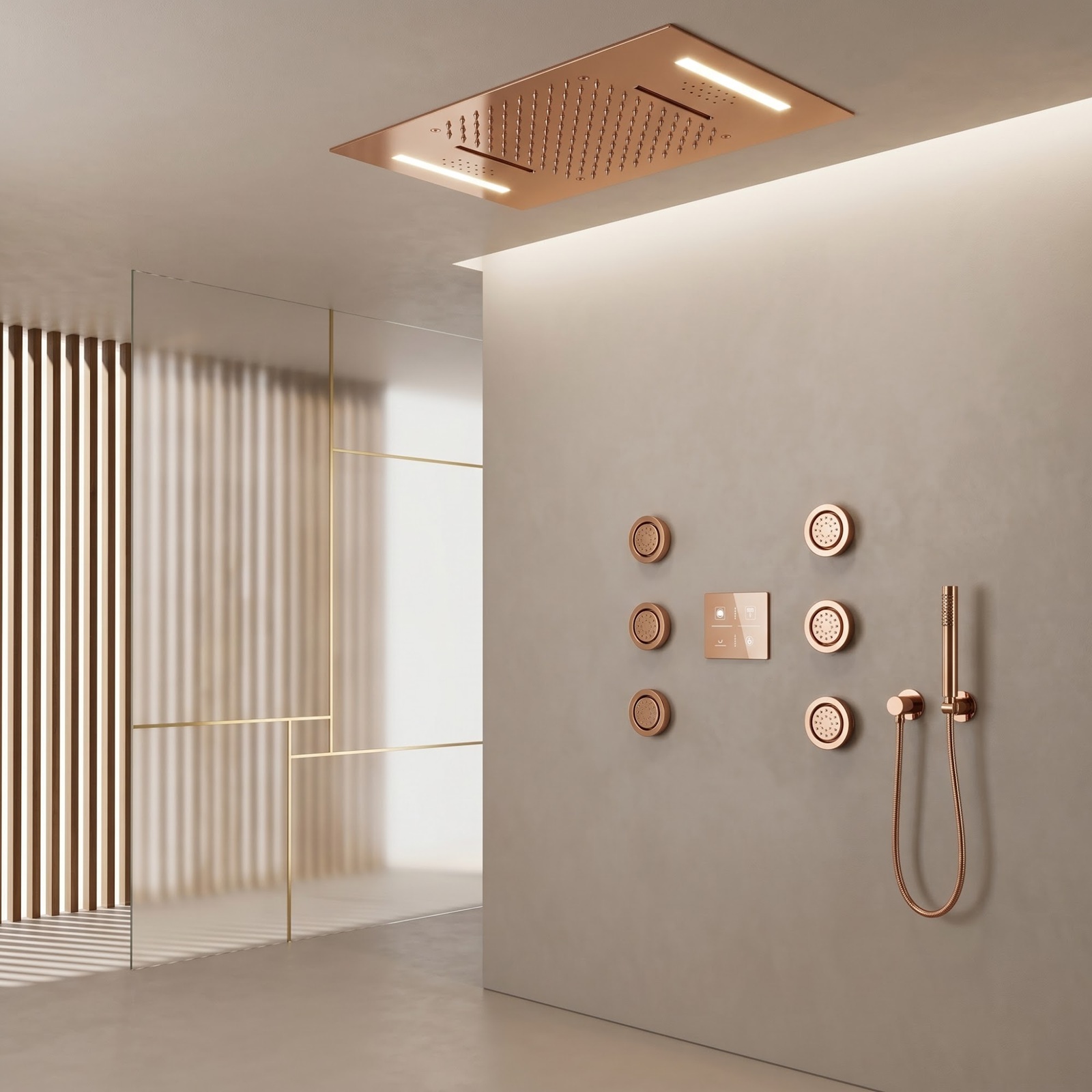
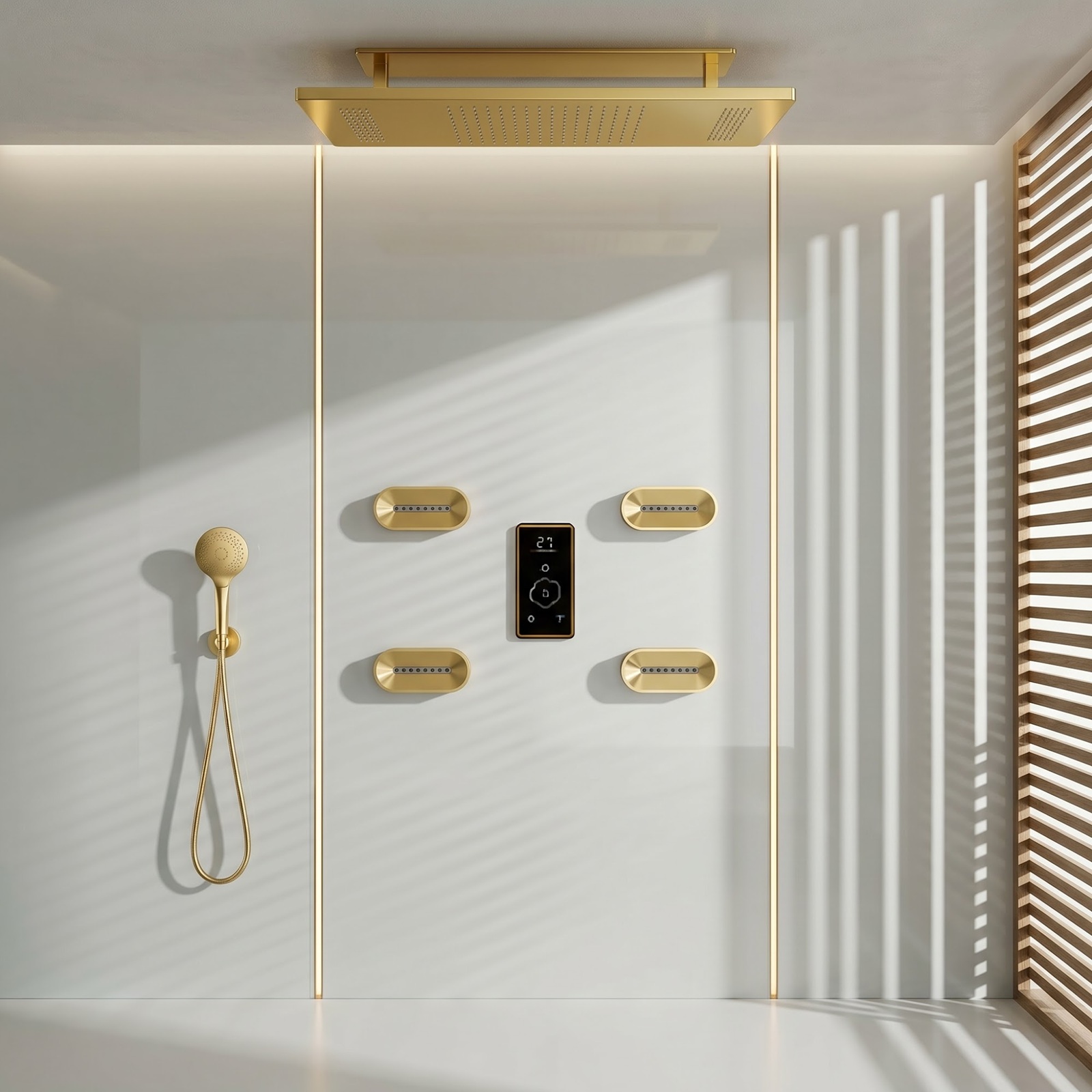
The initial interior concept specifies a recessed ceiling rain shower, body sprays, handheld shower, brushed-gold trim, and touch-based thermostatic controls. Rather than approving fixtures independently, the architect and plumbing engineer establish a coordinated room prototype.
The team first verifies incoming pressure and calculates simultaneous outlet demand. The plumbing engineer reviews mixing-valve capacity and hot-water recovery while the architect reserves accessible service zones behind the control wall. Waterproofing details are coordinated around the concealed rough-in assembly. Housekeeping reviews finish-care requirements, and facilities personnel confirm that cartridges, filters, control components, and other serviceable parts can be reached without removing finished stone.
A full mock-up is then commissioned before repetitive installation begins.
That process transforms the shower from an isolated luxury product into a maintainable hospitality system—and allows installation conflicts to be resolved once rather than repeated across 180 rooms.
Water Management and Lifecycle Planning
Hospitality plumbing also intersects with building water management.
Read MoreShow Less
ANSI/ASHRAE Standard 188 establishes minimum legionellosis risk-management requirements for applicable building water systems and addresses design, construction, commissioning, operation, maintenance, repair, replacement, and expansion. ASHRAE further emphasizes that building-water-system design can directly affect conditions associated with microbial growth.
AEC teams should therefore consider fixture selection together with piping layout, temperature management, stagnation potential, commissioning, flushing procedures, and the owner’s water-management program.
This becomes particularly important in hotels where guestrooms may experience irregular occupancy.
Specification-First Luxury
The strongest hospitality bathrooms create luxury through coordination.
Read MoreShow Less
Material quality, architectural finishes and visual impact remain important, but long-term performance depends equally on thermostatic stability, hydraulic design, accessible installation, water efficiency, maintenance planning, documentation, and commissioning.
BathSelect’s broader commercial and luxury shower system portfolio gives architects and engineers multiple pathways—from conventional thermostatic systems to multifunction and digital shower environments.
For hotel owners and design teams, the specification objective should therefore be clear: create bathrooms that look exceptional on opening day while remaining comfortable, serviceable, efficient, and technically coherent throughout the property lifecycle.
That is the foundation of BathSelect Luxury Hospitality Design—not luxury as an added finish, but luxury engineered into the entire guest experience.

BathSelect Luxury Hospitality Design
Related Hospitality, Shower-System, Plumbing and AEC Sources
Professional and technical references relevant to luxury hospitality bathroom design, hotel operations, shower-system specification, thermostatic control, water efficiency, accessibility, building water management, facility operations, and coordinated AEC design.