BathSelect Hotel Bathroom Standards
Hotel bathroom design is increasingly defined by more than finish selection and visual identity. For architects, MEP engineers, plumbing consultants, hospitality designers, and facility managers, the modern hotel bathroom is a coordinated technical environment where accessibility, water efficiency, temperature control, hygiene, maintainability, acoustics, and guest experience must work together.
Read MoreShow Less
Effective hotel bathroom standards therefore begin at the specification level. Fixtures should be evaluated not simply as individual products, but as components within the domestic-water, drainage, electrical, accessibility, and long-term facility-management strategy of the property.
For hospitality projects using BathSelect fixtures, this means coordinating architectural intent with verified flow rates, valve technologies, rough-in requirements, pressure conditions, power supplies, service access, and applicable project codes.
A Specification Framework for Hotel Bathrooms
A hotel may contain several distinct plumbing environments: private guestroom bathrooms, accessible guestrooms, public lobby restrooms, spa facilities, restaurants, meeting spaces, fitness areas, and back-of-house washrooms. Applying one fixture specification uniformly across all these spaces can create operational problems.
Read MoreShow Less
A more resilient hospitality bathroom specification establishes performance criteria by application.
| Design ParameterTypical AEC ReferenceHotel Design Consideration | ||
|---|---|---|
| Guestroom lavatory flow | Up to 1.5 gpm for WaterSense-labeled bathroom faucets | Balance water efficiency with guest comfort |
| Public restroom lavatory | 0.5 gpm or less is identified by EPA as efficient for public lavatories | High-frequency use favors controlled flow |
| Showerhead flow | Up to 2.0 gpm for WaterSense-labeled showerheads | Evaluate pressure, spray coverage and simultaneous outlets |
| Accessible lavatory height | 34 in. maximum rim/counter height under ADA 606.3 | Coordinate millwork, traps and knee clearance |
| Faucet operation | ADA Section 309 where applicable | Sensor activation can simplify operability |
| Shower temperature control | ASSE 1016-type automatic compensating valve strategy | Reduce thermal shock and scald risk |
| Lavatory temperature limiting | ASSE 1070 where applicable | Consider point-of-use temperature limitation |
| Potable-water materials | NSF/ANSI/CAN 61 and 372 where required | Verify product-specific certification |
The U.S. EPA states that WaterSense-labeled bathroom sink faucets have a maximum flow of 1.5 gpm, while public lavatory faucets in non-private toilet facilities commonly use 0.5 gpm or less. WaterSense-labeled showerheads are limited to 2.0 gpm.
These values should be treated as specification references rather than universal code limits; the governing plumbing code, accessibility requirements, sustainability program, owner standards, and Authority Having Jurisdiction remain controlling.

Accessibility Must Be Coordinated Early
Accessible hotel bathrooms cannot be resolved simply by selecting an ADA-labeled faucet.
Read MoreShow Less
Under the 2010 ADA Standards, accessible lavatory rims or counter surfaces are generally limited to 34 inches maximum above the finished floor, and faucet controls must comply with the operability provisions of Section 309. Hand-operated metering faucets must remain open for at least ten seconds.
For the design team, compliance therefore depends on coordination among the lavatory, countertop, trap, supply piping, mirror, accessories, controls and required clear floor space.
This is particularly important where architects introduce floating vanities, deep stone aprons or concealed plumbing assemblies into upscale guestrooms.
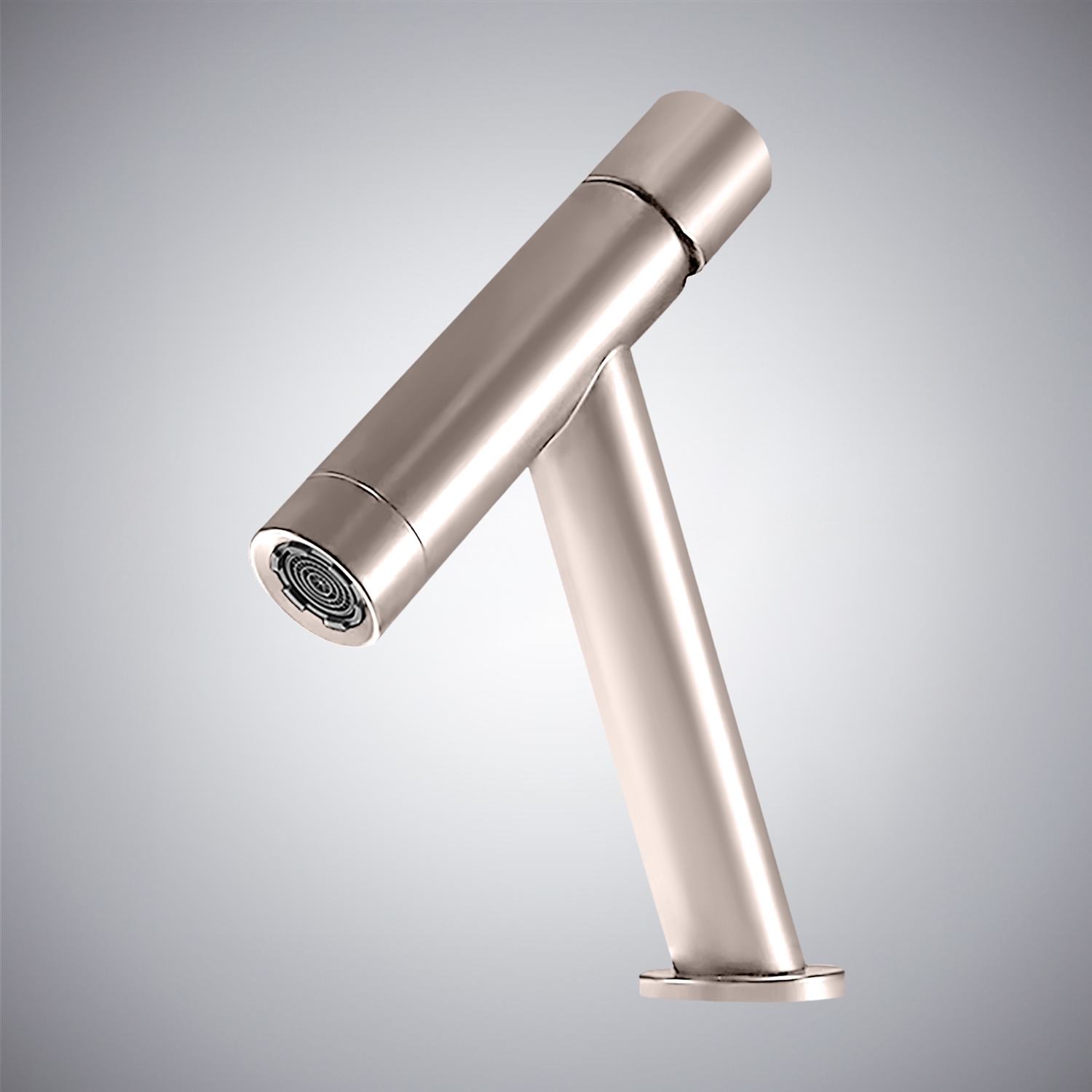
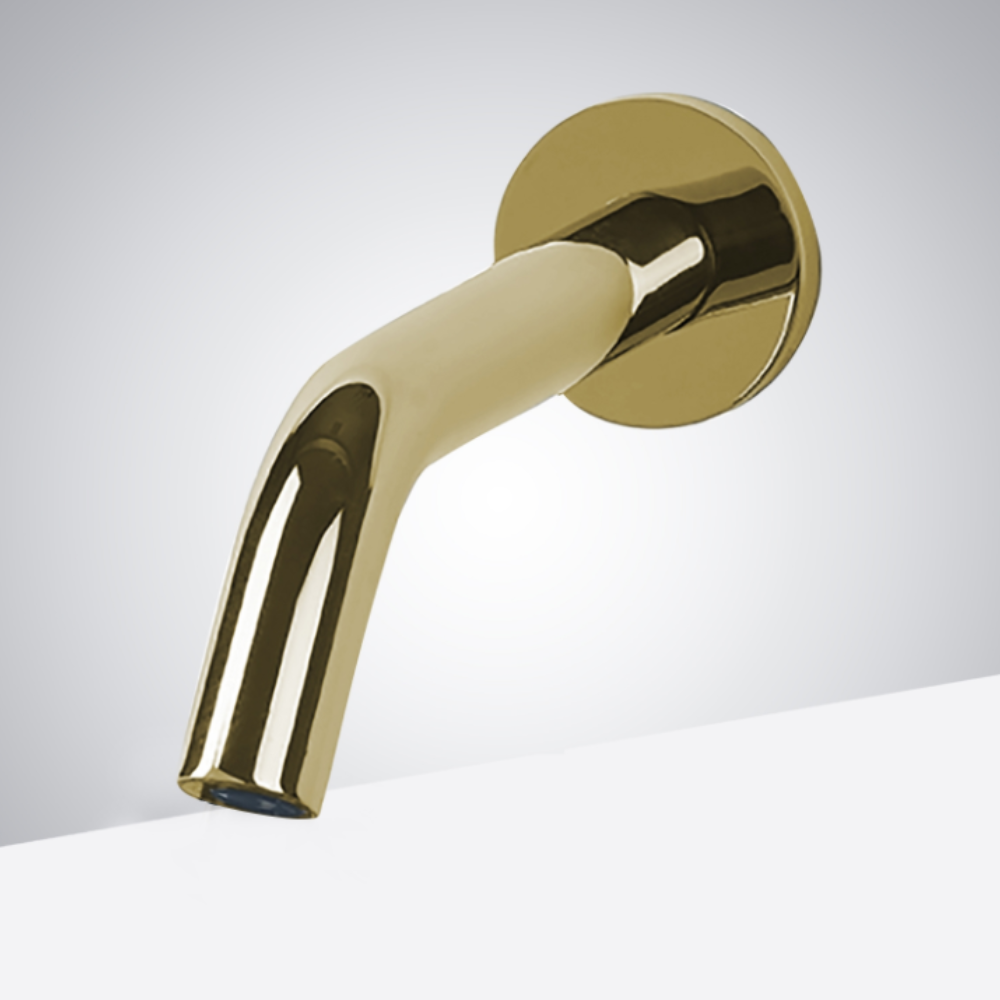
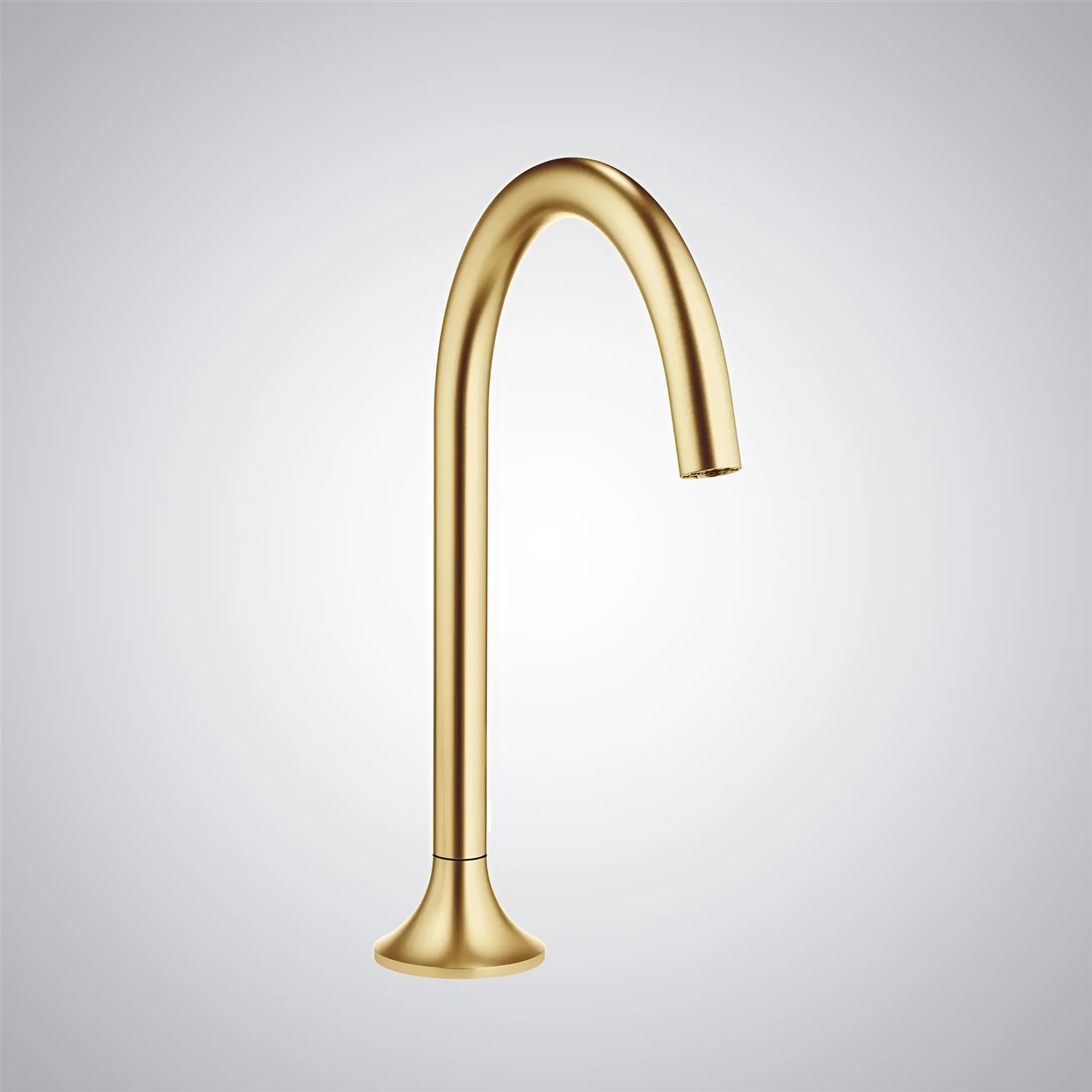
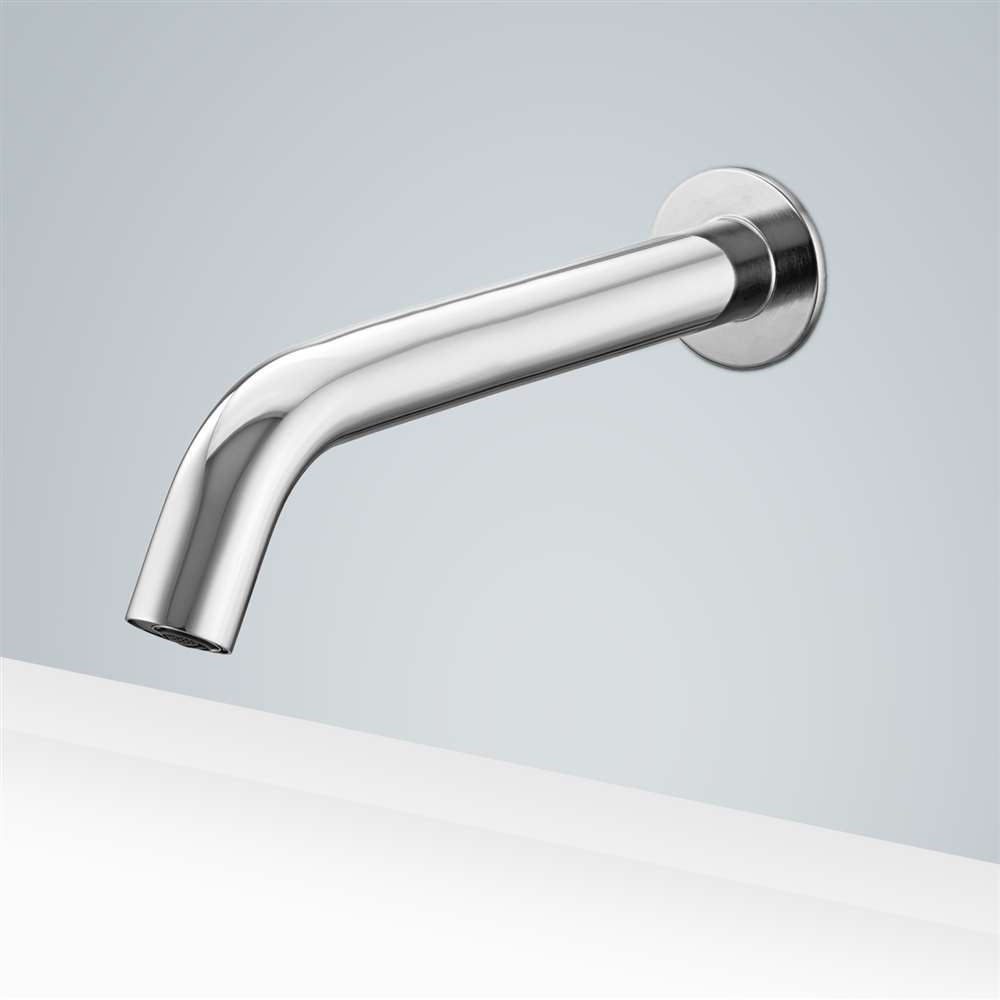
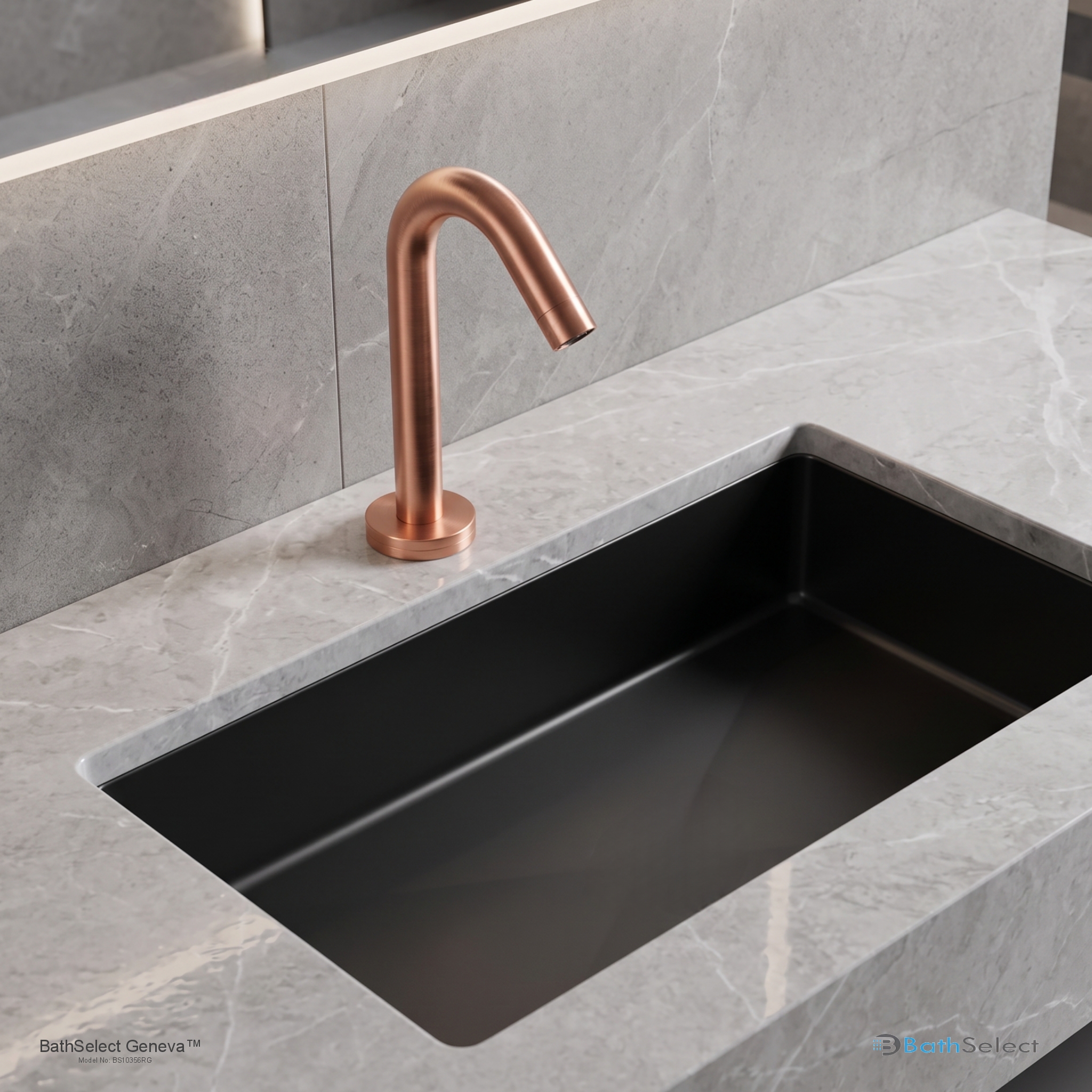
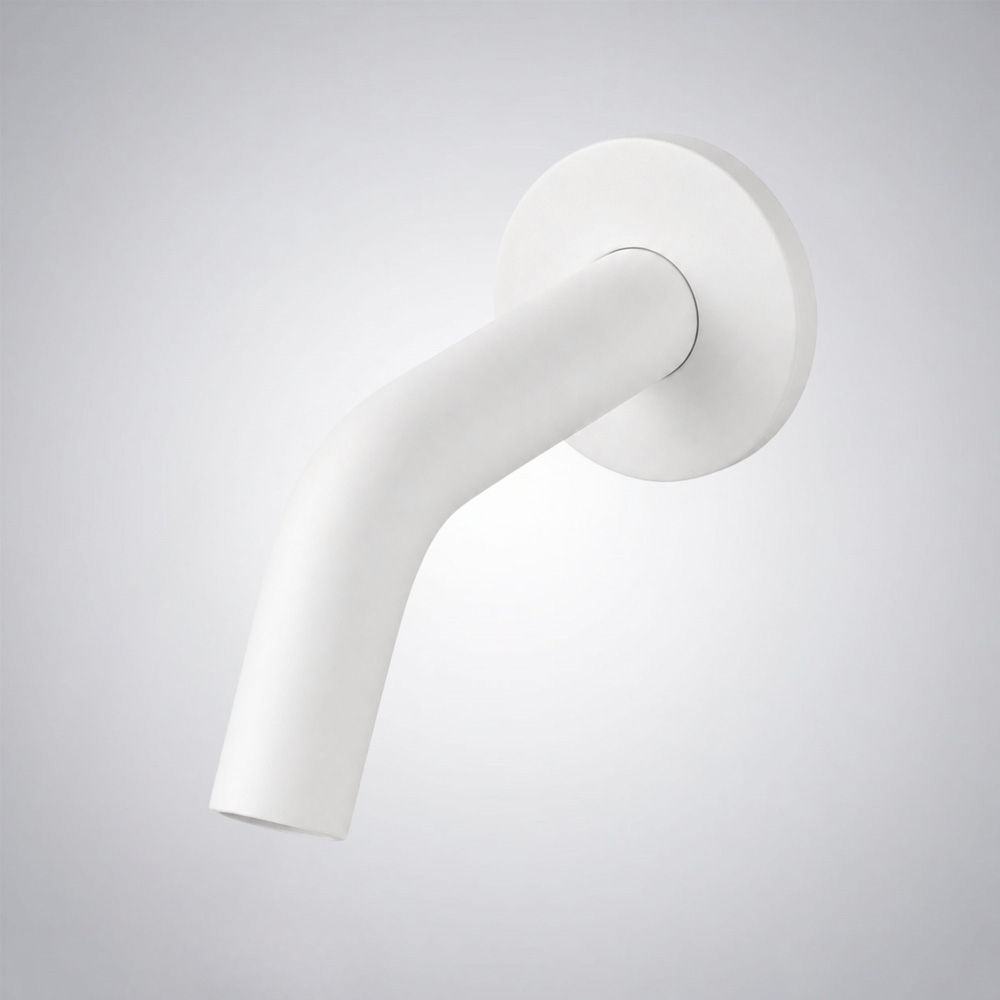
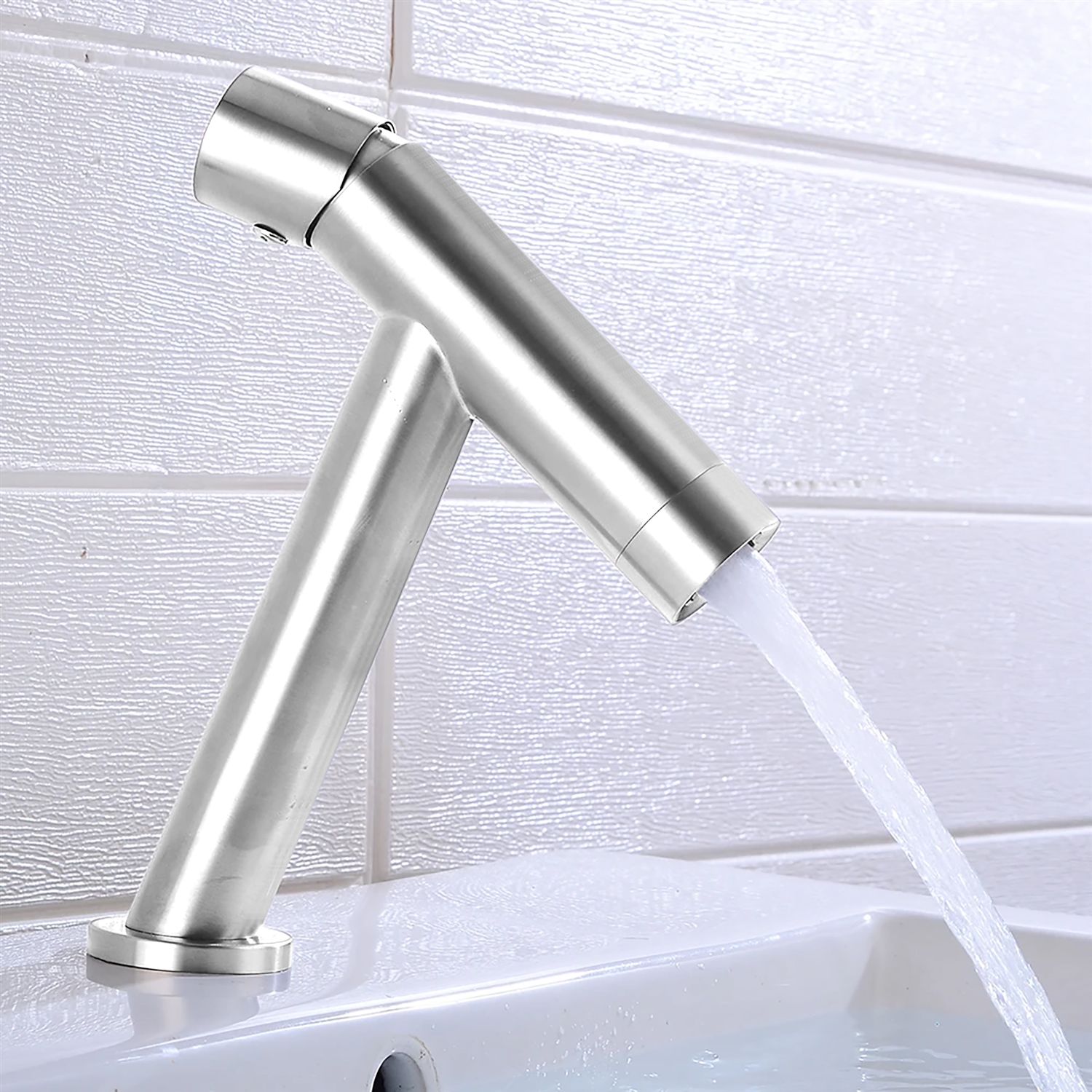
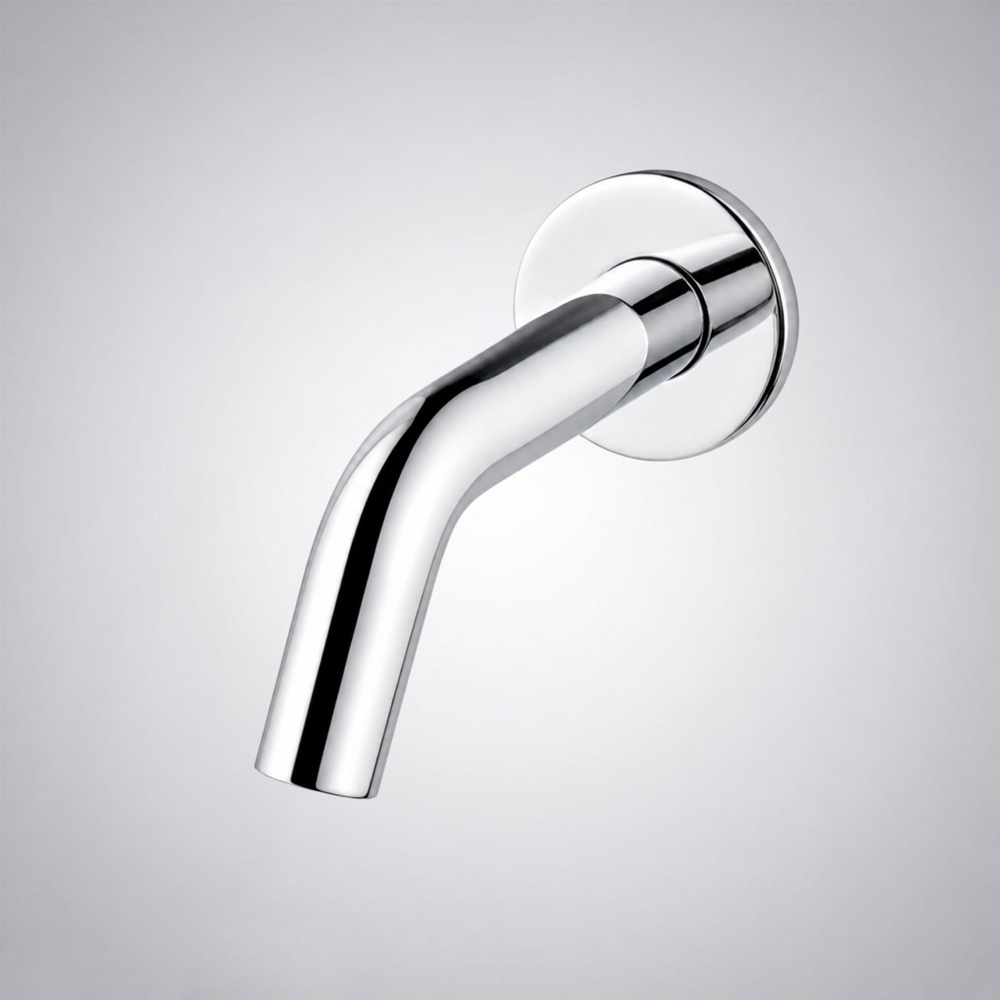
Touch-free operation can also support an accessible design strategy. BathSelect's commercial touchless faucet systems include sensor-operated configurations with technical documentation such as specification sheets, installation instructions and BIM resources. Product-specific accessibility compliance should still be confirmed from the current submittal package rather than assumed from appearance or product type.
Shower Performance: Control Before Complexity
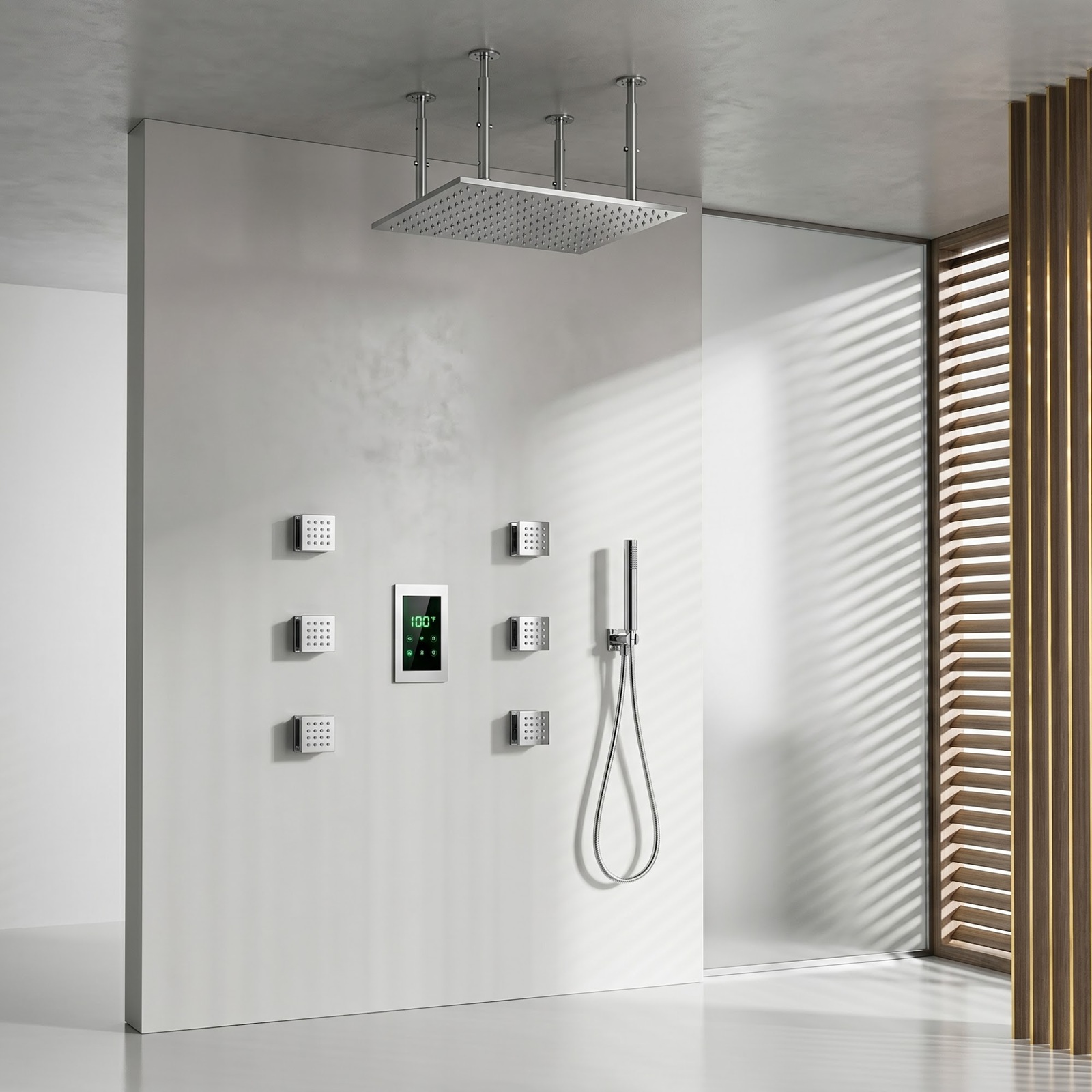
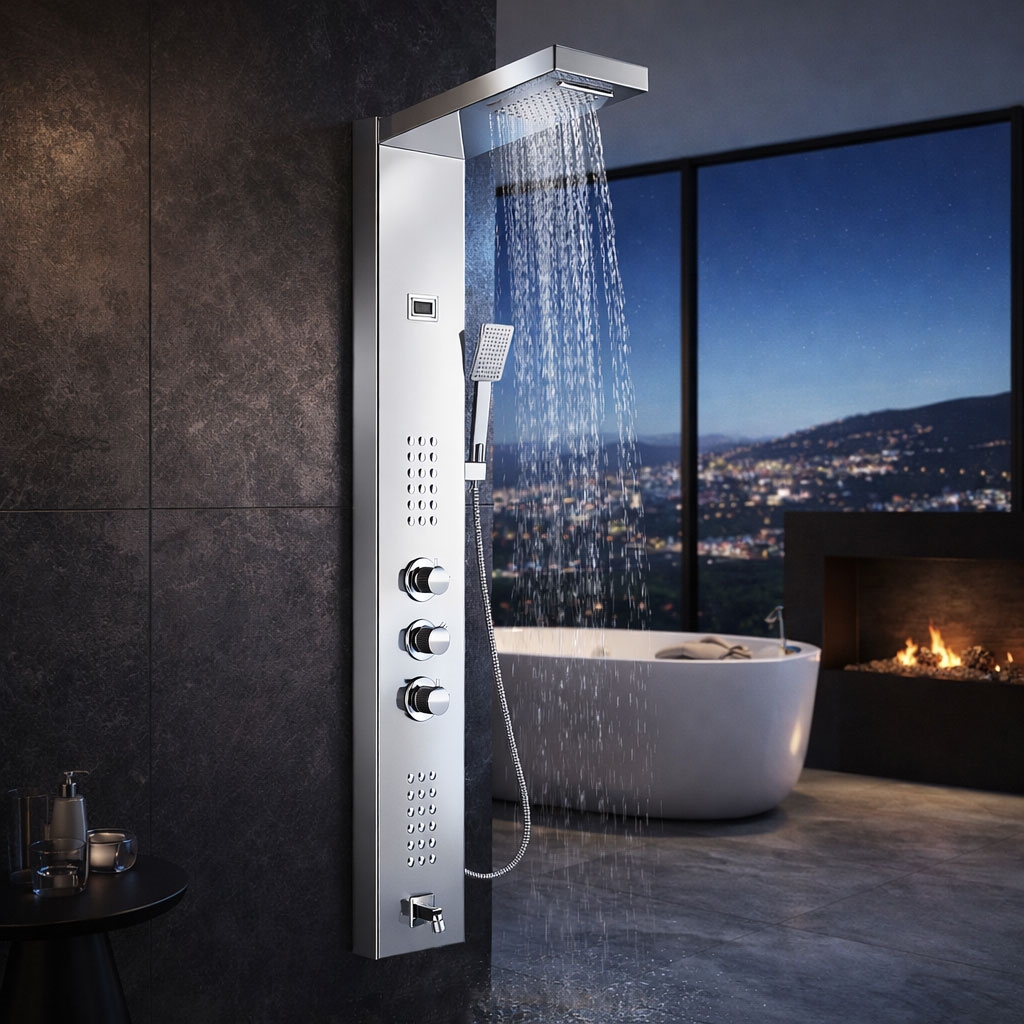
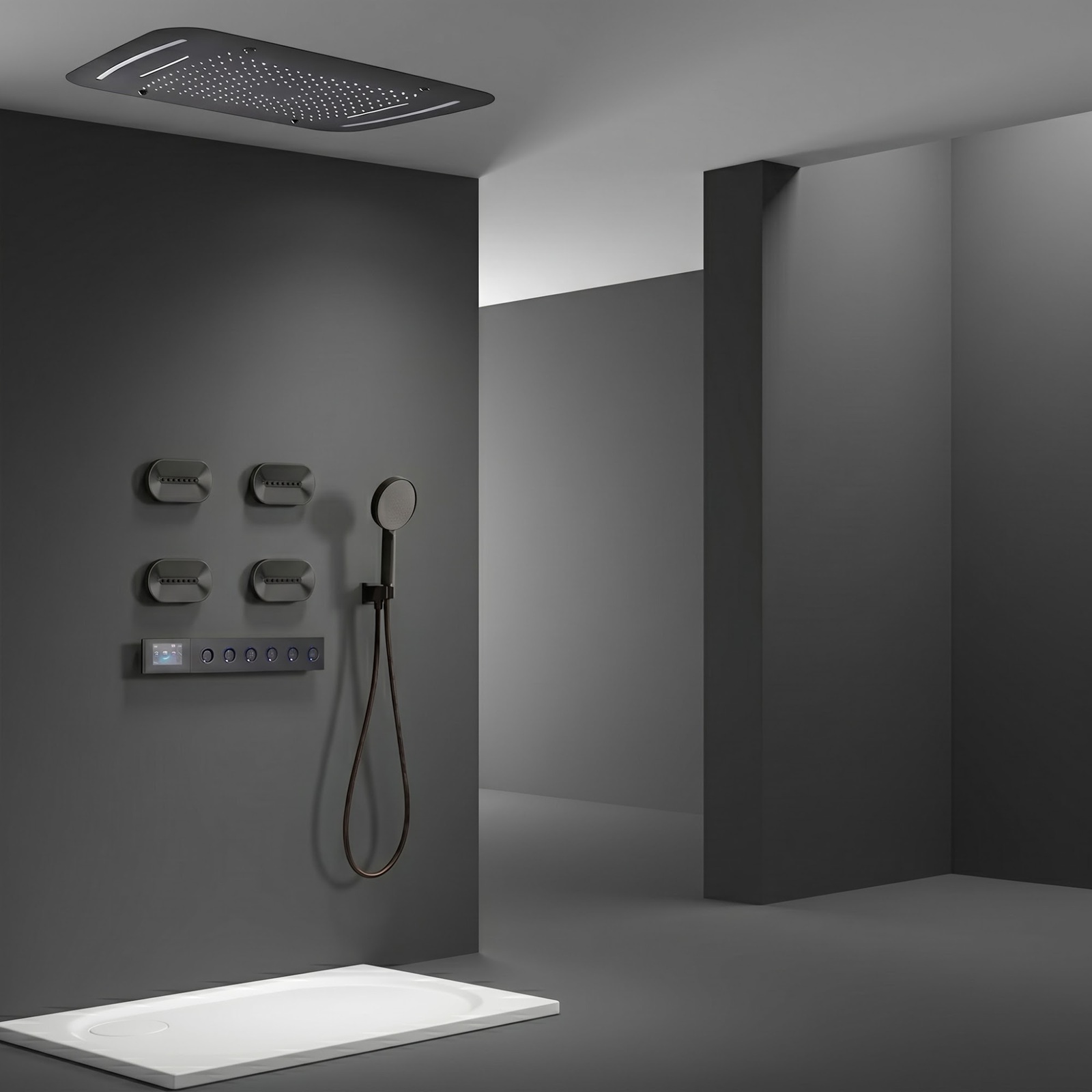
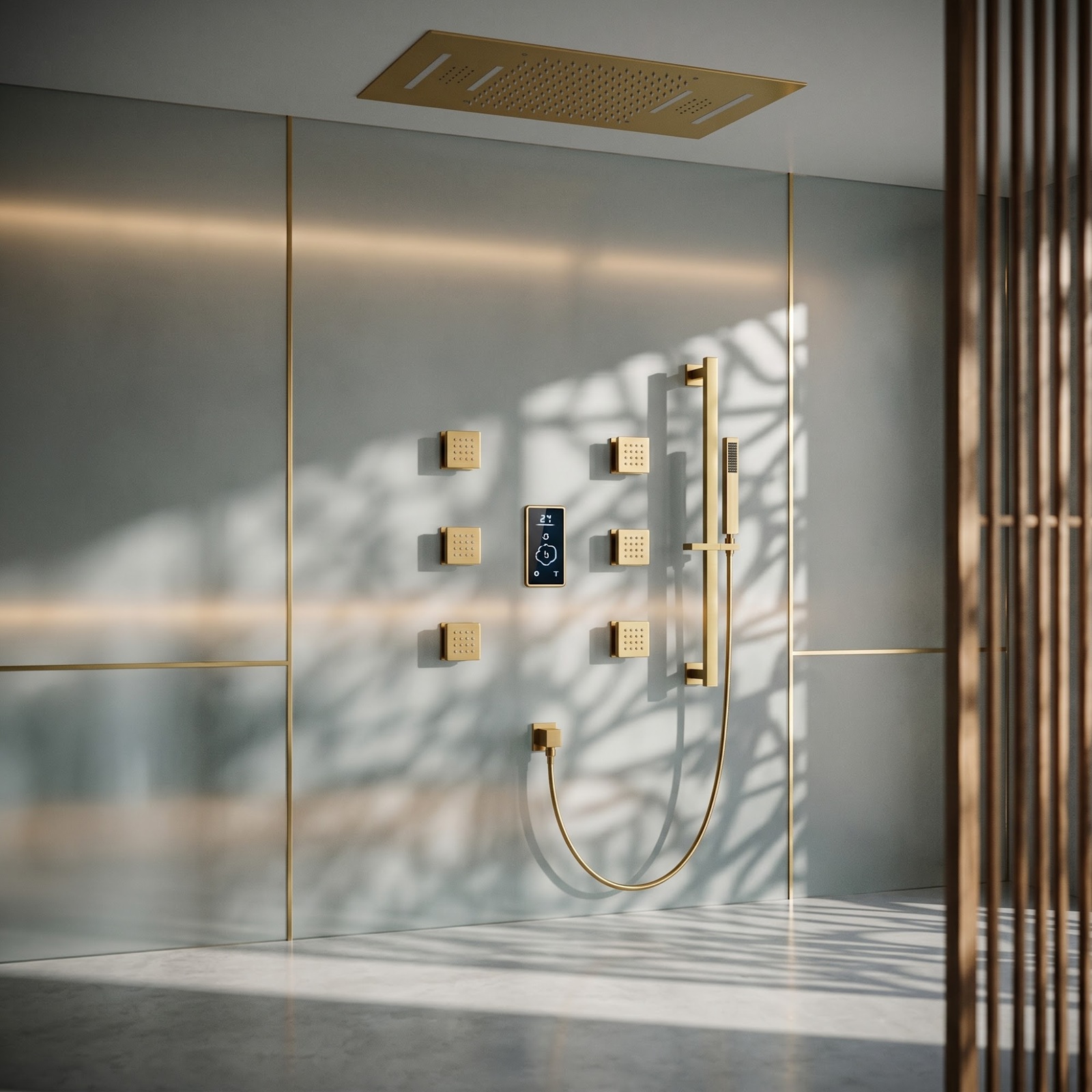
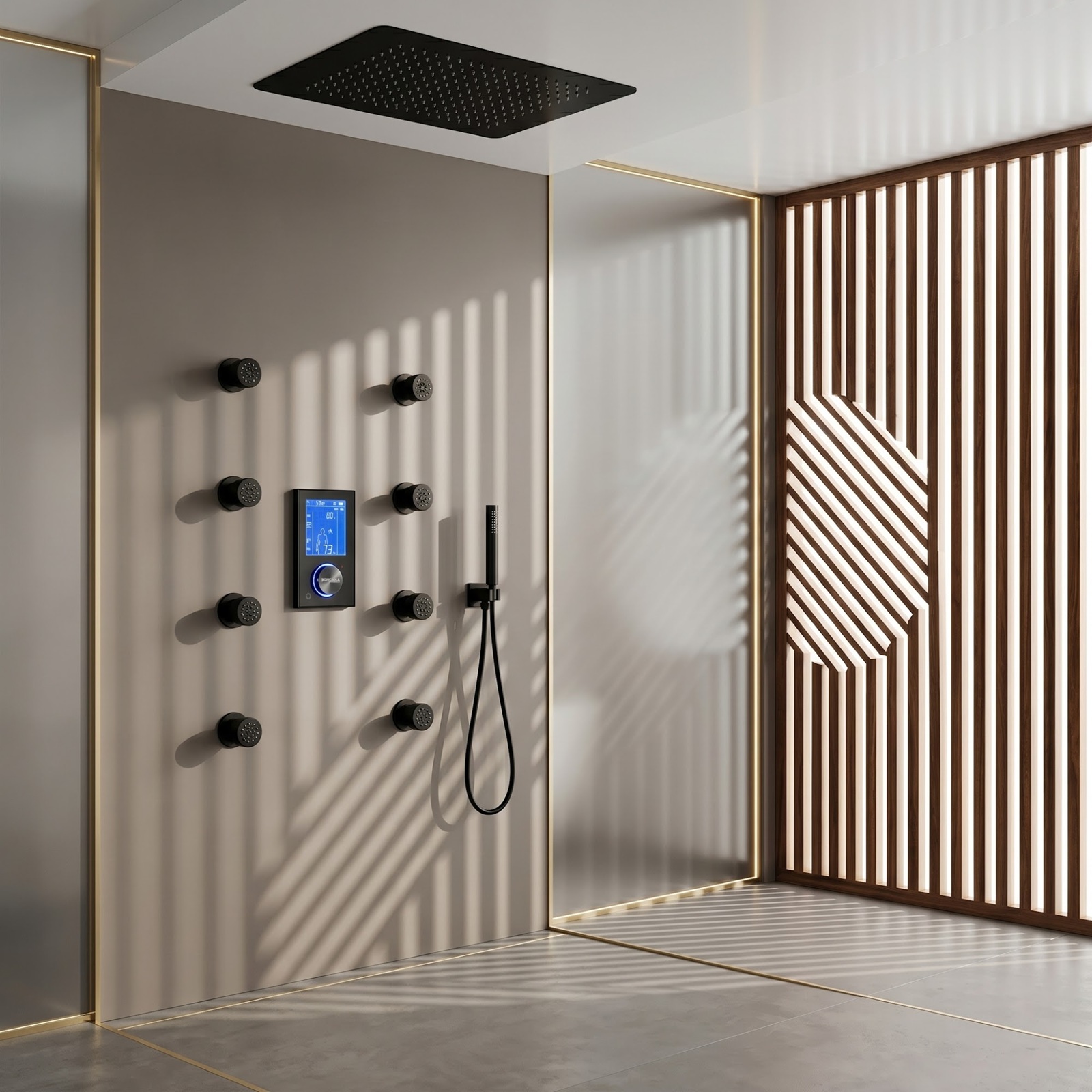
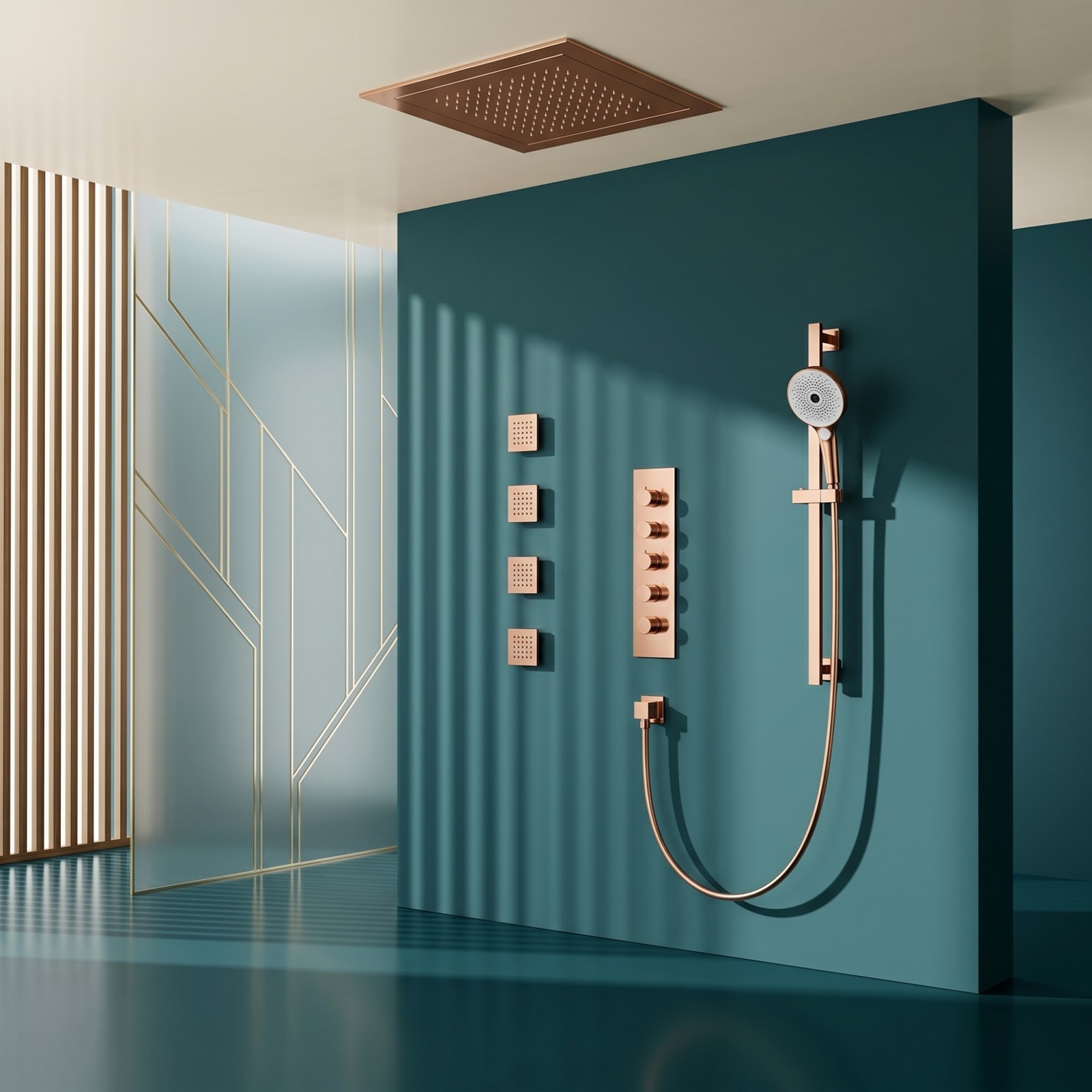
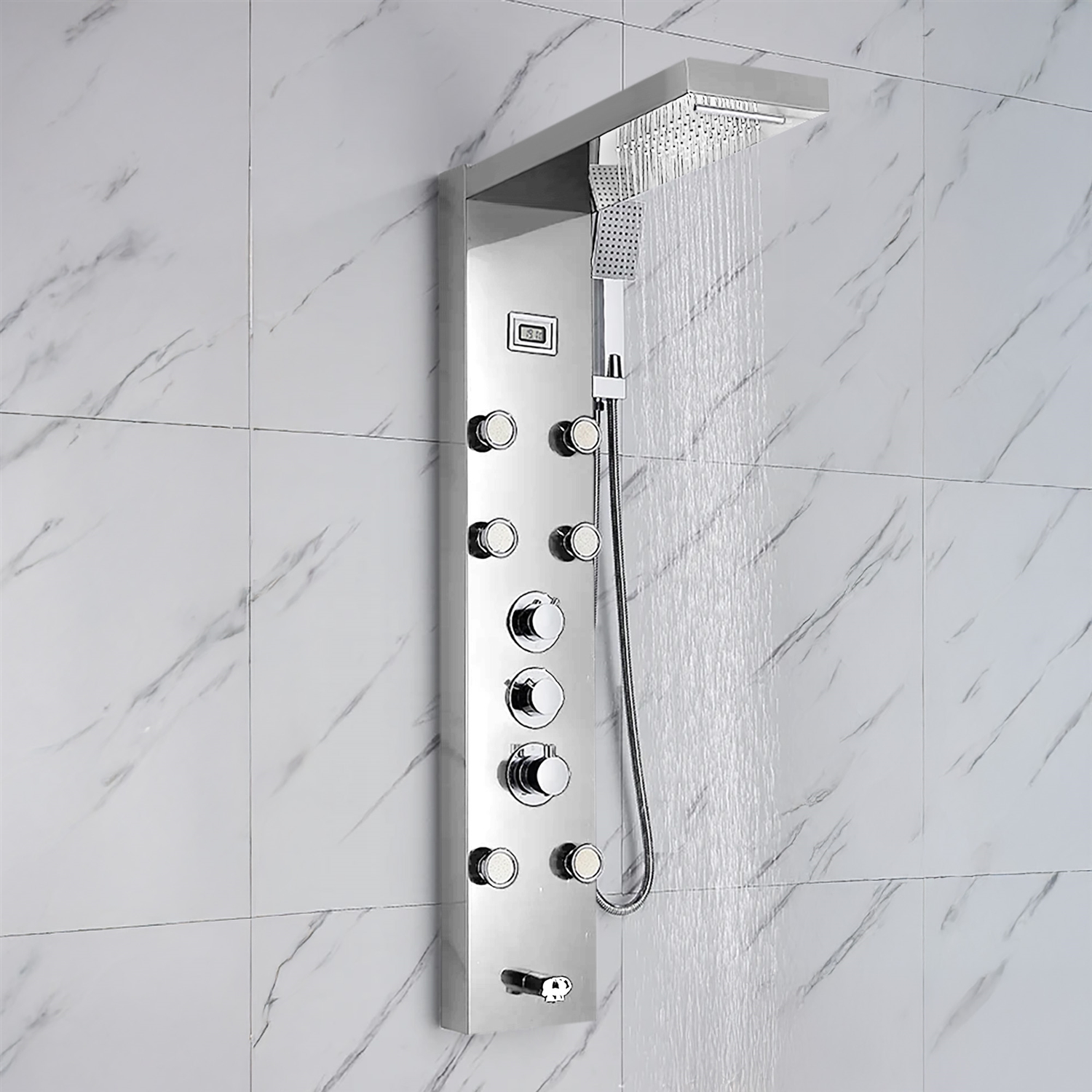
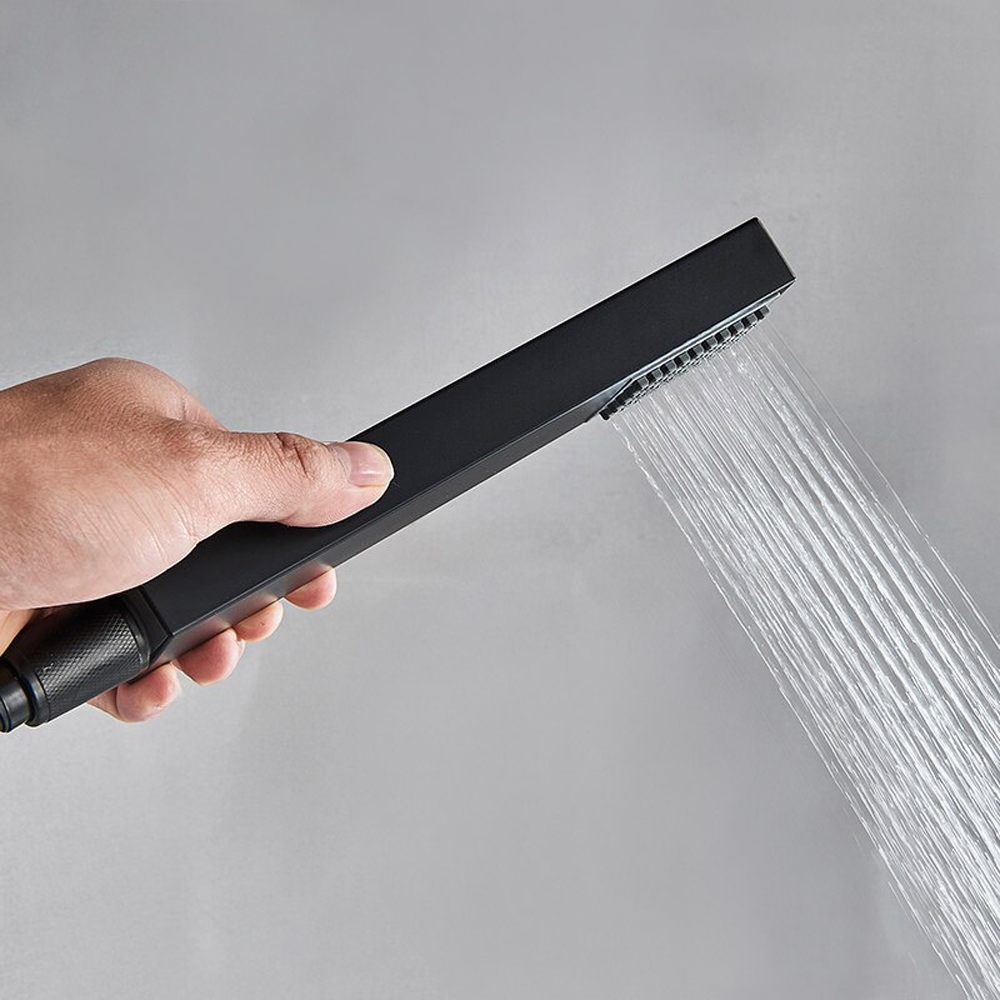
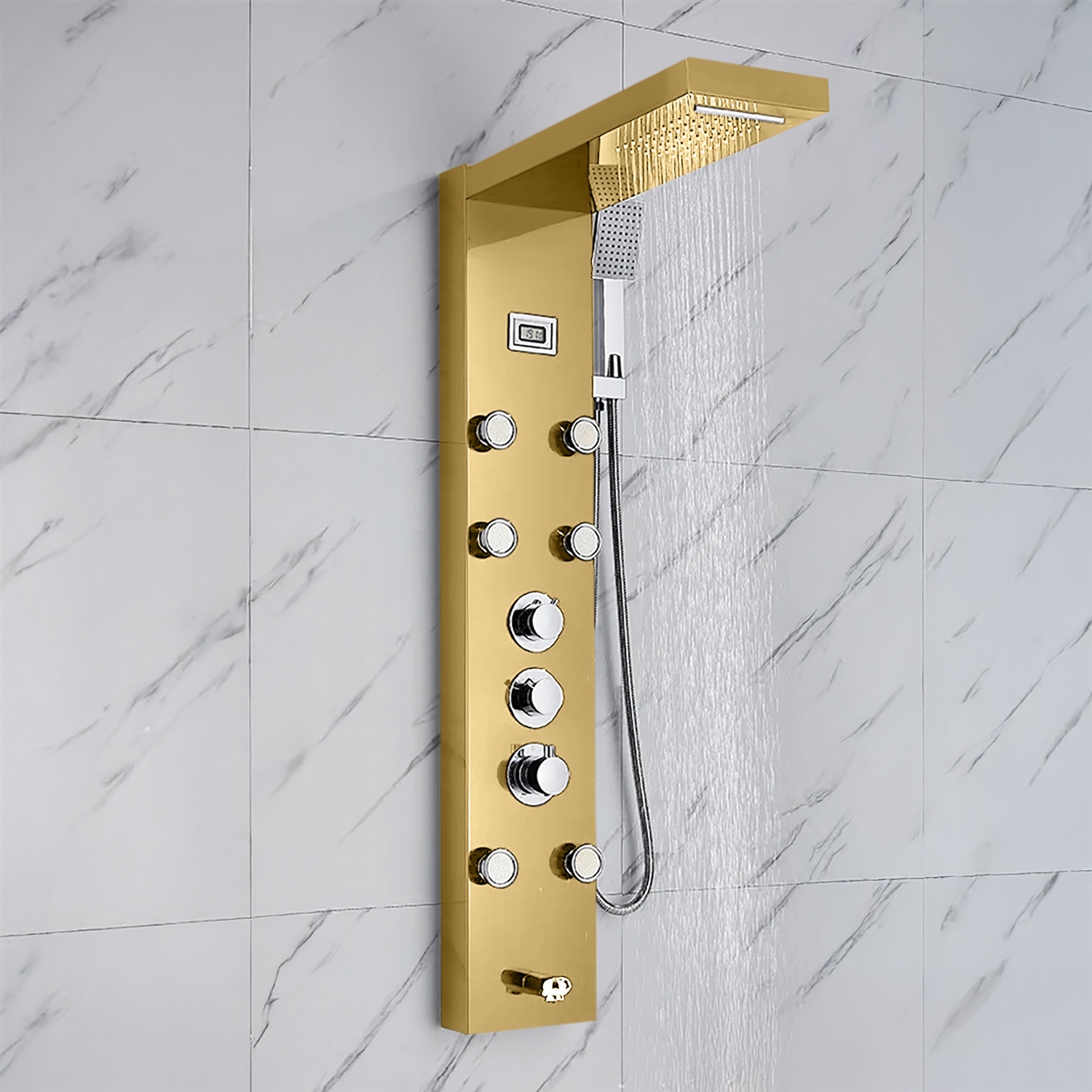
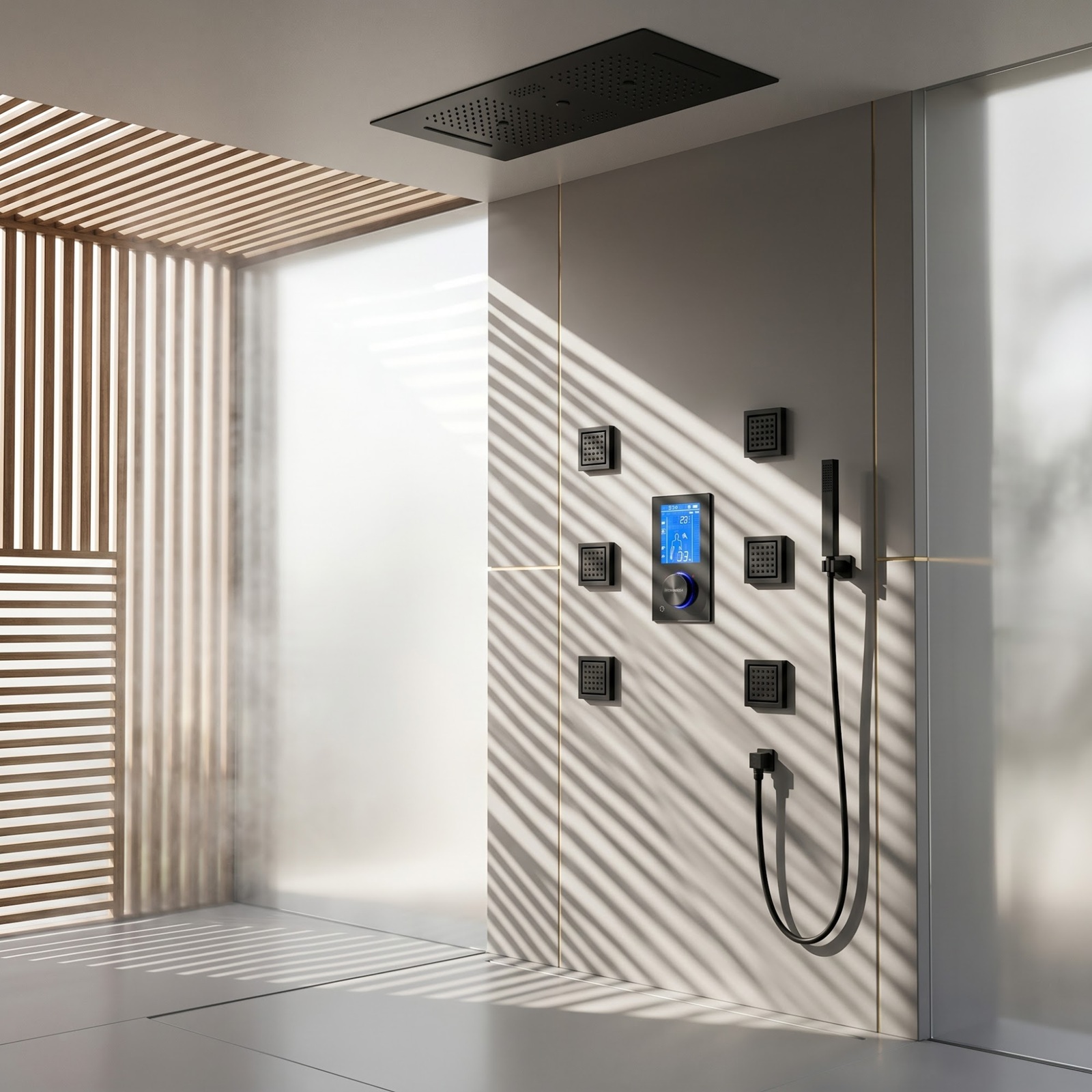
Luxury hospitality bathrooms increasingly incorporate rain heads, hand showers, body sprays and digital or thermostatic controls. Each additional outlet changes the hydraulic calculation.
Read MoreShow Less
The specification should identify:
- Available static and dynamic pressure
- Maximum simultaneous fixture demand
- Individual outlet flow rates
- Supply pipe sizing
- Hot-water recovery capacity
- Diverter configuration
- Thermostatic or pressure-compensating valve requirements
- Service access to cartridges and mixing components
ASME A112.18.1/CSA B125.1-2024 covers plumbing supply fittings including showerheads, handheld showers, body sprays, lavatory fittings and automatic compensating valves.
For point-of-use shower temperature control, ASSE 1016 addresses automatic compensating valves serving showers and tub/shower combinations, while ASSE 1070 addresses water-temperature-limiting devices for fixtures such as lavatories and bathtubs.
BathSelect's commercial thermostatic shower systems include thermostatic, pressure-balance and digital control approaches. On an AEC project, selection should be based on the required hydraulic performance and applicable certification of the specific model—not simply the number of functions available.
Water Efficiency Without Sacrificing Hospitality
Water conservation in hotels becomes significant because small fixture-level reductions are multiplied across hundreds of guestrooms.
Read MoreShow Less
Consider an illustrative 250-room hotel operating at 75% occupancy, with an average of 1.6 guests per occupied room and one eight-minute shower per guest per day.
That represents approximately 300 showers per day.
At 2.5 gpm, shower demand would be approximately 6,000 gallons per day.
At 2.0 gpm, the same assumed usage would require approximately 4,800 gallons per day.
The theoretical difference is:
1,200 gallons per day, or approximately 438,000 gallons annually.
This is an engineering illustration, not a measured BathSelect project result. Actual savings depend on occupancy, shower duration, fixture configuration, water pressure, guest behavior and simultaneous outlet use.
The example demonstrates why a half-gallon-per-minute difference can become a material operational variable at hospitality scale.

Hygiene and Hotel Water Management
Fixture efficiency should not be separated from building-water management.
Read MoreShow Less
Hotels contain extensive domestic-hot-water networks, intermittently occupied guestrooms, long piping branches and variable demand. Those conditions make plumbing-system operation and commissioning important considerations beyond fixture selection.
ANSI/ASHRAE Standard 188 establishes minimum Legionellosis risk-management requirements covering the design, construction, commissioning, operation, maintenance, repair and modification of applicable building water systems.
The implication for hotel design teams is important: reducing flow cannot be approached as an isolated sustainability exercise. Pipe sizing, stored-water temperatures, circulation, branch lengths, stagnation risk, flushing strategy and point-of-use temperature protection should be evaluated as one coordinated system.
Touchless fixtures can reduce user contact at public wash stations, but sensor technology does not replace an appropriate building-water-management program.
For hotel public restrooms and shared facilities, BathSelect's commercial automatic sensor faucet and dispenser systems provide an example of coordinated hands-free water and soap delivery. Specifiers should evaluate sensing distance, false-activation control, solenoid access, mixing method, power source and shutoff timing during submittal review.


Material Compliance and Lifecycle Specification
Potable-water components also require attention to material and health-effects requirements.
Read MoreShow Less
NSF identifies NSF/ANSI/CAN 61 as a standard addressing health effects associated with drinking-water system components, while NSF/ANSI/CAN 372 provides a methodology for verifying lead content, including a 0.25% maximum weighted lead content for most covered components.
For hotel ownership groups, however, compliance should be paired with serviceability.
A stronger fixture schedule records not only model number and finish but also:
flow rate, pressure range, inlet size, valve type, mixing method, power requirement, sensor range, replacement cartridge, solenoid location, filter access, warranty and required maintenance clearance.
These details help prevent a visually successful bathroom from becoming a maintenance liability after turnover.
The Hotel Bathroom as a Coordinated Building System
The strongest BathSelect hotel bathroom specification is ultimately not the one with the greatest number of features. It is the one in which architecture, plumbing engineering and facility operations have been coordinated before procurement.
Read MoreShow Less
Water-efficient outlets must still deliver acceptable performance. Accessible layouts must remain functional after millwork is installed. Thermostatic systems must be selected around actual pressure and flow conditions. Electronic faucets require serviceable power and control architecture. Premium finishes must coexist with commercial maintenance requirements.
For architects and engineers developing luxury hotel bathrooms, resort bathrooms, ADA-compliant guestrooms, commercial washrooms and hospitality shower systems, BathSelect's broader architect-oriented touchless fixture series provides a useful starting point for comparing flow, sensing, power and documentation requirements.
Hotel bathroom standards are therefore best understood as a performance framework rather than a product checklist. When fixture selection is integrated with accessibility, water management, hydraulic design, temperature safety and lifecycle serviceability, the bathroom becomes what hospitality projects increasingly require: a durable, resource-conscious building system that still feels effortless to the guest.

BathSelect Hotel Bathroom Standards
Related Hotel Bathroom, AEC, Plumbing, Accessibility and Hospitality Sources
Professional and technical references relevant to hotel bathroom standards, hospitality design, plumbing and shower-system coordination, accessibility, water efficiency, temperature control, building-water management, material compliance, specification documentation, and long-term facility operations.