Integrated soap and water fixtures engineered to streamline handwashing workflows, reduce maintenance, and improve hygiene compliance in commercial restroom environments.
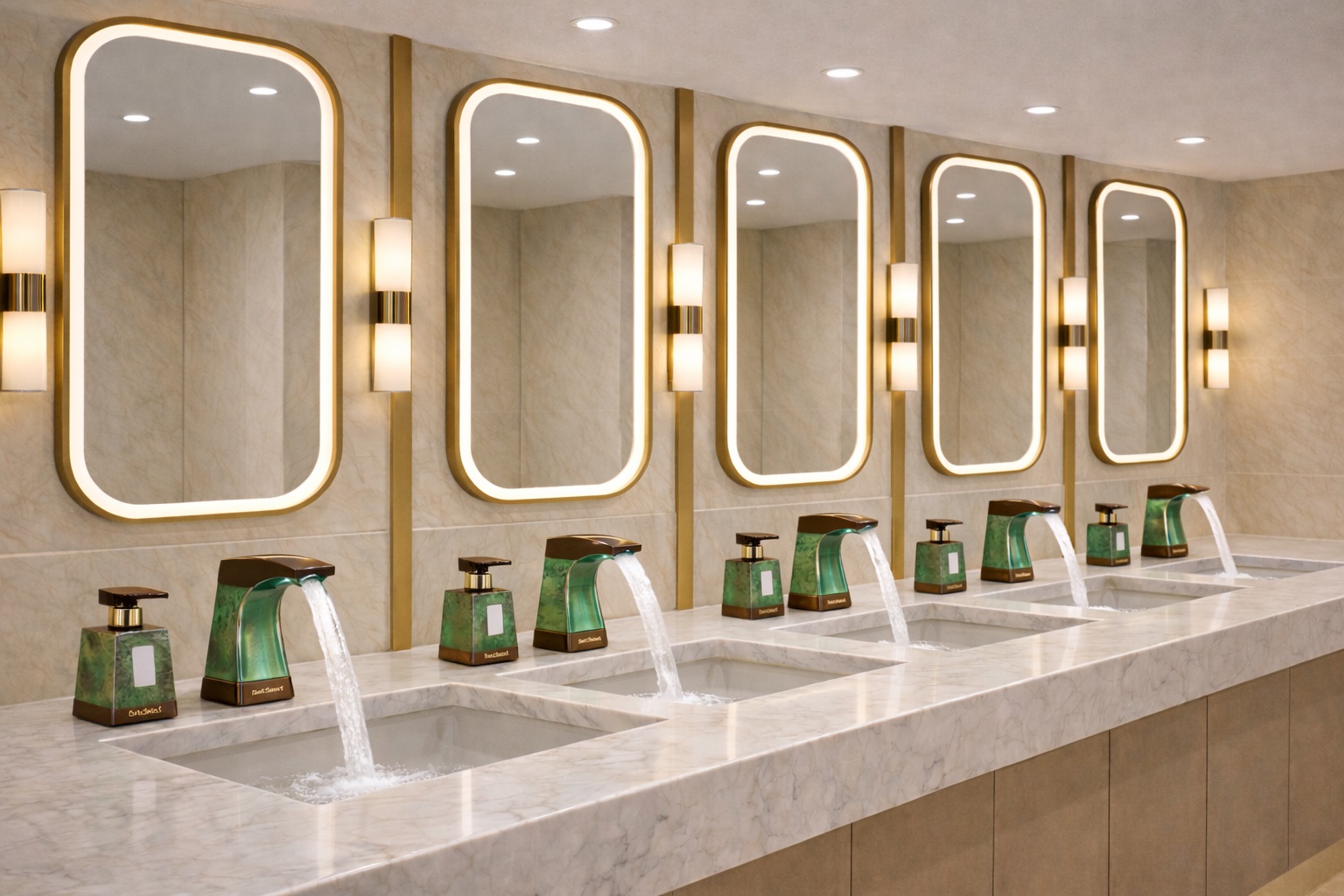
Use cases: Airports · Healthcare · Commercial Facilities
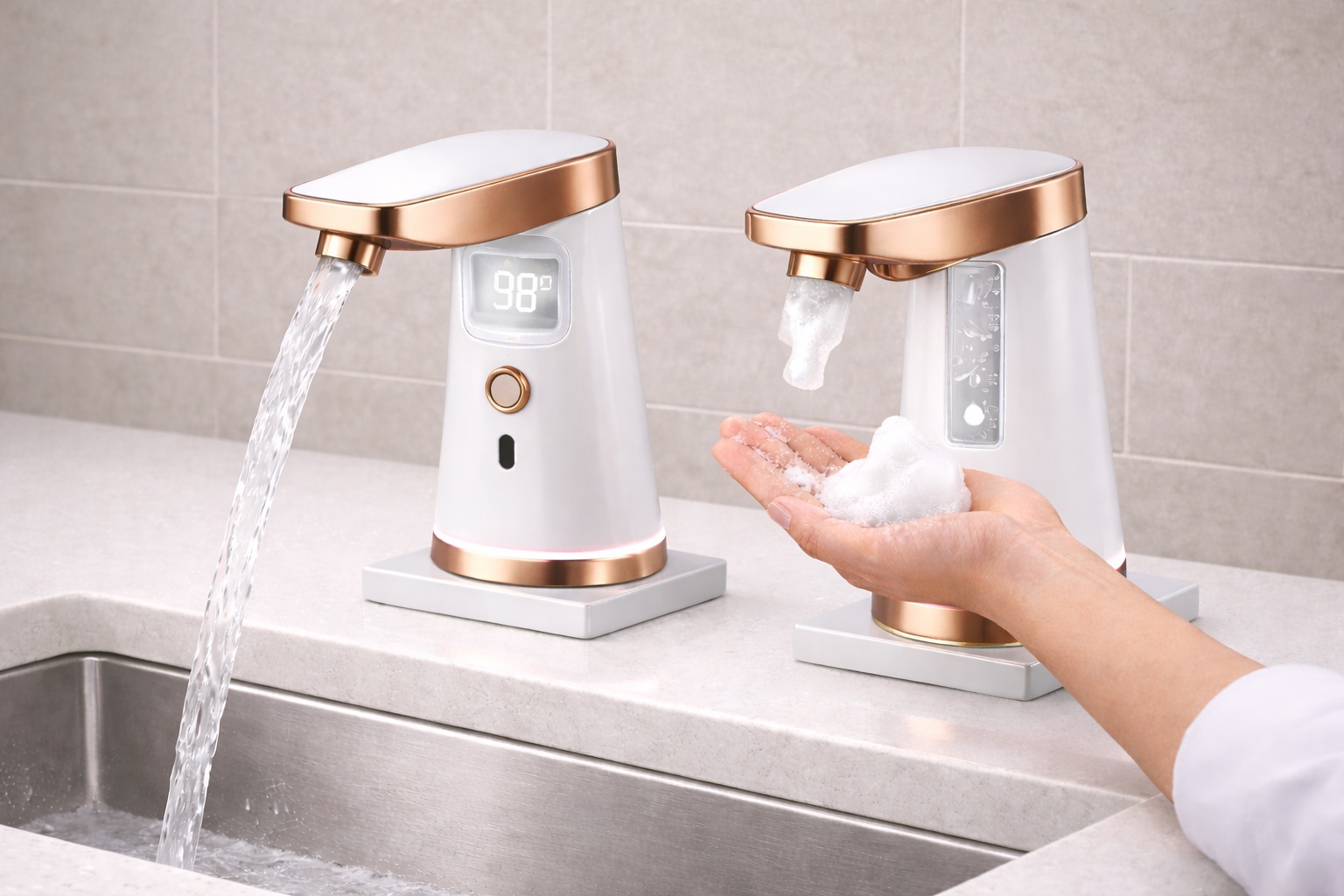
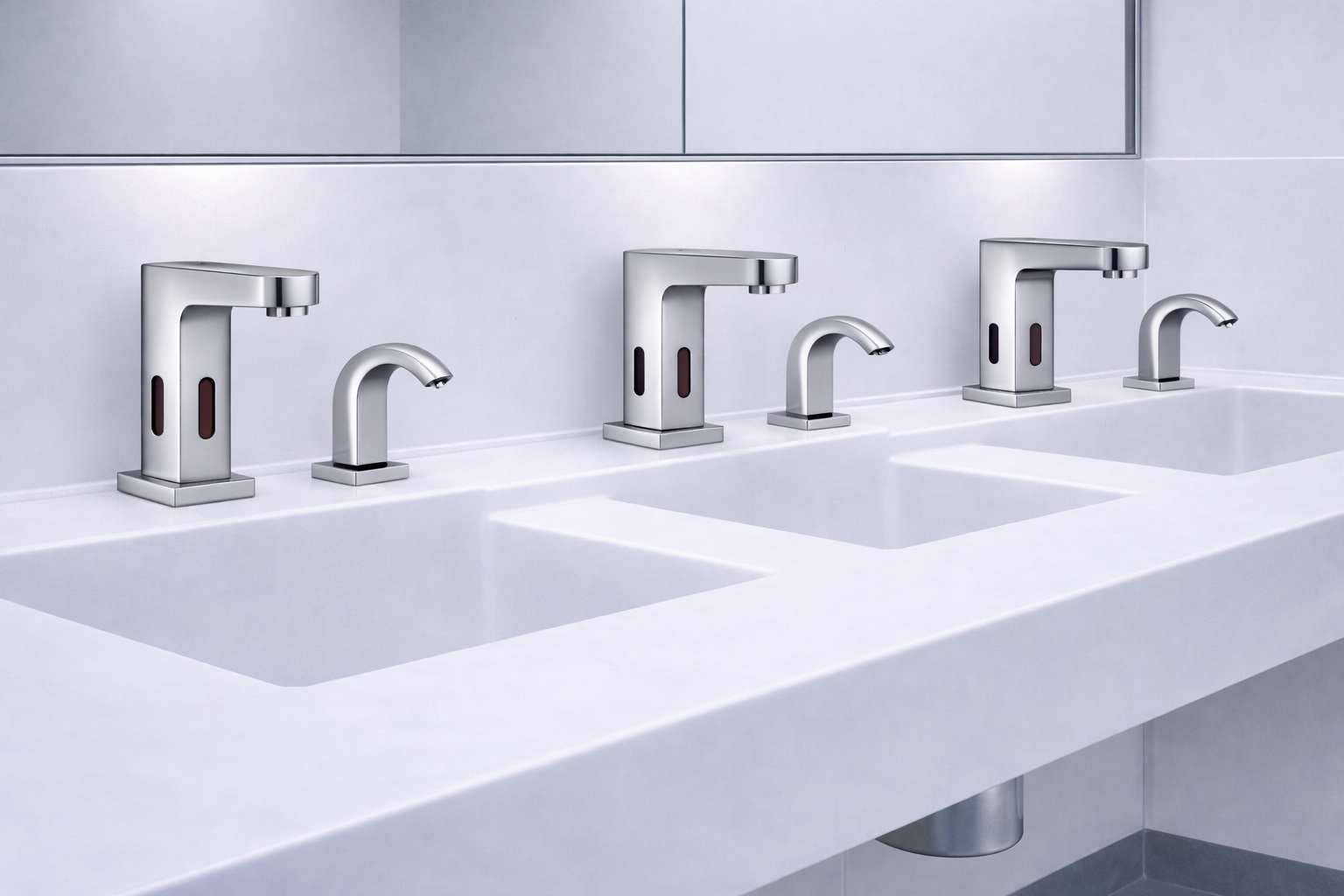
Touchless integrated fixtures combining infrared activation with controlled soap and water delivery to support ADA compliance and architectural design performance.
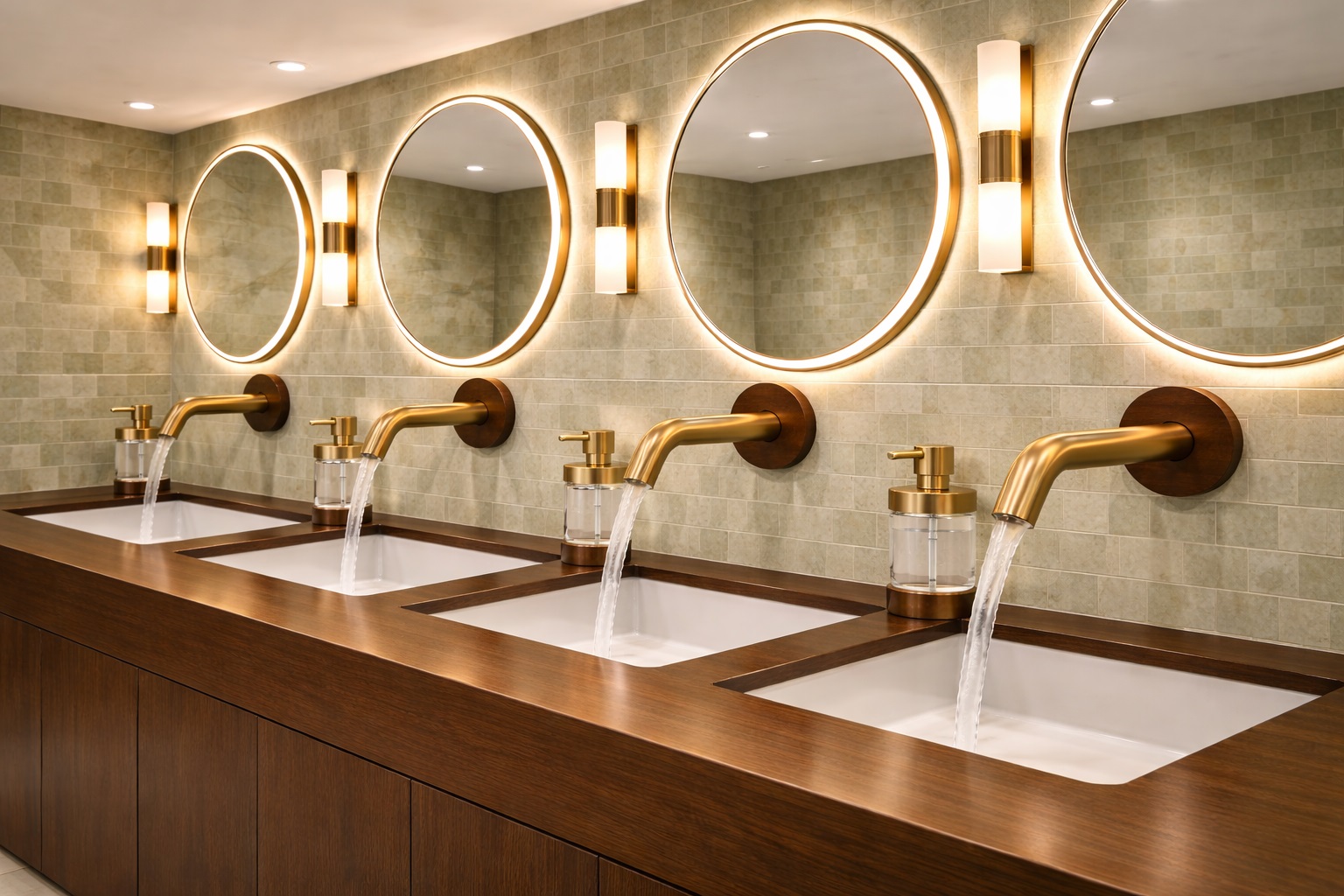
Use cases: Education · Corporate · Public Facilities
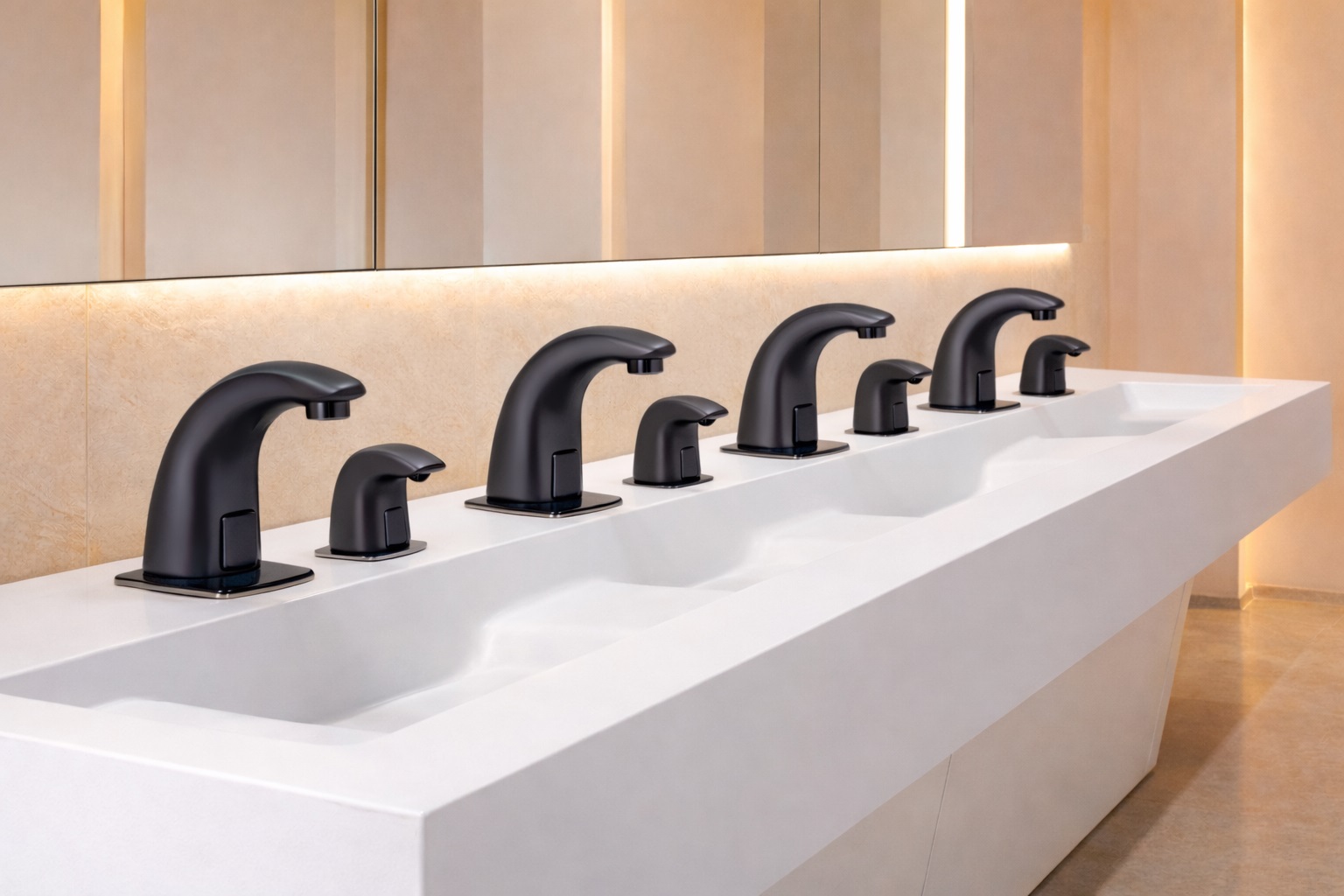
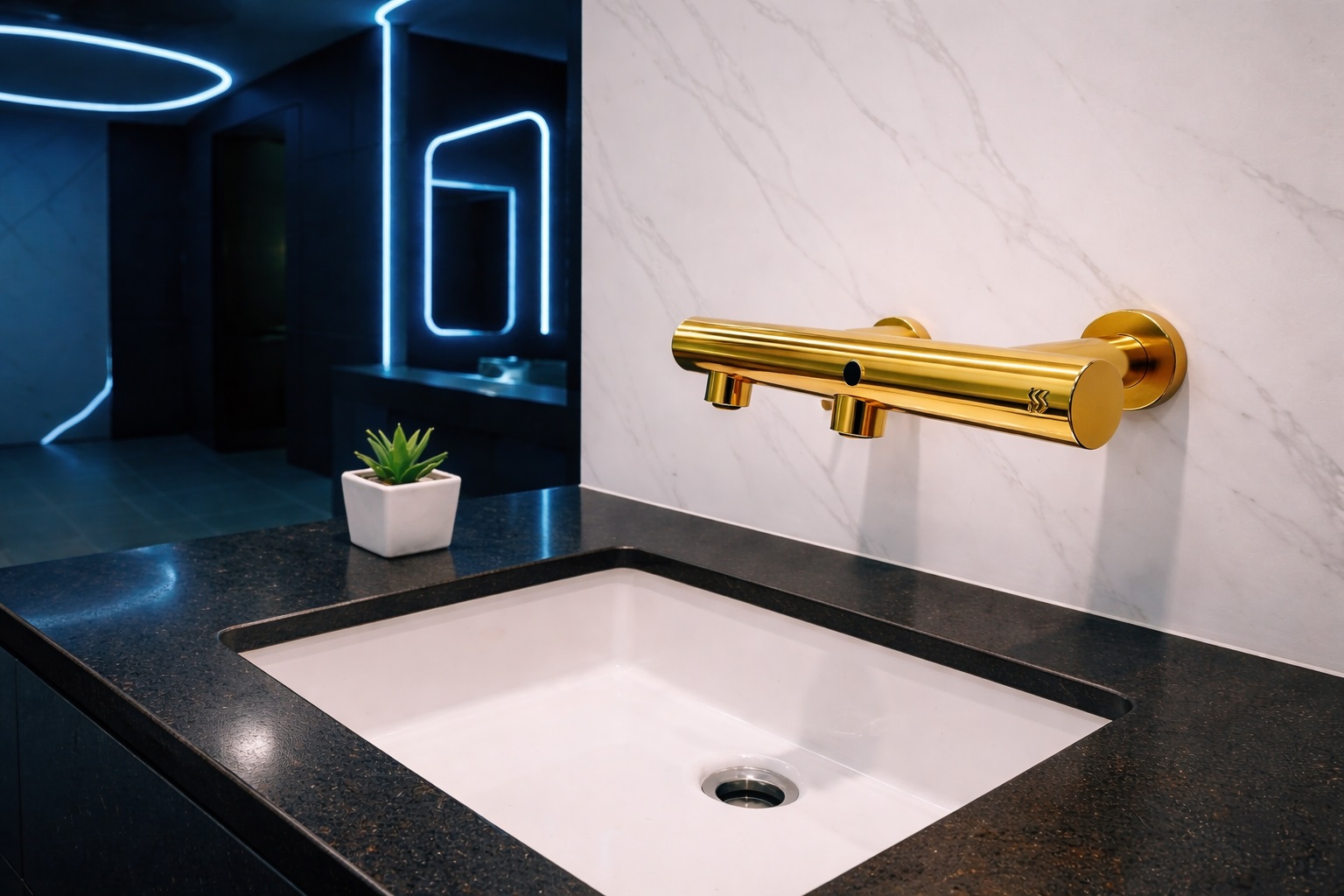
Modern matte black finishes combined with commercial-grade internals provide durability while supporting contemporary restroom architectural aesthetics.
BathSelect commercial soap dispenser faucets provide integrated, touchless dispensing engineered for high-traffic public restrooms. These fixtures improve hygiene compliance, reduce cross-contamination, and deliver consistent performance using durable commercial-grade materials and advanced sensor activation technology. Ideal for architects and facility managers specifying reliable hand hygiene solutions.
This category presents spec-grade soap dispenser faucet systems engineered for public restroom applications. Designed for durability, hygiene efficiency, and architectural integration, these fixtures support commercial restroom performance standards while minimizing maintenance requirements and improving operational reliability.
Deck-mounted soap dispenser faucets provide seamless integration into sink decks and countertop installations. These systems deliver reliable dispensing performance while maintaining architectural aesthetics and commercial durability for public restroom environments.
Wall-mounted soap dispenser fixtures provide efficient and accessible hand hygiene solutions while preserving countertop space. Engineered for durability and commercial compliance, these systems support high-use public restroom environments and simplify maintenance operations.
These commercial sensor faucets integrate seamlessly with soap dispensing systems to deliver complete touchless handwashing solutions. Designed for architects and engineers, they ensure durability, hygiene compliance, and reliable performance across commercial restroom installations.
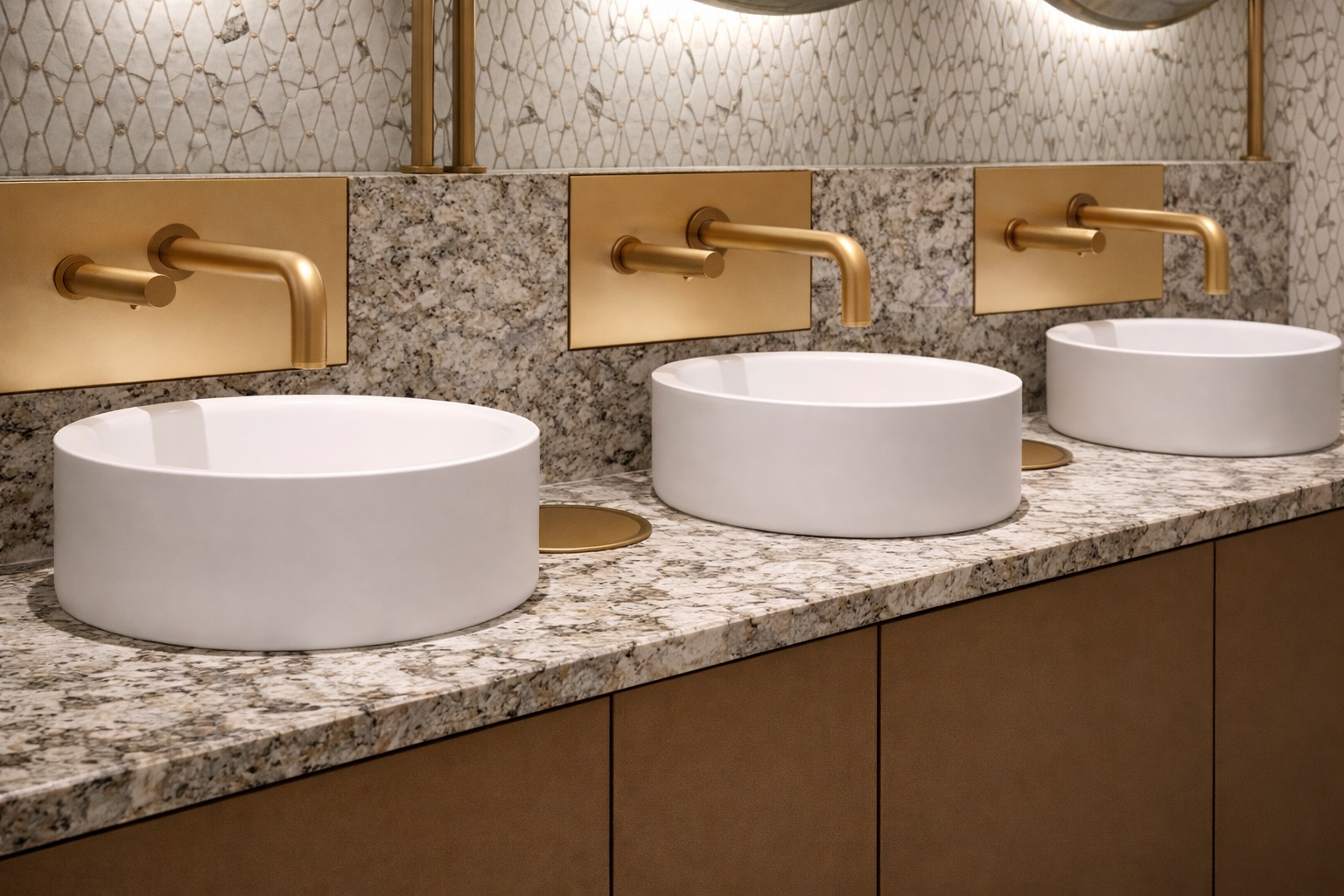
Airport Installation — Integrated soap dispenser faucets improve hygiene efficiency and operational reliability.
Healthcare Facility — Touchless fixtures support infection control and sanitation protocols.
Corporate Facility — Architectural fixtures provide durability and modern design integration.
Soap Dispenser Faucet Specification Video Showcase
This demonstration presents BathSelect architectural soap dispenser faucets designed for public restroom applications. The video highlights infrared sensor activation, integrated soap dispensing, and controlled water flow performance. Architects and engineers can evaluate fixture reliability, hygiene efficiency, and commercial installation suitability across high-traffic environments such as airports, healthcare facilities, and institutional buildings.
Commercial Soap Dispenser Faucet — Installation and Engineering Specification Guide
This video provides engineering and architectural insight into BathSelect commercial soap dispenser faucet systems. It covers installation integration, maintenance accessibility, sensor reliability, and lifecycle performance considerations. These fixtures support hygienic restroom design, reduce maintenance complexity, and meet commercial specification standards for public facilities.
These specification videos assist architects, engineers, and facility planners in evaluating BathSelect soap dispenser faucet systems for hygiene compliance, durability, and commercial restroom performance integration.
Soap Dispenser Faucet Specification Guidance
Airports and Transit Facilities
Specify integrated soap dispenser faucets with durable brass construction, vandal resistance, and AC-powered sensor reliability for high-traffic restroom environments.
Healthcare and Institutional Facilities
Touchless integrated fixtures reduce contamination risk while supporting sanitation protocols and compliance with healthcare design standards.
Corporate and Commercial Facilities
Architectural finishes combined with reliable sensor systems ensure modern aesthetics and long-term operational performance.
These technical FAQs address critical specification, engineering integration, and lifecycle performance considerations
when selecting BathSelect architectural soap dispenser faucets for commercial restroom design, public infrastructure,
and institutional facilities.
How do integrated soap dispenser faucets impact plumbing system design and rough-in coordination?
Integrated soap dispenser faucets introduce additional routing requirements for soap supply lines, refill access,
and mounting clearances. Architects and plumbing engineers must coordinate deck thickness, mounting hole placement,
and under-deck clearance for reservoirs or multifeed systems. Proper coordination prevents interference with drain
lines, sensor modules, and electrical connections while ensuring long-term service accessibility.
What sensor reliability and activation performance criteria should be specified for commercial soap dispenser faucets?
Commercial specifications should prioritize sensor stability, activation speed, and environmental immunity.
Key performance indicators include detection range consistency, resistance to ambient light interference,
and reliable activation under varying hand positions. Stable sensor logic prevents false triggers, reduces
soap waste, and ensures predictable operation in high-traffic restroom environments.
What material and internal component specifications ensure long-term durability in public restroom environments?
Specify solid brass construction, corrosion-resistant internal channels, and chemically resistant seals.
Commercial restroom fixtures must withstand aggressive cleaning chemicals, hard water mineral content,
and frequent activation cycles. Durable finishes such as PVD coatings provide long-term resistance to
abrasion, corrosion, and finish degradation.
How do integrated soap dispenser faucets affect ADA compliance and accessibility design?
Touchless soap dispenser faucets support ADA accessibility by eliminating manual activation requirements.
However, proper specification must ensure compliant mounting heights, unobstructed reach ranges, and accessible
service areas. Installation must also maintain required knee and toe clearances beneath lavatories.
What power configurations provide optimal reliability in commercial installations?
Hardwired AC power with battery backup provides the highest operational reliability for high-traffic environments.
Battery-only systems simplify installation but require scheduled maintenance planning. AC-powered systems reduce
long-term maintenance burden and ensure consistent performance across continuous daily usage cycles.
How do soap dispenser faucet systems influence hygiene compliance and infection control protocols?
Touchless integrated dispensing systems eliminate surface contact points, reducing cross-contamination risk.
Controlled dispensing volumes and consistent activation improve hand hygiene compliance while minimizing soap waste.
These features support infection control protocols in healthcare, institutional, and public restroom environments.
What maintenance and lifecycle considerations should be evaluated during specification?
Specification should prioritize accessible service components, modular internal assemblies, and replaceable
sensor and dispensing modules. Easy access to refill reservoirs and service components reduces maintenance labor,
improves uptime, and lowers total lifecycle cost for facility operators.
What activation cycle performance is required for high-traffic commercial restroom installations?
Commercial soap dispenser faucets must support hundreds of thousands of activation cycles without sensor drift,
valve failure, or dispensing inconsistency. High-cycle durability ensures reliable operation in airports,
stadiums, healthcare facilities, and large institutional buildings.
How do soap dispenser faucet systems contribute to sustainability and water conservation goals?
Integrated sensor control minimizes unnecessary water flow and soap waste while supporting WaterSense-aligned
flow performance. Properly specified systems contribute to sustainability certification goals such as LEED,
WELL, and green building standards.