Engineering Evaluation Guide for Thermostatic Shower Systems
17 Things You Should Know About Engineering Before You Buy a Thermostatic Shower System
It's not just the appearance of a thermostatic shower system.
You should also know how long it will last, how safe it is, how
it works, and how easy it will be to keep up with over time.
Architects, engineers, developers, and procurement teams should
check the technical specifications before buying something to
make sure they are following the rules and that the item will
last a long time.
Advanced shower engineering significantly impacts both
performance and sustainability: studies show that optimized
showerhead flow rates (e.g., ≤6.3 L/min) can reduce
energy-related greenhouse gas emissions by over 20 % in typical
household use while maintaining user comfort — a key metric for
modern bathroom design and water efficiency
For more information about the product, go to BathSelect Shower
Systems Collection.
Check the range often to make sure the temperature stays the same.
By mixing hot and cold water, thermostatic valves keep the
temperature at the outlet steady. This stops people from getting
burnt. Find systems that let you set the temperature very
accurately within a small range.
This range is usually between 38 °C and 50 °C for home use, but
it can go up to 60 °C for use in institutions. Parts that respond
quickly and have thermostatic properties keep the temperature
from changing too much when the pressure changes.
How to deal with stress and keep things going
The valve should still work well even if the pressure at the
inlet goes up or down. The normal range of operational pressure
is between 0.5 and 5.0 bar. But the range can change based on how
the system is set up.
Balanced inlet pressure compatibility keeps the temperature
output the same, no matter how many people are in the building
or if a fixture is turned on somewhere else in the system.
Following the Rules of Business
BS EN 1111, ASSE 1016, or any other codes that are important in
your area should be followed when doing plumbing and safety
work.
If you work for a hospital or a business, make sure that the
thermostatic mixing valves are up to the company's engineering
standards. Certification means that the performance has been
tested in tough situations, like high temperatures, for long
periods of time.
Material & Performance Considerations
Strong enough to stop rust and keep buildings from falling apart.
Pick thermostatic systems that are made of safe-to-drink materials
like high-quality brass, stainless steel, and elastomers.
Things that are in places where the air is humid and the water is
rough shouldn't rust. Don't use cheap alloys in parts of a building
that need to last a long time.
The ability to control the flow rate and throughput
Learn what the highest flow rate is at different levels of
pressure.
When you choose rain heads, body sprays, or multi-outlet setups,
make sure that the total demand doesn't go over the valve's maximum
flow rate. If the valves are too small, they might not work right or
spray evenly.
Minimum Temperature for Supply and Differential Requirements
Thermostatic valves will only work if the hot supply temperature is
above a certain level and the difference between the hot and cold
feeds is big enough to keep the mixing stable.
To make sure the device works right and follows the rules for
stopping legionella from spreading, check the manufacturer's
minimum temperature requirements.
Operational & Safety Requirements
Protection from burns and an automatic shut-off
If the hot or cold supply stops working, safety features should
stop the flow on their own. This keeps burns and thermal shock from
happening.
If it doesn't work, check the recorded shut-off response time and
the flow limits that are still in place.
Setting up the installation and making sure it works with Rough-In
Find out if the system is hidden or not.
Check the rough-in dimensions, connection standards (½″ or ¾″
NPT/BSP), mounting depth tolerances, and whether it will work with
the plumbing that is already there.
When the rough-in is lined up correctly, the installation costs
less.
How to Build Diverter Valves
If your shower system can do more than one thing, check the
diverter's mechanical cycle ratings, sealing design, and how long
it will last.
Even after being used a lot and under a lot of different amounts
of pressure, diverters should still work without leaking.
Additional Engineering Evaluation
Maintenance
When you run a facility, choose systems with thermostatic
cartridges that are easy to reach and parts that can be
changed when you need to.
Businesses can save time and money on long-term maintenance
by using easy service.
Cartridge Performance
The cartridge is what makes everything work.
Find out how quickly the system reacts to changes in the
temperature of the water coming in, how well it stops
scaling, and how long it lasts. Good cartridges stay
accurate even if you use them all the time.
Pressure & Thermal Shock
Even if the temperature or pressure drops quickly,
thermostatic valves should still work well.
Engineers often use short-term tests like pressure tests and
quick temperature changes to make sure something works.
Water Cleanliness
Filter screens or inlet strainers that are built in keep
dirt and other things out.
In places where the water is hard or has particles in it,
protective filtration can help the system last longer.
Crossflow Protection
The system has non-return valves that stop the hot and cold
supply lines from crossing.
Crossflow can change the temperature of a system too much,
which is not safe for plumbing. Make sure that businesses
follow the rules about backflow.
Sound Quality
If your project has more than one housing or hospitality
unit, check the flow noise ratings.
If plumbing systems aren't made to handle it, they can carry
noise when they move quickly.
Documentation & Warranty
Performance curves, certification data, installation
manuals, and compliance declarations should all be in
technical documentation.
The company gives strong warranties, which means they are
sure the product will last a long time and that they did a
good job of checking its quality.
Smart Integration
(Optional) Smart Control and Linking to Buildings
Some high-tech thermostatic shower systems might have digital
controls, let you set the temperature, or let you connect to smart
buildings.
Check to see if building management systems and security measures
will work in high-end or commercial buildings.
In short,
A thermostatic shower system is a very exact piece of equipment
that can change how well it works and how safe it is for the person
using it.
People who work in AEC can use these engineering standards to make
sure that projects for homes, hotels, and schools follow the rules
and work well.
Some of these requirements are how easy it is to use, how well it
holds up under pressure, how well it meets safety standards, and
how the materials are made.
You can place an order for systems from the BathSelect Shower
Systems Collection right now.
Customer Field Review
BathSelect BS7777MB Matte Black Thermostatic Digital Shower Set Field Review
A specification-focused evaluation using closely related digital and thermostatic shower records
covering electronic temperature response, hydraulic balance, multi-outlet coordination, interface
stability, commissioning, smart-control functionality, and prolonged operating performance.
✔ Related Digital Shower Evidence Referenced✔ Thermostatic Performance Focus✔ Multi-Outlet Coordination Review2025–2026 Review Records
Related-System Field ReviewThermostatic Digital ShowerModel BS7777MB
Tate Brooks, Specialist — Amarillo, Texas
Thermostatic Digital Shower Evaluation
Review record date: July 10, 2026 • Rating: 4 out of 5
Customer Review
The supplied review workbook contains no exact BS7777MB-coded entry, so this page uses the closest
technically relevant thermostatic digital-shower records and keeps them clearly separated from the
exact BS7777MB product specifications.
Read More
The primary record from Tate Brooks describes a digital shower platform that initially showed a brief
mismatch between electronic temperature settings and delivered water temperature. After recalibration,
the interface returned to precise regulation and remained dependable during prolonged testing. That pattern
is directly relevant when evaluating a multi-function digital system such as BS7777MB.
Installation
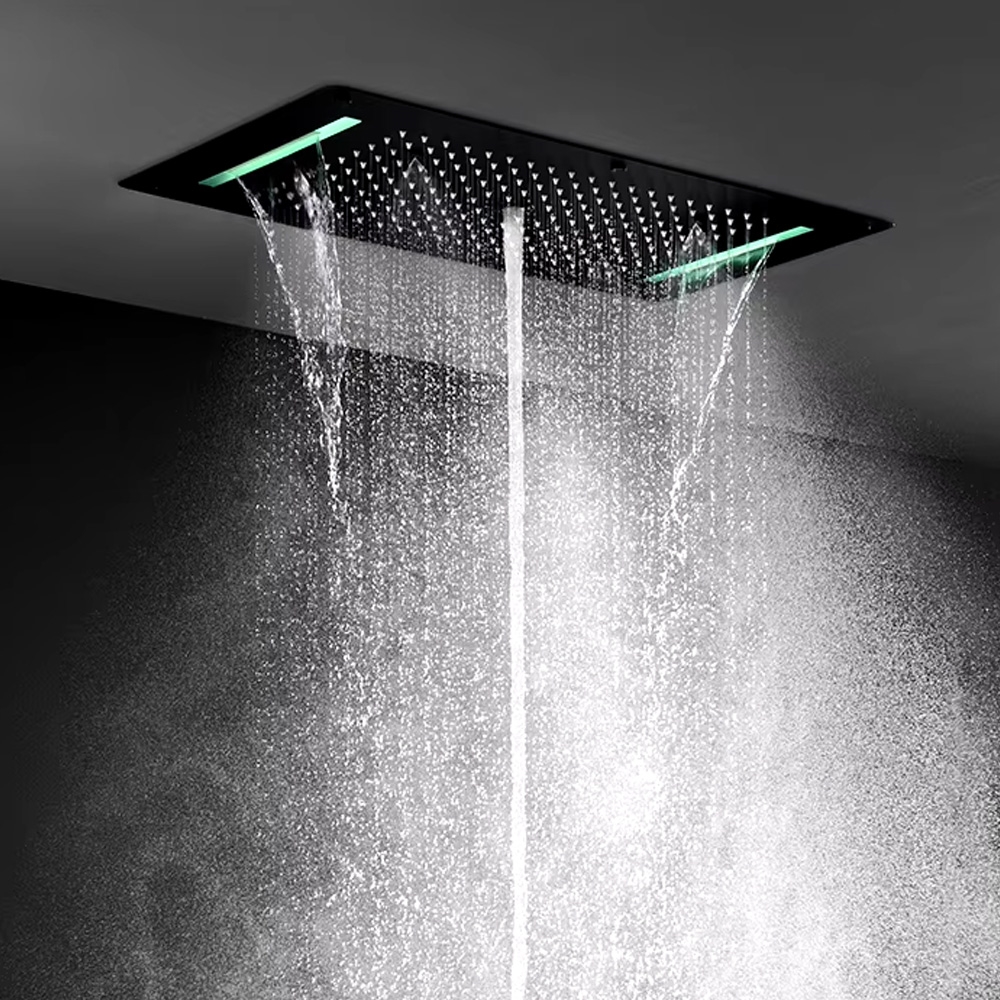
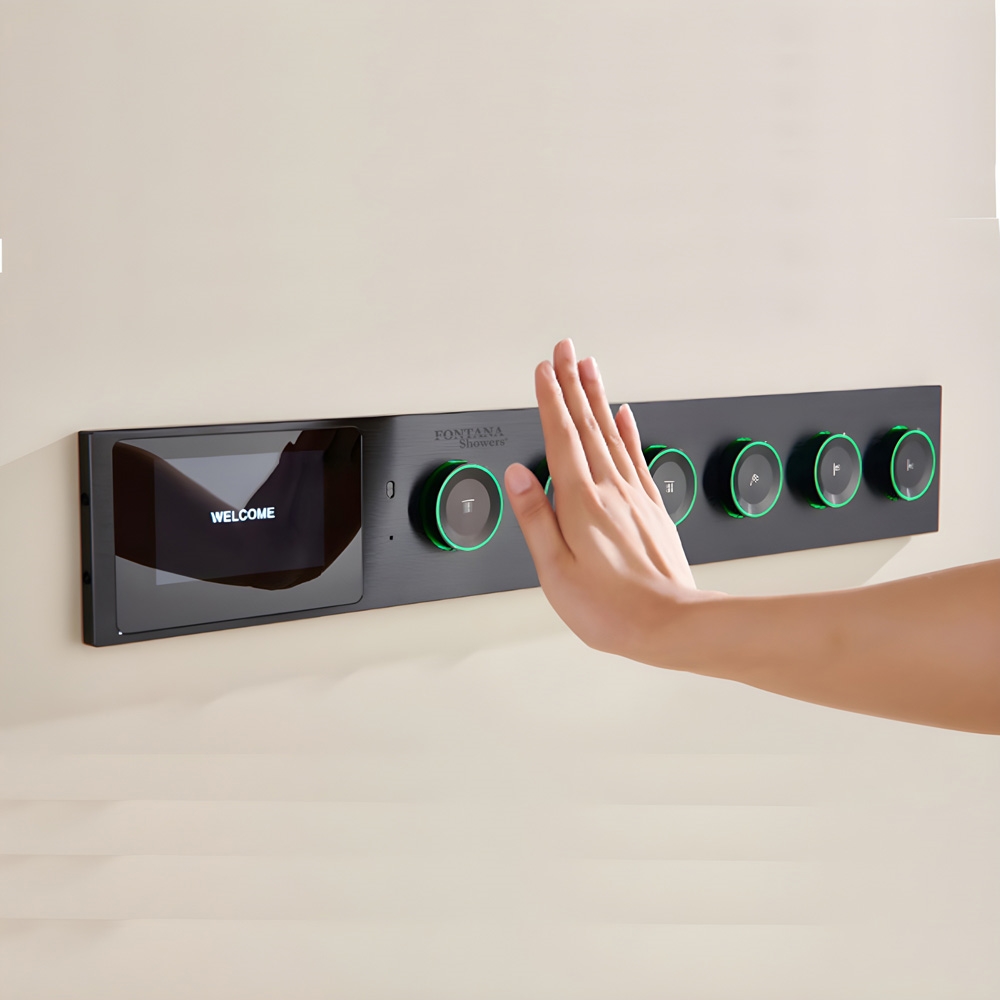
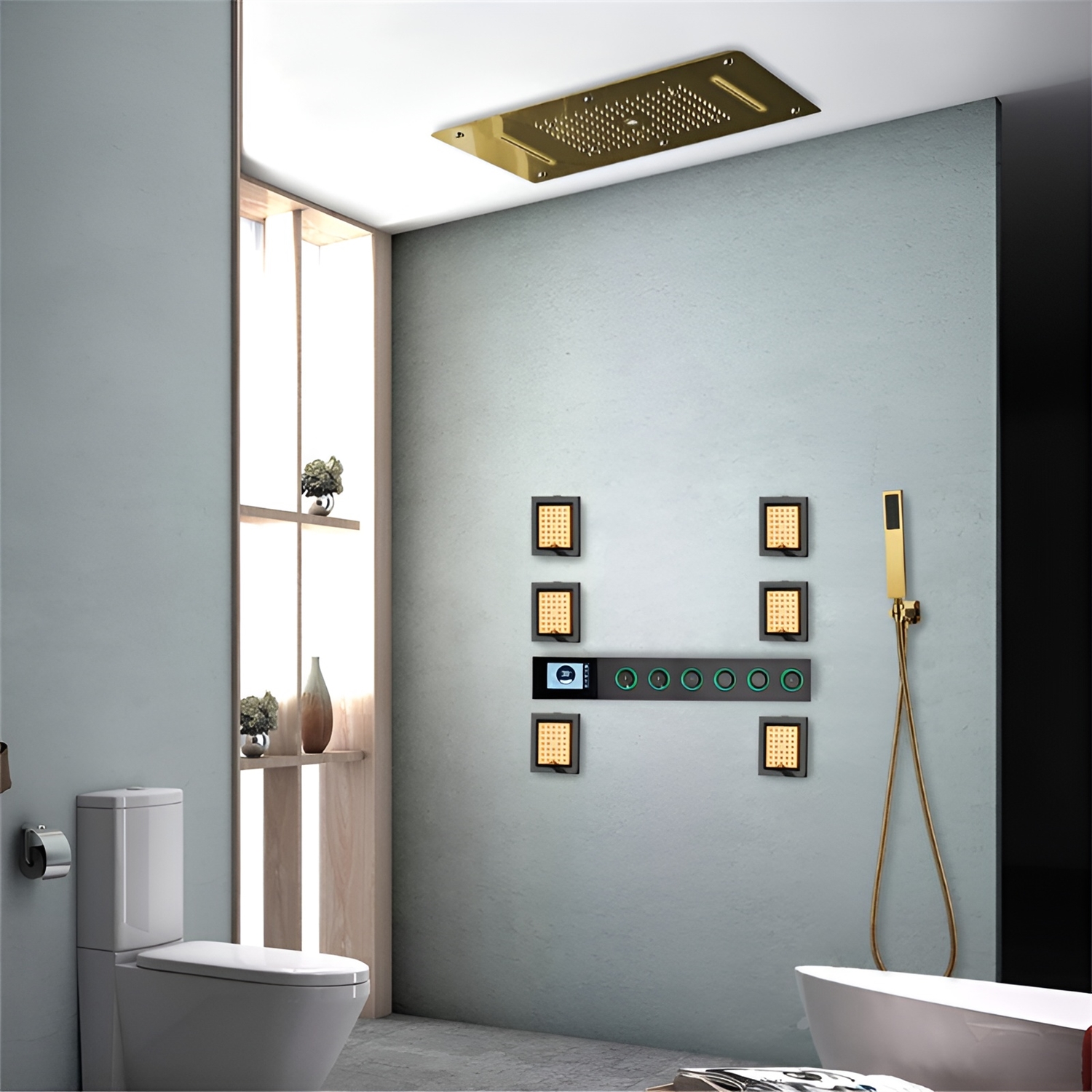
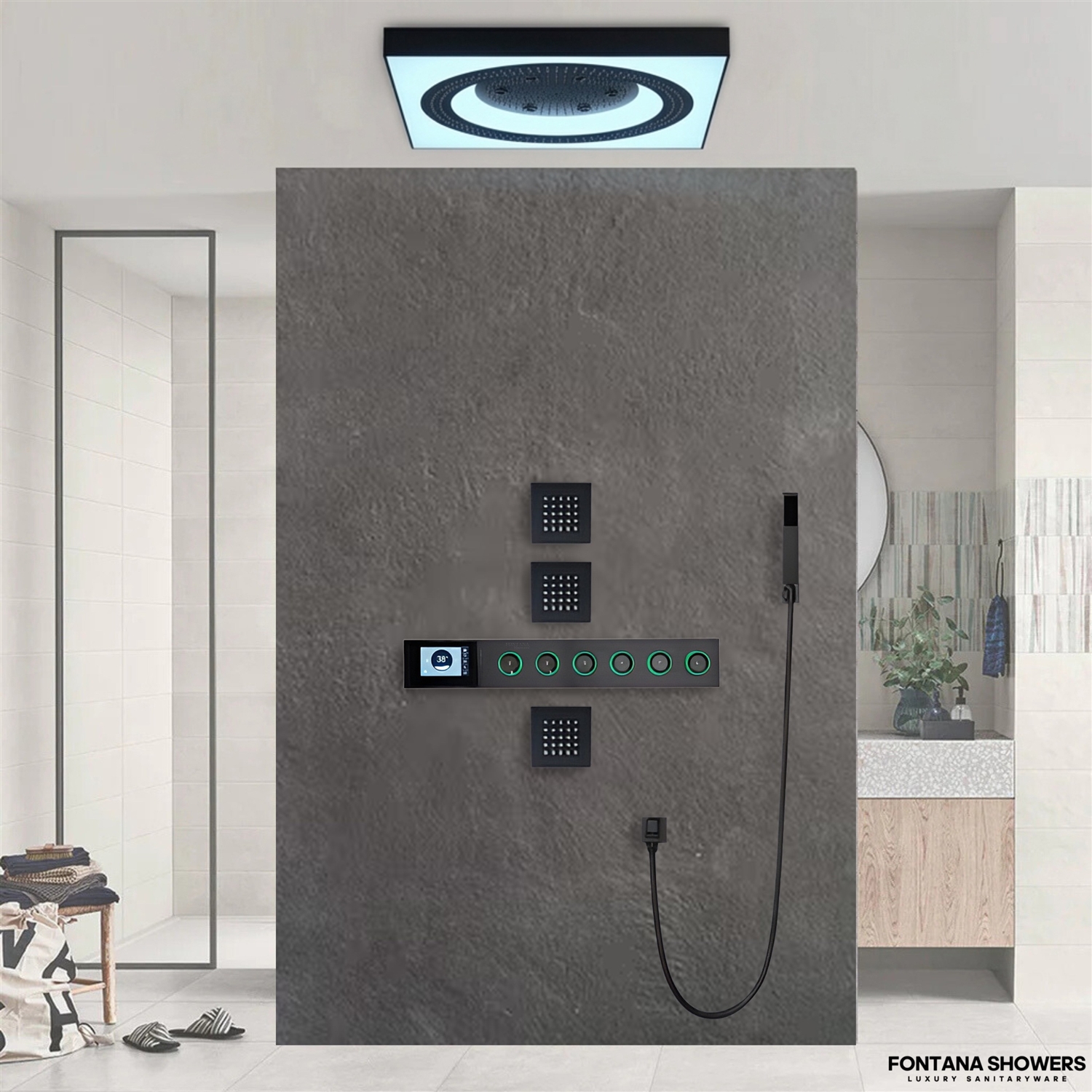
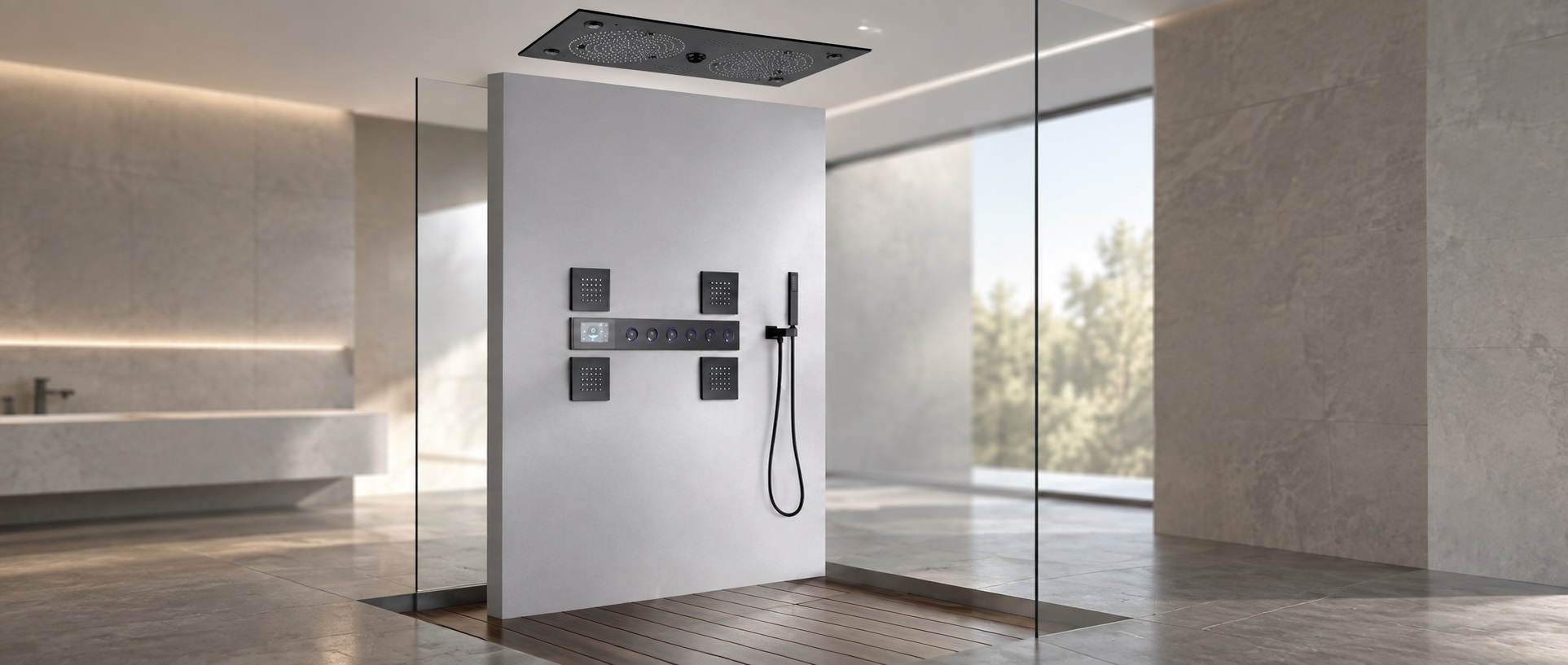
BS7777MB combines a large ceiling shower assembly, six mixer outlets, electronic controls, smart connectivity,
lighting, audio, and multiple water functions, so installation coordination extends beyond a standard thermostatic set.
Read More
Rough-in planning should coordinate the G1/2 connections, six outlet paths, ceiling support, access for the digital
controller, electrical requirements, speaker and lighting components, waterproofing, and service access. A related
pressure-variance review also shows why simultaneous-outlet testing should be included during commissioning rather than
evaluating each function independently.
Digital & Thermostatic Control
Related field evidence supports precise digital temperature control after calibration, responsive interface behavior,
and stable thermostatic regulation during extended operation.
Read More
A second digital-system record notes precise temperature control, quick interface response, and steady flow without sudden
changes during extended operation. The primary review adds that electronic response lag can occur if calibration is not correct,
reinforcing the need to verify displayed temperature against actual delivered water during startup and handover.
Functions and Finish
The current BS7777MB page specifies a matte black system with rainfall, waterfall, and mist functions, a 35.33 × 11.81 in
shower head, six mixer outlets, and stainless-steel/brass construction.
Read More
The combination of multiple discharge modes and a large-format ceiling head makes balanced hydraulic distribution a key design issue.
Related field evidence from another thermostatic digital shower documents pressure variance between active spray zones until the
internal controls were recalibrated, after which discharge performance and temperature regulation remained stable.
Smart Operating Function
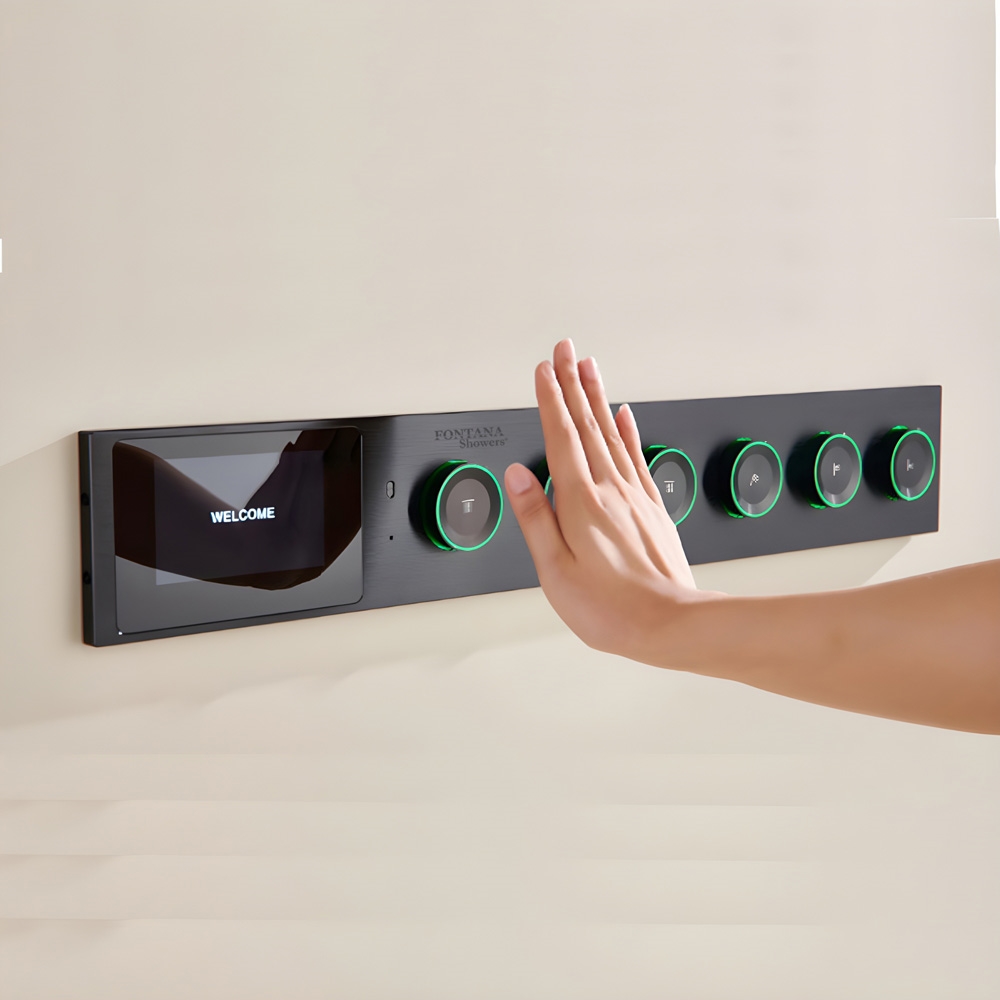
BS7777MB adds Tuya Wi-Fi control, voice control, Bluetooth music, RGB lighting, memory mode, motion sensing, and a digital display
for temperature and flow adjustment.
Read More
These features increase the number of systems that need to be checked during commissioning. Project teams should test manual controls,
app connectivity, voice commands, saved presets, lighting, audio, temperature response, and water-function changes separately and then
under combined operation so one smart function does not mask a hydraulic or control issue elsewhere in the assembly.
Recommended Use
The strongest application fit is for luxury residences, hotels, resorts, spas, and premium hospitality bathrooms where digital control,
multiple spray functions, smart-home integration, and a large ceiling shower are intentional parts of the project brief.
Read More
The product page specifies a 0.3–0.5 MPa water-pressure requirement, so supply conditions should be confirmed before final specification.
For larger projects, record temperature calibration, pressure during simultaneous outlet use, app pairing, voice-control response, memory
settings, and access locations in the commissioning package so later service teams have an operating baseline.
Review Summary
Primary RatingFour out of five in the selected related digital-shower field record.
Control FocusElectronic temperature response, thermostatic stability, pressure balance, and multi-outlet synchronization.
Product ComplexitySix outlets plus digital, voice, app, Bluetooth, RGB, memory, motion-sensing, and multi-function water controls.
Read More
Reviewer Context
Evidence combines related thermostatic digital shower evaluations and digital-control user records from 2025–2026.
BS7777MB Configuration
Matte black; stainless steel and brass; six mixer outlets; rainfall, waterfall, and mist; 0.3–0.5 MPa pressure requirement.
Commissioning Priorities
Temperature verification, pressure balance, outlet synchronization, digital response, app/voice pairing, memory presets, RGB, and audio.
Related Field Evidence
Digital and thermostatic shower records support the control, calibration, pressure-balance, and prolonged-operation discussion.
Exact Product Configuration
Six outlets, three water functions, smart connectivity, RGB, Bluetooth, memory mode, and current dimensions follow the BS7777MB page.
Commissioning Emphasis
Electronic temperature response and simultaneous-outlet hydraulic balance receive explicit attention before project handover.
Transparent Attribution
Related review evidence is kept separate from exact BS7777MB specifications and configuration details.