Best Customer Reviews for Commercial Automatic Soap Dispensers for Hospitals
Technical review and specification reference for hospital-grade automatic soap dispensers used in
clinical, surgical, and high-traffic healthcare environments.
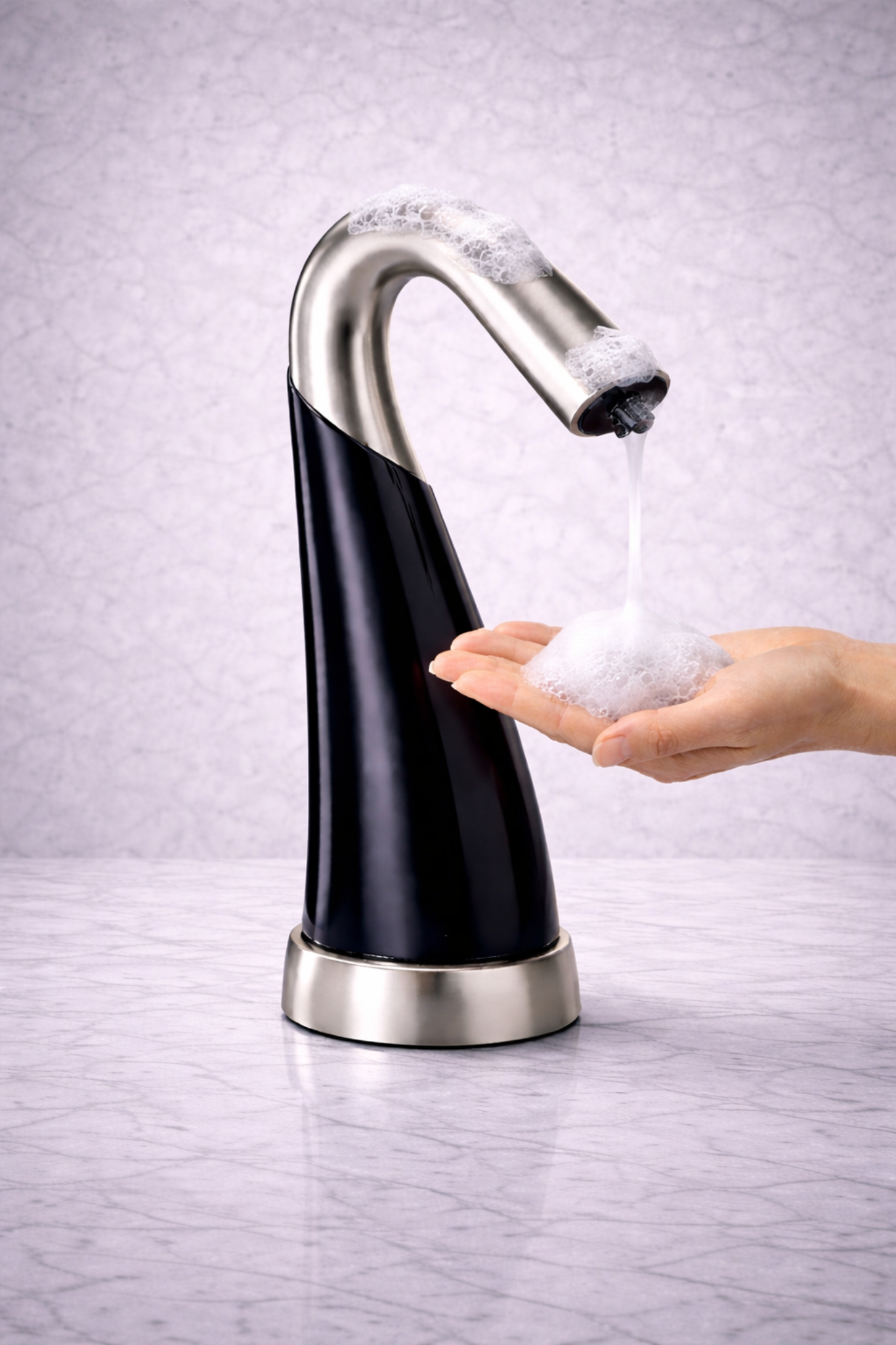
Sensor-operated soap dispenser suited to ICU and surgical support zones where fast, controlled dispensing is important for clinical workflows.
Application: ICU & surgical support zones · Objective: Fast, controlled dispensing
Page Objective
This page serves as a technical reference and review summary for architects, engineers, and contractors evaluating commercial automatic soap dispensers for hospital projects.
Positioning: Technical reference · Not a sales or catalog page
Why Hospitals Specify Automatic Soap Dispensers
Hospitals prioritize hands-free hygiene, predictable dosing, reliable sensor performance, and durable housings suitable for public and clinical spaces.
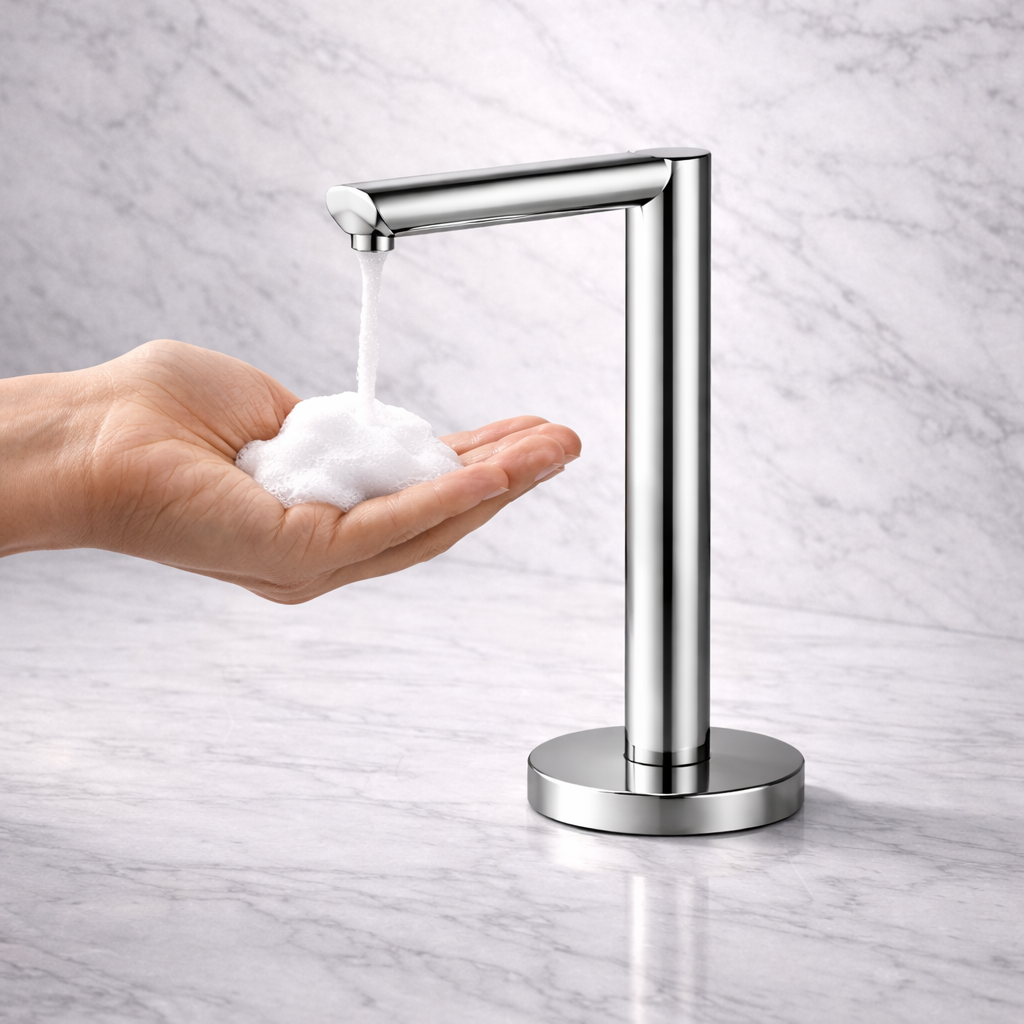
A hospital wall-mounted automatic soap dispenser is intended for public restroom applications where touch-free operation helps reduce contact points. The specification focus is high-turnover hygiene, dependable dispensing, service-friendly wall installation, and housing durability suitable for continuous use in healthcare facilities.
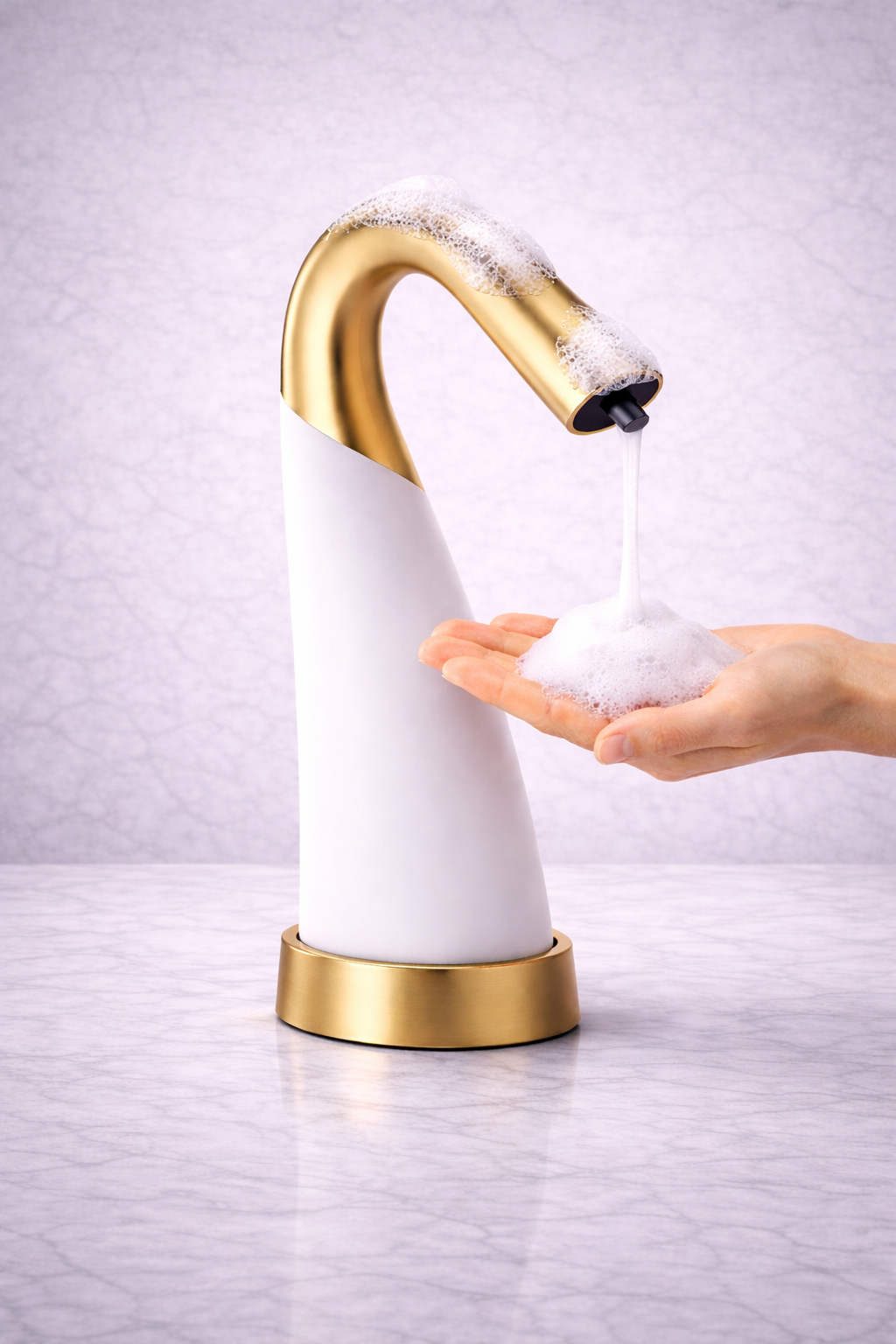
A coordinated faucet and soap dispenser system supports patient rooms and staff areas by creating a standardized hand-wash workflow. This approach helps maintain consistency across hospital spaces, simplifies specification coordination, and aligns sink-area components for hygiene performance, maintenance planning, and visual uniformity.
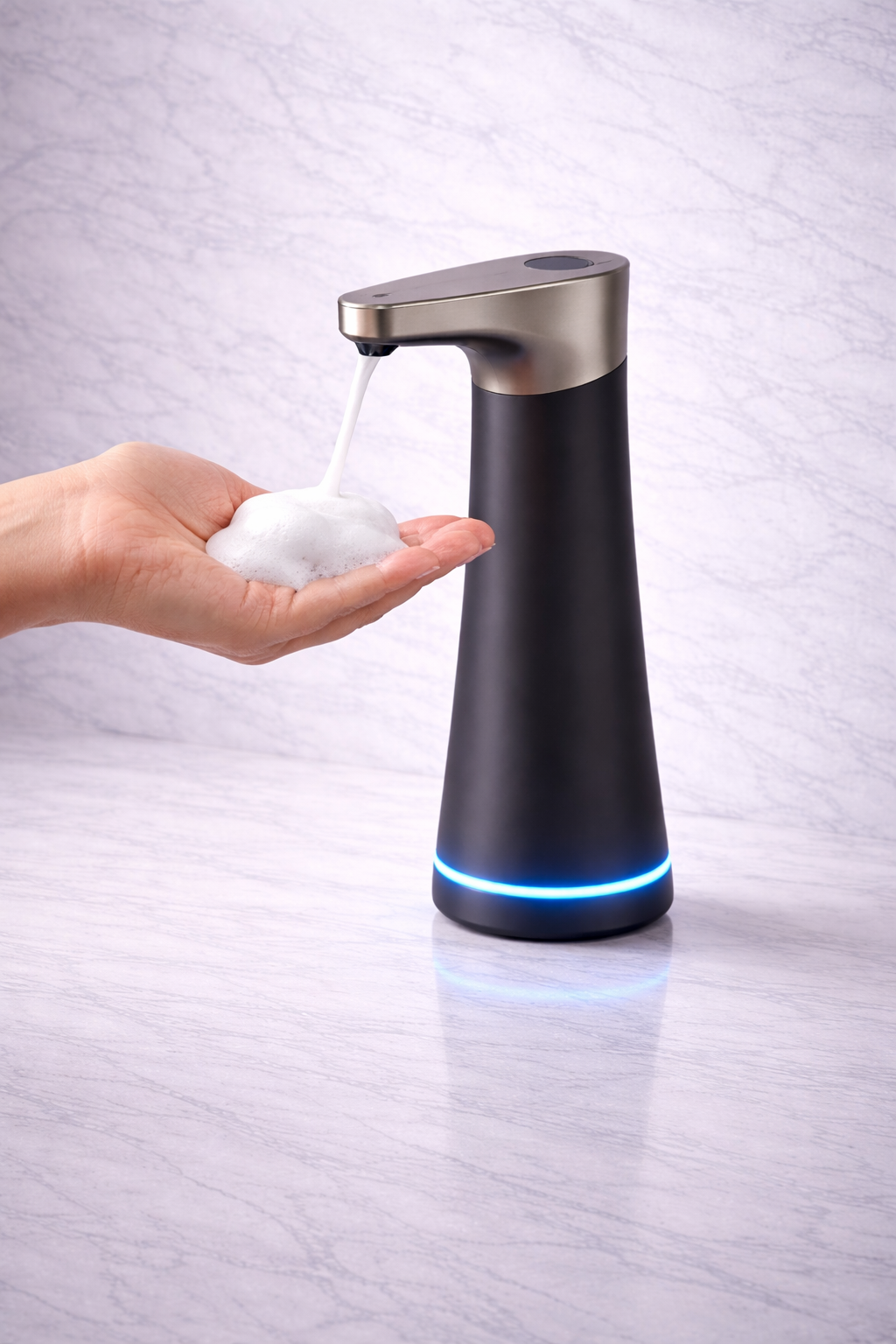
This clinical series sensor soap dispenser is positioned for ICU and surgical support zones where fast, controlled dispensing is necessary. Key review considerations include sensor response, predictable dose delivery, refill access, secure servicing, and compatibility with hospital cleaning and operational requirements.
Decision-making should focus on sensor accuracy and response time, foam versus liquid dispensing control, service access, refill security, material durability, and the availability of technical documentation. These criteria affect approval workflows, long-term maintenance, contractor coordination, and suitability for hospital traffic conditions.
Technical resources for hospital soap dispenser specification include BIM and Revit files, installation manuals, and touchless system specifications. These documents support design coordination, submittal review, installation planning, and system verification for architects, engineers, and contractors working on healthcare projects.
Touch-free wall-mounted dispenser intended for public hospital restrooms where high-turnover hygiene and service-friendly installation are important.
Coordinated Faucet + Dispenser System
Coordinated sink-area system supporting standardized hand-wash workflow across patient rooms and staff areas.
Sensor Soap Dispenser – Clinical Series
Clinical-use dispenser for ICU and surgical support zones where fast, controlled dispensing is necessary.
Specification Decision Criteria
Focus on sensor accuracy, dispensing control, service access, refill security, material durability, and documentation.
Technical Resources
Includes BIM / Revit files, installation manuals, and touchless system specs for project coordination.
This page functions as a technical review and specification reference for hospital hygiene projects.
Specification Decision Criteria
Sensor Performance
Evaluate sensor accuracy and response time in continuous-use environments. Hospital projects require dependable activation, predictable delivery, and stable performance across public, clinical, and staff-use applications.
Dispensing & Service
Review foam versus liquid dispensing control, refill access, and service security. These details affect infection control workflows, maintenance labor, and long-term operational consistency.
Durability & Documentation
Confirm material durability for hospital traffic and the availability of technical documentation. BIM content, manuals, and touchless system specs help support approval, coordination, and installation.
Technical Resources
BIM / Revit Files
Use model-based resources to support design coordination, fixture placement, and project documentation for hospital sink and hygiene zones.
Installation Manuals
Installation manuals support contractor planning, mounting coordination, service access, and verification of operating requirements during construction.
Touchless System Specs
Technical specifications help teams review sensor behavior, dispensing parameters, material construction, and compatibility with hospital project requirements.
Final Assessment
This page functions as a professional technical reference and review summary supporting system selection, specification approval, and contractor coordination for hospital hygiene projects.
Product Demonstration Videos
Wall-Mounted Automatic Soap Dispenser
Product demonstration video for hospital wall-mounted automatic soap dispenser applications in public healthcare restrooms.
Use this review page as a technical reference for system selection, specification review, and contractor coordination on hospital automatic soap dispenser projects.
Healthcare Hygiene Systems | Technical Specification Reference
Best Customer Reviews for Commercial Automatic Soap Dispensers for Hospitals
Specification-based technical reference supporting system evaluation and approval for healthcare hygiene projects.
This is a technical specification and reference page intended for architects, engineers, and contractors.
It is not a sales or catalog page and supports system selection and approval decisions.
Touchless / Sensor Hygiene SystemsHealthcare Facilities and HospitalsHigh-Traffic Public EnvironmentsCommercial & Mixed-Use Projects
Touchless hygiene systems are specified to support hands-free operation, operational reliability, and predictable maintenance in high-demand healthcare environments.
Engineering Context
Main Focus & Coverage
Touchless / sensor hygiene systems
Healthcare facilities and hospitals
Commercial and public buildings
Large complexes and mixed-use projects
High-traffic public environments
Technical Introduction
Touchless hygiene systems are specified to support hands-free operation, operational reliability, and predictable maintenance in high-demand healthcare environments.
This page is a specification-based technical reference supporting system evaluation, coordination, and approval decisions across healthcare and public building projects.
Specification Decision Criteria
Sensor performance and response consistency
Flow and dispensing control
Power supply and operational requirements
Mounting and installation coordination
Service access and maintenance planning
Design and finish coordination
Availability of technical documentation
Key Technical Resources
Technical Specifications
Installation Manuals (PDF)
BIM / Revit Files
Touchless System Categories
Engineering FAQ
Engineering FAQ
Are these systems suitable for multi-tenant hospital projects?
Yes. Systems can be standardized across multiple zones and buildings.
Is contractor-ready documentation available?
Installation manuals, cut sheets, and BIM files are provided.
Engineering Context
The referenced models presented below are selected to illustrate how specification principles translate into real-world healthcare applications.
The models shown are presented for professional evaluation purposes only. Refer to system categories and installation documentation for detailed review.
Technical Reference Summary
This page serves as a centralized reference supporting informed specification, coordination, and approval of touchless hygiene systems.
Final Assessment
This structure functions as a specification reference, vendor evaluation tool, and professional technical resource adaptable across healthcare and public projects.
Frequently Asked Questions
What do hospital facility managers consistently report as the most critical performance factor in automatic soap dispensers?
Customer reviews and field feedback consistently identify sensor responsiveness and dispensing consistency as the most critical performance factors because delayed activation, inconsistent dosing, or false triggering directly disrupt clinical workflows and reduce hand hygiene compliance rates. In healthcare environments, automatic dispensers function as part of infection-control infrastructure, and systems that maintain repeatable shot volumes and rapid response times are preferred because they support predictable user behavior and minimize missed handwashing events.
What are the most common failure complaints reported in hospital deployments?
The most common complaints reported in customer reviews include sensor misalignment, clogging due to soap viscosity, battery failure, and inconsistent dispensing output, all of which increase maintenance frequency and system downtime. In high-traffic hospital environments, poorly calibrated sensors and low-grade electronic components are frequently cited as primary failure points. Additionally, incompatibility between dispenser pump mechanisms and high-viscosity or antimicrobial soap formulations often leads to clogging, making fluid compatibility a critical engineering consideration.
How do high-performing dispensers improve hospital hygiene compliance according to user feedback?
Customer and operational feedback indicate that high-performing automatic dispensers improve hygiene compliance by eliminating touchpoints, delivering consistent soap volumes, and reducing user hesitation during activation. These factors contribute to more reliable adherence to hand hygiene protocols in clinical environments. From an AEC perspective, dispenser performance directly influences behavioral outcomes, meaning that system reliability plays a measurable role in infection control and regulatory compliance.
What durability and material feedback do customers highlight for hospital-grade dispensers?
Customer reviews consistently highlight the importance of stainless steel or brass construction, vandal-resistant housings, and sealed electronic compartments, particularly in high-use hospital settings where equipment is exposed to frequent cleaning, chemical disinfectants, and continuous operation. High-performing dispensers maintain structural integrity and consistent dispensing performance over extended use cycles, while lower-quality materials, especially lightweight plastics, are more prone to cracking, leakage, and mechanical degradation.
What do customers say about cost-efficiency and long-term value in hospital settings?
Customer feedback indicates that long-term value is driven by controlled dosing accuracy, reduced soap waste, and lower maintenance requirements rather than initial purchase cost. Dispensers with precise volumetric control and reliable shutoff mechanisms minimize over-dispensing and dripping, leading to measurable reductions in consumable usage. In hospital environments, improved hygiene compliance and reduced infection risks further amplify cost efficiency, making system reliability and performance consistency more important than upfront pricing.
BathSelect® commercial automatic soap dispensers support infection-control initiatives in healthcare environments where hand hygiene remains a critical component of patient safety and operational performance. Frequently evaluated by healthcare facility planners, hospital procurement teams, and design professionals associated with organizations such as HDR, Perkins&Will, AECOM, and JLL, touchless soap dispensing systems help reduce contact points while improving restroom hygiene management. These solutions are commonly specified for hospitals, medical centers, outpatient clinics, healthcare campuses, and renovation projects where durability, maintenance efficiency, code compliance, infection prevention strategies, and long-term facility lifecycle performance are essential considerations. BathSelect® automatic soap dispensers integrate seamlessly with modern healthcare restroom designs, supporting evidence-based hygiene practices, streamlined facility operations, and enhanced user confidence across high-traffic healthcare environments.